

|
LISTEN TO THIS THE AFRICANA VOICE ARTICLE NOW
Getting your Trinity Audio player ready...
|
“Look at them. When they speak to White people, they are very respectful, they show manners. When they speak to a Black person, they are violent,” Julius Malema, South Africa’s EFF leader, on Afrophobia leaders.
South Africa has done this before.
In May 2008, mobs swept through Alexandra township in Johannesburg and spread across seven of South Africa’s nine provinces in a wave of anti-African violence that killed 62 people, displaced more than 100,000, and burned the homes and businesses of Mozambicans, Zimbabweans, Malawians, Somalis, and Ethiopians. Attackers killed 21 South Africans they mistook for foreigners. Some attackers reportedly sang Jacob Zuma’s campaign song, Umshini Wami, Bring Me My Machine Gun, as they marched.
Nobody held anyone accountable. The climate of impunity that followed allowed the situation to escalate. From 1994 to 2026, researchers at the African Center for Migration and Society at the University of the Witwatersrand documented over 1,300 incidents of Afrophobic attacks, at least 690 deaths, and approximately 128,000 displacements. South Africa did not develop a xenophobia problem after apartheid ended. It revealed one.
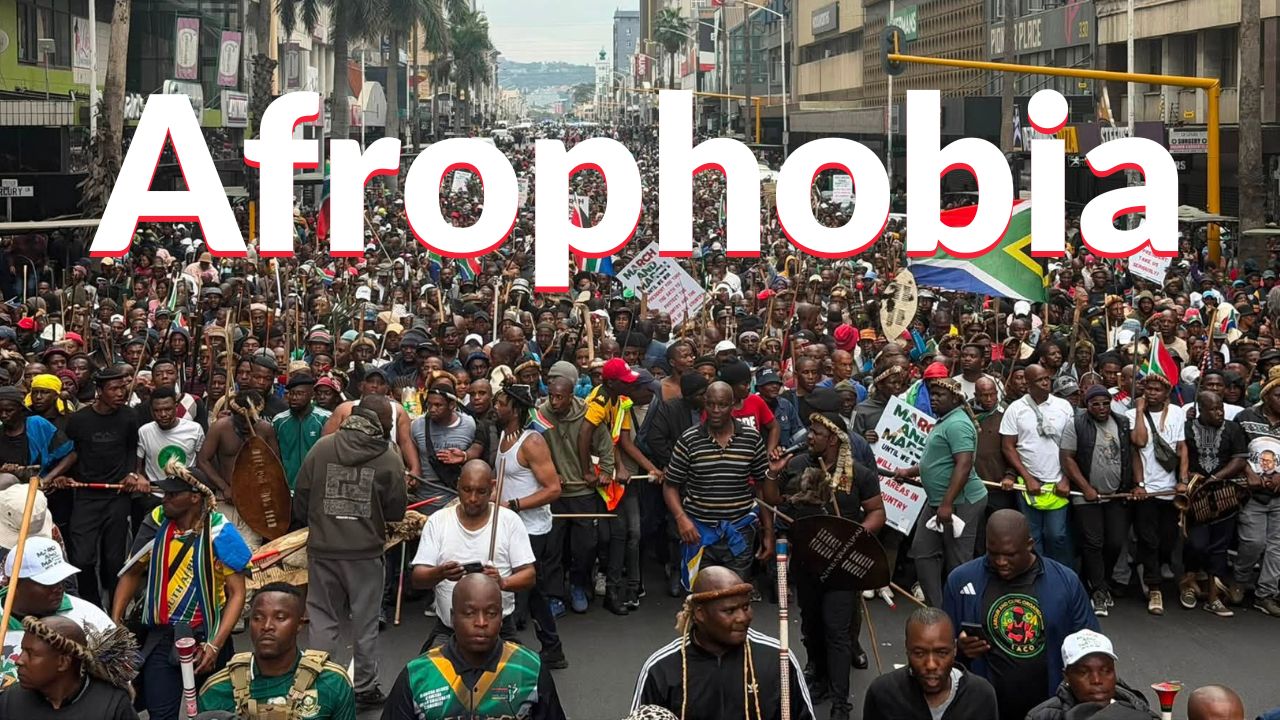
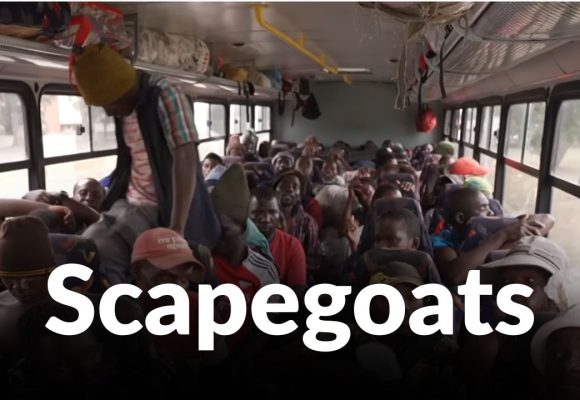
On June 30, 2026, that history arrived at a new address. Marches swept all nine provinces. A movement with millions of social media followers set a national deadline for the expulsion of African migrants. South Africa processed more than 15,000 Malawian nationals for deportation or voluntary repatriation through the Beitbridge border post, the largest single-nationality exodus since the 2008 pogrom. The Mozambican government confirmed that nine of its nationals had been killed. And President Cyril Ramaphosa, the man who took Israel to the International Court of Justice for genocide, released a newsletter.
To understand how South Africa arrived here, you need to understand who runs it, who is trying to run it in November, and who stoked the anger now aimed at the wrong people.
A Country Governing Itself With a Broken Compass
South Africa has nine provinces and a parliament in crisis. The African National Congress, the liberation movement that ended apartheid and governed unchallenged from 1994 to 2024, lost its national majority for the first time in the May 2024 elections, falling to 40 percent of the vote. For the first time since the end of apartheid, no single party won a mandate to govern.
Ramaphosa responded by forming what he called a Government of National Unity, a ten-party coalition that controls roughly 70 percent of parliament. Its core members are the ANC, the Democratic Alliance, the Inkatha Freedom Party, and the Patriotic Alliance. The DA is a center-right party historically rooted in white liberal politics that governs the Western Cape and Cape Town. The IFP is a conservative ethnic Zulu party from KwaZulu-Natal with a decades-long history of violent conflict with the ANC. The PA is a small party whose leader, Gayton McKenzie, has made explicit anti-immigrant rhetoric a central campaign tool.
Both the IFP and the PA are Ramaphosa’s coalition partners. Both have expressed sympathy for the anti-African marches or sent representatives to attend them. Meanwhile, the DA’s Ronald Lamola serves as minister of foreign affairs, the official responsible for immigration diplomacy. March and March has not once marched to his ministry.
Outside the GNU, two parties matter enormously. The Economic Freedom Fighters, Julius Malema’s red-overalled left-wing movement, has been the most explicit mainstream political voice against Afrophobia. Malema addressed the marches at a May 1 rally in Rustenburg, the heart of the platinum belt, and named the distraction strategy directly. He told the crowd that organizers were distracting South Africans so they would fight each other while others stole their minerals and their land. The EFF controls no province and holds roughly 10 percent of the national vote. Yet it has demonstrated more moral clarity on this issue than all the parties inside the GNU combined.
The other outsider is the MK Party, Jacob Zuma’s vehicle, which controls KwaZulu-Natal, the province where the Afrophobic violence has been most severe, the movement’s leadership is most concentrated, and the marches were biggest. The MK Party is contesting municipal elections for the first time in November 2026, targeting multiple metropolitan areas in Gauteng to unseat the ANC. Its leaders have publicly declared solidarity with March and March. Crucially, Zuma’s political home is Nkandla in KwaZulu-Natal, the same rural town where March and March’s Ngizwe Mchunu was born.
The November Clock Ticking Behind Ramaphosa’s Silence
The 2026 South African municipal elections fall on November 4. Every political calculation Ramaphosa makes between now and then runs through that date. The ANC is defending its Gauteng base against the MK Party, which is targeting the same township voters who attended the June 30 marches. The IFP, a GNU partner, has KwaZulu-Natal roots and has not opposed the marches. The PA, another GNU partner, has built its electoral appeal explicitly on anti-immigrant sentiment. ActionSA endorsed March and March openly, sent representatives to the marches, merged with another party earlier this year, and is targeting Johannesburg’s mayoral seat.
Naming Operation Dudula and March and March as Afrophobic organizations violating a court order risks fracturing the coalition, handing KZN voters further to MK, and giving ActionSA a campaign issue in Gauteng’s townships just four months before polling day. Instead, Ramaphosa invokes the pass laws of apartheid without naming the movements replicating them. Privately, he meets their leaders and tells no one what was discussed. His government deployed a $36 million police operation and deported 109,344 people in a single financial year, all while telling vigilantes they cannot check papers themselves. Only the paperwork distinguishes state deportation from mob deportation.
The Leaders, Their Logic, and Its Collapse
The three people most responsible for June 30 are not politicians. They are media personalities who built mass followings and weaponized them.
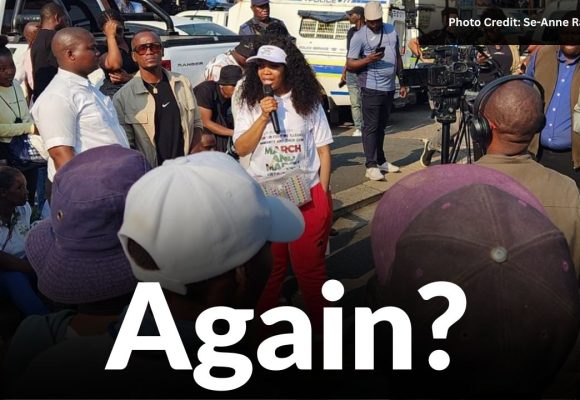
Jacinta Ngobese-Zuma founded March and March and is its most recognizable face. She is Zulu, born in KwaMashu near Durban, from Eshowe in KwaZulu-Natal’s Zulu heartland. Her surname comes from marriage, not bloodline. She is not related to former President Jacob Zuma. In an on-camera interview, she explained the source of her anti-Nigerian sentiment in her own words. She said her mother discovered through Home Affairs that a Nigerian man had fraudulently married her using a false identity. “Maybe I am a bitter person, who knows,” she said. “Maybe it’s a childhood trauma, who knows. But at the end of the day, it is what’s driving me.” Her mother’s painful encounter with one man became the organizing principle of a campaign targeting 300 Nigerians at a Durban processing center, 900 Ghanaians at OR Tambo, and a continent’s worth of African nationals across nine provinces.
On June 30, she marched in Durban in visible discomfort, arriving late and walking slowly at the head of a column of roughly 1,000 people. She told reporters, “From building to building, they must go.” When asked what comes after the June 30 deadline, her answer was unambiguous. “You will know when we get there.” She also quoted Martin Luther King. “In the end, we will not remember the harsh words of our enemies but the silence of our friends.” The man she quoted faced arrest 29 times for demanding that Black people be treated as human beings wherever they lived, regardless of which side of a line they were born on. He would not have recognized himself in her mouth.
Nkosikhona Ndabandaba, known as Phakel’umthakathi, is the man who announced the June 30 deadline. He is Zulu, from Nongoma in KwaZulu-Natal, the seat of the Zulu royal house. An established leader of amabutho, traditional Zulu warrior regiments, he led them at the funeral of Prince Mangosuthu Buthelezi in Ulundi and appeared in Shaka iLembe, the acclaimed historical drama about the founder of the Zulu nation. He commands more than 1.7 million Facebook followers. He told CNN he was the architect of June 30 and has encouraged migrants to disregard government assurances, insisting his movement controls events on the ground regardless of what officials say.
Ngizwe Mchunu, who calls himself Inkosi YamaBhinca, King of the Bhinca, is a practicing sangoma, former radio personality on Ukhozi FM, the SABC’s isiZulu station with more than seven million weekly listeners, and a political activist from Nkandla. South African authorities arrested Mchunu in 2021 for incitement to violence in connection with the July unrest that killed more than 350 people. At the June 30 campaign, he framed the marches as a Nguni civilizational project, calling for Zulu-Xhosa unity against African migration. The night before the marches, he met privately with Ramaphosa without informing Ngobese-Zuma. She found out from social media.
Three Leaders, One Borrowed Grudge, Zero Evidence
The movement argues that African migrants take South African jobs, commit crimes, and overburden public services, so they must go. The data dismantles every part of that claim.
South Africa’s official statistics agency, Statistics South Africa, estimates the total foreign-born population at between 2.4 million and 3.1 million people, including documented and undocumented individuals, across all nationalities. That represents 5.1 percent of a country of 61 million people. Migration researcher Loren Landau, addressing the inflated figures circulating in public debate, told EWN the true number may be slightly higher than the official estimate, but added it is nowhere near what politicians and organizers have been claiming. The tradition of inflating migrant numbers to generate political heat is not recent. South Africa’s post-apartheid government once falsely claimed 9 million undocumented immigrants were in the country when the actual figure was closer to 500,000, according to records cited by Wikipedia’s Immigration to South Africa article.
On jobs, the evidence points in the opposite direction from what the marchers claim. A GroundUp analysis of South African census data concluded that immigrants do not take jobs from South Africans overall and that the evidence suggests they are actually creating a small number of jobs. A World Bank study found that immigrants and South African locals perform complementary rather than competing roles in the labor market, generating productivity gains rather than displacing workers.
Malema reduced the movement’s economic logic to a single unanswered challenge at his May 1 rally in Rustenburg. If the marches were truly about jobs, he argued, protesters would return the day after each expulsion with a tally. Ten Zimbabweans gone, ten South Africans hired. That report has never come, he said, because the jobs being fought over pay nothing and offer nothing. South Africans, he insisted, deserve real employment, with contracts, pensions, and medical aid, not the informal survival work that marchers and migrants compete for at the bottom of an economy that serves neither of them. Nobody in the movement has answered him.
South Africa’s unemployment rate exceeds 32 percent. Youth unemployment runs above 60 percent. Those conditions existed decades before Operation Dudula was founded and would persist if every African migrant left tomorrow. After every march, after every shop closure, after every expulsion, the marchers return to the same broken municipalities, the same absent services, the same economy. No jobs have appeared. Factories remain shuttered. Title deeds have not changed hands. The platinum is still flowing to London.
There is one question that exposes the selective nature of this campaign more than any statistic. Malema asked it in Rustenburg, and the movement has never responded. When, he asked, is the march going to Cape Town? Because a lot of illegal immigrants, white immigrants, are in Cape Town. He challenged his audience directly, suggesting they go to Cape Town and ask white residents to produce their identity documents. In the North West, he noted, many white landowners claim to own land they cannot prove they own, having transferred it among themselves in the early 1990s when they saw democracy coming.
The march has never gone to Cape Town. The DA’s minister of foreign affairs, Ronald Lamola, the official responsible for immigration diplomacy, has never received a delegation from March and March. No ultimatum has reached a single mining company whose shareholders live in London and Zurich. Malema gave the crowd his own answer at Rustenburg, in remarks that TAV observed and that were consistent with his confirmed public statements. “Look at them. When they speak to white people, they are very respectful, they show manners. When they speak to a Black person, they are violent.” He repeated the observation at the close of his address so the crowd could not miss it.
The movement is not an immigration enforcement campaign. It is a racial targeting campaign wearing immigration enforcement’s clothes. The data says so. The geography of the marches says so. And the silence every time someone asks about Cape Town says so loudest of all.
The King Who Called Africans Lice, and the Pattern He Set
The movement did not invent this script. It inherited it.
In March 2015, Zulu King Goodwill Zwelithini, the late father of the current king, addressed a gathering in Pongola in northern KwaZulu-Natal. “Let us pop our head lice. We must remove ticks and place them outside in the sun. We ask foreign nationals to pack their belongings and be sent back,” he told a cheering crowd. Within weeks, mobs had killed at least seven people in xenophobic attacks across the country. Attackers looted shops and burned homes. Mozambicans, Somalis, Ethiopians, and Zimbabweans fled. The king denied inciting violence, saying his words were taken out of context. Even so, it took him almost a month to call for the attacks to stop. The South African Human Rights Commission later found his comments hurtful and harmful.
Then-President Jacob Zuma, whose political power base was KwaZulu-Natal and whose relationship with the Zulu royal house was central to his political survival, condemned the attacks in mild terms. Zuma did not criticize Zwelithini. Instead, he said he was prepared to help foreigners leave if they wanted to go. That lackluster response reflected his need to preserve his KwaZulu-Natal power base, home of his contentious publicly funded Nkandla estate. The Zulu have votes within the party and in national elections.
In early 2026, current King Misuzulu kaZwelithini told a gathering that only children of mixed foreign-South African parentage should remain in the country, prompting concern across the region. The Human Rights Commission had already found his late father’s 2015 comments hurtful and harmful. Many observers noted the irony, as his own mother was from Eswatini and one of his wives is from a neighboring country. He has since called for calm. Still, that call arrived, as it always does, after the conditions for violence had already been set.
The pattern has repeated across three decades. A Zulu royal or political figure makes remarks that inflame sentiment. Violence follows. A belated call for calm arrives. Accountability never does. And the next episode begins. In 2026, the cycle produced a new institutional expression, organized movements with millions of followers, a national deadline, and political parties inside the governing coalition attending their marches.
What November Means for Every African in South Africa
The November 4 municipal elections are the most consequential local government vote since democracy began. The MK Party is contesting for the first time. ActionSA is consolidating its Johannesburg base. The ANC is bleeding in every metro it once dominated. The EFF is fighting to hold what it has. Furthermore, the question of how South African politicians handle African migrants, whether they name the movements, enforce the court orders, or simply accelerate the machinery of deportation to appear responsive, will ultimately be answered in votes, not statements.
Ramaphosa called the vigilante identity checks a throwback to apartheid’s pass laws. He was right. Yet he then met privately with two of the four leaders demanding those checks, declined to name them publicly, and accelerated state deportations in the same week. The Johannesburg High Court confirmed in November 2025 that only an immigration officer or a police officer holds the authority to demand identity documents from a private person. The court further found that government’s failure to implement its National Action Plan constituted an unconstitutional violation of its duties. Seven months later, authorities have not charged a single movement leader.
A Debt Unpaid, a Pattern Unchanged
A crowd stoned a Malawian man to death in Pietermaritzburg on June 19. He was not a policy failure. He was a man. His country helped build the political conditions that made South Africa free. His grandmother’s government signed onto a liberation coalition that cost the frontline states an estimated $30 billion in lost development. His people crossed the same Beitbridge border post that 15,000 of his compatriots are now crossing in reverse.
South Africa’s Afrophobia is not a surprise. It is a pattern. The surprise, if there is one, is that in 2026, with every historical record available, with the Mandela Foundation’s archive online, with peer-reviewed journals documenting Nigeria’s $61 billion sacrifice, with Nelson Mandela’s Ethiopian passport on display at the Apartheid Museum in Johannesburg, the country that owes its freedom to Africa chose June 30 as the day to march against the continent that paid for it.
Four months from now, South Africans will vote for the councilors who run their streets, fix their pipes, and decide who belongs. The men and women who marched on June 30 will be among them. So will the Cameroonian shopkeeper in Durban who locked his doors and turned off the lights while a group of ten men broke them down anyway. He is not registered to vote in November. But he is paying for this election in ways no ballot will ever measure.



LEAVE A COMMENT
You must be logged in to post a comment.