

|
LISTEN TO THIS THE AFRICANA VOICE ARTICLE NOW
Getting your Trinity Audio player ready...
|
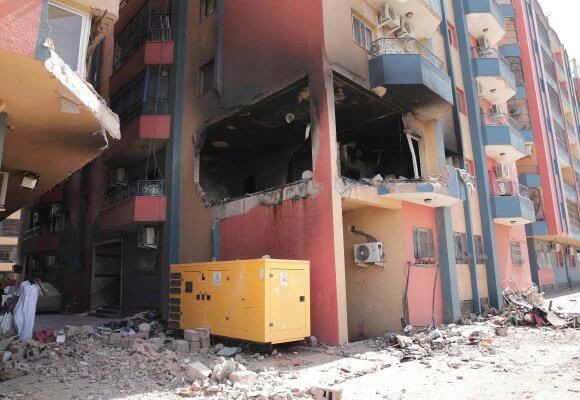
A Zimbabwean gardener, Elvis Nyathi, was dragged from his home in Diepsloot, beaten, and set on fire by an Afrophobic mob going door to door demanding to see papers.
In Mossel Bay, more than 50 shacks in a migrant settlement were burned to the ground, and two Mozambican men were killed.
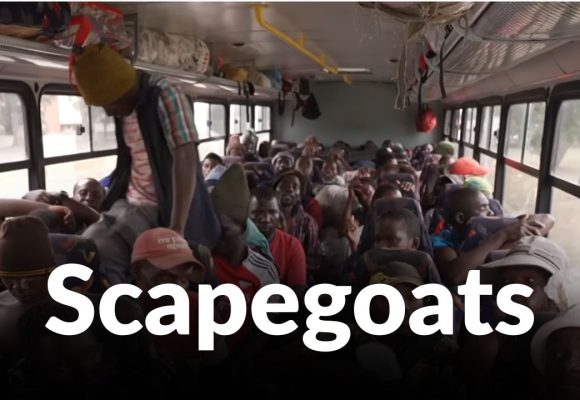
In Pietermaritzburg, displaced women and children from Malawi spent nights in the cold of South African winter, waiting to board buses out of an abandoned municipal building, having fled their own homes with nothing.
This is the documented record. Looting. Killing. Families put out into the cold.
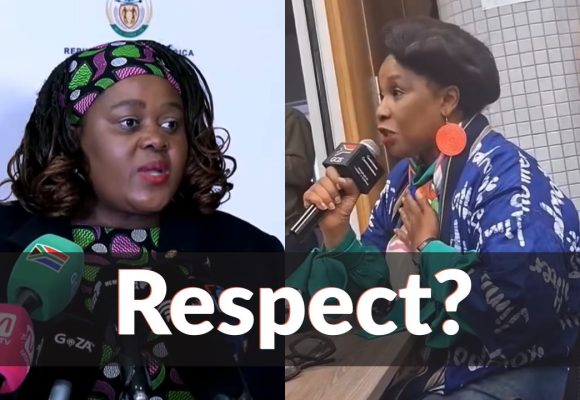
Naledi Pandor, South Africa’s former top diplomat, calls it Afrophobia.
The United Nations calls it xenophobia.
Vusi Thembekwayo calls it frustration.
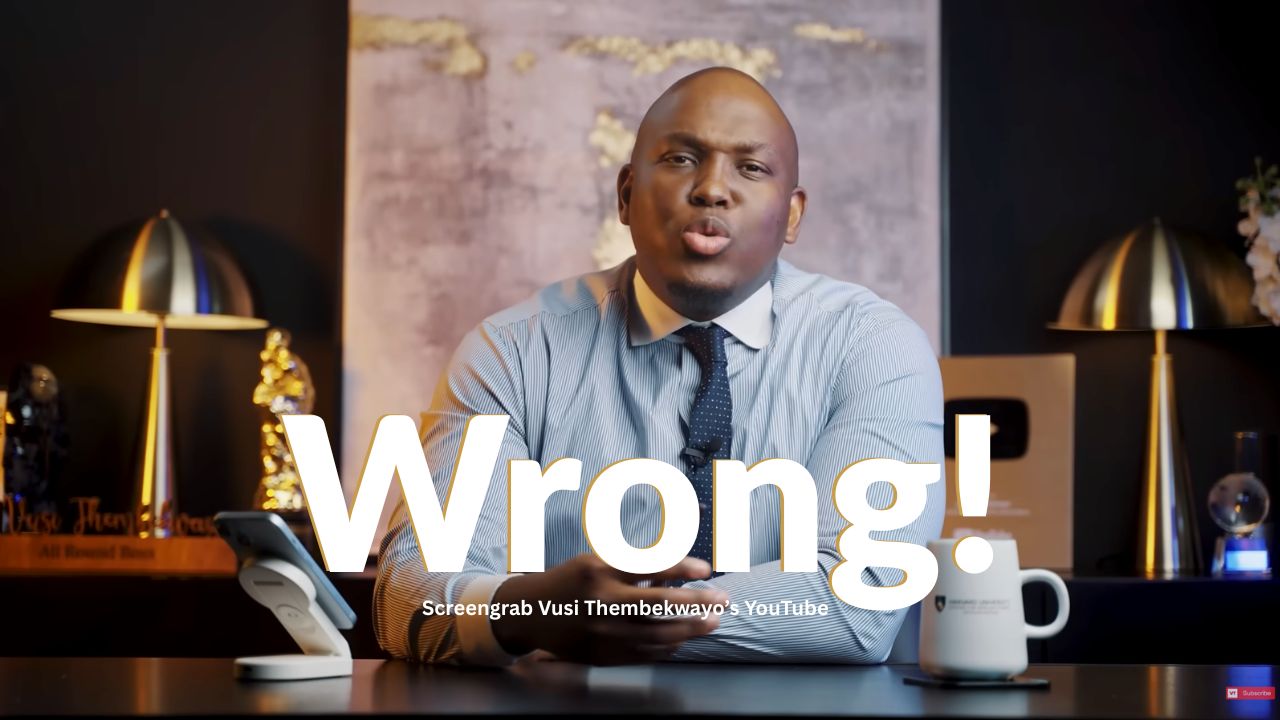
Thembekwayo, the South African entrepreneur and venture capitalist whose commentary reaches audiences in more than 150 countries, wants credit for saying South Africans are not xenophobic.
He said it at The Platform Nigeria 2026, a Lagos gathering hosted by Pastor Poju Oyemade, on May 1. The backlash that followed played out mostly in Nigerian outlets and on social media, in the same country where he made the claim, not in the South African press covering the attacks.
It is a shallow argument that states the obvious. Not all South Africans are Afrophobic, the same way not every Muslim is a terrorist.
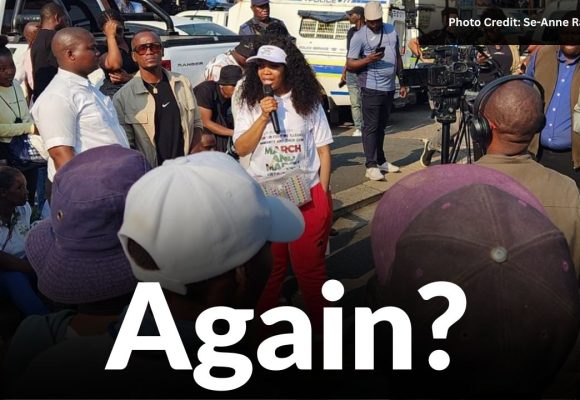
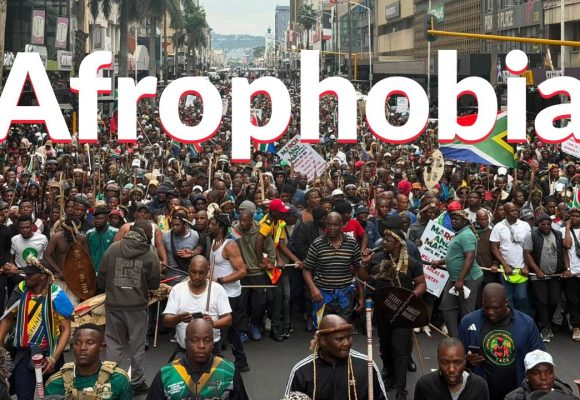
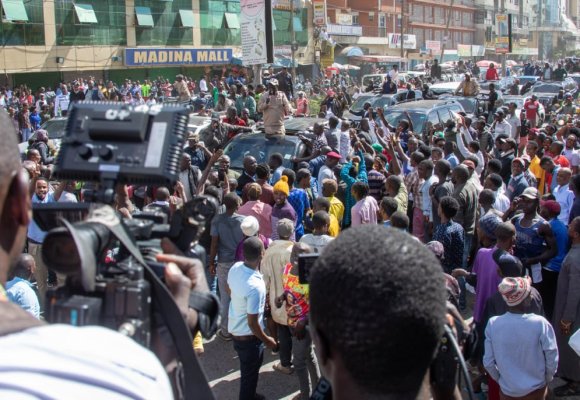
Ngobese-Zuma herself claims her movement’s marches drew more than 200,000 people onto the streets in a single day, in a country of more than 60 million.
Even by her own count, that is a small share of the population. But 200,000 people marching against fellow Africans is not nothing. It is a show of force that will shape how the world sees South Africa for years.
So much for Thembekwayo’s credit. South Africans are not xenophobic; they just happen to have at least 200,000 of them marching against fellow Africans.
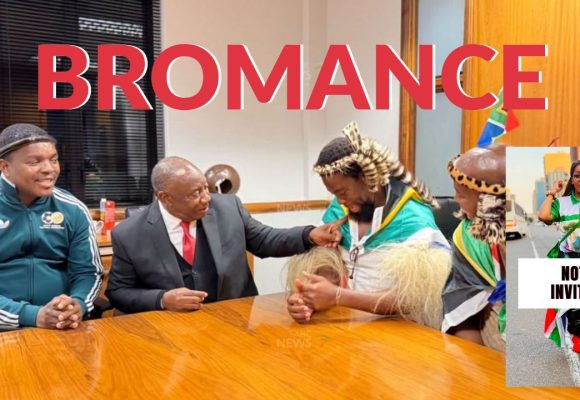
Nobody in South Africa, not President Cyril Ramaphosa, who met privately with Ndabandaba and Mchunu on the eve of the marches rather than confront them, and not Thembekwayo, has stepped up to stop them.
That is tacit approval.
On August 4, Thembekwayo took to his YouTube channel to explain himself, and said it again, word for word.
What he has never said, in either video, is the word Afrophobia. He has not named March and March.
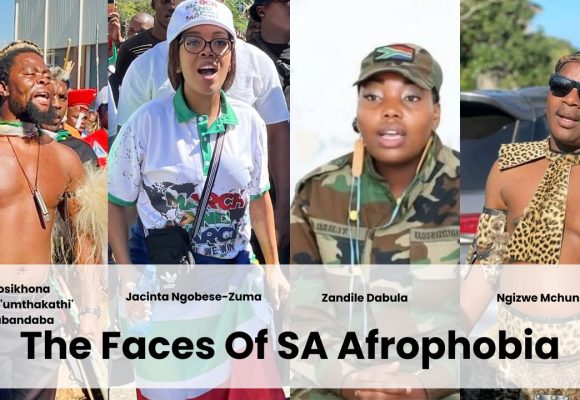
He has not named Operation Dudula, formerly led by Zandile Dabula, who also fronted X-Deport, a Moja Love show that sent her raiding undocumented immigrants’ homes and businesses on camera before she resigned in May to join ActionSA as an elective office candidate.
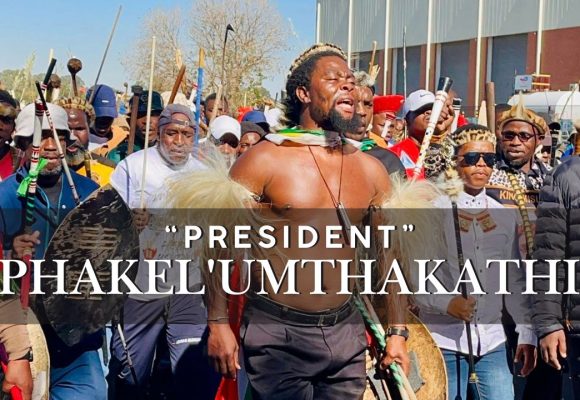
Thembekwayo has also not named Jacinta Ngobese-Zuma, Nkosikhona “Phakel’umthakathi” Ndabandaba, or Ngizwe Mchunu, the vigilantes organizing what he claims not to support.
In his quest to insist that South Africans are not xenophobic, the self-proclaimed professional communicator failed to acknowledge the plight of immigrants caught in the ugliness of the attacks. It is rhetorical judo on his audience, a doctor who knows the diagnosis but refuses to say it.
What the World Already Calls This
The United Nations does not share Thembekwayo’s caution.
Secretary-General António Guterres condemned the violence in April, naming KwaZulu-Natal and the Eastern Cape and calling it incitement that has no place in a democratic society.
Human Rights Watch documented the same pattern in May, reporting vigilantes carrying out xenophobic attacks with little police response.
Former International Relations Minister Naledi Pandor went further than either body. She told diplomats in Pretoria the violence was not ordinary xenophobia. She called it Afrophobia, a targeting of Africans by Africans that Europeans in South Africa do not face.
Thembekwayo has access to the same record. He has chosen a softer word instead.
His response to that record is to wave it off as media distortion. “Contrary to what you see in the media, South Africans are not xenophobic,” he told a Lagos audience in May.
He repeated the line, verbatim, in his follow-up video. A slogan does not become true through repetition. It becomes a talking point, rehearsed until it sounds like conviction.
His Own Words Do the Work
Thembekwayo insists he does not name nationalities, then tells his audience that if they visited certain communities, they would find one. “I don’t need to mention which one,” he said. “They know who they are.”
That is not restraint. It is a dog whistle delivered with a straight face, deniability built in.
The deniability is not abstract. Human Rights Watch and independent monitors have documented who actually gets attacked in this violence: Zimbabwean, Nigerian, Mozambican and Somali nationals, named repeatedly in incident reports going back years.
Thembekwayo does not have to say a nationality out loud. His audience already knows which ones the violence he is describing lands on.
Refusing to name it does not make the target less specific. It just keeps his hands clean of it.
He also tells migrants directly they are guests who must not “superimpose” their culture on their hosts. Nowhere in either video does he distinguish a documented resident from an undocumented one, or a refugee from a family that crossed a border last month.
Guest is the only category he offers, and it is a convenient one. It erases legal status, erases decades of residence, erases the difference between a person with a work permit and a person with none.
What Does ‘Behave’ Actually Mean
Thembekwayo never names an actual offense.
He points to a “shift in community culture,” to city centers that look “overrun,” to a nationality he refuses to name because, in his words, “they know who they are.”
Not one of those lines describes a law broken or a crime committed. The complaint is about presence itself, not conduct.
That is the same emptiness at the center of what movement leaders like Ngobese-Zuma have demanded of migrants, that they comply, adjust, fall in line, without ever specifying with what.
A standard nobody defines is a standard nobody can meet.
It does not ask migrants to follow the law.
Courts, police and immigration officials already exist to do that. It asks them to become smaller and quieter until their presence stops registering as a problem.
That is not a behavior code. It is a demand for invisibility, and Thembekwayo never says so, because saying so would mean admitting what he is actually asking for.
He also never extends South Africans the same scrutiny he applies to migrants. Their frustration over unemployment and service delivery gets a full account of its legitimacy.
A documented immigrant’s right to simply live in South Africa gets none. He defends one group’s grievance and questions the other’s existence.
Frustration Is Not a License
Nobody disputes that South Africans face real economic hardship. That hardship is no excuse for scapegoating fellow Africans.
That is why Thembekwayo’s most dangerous framing is not the guest language. It is his instruction on how to interpret vigilante violence.
He frames the attacks for his viewers as frustration, not criminal or malevolent conduct. Reading them any other way, he warns, means failing to address the underlying issue.
That instruction does real work.
It hands his audience a verdict before the facts arrive: not criminal, just frustration.
Thembethayo then offers his own standard for silence, unprompted.
The only thing worse than a person who breaks the rules of decency, he says, is the person who watches it happen and stays quiet.
He built the trap himself.
By his own measure, his own silence is worse than the acts he refuses to name.
Empathy That Runs One Way
Thembekwayo tells his audience he spends more time outside South Africa than in it. “I do more business outside of my own country than I do in it,” he says, calling himself a global citizen. He has built a career on the freedom to cross borders and operate in other people’s countries on his own terms.
He grants no such freedom to migrants operating in his.
He extends real empathy to Black South Africans without the means to fight government policy in court. He says the streets are the only place they get heard, and that they have told the government for years it manages migration wrong, and been ignored.
He may be right about that neglect. But he never asks who has fewer means to be heard than an undocumented migrant facing a mob.
Immigrants cannot vote out the government he blames. Many cannot report a threat to police without risking deportation.
His empathy runs toward the people who look like his neighbors growing up in Benoni.
It stops cold at the same border he crosses for a living.
What the Census Actually Shows
Thembekwayo never puts a number on the “shift in community culture” he describes. South Africa’s own statistics agency did, in a presentation delivered this month.
The 2022 Census counted 2.4 million international migrants in South Africa, documented and undocumented combined, or 3.9% of the population. Statistician-General Risenga Maluleke noted that figure matches the global average, where migrant populations typically make up close to four percent of a country’s total.
Nearly half of South Africa’s immigrants come from a single country, Zimbabwe, accounting for roughly one million people. The rest are overwhelmingly from within the Southern African Development Community: Lesotho, Mozambique, Zambia, the Democratic Republic of Congo.
Overrun does not survive contact with that number.
An immigrant share matching the global average is not a demographic emergency. It is evidence that an ordinary number of people crossed a border, the way people do everywhere, and settled among neighbors who decided their presence needed a name anyway.
Thembekwayo supplied one.
Not documented, not undocumented, not Zimbabwean or Mozambican.
“Overrun.”
The census does not support the word he chose either.
South Africa is not even the continent’s outlier on this measure.
United Nations Population Division data for 2024 puts South Africa’s migrant share at four percent, an exact match with Uganda and Rwanda.
In raw numbers, that means roughly 2.4 million immigrants in South Africa against about 1.9 million in Uganda and 560,000 in Rwanda, a gap that tracks each country’s overall population size rather than any special strain on South Africa.
Neither Uganda nor Rwanda has organized a publicly led campaign to drive migrants out by force. Whatever explains South Africa’s vigilante movement, it is not the size of its immigrant population.
The distortion goes further than “overrun.”
Ngobese-Zuma told Fox News Digital in July that the real number of undocumented immigrants in South Africa is “between 15 and 30 million,” by her own low estimate close to a quarter of the country’s entire population.
Nothing supports that figure.
The Census, the UN Population Division, and Stats SA all converge within a few hundred thousand of two to four million total foreign nationals, documented and undocumented combined, a fraction of her lowest number.
Thembekwayo never repeats her figure. He also never corrects it. Vague language like “overrun” does specific work here. It makes a fabricated number sound plausible without ever committing to one, and lets the audience supply whatever figure frightens them most.
Two Videos, One Missing Word
Thembekwayo says he hates being clipped out of context, and insists he can speak for himself.
He has now had two long videos and thousands of words to prove it. He used them to defend a slogan, recount his family history, and warn Pan-Africanists not to lecture him.
He did not use them to say the word his own government’s former top diplomat already used. He did not use them to name a single person organizing the campaign he claims not to support.
Two videos is not a shortage of time. It is a decision about what not to say.
That is the silence this piece is about. Not the words he chose. The ones he still refuses.

LEAVE A COMMENT
You must be logged in to post a comment.