

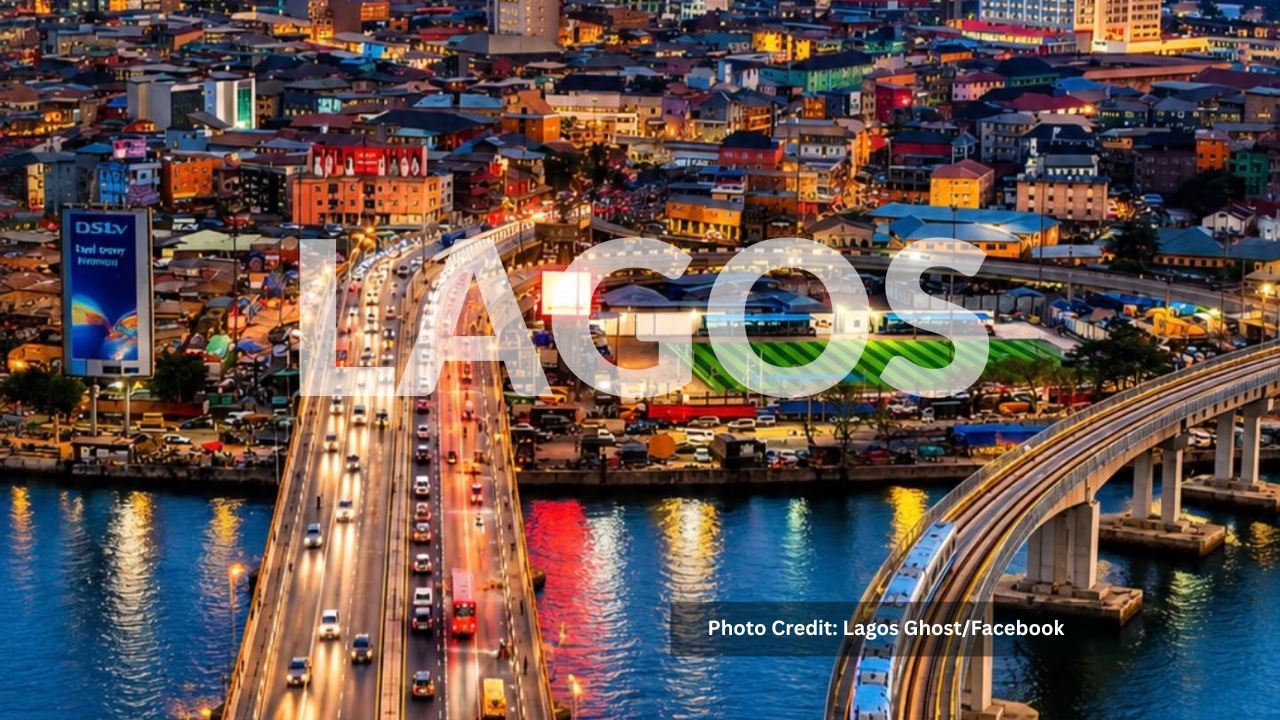
|
LISTEN TO THIS THE AFRICANA VOICE ARTICLE NOW
Getting your Trinity Audio player ready...
|
Nigerians have a reputation problem, and it was built for them, not by them. Say the word “Nigerian” in any airport lounge in the world and watch the reflex. Scam warnings. Jokes about the Nigerian prince email fraud. Complaints about loud voices and pushiness.
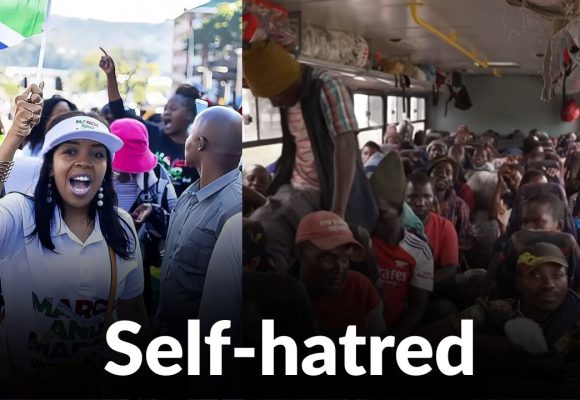
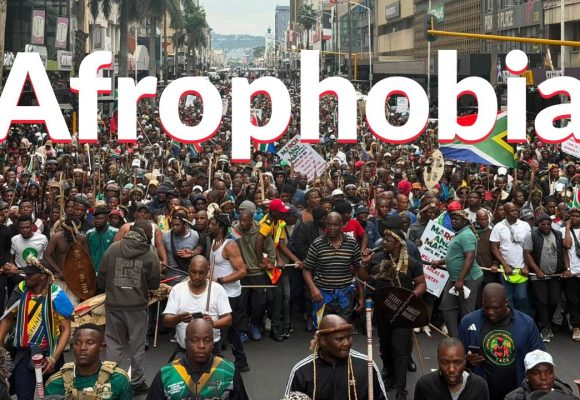
Nowhere is the critique sharper than among South Africa’s Afrophobic movement leaders. Jacinta Ngobese-Zuma, founder of the anti-immigrant group March and March, told Nigerian broadcaster Ireti Bakare-Yusuf on the Borderlines podcast that she disliked Nigerians because of their behavior and accused them of “selling drugs in South Africa and destroying the future of this country.”
She offered no evidence. Roughly 27,000 of the 156,000 people held in South African prisons are foreign nationals, and 65 percent of those are there only for immigration violations, according to a GroundUp fact-check of her claims.
Ngobese-Zuma has since given the hostility a personal origin story. In multiple interviews, she has said that when she was 14, her mother discovered through South Africa’s Department of Home Affairs that she had unknowingly been registered as married to a Nigerian man using a false identity, a discovery Ngobese-Zuma says devastated her mother and left the family’s own legal identity in question.
“Maybe I am a bitter person, who knows,” she said of the incident. “Maybe it’s a childhood trauma.”
Whatever happened in that specific case, one family’s alleged fraud has become the justification for treating an entire nationality as suspect.
South Africa isn’t alone. Ghana and Nigeria share something closer to sibling rivalry than enmity, most famously fought out over whose jollof rice is better, a decades-long, mostly affectionate argument that shows up everywhere from family dinners to national tourism campaigns.
But underneath the banter sits real economic tension.
Ghana’s traders’ union has spent years locking Nigerian-owned shops under chain and padlock, more than 250 closed since 2019 alone, and in July 2025 hundreds of Ghanaian traders marched through Accra and Kumasi carrying signs reading “Nigeria Must Go,” a deliberate echo of Nigeria’s own 1983 mass expulsion of Ghanaians, the order that gave the world the woven “Ghana Must Go” bag.
The complaints echo what’s heard in South Africa: Nigerians accused of dominating trade, flouting local law, undercutting local businesses. The backlash isn’t confined to one country or one grievance. It shows up wherever Nigerians go in large enough numbers to be noticed.
Video: Nigeria Info FM, “Afrophobia: Ireti Challenges Jacinta Ngobese-Zuma Claims About Nigerians In South Africa,” June 27, 2026.
While foreign nationals broadly have been targeted in the latest wave of Afrophobic attacks, Nigerians have drawn a disproportionate share of the blame, treated in South African public discourse as the face of a crisis the data does not support.
A different voice from South Africa
Julius Malema struck a different tone, praising Nigerians’ assertive nature.
“One thing I like about Nigerians is not about these things that you accuse them about,” Malema said. “A Nigerian man, if he comes in here and speaks, you won’t doubt that this man has got confidence. So white people refer to them as being rude, that’s why in Nigeria you don’t find a lot of white people.”
Nigerians run so much of the world they touch, and they built that success with almost no help from home.
Ask anyone who has encountered a Nigerian, and they’ll most likely describe them as audacious in some fashion. That audacity shows up in something as simple as how Nigerians dress. Nigeria is home to over 250 ethnic groups, with some scholarly estimates running past 400, and that diversity is on full display at any gathering.
Spot a Nigerian at a wedding, a Sunday service, or just relaxing on a weekend anywhere in the world, and there’s a good chance the men are in an agbada or kaftan, often topped with an embroidered, one-sided bent cap, and the women in lace or adire, a head wrap called a gele tied high and wide enough to make no apology for its size.
It shows up on the dance floor too.
Money spraying, showering a celebrant with cash while they dance, started in Yoruba culture in the early 1900s and turned into a full public spectacle during Nigeria’s oil boom decades later. It has since spread far beyond Nigeria, showing up at Ghanaian, Congolese, Kenyan, and Afro-Caribbean celebrations worldwide, wherever people want generosity to look and feel like a performance rather than a quiet transaction. Nigerians don’t tone their culture down to fit in elsewhere. They bring it with them, in full color and with cash in the air, and expect the room to adjust.
A giant the continent underappreciates
Start with scale. Nigeria holds an estimated 242 million people, Africa’s largest population and the sixth largest on Earth, though the country hasn’t conducted a full census since 2006 and figures vary by source. That scale is a center of gravity. Nigeria has treated its size as fuel, building institutions, industries and culture at a pace few nations its age have matched.
That same scale gave Nigeria the standing to lead, not just build. When the IOC refused to ban New Zealand from the 1976 Montreal Olympics over its rugby team’s tour of apartheid South Africa, Nigeria’s military head of state, General Olusegun Obasanjo, ordered the country’s 45-athlete delegation home on the eve of the opening ceremony, helping trigger a 29-nation African boycott coordinated by Nigerian sports administrator Abraham Ordia, president of the Supreme Council for Sport in Africa.
A decade later, Nigeria did it again, and this time led outright. When Margaret Thatcher’s government refused to enforce international sanctions against apartheid South Africa, Nigeria and Ghana became the first two nations to announce a boycott of the 1986 Commonwealth Games in Edinburgh, a decision that snowballed into 32 nations withdrawing and left the Games with their smallest turnout in decades. Nigeria sacrificed its own athletes’ careers over this, at real cost to a country still rebuilding from its own civil war.
Nollywood and a culture that refuses to ask permission
Nollywood is the clearest proof of that instinct. The industry produces more than 2,500 films a year and stands as the world’s second-largest film industry by output, trailing only India’s Bollywood and ahead of the US’s Hollywood. Independent filmmakers built that industry themselves, shooting on consumer video cameras and distributing directly to audiences hungry for their own stories told their own way.
Nigerian pride in education runs deep enough that it shows up in how people introduce themselves. It’s not unusual to meet someone who rattles off “Engr.” before their name at a wedding, or a doctor who insists on “Dr.” even outside the clinic, professional titles worn as identity, not just credentials. Multiple degrees, multiple licenses, multiple professional bodies to answer to, all before 40, is treated as normal rather than exceptional.
Wole Soyinka carried that same drive into literature, becoming the first African to win the Nobel Prize in Literature in 1986. Nearly four decades later, Chimamanda Ngozi Adichie became the Women’s Prize for Fiction’s “Winner of Winners,” and a MacArthur Fellow, and Nigerian voices in music and film reached a scale no one predicted.
Burna Boy became the first Nigerian solo artist to win a Grammy in the renamed Best Global Music Album category in 2021. Genevieve Nnaji directed and starred in “Lionheart,” Nigeria’s first-ever Oscar submission, later disqualified on a language technicality that sparked international debate about how the Academy defines “foreign” film.
The megachurch, imported and outbuilt
Nigerians didn’t invent the megachurch.
America did.
Mid-century Pentecostal and evangelical movements built the first arena-sized sanctuaries and exported the model worldwide. Nigeria took that import and built past it.
Winners Chapel’s Faith Tabernacle in Ota held the Guinness World Record for the largest church auditorium on Earth when it opened in 1999, seating 50,000.
Dunamis International Gospel Centre’s Glory Dome in Abuja, completed in 2018, seats 100,000 under a pillar-free dome built so no worshipper’s view is blocked.
The Redeemed Christian Church of God’s Redemption Camp outside Lagos has grown into a functioning city, complete with its own university, that hosts monthly gatherings numbering in the hundreds of thousands.
Winners Chapel is now building The Ark, designed to seat 100,000, one more escalation in a building tradition that treats scale itself as an act of faith.
It is the same instinct that built Nollywood and Nigeria’s unicorn startups, applied to religion. Someone else invented the format. Nigerians decided there was no ceiling on how far it could go.
Wealth built without a safety net
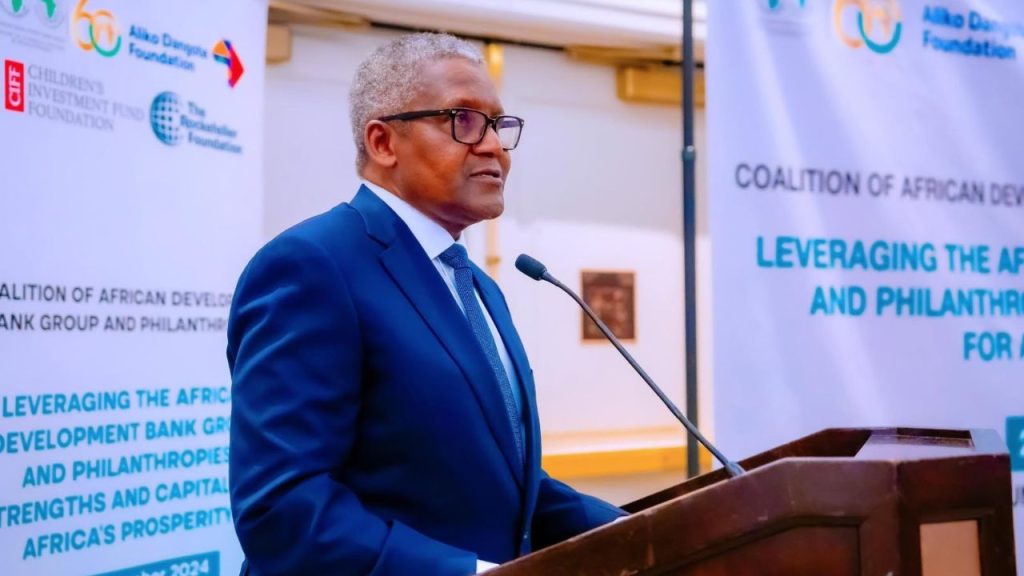
Aliko Dangote has topped Forbes’ list of Africa’s richest people for 15 consecutive years, with a 2026 net worth of $28.5 billion. He is the richest Black person on Earth. Dangote’s story begins with the trading legacy of his mother’s family, the Dantatas of Kano, whose commodity fortune gave him an early foothold and a loan from his uncle to start his first company in 1977.
He took that foothold and multiplied it many times over, expanding from trading into manufacturing, then cement, then sugar, then his refinery in Lekki, Africa’s largest, a $19 billion single-train facility built to end Nigeria’s dependence on imported fuel. Dangote has held the position of Africa’s richest individual longer than any rival country has managed to produce one.
Video: Dangote Petroleum Refinery Inauguration By President Muhammadu Buhari, May 22, 2023.
Shola Akinlade represents a different, equally Nigerian path to the top. Growing up in Lagos and studying computer science at Babcock University, he built his career the way Nigeria’s rugged business terrain demands, win or go home, with no institutional safety net to soften a wrong turn. He worked as a database manager, then founded a small software consulting firm, then co-founded Paystack in 2015 with Ezra Olubi to solve a problem he lived daily: fragmented, unreliable payment systems for Nigerian businesses. Y Combinator accepted the company into its Silicon Valley accelerator in 2016, and Stripe acquired Paystack for roughly $200 million in 2020, proof that Nigerian ingenuity competes and wins on a global stage.
Nigeria’s business landscape runs on that same terrain nationwide.
About 93 percent of Nigerian employment is informal, according to the National Bureau of Statistics, built on self-employment, trade and small enterprise rather than salaried contracts.
Nigeria’s flagship national cash transfer program targets 15 million beneficiaries, a fraction of a country of 242 million. What Nigerians rely on instead is family. Extended kin networks, church and mosque charity structures, and informal savings groups called esusu or ajo have functioned as Nigeria’s real social security system for generations. When failure carries no cushion, ambition stops being optional and becomes survival.
A bastion of entrepreneurship, built without state help
That survival instinct scaled into something larger. Nigeria stands as Africa’s undisputed startup capital. Six of Africa’s tech unicorns, private companies valued at $1 billion or more, operate in Nigeria, more than any other country on the continent, including Flutterwave, OPay, Interswitch, Moniepoint, Chipper Cash and Andela. Nigeria also consistently captures around 30 percent of all venture capital deals across the continent, ahead of Kenya, South Africa and Egypt.
That achievement stands out even more given the scale gap it overcame. US venture capital hit roughly $339 billion in 2025 alone. Nigerian startups raised under $1 billion the same year. Foreign venture funds have powered nearly all of Nigeria’s growth, betting directly on Nigerian ambition rather than any domestic subsidy program.
Money sent home, and money sent to free a continent
Nigeria stands as Sub-Saharan Africa’s remittance champion, receiving roughly $21 billion in 2024 alone and capturing close to 38 percent of all money the region’s diaspora sends home, according to World Bank data. Globally, Nigeria ranks among the top ten remittance destinations on Earth, behind only India, Mexico, China, the Philippines, France and Pakistan in absolute dollar terms. That figure explains why Nigerians abroad often keep extended families, and sometimes entire towns, afloat.
Nigeria’s generosity toward the rest of the continent runs deeper than remittances, and further back than most Africans realize. Nigeria began direct financial support to the African National Congress and the Pan Africanist Congress in 1961, just a year after the Sharpeville massacre pushed both organizations underground. By 1970, that support had grown into a structured annual subvention of about $5 million to both groups.
In 1976, Nigeria’s government created the Southern Africa Relief Fund, popularly known at home as the Mandela Tax, a mandatory 2 percent deduction from civil servants’ salaries. The fund raised $10.5 million in its first six months, with contributions from students who skipped lunch to give what they could. Nelson Mandela himself called Nigeria one of the movement’s most generous donors.
One country, every field
The pattern repeats everywhere Nigerians go. Ngozi Okonjo-Iweala became the first woman and first African to lead the World Trade Organization.
Philip Emeagwali won the 1989 Gordon Bell Prize for a parallel-processing breakthrough in oil-reservoir simulation. Oluyinka Olutoye, a Nigerian-born pediatric surgeon, co-led the 2016 Texas Children’s Hospital team that removed a rare tumor from a fetus mid-pregnancy and returned the baby to the womb; she was born healthy weeks later.
Bennet Omalu was the first to discover and publish findings on chronic traumatic encephalopathy (CTE) in an NFL player, a discovery later dramatized in the film “Concussion.” Anthony Joshua became a two-time unified heavyweight world champion, and Victor Osimhen ended Napoli’s 33-year wait for a Serie A title before finishing eighth in Ballon d’Or voting, the highest ranking any Nigerian footballer has ever reached in the sport the rest of the world actually watches.
When the Hustle Is Crime
Nigeria produces big criminals too, and the country’s ranking on the world stage says so plainly. The country’s own penal code gave the world its shorthand for the crime, Section 419 of the Nigerian Criminal Code covers fraud by false pretenses, and “419” or being a “419 person” has become the common way Nigerians describe a scammer, the same term that eventually reached the rest of the world through the “Nigerian prince” emails.
The internet-era version of that same hustle has its own name too, “Yahoo-yahoo,” and the young men who practice it are called “Yahoo boys,” language so embedded in Nigerian slang that referring to someone as “doing Yahoo-yahoo” needs no further explanation at home.
The University of Oxford and UNSW Canberra’s World Cybercrime Index, built from a survey of 92 global cybercrime experts and published in the journal PLOS ONE, ranks Nigeria fifth in the world for cybercrime threat, behind only Russia, Ukraine, China and the United States, nations with vastly more resources, infrastructure and state capacity behind their criminal networks. Nigeria produces both kinds of global headlines, and pretending otherwise would be its own kind of dishonesty.
No case makes that point more visibly than the rise and fall of one Instagram influencer who turned fraud into a personal brand.
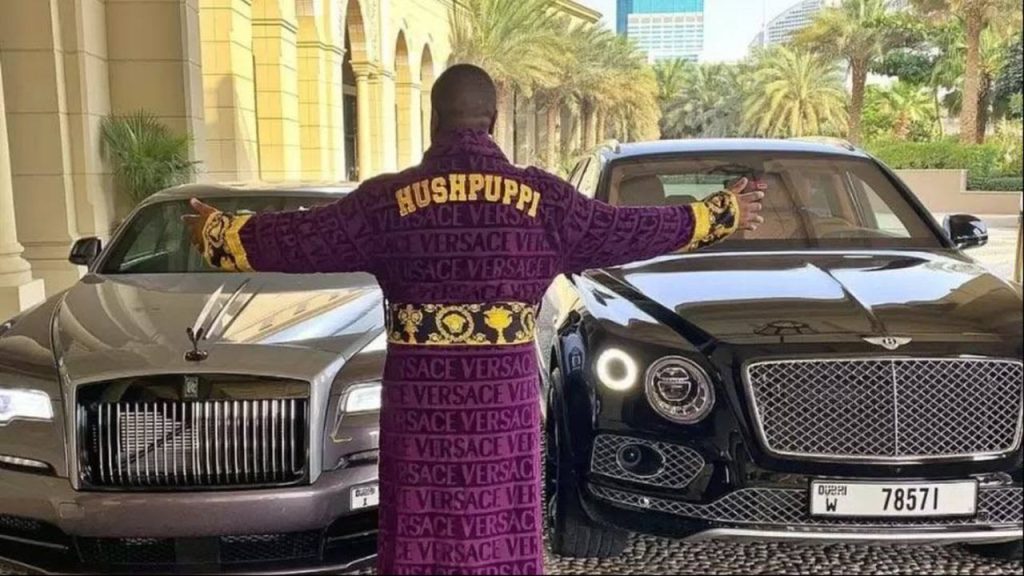
Ramon Olorunwa Abbas built an empire out of nothing but an Instagram following. Known online as Hushpuppi, he lived in a five-star suite at Dubai’s Versace hotel, posted himself boarding private jets and driving Rolls-Royces, and told his 2.5 million followers he made his money in real estate.
He hadn’t.
Federal investigators say Abbas ran business email compromise scams that hijacked corporate wire transfers, tricking companies into sending payments to accounts he controlled. By his own admission, he conspired to launder more than $300 million in an 18-month stretch alone, work the FBI’s Los Angeles field office called some of the most prolific money laundering in the world.
Dubai police raided his residence in June 2020 and seized 13 luxury cars worth nearly $7 million, all paid for with victims’ money. Abbas pleaded guilty and was sentenced to 11 years and three months in a California federal prison, the same platform that made him famous, supplying the evidence that convicted him.
Franklin Nwadialo’s fall was slower and stranger. For more than a decade, using the name “Giovanni,” he built online relationships with women on dating sites like Match and Christian Café, invented crises, a father’s funeral, a son’s tuition, a military fine he couldn’t pay, and asked for help. Victims sent him hundreds of thousands of dollars at a time.
While the scheme ran, Nwadialo built a real political career at home, winning election as chairman of Ogbaru Local Government Area in Anambra State. The FBI arrested him the moment he landed in Texas in November 2024, mid-term, still holding office. Prosecutors said his victims lost more than $3.3 million combined. He was sentenced to five years in federal prison.
These are not isolated cases. In December 2024, Nigeria’s own Economic and Financial Crimes Commission raided a seven-story building in Lagos’s Victoria Island and arrested 792 people running cryptocurrency investment and romance scams targeting Americans, Canadians and Europeans. Nearly a quarter of those arrested, 193 people, were foreign nationals, Chinese and Filipino operators who had set up shop on Nigerian soil and trained Nigerian recruits to run the schemes. Nigeria has since deported more than 100 of them.
The math still favors the builders. For every Nigerian running a scam, there are thousands more running clinics, film sets and engineering firms, and a few building things, like Africa’s largest oil refinery, that nobody thought would ever get built.
The larger truth behind a difficult reputation
Nigeria carries real challenges alongside its achievements. Boko Haram’s kidnapping of the Chibok schoolgirls in 2014 remains a national wound. Religious tension between the mostly Muslim north and mostly Christian south has cost lives and continues to strain the federation. Corruption scandals and coup anxieties have all done real damage to how the country is seen abroad.
Nigerian confidence has also crossed into real overreach. In March 2026, a Nigerian man was installed in South Africa’s Eastern Cape with the title “Igwe Ndigbo Na East London,” Igbo king of East London, not just leader of the local Igbo community, but a claimed title over the South African city itself. South Africa’s traditional leadership called it an illegal violation of local law. The country’s Cabinet condemned it.
Protests turned violent, roughly 26 Nigerians were hospitalized, and Nigerian-owned property was destroyed. Nigeria’s own High Commission apologized to South African authorities rather than defend it, and Nigeria’s Guardian newspaper wrote afterward that the incident “was largely preventable had the Nigerian actors involved exhibited greater discretion.” Boldness without any sense of a host country’s boundaries isn’t confidence, it’s a real failure, and Nigeria’s own institutions treated it as one.
Alongside those headlines stands a quieter, larger truth. Nigerians go where other Africans hesitate to go, into unfamiliar industries, unfamiliar countries and unfamiliar risk. That willingness is the more accurate national signature, distinct from the miscalculation in East London.
Consider what Nigerians are often called instead, rude. Ask why. Nigerians rarely play the subservient role that other cultures expect from African visitors abroad. They negotiate. They correct mispronunciations of their names. They ask for raises. A Nigerian medical professional based in the United States put it plainly.
“In Nigeria, failure is unacceptable, you must go out there and do anything and come back home successful,” Zen said. “If you’re not successful, just stay where you are and don’t come back.”
A pattern the rest of the continent should study
That standard is a survival mechanism, forged by a state that rarely shows up, that produced a global diaspora of doctors, engineers, founders and artists who refuse to shrink themselves for anyone’s comfort.
Nigeria’s lesson for the rest of Africa is about refusing permission. Nigerians decided early that they belonged in every room, boardroom, film set, laboratory or Nobel ceremony, without apologizing for showing up and without waiting on a government that was not coming to help. The rest of Africa should stop flinching at that confidence and start borrowing it.
Contribution: Editorial review by Dr. Bizuum Godwill Yadok, a creative writer, literary critic, and academic with a research focus on Nigerian literature and performance poetry. He is Chairman of the Plateau Writers’ Society, Vice-Chairman of the Coalition of Plateau Literary Societies and of the Association of Nigerian Authors’ Plateau State Chapter, a Pioneer Fellow of the ANA/Ken Saro-Wiwa Residency Program, winner of the Sevhage/E.E. Sule Prize for African Literary Criticism, and Editor-in-Chief of Impact International Journals and Publications.




LEAVE A COMMENT
You must be logged in to post a comment.