

|
LISTEN TO THIS THE AFRICANA VOICE ARTICLE NOW
Getting your Trinity Audio player ready...
|
South Africa’s President Cyril Ramaphosa addressed the nation on Sunday on what his government called the challenge of illegal immigration. He announced courts, inspectors, and border measures. He used the word Afrophobia for the first time. He did not name the movements that have burned homes with families inside, blocked pregnant women from clinics, and given African migrants a deadline of June 30 to leave the country. The movements said the speech changed nothing. The deadline stands.
Meanwhile, at least five Mozambican nationals are confirmed dead, according to the Mozambique government. The total number of migrants killed across all nationalities and incidents remains unconfirmed. Vigilantes burned at least 55 homes in a single settlement, some while families were still inside. Six African governments have begun evacuating their citizens from a country that sheltered anti-apartheid exiles for decades. That is the crisis Ramaphosa addressed without addressing.
The deadline was set by two South African anti-immigration movements, Operation Dudula and March and March, demanding that undocumented African migrants leave or face a national shutdown. The movements claim to target undocumented migrants specifically. That claim does not survive contact with the evidence. No June 30 ultimatum has reached British, Portuguese, or Chinese nationals, documented or otherwise. The targets are Black Africans.
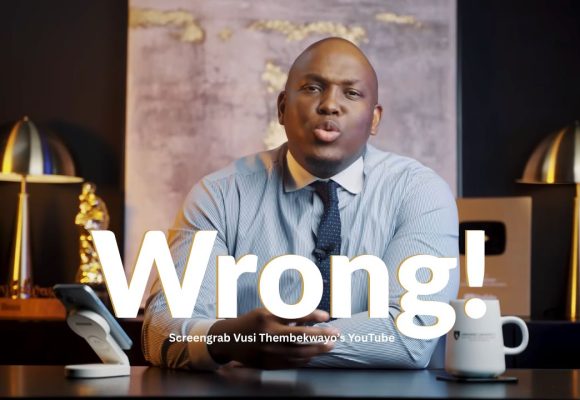
Even migrants with valid documentation have sold their possessions to comply with the deadline, PanaGenius host Sandra Babu-Boateng documented in extensive video coverage of the crisis. Legal status offers no reliable protection. Scholars and analysts have long distinguished between xenophobia, a generalized hostility toward all foreigners, and Afrophobia, the targeted hatred of Black Africans from north of the Limpopo River specifically.
As Unisa theology professor Rothney Tshaka has argued, white immigrants are seen as contributing, while Black Africans are treated as a threat. That distinction defines what is happening now. South Africa’s president used the word Afrophobia for the first time on June 7, 2026. He has yet to name the movements responsible for the violence it describes.
The Deadline and What Stands Behind It
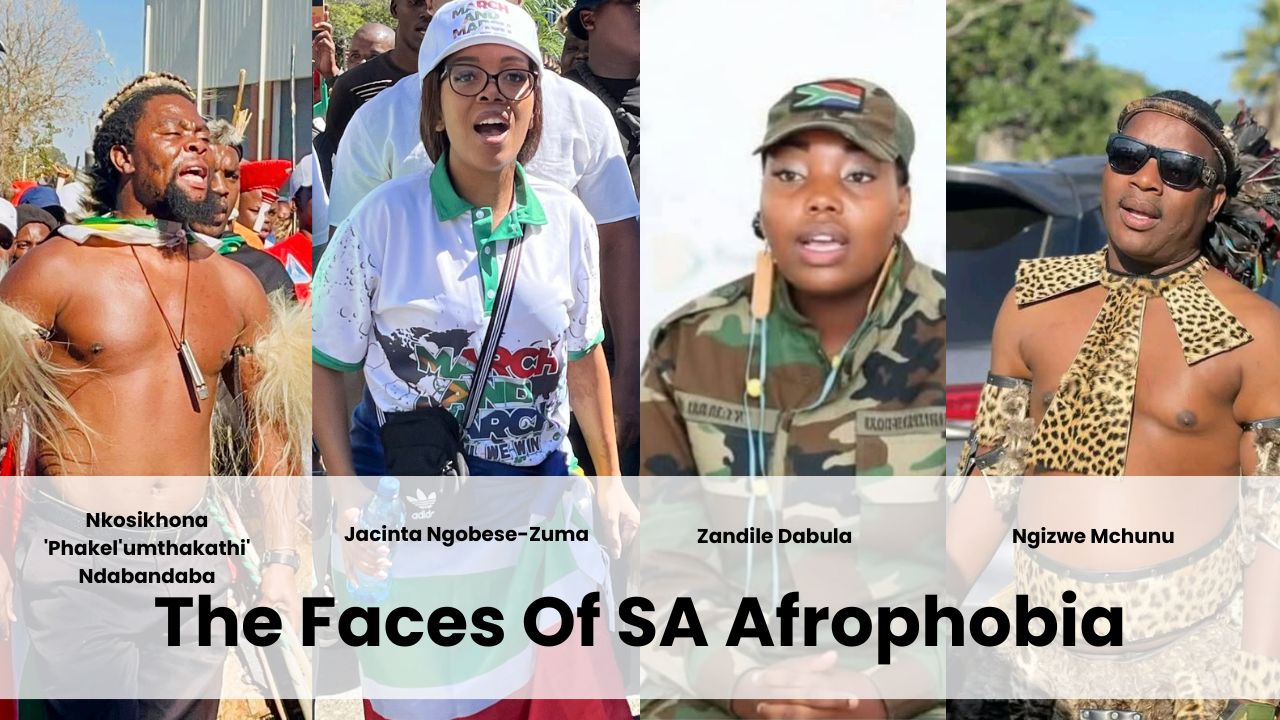
March and March founder Jacinta Ngobese-Zuma announced the June 30 protest at a media briefing in Umhlanga, KwaZulu-Natal. She demanded that the government present an immigration action plan and that undocumented foreign nationals leave the country. The movement’s Gauteng convener, Sandile Dube, made the stakes explicit. “South Africans are saying they have had enough with illegal foreign nationals and they want them removed from this country,” Dube said.
South Africa’s Minister in the Presidency, Khumbudzo Ntshavheni, declared on June 4 that there would be “no shutdown” on June 30. The movements confirmed they will proceed regardless.
The violence that preceded the deadline is documented and prosecutable. In the KwaNonqaba settlement in Mossel Bay, a port town approximately 380 kilometers east of Cape Town, arsonists burned around 55 shacks. Dolinda Mabunda, a Mozambican resident, told reporters: “We were still inside when people started burning down our house.” Police found two Mozambican men, aged 27 and 43, dead at the Asla Park informal settlement outside Mossel Bay on June 1. South African police confirmed both deaths but disputed the broader toll. The Mozambique government counted five citizens dead from direct xenophobic attacks that weekend, with two additional road deaths during the flight home.
Western Cape police spokesperson Brigadier Novela Potelwa challenged that figure, saying: “It is not true that five people were killed.” That disputed count, two confirmed by South African authorities against five claimed by the Mozambique government, is a documented disagreement between two sovereign governments on the public record.
Human Rights Watch documented another pattern in a report published May 20, 2026. Both Operation Dudula and March and March posted members at hospital entrances to turn away patients they believed to be foreign nationals. Pregnant women were among those denied care. The targeting did not distinguish between documented and undocumented patients.
Anyone perceived as a foreign African national faced exclusion, regardless of legal status, Human Rights Watch found. A Johannesburg High Court order, issued in November 2025, explicitly prohibits this conduct. Judge Leicester Adams ruled that only an immigration officer or a police officer has the legal authority to demand identity documents from a private person. No movement leader has faced arrest for violating that order.
The Faces Behind the 30-Day Ultimatum
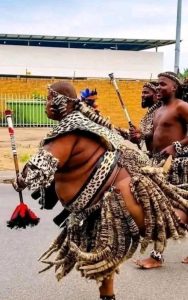
Three of the five people driving this crisis built careers in broadcasting before they built movements. Ngobese-Zuma hosted at Vuma FM in Durban before founding March and March in March 2025. Ngizwe Mchunu hosted at Ukhozi FM, one of the largest radio stations in Africa by listenership, before founding Amabhinca Nation. Nkosikhona “Phakelumthakathi” Ndabandaba is a television actor, known for Shaka iLembe, who leads amabutho-styled marches in traditional Zulu warrior regalia in coordination with March and March, Scrolla Africa reported. These are not accidental careers. Broadcast-trained communicators know how to frame a narrative, move a crowd, and make contested conduct sound like common sense. The movements they lead did not grow through traditional political organizing. They grew through social media amplification of broadcast-quality rhetoric and marches designed to be filmed and shared.
Their legal records are as notable as their media profiles. South African court records show that Nhlanhla “Lux” Dlamini, the founder of Operation Dudula, received a five-year suspended sentence for housebreaking and malicious damage to property in 2022. The November 2025 Johannesburg High Court order named Operation Dudula’s former president, Zandile Dabula, as a respondent and prohibited her from requiring members of the public to produce identity documents.
Court filings reported by Daily Maverick show the South African Human Rights Commission filed legal action against Ngobese-Zuma in October 2025, citing denial of healthcare access to foreign nationals. The Pretoria High Court ordered Mchunu to stop making defamatory statements about EFF leader Julius Malema, TimesLIVE reported, after Mchunu alleged without evidence that Malema had received money from Nigerian drug cartels.
Mchunu issued a formal apology on June 4, 2026. Each leader states publicly that their movements target illegal immigration only. The documented conduct at clinics, workplaces, and residential settlements, as reported by Human Rights Watch, Daily Maverick, and Al Jazeera, has not reflected that distinction.
A Continent Responds, Unevenly
Ghana moved first and hardest. Foreign Affairs Minister Samuel Okudzeto Ablakwa summoned South Africa’s acting high commissioner, reminded Pretoria of Ghana’s support during the anti-apartheid struggle, and on May 6 formally petitioned the African Union to place the crisis on the agenda of the AU’s 8th Mid-Year Coordination Meeting, scheduled June 24-27 in El Alamein, Egypt. Ghana chartered a government flight and airlifted 297 nationals from O.R. Tambo International Airport in Johannesburg on May 27. Over 800 Ghanaians had registered for evacuation.
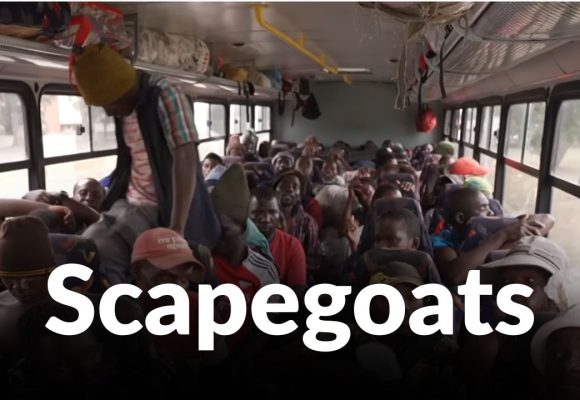
Nigeria summoned South Africa’s high commissioner in Abuja on May 4 and announced plans to repatriate between 2,000 and 4,000 nationals, according to the Nigerian Foreign Ministry. Screening began June 5, with 1,094 registered by that date, Premium Times Nigeria reported. Mozambique sent six buses and 12 minibusses, returning 545 citizens through the Ressano Garcia border crossing by June 4, the Mozambique government said. The government provided 10 days of food per returnee. It also documented 39 citizens unable to depart due to verification problems, including a child, who was detained by South African authorities.
Malawi’s Ministry of Foreign Affairs announced a voluntary repatriation program on June 3, with more than 200 citizens registered with its mission in South Africa. Zimbabwe activated its embassy in Pretoria and arranged government buses from May 18. Its Justice Minister, Ziyambi Ziyambi, told Al Jazeera that Harare would not interfere in Pretoria’s internal affairs. Zimbabwe’s economic dependence on South Africa shaped that restraint.
Lesotho’s position offers the starkest illustration of structural vulnerability. Its Home Affairs Minister, Lebona Lephema, was negotiating a bilateral immigration cooperation agreement with South Africa’s Home Affairs Minister, Leon Schreiber, in April 2026. Anti-Basotho violence was already underway in KwaZulu-Natal at that same moment. Entirely surrounded by South Africa and economically integrated with it, Lesotho filed no formal diplomatic protest.
The Silence That Speaks Loudest
The silence from the Democratic Republic of Congo, Burundi, and Somalia carries its own meaning. Those three countries supply the largest share of UNHCR-registered refugees in South Africa, according to UNHCR’s 2025 figures. None issued a formal government statement condemning the attacks or announcing repatriation. The DRC was managing its own M23 security crisis in the east. Human Rights Watch has documented Burundi’s longstanding practice of treating its exile community as a security threat rather than a population to protect. Somalia’s state fragility leaves it with near-zero consular capacity in Pretoria.
The pattern exposes a structural contradiction at the heart of pan-African solidarity. The migrants facing the greatest danger are overwhelmingly refugees. They fled conflict, state collapse, or persecution at home. Ghana and Nigeria could summon ambassadors and charter flights because they have functioning diplomatic infrastructure.
Burundian and Congolese refugees in South Africa have neither a functioning consulate nor a government with the political will to demand their protection. In practice, Pan-African solidarity reaches the Africans who need it least. The scale of the evacuations, documented by government press statements and wire reports as of June 5-6, 2026, speaks for itself.
Ghana airlifted 297 nationals on May 27, with more than 800 registered for departure. Mozambique returned 545 citizens by bus through the Ressano Garcia border crossing by June 4. Nigeria had 1,094 nationals in the screening pipeline as of June 5, with flights pending.
Malawi announced a road-transport repatriation program on June 3, with more than 200 registered. Zimbabwe arranged government buses from May 18, though the total number of departures remains undisclosed. Ethiopia was next in the pipeline, according to the Nigerian Foreign Ministry. In total, at least 842 people had left South Africa under government evacuation programs by the time of this report, with thousands more in processing.
Asante ya Punda ni Mateke
There is a Kenyan proverb that captures what is happening with precision no diplomatic language can match. Asante ya punda ni mateke. A donkey’s gratitude comes in the form of a kick. The countries now chartering flights and dispatching buses are not strangers who stumbled into a dispute. They are the countries that made South Africa’s freedom possible.
Zambia hosted the African National Congress in Lusaka for three decades. Oliver Tambo ran the ANC’s external mission from there, coordinating liberation strategy while South Africa’s apartheid government hunted his colleagues.
Tanzania sheltered ANC cadres and trained Umkhonto we Sizwe fighters. Mozambique paid the heaviest price. South Africa’s apartheid military launched direct raids into Mozambican territory, targeting ANC safe houses.
Pretoria also backed the RENAMO destabilization that killed an estimated one million Mozambicans and displaced five million more. Mozambique absorbed that cost because it refused to abandon the people fighting for South Africa’s freedom.
Nigeria funded the anti-apartheid movement with oil revenues and led the international charge for sanctions against Pretoria. Ghana, under Kwame Nkrumah, built the ideological and institutional architecture of African liberation solidarity. Zimbabwe’s liberation infrastructure was intertwined with the ANC’s own.
These were not acts of charity. They were acts of continental solidarity, built on the conviction that African freedom was indivisible.
The people now receiving ultimatums for June 30 departures are the children and grandchildren of those countries. Some fled conflicts South Africa had no hand in preventing. None of them gave apartheid a single day of its 46-year lifespan.
The Real Problem Is Not the Migrant
The economic frustration driving anti-migrant sentiment in South Africa is real and deserves acknowledgment. South Africa’s official unemployment rate stands above 32 percent, among the highest in the world for a middle-income country, according to Statistics South Africa. Youth unemployment exceeds 60 percent. The post-apartheid economic settlement expanded political rights while largely preserving ownership structures. That contradiction has grown over 30 years into a crisis no government has resolved.
Thabo Mbeki and Julius Malema, the Leaders Ramaphosa Will Not Follow
South Africa’s former President Thabo Mbeki named the real problem at the 16th Thabo Mbeki Africa Day Lecture in Cape Town in May 2026. The Thabo Mbeki Foundation and Unisa hosted the lecture under the theme “Rebuilding African Unity in an Age of Fragmentation.” Mbeki returned again and again to one question: where will the capital come from to eradicate poverty in Africa?
He argued that Africa cannot industrialize or educate its population without massive investment, and that continental solidarity is a precondition for attracting such investment. In his framing, the enemy of South African jobs is not the Mozambican trader in Soweto. It is the developmental incoherence that keeps South Africa uncompetitive.
Keynote speaker and former Nigerian Ekiti State Governor Kayode Fayemi directly addressed Afrophobia in the same lecture. He reminded the audience that solidarity from across the continent sustained South Africa’s liberation. Violence against fellow Africans, he said, destroys the moral foundation of pan-Africanism. Pan-Africanism must be both moral and material, rooted in human solidarity and economic transformation simultaneously.
“When you tell an African migrant living in Johannesburg to go home, he does not understand,” Mbeki said in separate public remarks on the xenophobia crisis. “Because, in his mind, the struggle against apartheid was an African struggle.” He warned that scapegoating foreign nationals erodes the pan-African solidarity that once united the continent against white minority rule. Mbeki spoke those words in May 2026, weeks before the Mossel Bay killings and the Ghana airlift. They have not been echoed in Parliament or at any press conference by the man who currently holds the presidency.
Julius Malema has said publicly what President Ramaphosa will not say privately. At the EFF’s Workers’ Day rally on May 1 at Tlhapi Stadium in Wonderkop, he addressed the anti-migrant violence directly and named its racial logic. “They are scared of white people,” he said. “When they speak to a white person, they are very respectful. But when they speak to a Black person, they are violent.”
Malema rejected the demand that movement leaders remove foreign children from schools and pregnant women from clinics. “I will never do it,” he said. “I am not going to take a pregnant woman out of a clinic because she is not South African.” He challenged the movement’s core premise: expelling African migrants has not created a single South African job.
Neither Mbeki nor Malema holds the presidency. One is a former head of state with no electoral stake in the outcome. The other leads a party that stands to lose votes in KwaZulu-Natal by defending African migrants. Both have been more explicit about the nature of the crisis than the man currently in office. That the most direct defense of pan-African solidarity inside South Africa has come from outside the presidency is itself a finding. The solidarity that Ghana, Nigeria, Zimbabwe, and Mozambique extended to South Africa was not transactional. It carried no conditions on legal status. It asked only that South Africa, once free, remember what it owed.
South Africa Moves to Kill the AU Debate
Ghana’s formal petition to the AU Commission described the attacks as a violation of the African Charter and a threat to continental integration. Ghana copied the letter to the Executive Council Chairperson and to Burundi’s Foreign Affairs Minister, who was serving as Council Chair. It requested four specific actions: inscription on the El Alamein agenda, stronger AU monitoring mechanisms, a fact-finding mission, and facilitated dialogue.
South Africa responded on May 8 through its Ministry of International Relations and Cooperation. Foreign Minister Ronald Lamola called Ghana’s move to the AU “regrettable,” according to a DIRCO statement. South Africa’s official position denied “credible evidence” of killings, a claim made even as Premium Times Nigeria had already confirmed two Nigerian deaths. South Africa argued the crisis belonged in bilateral channels, not before a continental body.
The Gambia’s Foreign Ministry publicly backed the AU debate. Nigeria had separately summoned South Africa’s high commissioner. No second formal co-signature to Ghana’s AU petition has surfaced as of June 7. The AU Commission has not publicly confirmed the El Alamein agenda item. The decisive test comes during Permanent Representatives’ Committee deliberations in Addis Ababa. An agenda item requiring Executive Council approval, not a petitioning state’s request alone. That process gives South Africa’s diplomats room to work before the June 24 opening gavel.
The African Commission on Human and Peoples’ Rights, a separate AU organ, issued its own statement on April 26. It explicitly deplored the attacks, naming them a grave violation of the African Charter and contrary to the principle of African solidarity. The Commission named Commissioner Solomon Ayele Dersso as country rapporteur for South Africa. That institutional record now exists. What it produces in El Alamein remains to be seen.
Ramaphosa’s Record in His Own Words
South Africa’s president has spoken about accountability for mass atrocity before, at length, on the world stage, and in his own name.
On January 26, 2024, following the International Court of Justice’s provisional measures ruling in South Africa’s genocide case against Israel, Ramaphosa broadcast a nationally televised address. “We have called Israel’s attacks on Gaza genocidal acts, acts for which Israel should and must be held accountable,” he said. “We, as South Africans, will not be passive bystanders and watch the crimes that were visited upon us being perpetrated elsewhere.”
He continued: “Some have told us to mind our own business. Others have said it was not our place. And yet it is very much our place, as people who know too well the pain of dispossession, discrimination, state-sponsored violence.” He closed with a declaration: “Never, never and never again shall it be that acts of genocide are perpetrated with impunity as we, the international community, look on.”
In October 2024, Ramaphosa’s government filed South Africa’s full memorial to the ICJ. The filing stated that “the international community cannot stand idly by while innocent civilians are killed for simply being.” In Barcelona in April 2026, weeks before the Mossel Bay killings, Ramaphosa said South Africa had proven it was right to take Israel to The Hague.
Against that record, the documented facts of the current crisis read as a parallel text. A review of official Presidency and DIRCO records shows that Ramaphosa has not, by name, condemned Operation Dudula or March and March in any public statement during the 2026 crisis. He has not ordered the arrest of movement leaders despite documented violations of a court order. His government has not confirmed compliance with Judge Adams’s November 2025 directive to implement the National Action Plan to Combat Racism, Racial Discrimination, Xenophobia, and Related Intolerance. His Foreign Ministry called Ghana’s attempt to raise the matter at the AU “regrettable.”
In Parliament on June 3, the same day Mozambique was counting its dead, Ramaphosa said: “We must never give in to violence, to xenophobia, and to vigilantism.” He did not name the movements responsible for the violence or the June 30 deadline that sent at least six African governments into emergency evacuation mode.
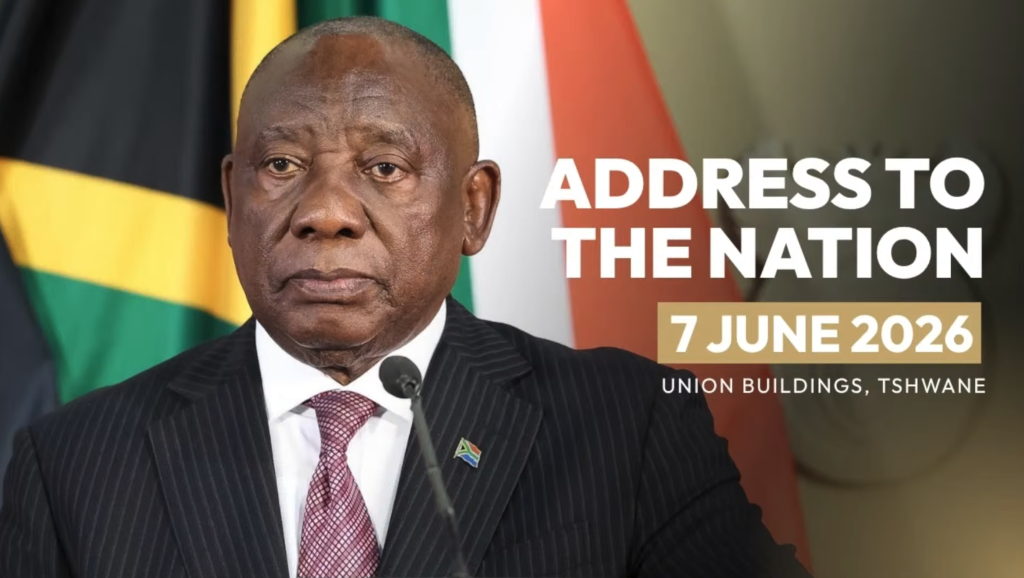
On June 7, 2026, Ramaphosa addressed the nation from the Union Buildings in Pretoria. He announced a Comprehensive Approach to Migration Management, adopted by the Cabinet the previous week, promising dedicated immigration courts, 10,000 new labor inspectors, stronger border enforcement, and increased penalties for employers who hire undocumented workers. He acknowledged corruption within Home Affairs and at the borders as a contributing factor.
For the first time, he used the word Afrophobia in a public address, according to the official Presidency transcript, stating: “There is no place for xenophobia, racism, sexism, Afrophobia or any other forms of intolerance in South Africa.” He did not name Operation Dudula or March and March. He did not mention the June 30 deadline by name. He did not take questions from journalists after the address, IOL reported.
The movements rejected the speech immediately. ActionSA leader Herman Mashaba, whose party attended March and March protests and declared unconditional support for the movement, said Ramaphosa had “merely repackaged the same failed and tired talking points” and called for mass deportations instead, according to IOL. The June 30 deadline remains in place. The movements have confirmed they will proceed.
What Is Ramaphosa Afraid Of?
The political context of South Africa’s Government of National Unity explains the pattern, if it does not excuse it. The ANC lost its parliamentary majority in 2024 and now governs through a coalition that includes the Patriotic Alliance, which campaigns explicitly for the deportation of undocumented foreigners. The IFP, also a GNU partner, sent representatives to March and March’s Durban protest in March 2026, according to News24. ActionSA leader Herman Mashaba attended the same protest and declared “unconditional support” for the movement.
ActionSA’s Zandile Dabula had led Operation Dudula as its organizational president before resigning in May 2026. Daily Maverick obtained a leaked letter citing internal divisions. Dabula then joined ActionSA’s Johannesburg campaign team. Naming March and March and Operation Dudula as Afrophobic movements violating a court order would put Ramaphosa in direct conflict with coalition partners mobilizing anti-migrant sentiment ahead of local government elections. That calculus appears in every public statement he has and has not made.
The question of Ramaphosa’s paralysis cannot be separated from what is happening on the ground beneath it. The movements do not operate in a legal vacuum. They march with police escorts. They violate a court order in full view of officers who do not intervene. They order foreign shopkeepers to close their businesses while metro police stand by. Our City News reporters documented a Cameroonian migrant being struck over the head during the April 29 Johannesburg march, with police present and no arrest made.
This is not anecdotal. The Gauteng High Court ruled that SAPS and the departments of Home Affairs, Justice, and Correctional Services failed to protect migrants from vigilantism, according to Daily Maverick’s reporting on the case. The International Commission of Jurists, intervening as a friend of the court in the Kopanang Africa Against Xenophobia case, sought explicit prohibitions against SAPS and the Department of Home Affairs from colluding with or enabling Operation Dudula. The word the ICJ used in its submission to the court was “colluding.”
Daily Maverick observed that Ngobese-Zuma and Dabula organize and lead marches city by city, encountering no obstacles. The movements march unmolested. The migrants run. That asymmetry is not a policing failure. It is a policing choice. And policing choices in South Africa are ultimately accountable to one office.
June 24 vs June 30
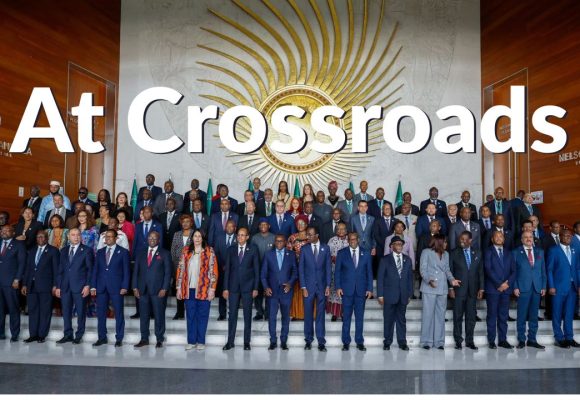
The AU meeting in El Alamein opens June 24. The June 30 deadline follows six days later. Between those two dates, South Africa will either face a formal continental reckoning or successfully contain the diplomatic pressure in bilateral corridors while the movements proceed with their planned shutdown.
Ramaphosa’s June 7 address did not change the movements’ calculus. It announced enforcement measures, acknowledged corruption, and used the word Afrophobia for the first time. It did not name the organizations burning houses and blocking clinic doors. It did not address the June 30 deadline directly. The African Commission on Human and Peoples’ Rights has found the attacks to be a violation of the African Charter. The UN Secretary-General has expressed concern. Human Rights Watch has documented the pattern across multiple reports. A Johannesburg High Court has issued a formal order. At least five Mozambicans are confirmed dead, according to the Mozambique government. The full death toll across all nationalities and incidents remains unconfirmed. At least 842 people have left South Africa under government evacuation programs, from a country the continent helped liberate 30 years ago.
South Africa has the right to enforce immigration law. Every state does. It does not have the right to enforce it through movements that burn houses with families inside and post members at clinic doors to turn away pregnant women. Those are not immigration enforcement actions. They are documented human rights violations, under a court order, by named organizations whose leaders remain free.
The man who told The Hague that the international community cannot stand idly by while innocent civilians are killed for simply being addressed his nation on June 7, and still would not say their names.
Methodology
This report draws on primary government sources, court documents, and verified institutional statements from the African Union, United Nations, African Commission on Human and Peoples’ Rights, and the International Commission of Jurists. Evacuation figures come from government press statements and wire reporting by Reuters, AP, and Premium Times Nigeria. Presidential quotes are sourced from official DIRCO and Presidency records, including the full text of President Ramaphosa’s June 7, 2026, address published by IOL and the official Presidency website. Extensive video coverage and analysis by Sandra Babu-Boateng of PanaGenius, whose YouTube channel has provided the most detailed running documentation of the crisis available in African media, informed the reporting throughout. Thabo Mbeki’s remarks are sourced from Pan African Visions and the Jambo Africa Online record of the 16th Thabo Mbeki Africa Day Lecture.


LEAVE A COMMENT
You must be logged in to post a comment.