

|
LISTEN TO THIS THE AFRICANA VOICE ARTICLE NOW
Getting your Trinity Audio player ready...
|
“Look at them. When they speak to White people, they are very respectful, they show manners. When they speak to a Black person, they are violent,” Julius Malema, South Africa’s EFF leader, on Afrophobia leaders.
Tens of thousands of African migrants had already left South Africa before the first march began. The June 30 deadline that drove them out arrived with demonstrations across all nine provinces, scattered violence, looting arrests, and a movement whose leader declared before the day was done that every Thursday for the next three months, the marches will continue.
The June 30 crisis did not begin as an immigration dispute. Immigration in South Africa has become a wedge issue, a deliberate political instrument used by multiple parties to split the governing coalition, redirect economic anger, and mobilize township voters ahead of November’s municipal elections. The men and women who set the deadline understood that. The politicians who could not name them publicly understood it too.
Fifteen Thousand Processed for Deportation Before the First March Started
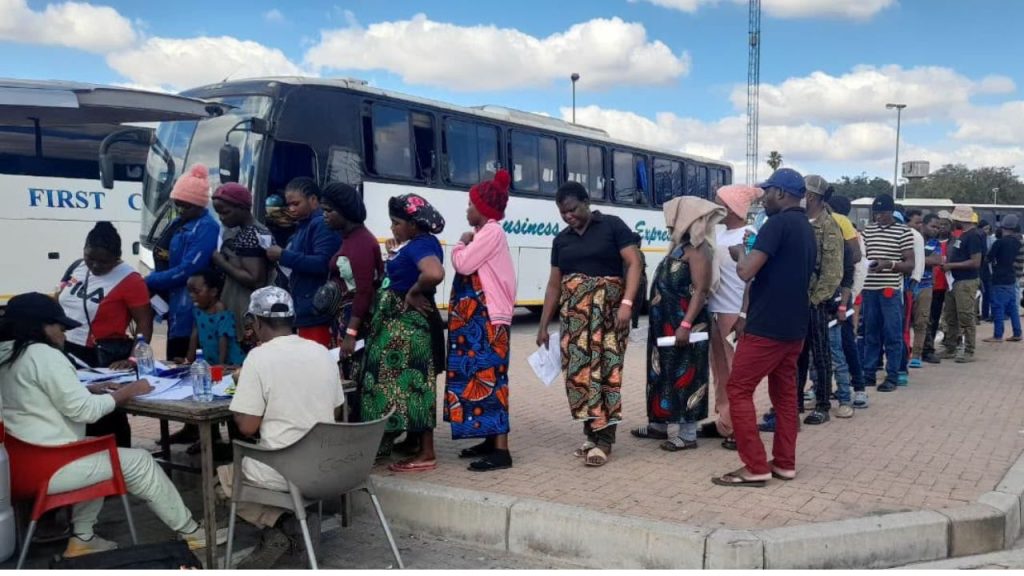
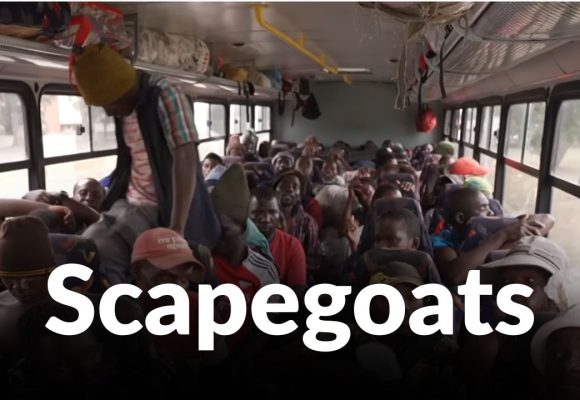
South Africa’s Border Management Authority Commissioner Michael Masiapato told the SABC that more than 13,200 foreign nationals were processed for deportation at Beitbridge and OR Tambo International Airport in a single five-day window ending June 24. That included roughly 9,000 Malawians and 3,000 Zimbabweans through Beitbridge alone, plus 900 Ghanaians and 300 Nigerians repatriated by air.
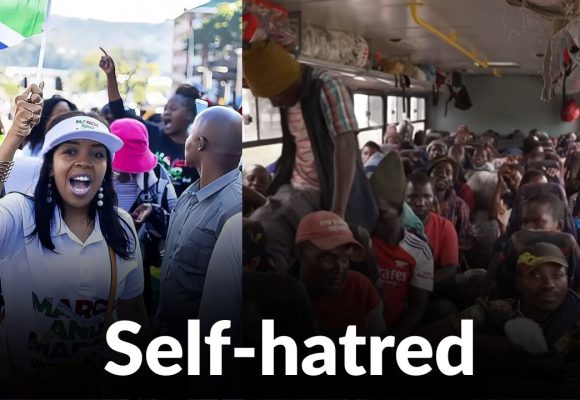
By June 27, eThekwini Municipality confirmed that more than 15,000 Malawians had been processed for deportation, with the Durban Drive-In and Sherwood repatriation centers so overwhelmed that the government relocated remaining Malawians to a new center near Musina in Limpopo, closer to the border. Nationally, deportations rose 46 percent across two financial years, climbing from just under 58,000 in 2024-25 to 109,344 by March 2026, according to France 24.
A Malawian gardener named Kaunga Nyirenda told CNN that two men gave him an ultimatum in early June. Leave, or return in a coffin. South Africa would not need anyone after the 30th of June, they told him. After 16 years in Johannesburg, he went home.
A Death Toll Nobody Has Officially Reconciled
Mozambique’s government confirmed that nine of its nationals had died following a Council of Ministers meeting in Maputo in early June. Government spokesperson Ussene Isse said attackers killed five Mozambicans directly in Mossel Bay in the Western Cape, two were run over while fleeing, and two died in road accidents during the journey home. Nearly 900 Mozambicans were affected by the unrest in Mossel Bay alone.
A crowd separately chased and killed a Malawian father in Pietermaritzburg’s Jika Joe settlement on June 19 following an anti-immigration protest. KwaZulu-Natal police confirmed the case as a murder investigation. France 24 reported three additional deaths, a Malawian man and two Mozambicans, tied to protests in KwaZulu-Natal and the Western Cape. Reuters reported on June 30 that at least four people had been killed in connection with Afrophobic violence in the period surrounding the marches. Nigeria’s foreign ministry confirmed two Nigerian nationals died in separate incidents involving South African security personnel. Across confirmed government statements from Mozambique, Nigeria, and South African police, at least 17 people of African nationality died in violence connected to the 2026 Afrophobic unrest. South Africa’s government has published no consolidated national death toll reconciling all nationalities and incidents. That absence is not administrative. It is a choice.
Marches Sweep Nine Provinces, Violence Follows
Crowds chanting makwerekwere, a Zulu-origin slur that reduces the languages of an entire continent to noise, moved through Johannesburg and Durban streets Tuesday, a reminder that the language of dehumanization always arrives before the violence does.
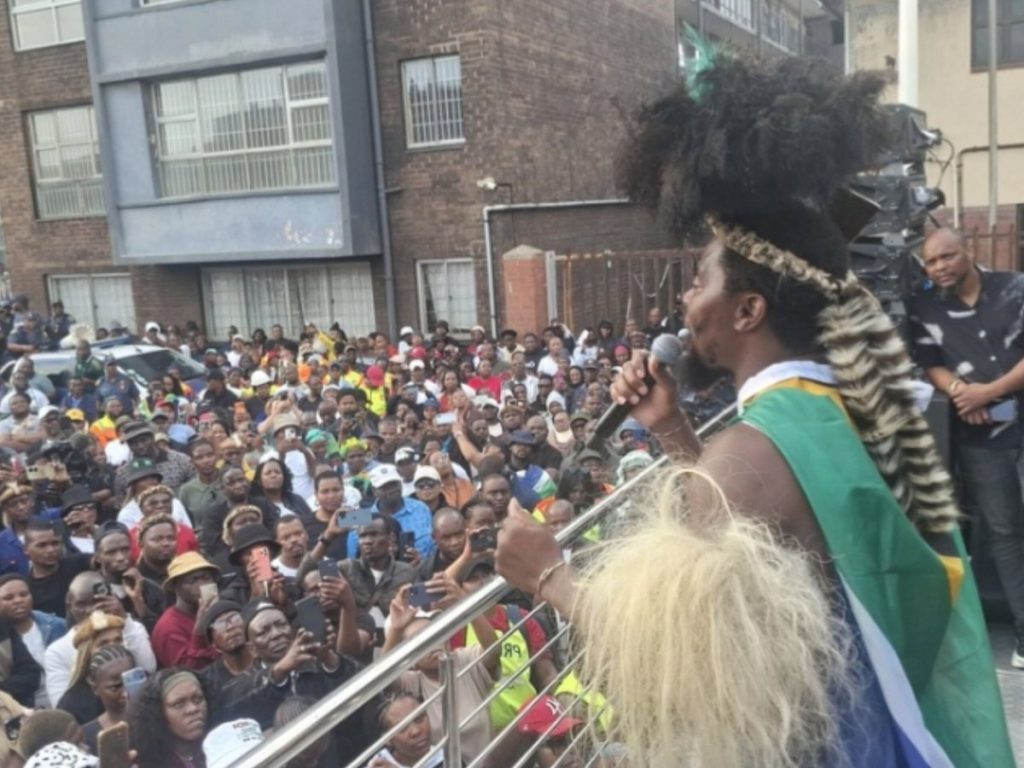
Demonstrations unfolded Tuesday across Johannesburg, Durban, Soweto, Cape Town, and cities in all nine provinces. In Johannesburg’s CBD, marchers gathered at Bayers Naude Square before moving toward Hillbrow. In Durban, a column of more than 15,000 people moved through the CBD, many carrying traditional weapons, cow shields, and knobkerries, according to the Mail and Guardian.
Daily Maverick reporters on the ground in KwaZulu-Natal, the Western Cape, the Eastern Cape, and Gauteng documented a picture that did not reach the scale of the 2008 pogrom that killed 62 people and displaced more than 100,000. Acting Police Minister Firoz Cachalia deployed a special operation costing roughly 600 million rand, approximately $36 million, with a stated policy of zero tolerance for violence. Police arrested suspects linked to looting in multiple areas. In Thembisa, north of Johannesburg, rioters threw stones at police, and sporadic gunfire was reported near the CBD.
Angry amabutho from several Durban hostels were openly frustrated with the restraint. “I thought we were here to fight,” one told the Mail and Guardian. “I don’t think that peaceful marches will yield any desired results.” That sentence, published the same day organizers were assuring Ramaphosa of their peaceful intentions, is the gap between what the movement’s leaders promise at press conferences and what their followers say on the streets.
When Media Becomes the Weapon
The three people who built June 30 are not politicians. They are media personalities who converted mass social media followings into a political organization with no formal registration, no disclosed funding, and no legal accountability for the violence that followed their mobilization.
Nkosikhona Ndabandaba, known as Phakel’umthakathi, announced the June 30 deadline to his 1.7 million Facebook followers and told CNN he was its architect. In one documented video, he approached a Congolese man standing by the roadside, did not ask whether he was in the country legally, and told him to leave immediately. “June 30 is the deadline, but you don’t have to wait until then. Leave now,” he said, before adding that after Tuesday, he could not control the people of South Africa. Ngizwe Mchunu, a former Ukhozi FM radio personality with more than seven million weekly listeners, built the Amabhinca Nation movement and framed the campaign as a Nguni civilizational project. Both are Zulu, from KwaZulu-Natal, and both use amabutho warrior imagery and isiZulu rhetoric as their primary organizational vocabulary.
Scholars of the Rwandan genocide have documented how Radio Télévision Libre des Mille Collines normalized the dehumanization of Tutsis through entertainment, music, and call-in formats before it began explicitly inciting killing. History does not repeat exactly. But it has a recognizable structure. Media personalities with millions of followers who use dehumanizing language against an identified civilian group, set deadlines for their removal, and organize crowds to enforce those deadlines do not need to explicitly call for violence to cause people to die. In South Africa, at least 17 people have died. Not one organizer has been charged.
The Fracture Nobody Saw Coming
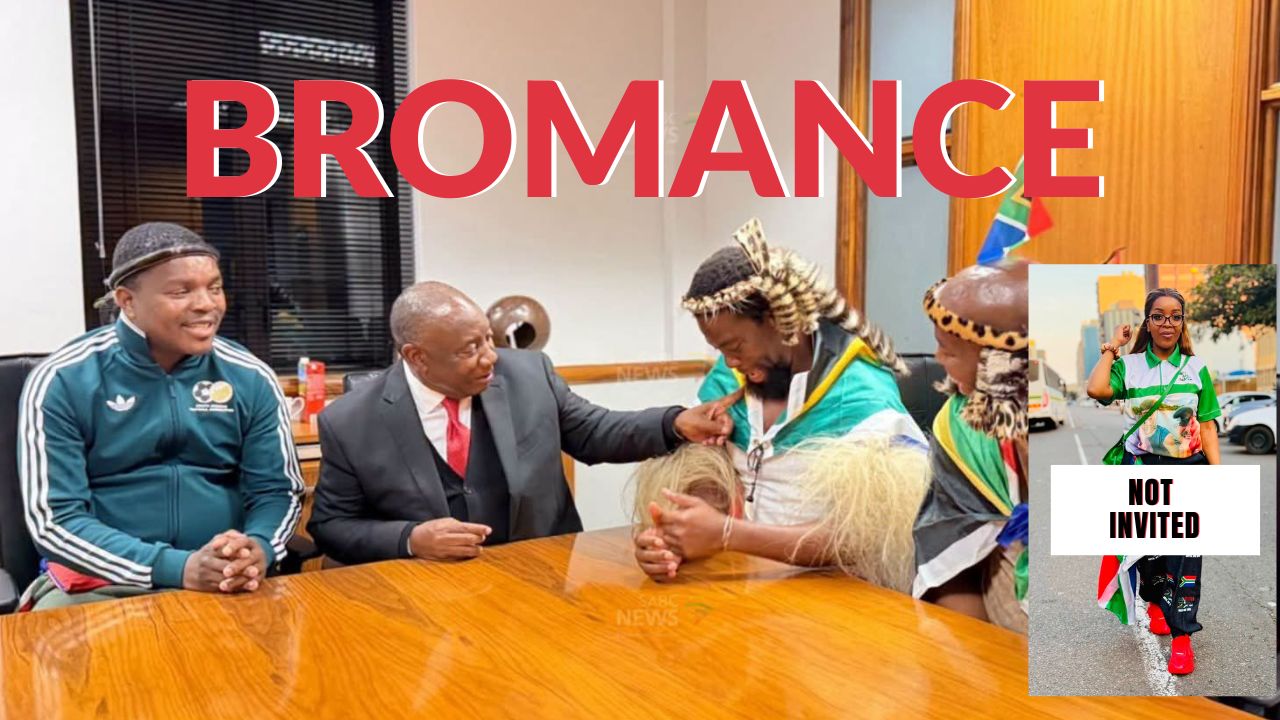
The most significant development of June 30 did not happen on the streets. On Monday night, hours before the marches began, President Ramaphosa held a private emergency meeting at the Union Buildings with Mchunu and Ndabandaba. Presidential spokesperson Vincent Magwenya confirmed the meeting to Business Day, saying Ramaphosa told both men that the right to protest is coupled with the responsibility to observe the law.
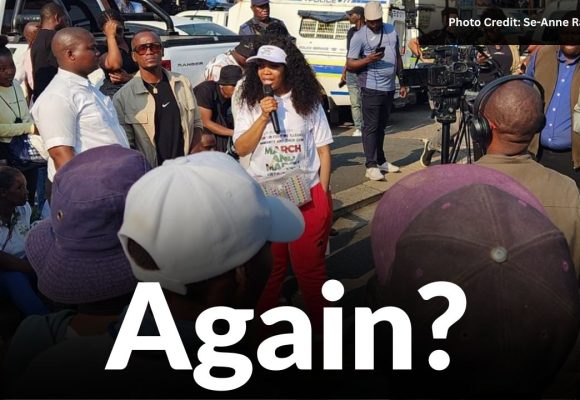
A critical distinction is buried in the Presidency’s own confirmation. Ramaphosa met with Mchunu and Ndabandaba as leaders of Insizwa Nobunsizwa, their separate organization, not as representatives of March and March. Jacinta Ngobese-Zuma, the founder and public face of March and March, was not invited, not informed, and not consulted. She told journalists in Durban on Tuesday that she had sent several requests to meet with Ramaphosa and received no response. “We’ve sent several requests to meet with him, but he has not responded to any of them,” she said, according to IOL. She learned about the Ramaphosa meeting from social media posts circulating after the fact.
The fracture was visible on the ground. Ngobese-Zuma arrived late to the Durban march, walking slowly and visibly in discomfort at the head of a separate column rather than alongside Mchunu and Ndabandaba. Ndabandaba, at his Wednesday press conference, pushed back against the rift narrative, insisting that attempts to drive a wedge between himself and Ngobese-Zuma would not succeed. The denial does not undo what happened. Ramaphosa chose which movement leaders to legitimate with a presidential audience. The woman who founded March and March was not among them.
According to Ndabandaba, Ramaphosa’s concerns centered on intelligence reports and fears raised by several African countries. “He wanted assurance that wherever I would be leading a march, there would be no violence, no attacks on foreign nationals and no looting,” Ndabandaba told reporters. He said he assured the president and offered to be arrested if violence occurred under his leadership.
“Look at them. When they speak to White people, they are very respectful, they show manners. When they speak to a Black person, they are violent,” Julius Malema, South Africa’s EFF leader, on Afrophobia leaders.
The Irony at the Heart of Ndabandaba’s Vision
Ndabandaba’s Wednesday press conference revealed something beyond the rift. It revealed the shape of his political thinking and the contradictions inside it.
He announced the movement would now target what he called “problem buildings” in eThekwini, pushing for raids and the arrest of undocumented residents. He argued that buildings found to be housing undocumented immigrants should be repurposed to house KwaZulu-Natal flood victims still without permanent accommodation years after devastating floods. He also said he would create one million jobs for young men before the end of the year, a claim with no disclosed mechanism or funding source.
More revealing were his earlier public positions. Ndabandaba has claimed South Africa possesses sufficient national wealth to provide every citizen with an annual income of R1 million, according to verified reporting by NewsNote SA. He has called for existing Black political parties to disband and be replaced by a new movement, arguing that those parties are constrained by foreign financial interests. His logic is that mineral wealth should flow directly to South African citizens, who could then live on state-distributed income while the economy runs itself.
The arithmetic alone is impossible. Paying R1 million annually to each of South Africa’s roughly 61 million people would require approximately R61 trillion per year. South Africa’s entire GDP in 2025 was roughly R7.5 trillion. Beyond the arithmetic, the deeper contradiction is structural. A policy designed to pay South Africans to stay home explicitly requires someone to do the work that generates the wealth being distributed. Ndabandaba is marching to expel the workers his own economic vision needs. He wants their buildings after they are gone. The immigrants he is removing are load-bearing walls in the structure he wants to keep.
‘Every Thursday for the Next Three Months’
Whatever fracture the Ramaphosa meeting opened within the movement, Ngobese-Zuma’s public posture showed no sign of retreat. Speaking to a crowd at Durban’s Point Road, she announced that every Thursday for the next three months, the movement would march until the government responded to its demands. “For as long as they haven’t left, we are marching every Thursday,” she told reporters, according to IOL.
When asked what comes after June 30, she refused to say. “You will know when we get there.”
The June 30 deadline did not end the campaign. It became its first chapter.
Ramaphosa Names the Pass Laws. He Will Not Name the Movements.
In his weekly newsletter the night before the marches, Ramaphosa drew a direct line between street-level identity checks and apartheid’s pass laws. He described vigilantism as thinly disguised in the language of patriotism and said only state officers hold the authority to enforce immigration law. The Presidency declared June 30 a normal working day. Justice Minister Mmamoloko Kubayi said no official ultimatum exists. The government debunked AI-generated fake notices, some bearing official insignia, falsely claiming the state had endorsed the deadline.
Ramaphosa cited his Freedom Day address and its language of ubuntu and African solidarity in his response to the African Union. “We did not walk alone into freedom,” he told the El Alamein summit. “We were carried by a tide of solidarity from the nations of Africa.” That language did not appear in his June 29 newsletter. It appeared in his submission to the continental body, trying to hold him to account.
What both statements withheld was any direct naming of Operation Dudula or March and March. The Johannesburg High Court confirmed in November 2025 that only an immigration officer or a police officer holds the authority to demand identity documents from a private person. The court further found that the government’s failure to implement its National Action Plan constituted an unconstitutional violation of its duties. Seven months later, authorities have not charged a single movement leader.
Daily Maverick described Ramaphosa’s decision to meet Mchunu and Ndabandaba as a moment when microwaved leaders gained access to the nation’s seat of power and were given legitimacy by the highest office in the land. That image, Ramaphosa grinning as he shook hands with men whose followers had spent weeks stopping Africans on street corners demanding their papers, was not released by a critic. It was shared by the Presidency’s own communications team.
A Continent That Is No Longer Waiting Quietly
The crisis has moved well past South Africa’s borders. Ghana was first. Foreign Affairs Minister Samuel Okudzeto Ablakwa formally petitioned the African Union on May 6, summoned South Africa’s acting high commissioner, reminded Pretoria of Ghana’s support during the anti-apartheid struggle, and chartered a government flight that airlifted 297 nationals from OR Tambo International Airport on May 27. Nigeria summoned South Africa’s high commissioner, demanded justice for two nationals killed in incidents involving South African security personnel, and as of July 1, urged the AU to make Afrophobic attacks a top continental security priority, according to Vanguard. Mozambique raised the crisis directly with Ramaphosa in Pretoria. The Gambia publicly backed Ghana’s AU petition.
The AU Commission issued its own statement on April 27, formally deploring the attacks as violations of the African Charter, naming Commissioner Solomon Ayele Dersso as country rapporteur for South Africa, and calling on Pretoria to prosecute organizers, dismantle vigilante networks, and provide victims with effective remedies and reparations. South Africa’s government described Ghana’s petition as addressing sporadic incidents and expressed that its foreign ministry found Ghana’s attempt to raise the matter at the continental level regrettable.
That word tells you everything about how Pretoria is reading the room.
Julius Malema, addressing a rally in Rustenburg on May 1, named both the racial double standard and the economic distraction directly. On the double standard, he told the crowd: “Look at them. When they speak to white people, they are very respectful, they show manners. When they speak to a Black person, they are violent.” On the economic logic, he reduced the movement’s argument to a single unanswered question. If the marches were truly about jobs, he argued, protesters would return the day after each expulsion with a tally. Ten Zimbabweans gone, ten South Africans hired. That report has never come, he said, because the jobs being fought over pay nothing and offer nothing. South Africans deserve real employment, with contracts, pensions, and medical aid, not the informal survival work that marchers and migrants compete for at the bottom of an economy that serves neither of them. He repeated the racial observation at the close of his address so no one would miss it.
The march has not gone to Cape Town. The DA’s minister of foreign affairs has received no delegation from March and March. No ultimatum has been received by a mining house. Six African governments are filing diplomatic protests, chartering evacuation flights, and demanding answers from an institution that helped free their parents. And every Thursday from now until the government responds, the marches are supposed to continue.
Maurice O. Ndole contributed to this report.


LEAVE A COMMENT
You must be logged in to post a comment.