

|
LISTEN TO THIS THE AFRICANA VOICE ARTICLE NOW
Getting your Trinity Audio player ready...
|
“You’re fighting over useless things. They’re distracting you so that you focus on each other while they’re stealing our minerals, stealing our land.” EFF Leader Julius Malema told an audience in Rustenburg on May 1, 2026.
South Africa is not imagining its crisis. Unemployment sits at 32.7 percent as of the first quarter of 2026, the highest among G20 economies. Youth unemployment is worse, and in some platinum-belt communities it exceeds 40 percent. The Council for Scientific and Industrial Research estimated that load shedding cost the economy roughly R2.8 trillion in 2023 alone, before falling sharply in 2024 as supply stabilized.
Municipal service delivery has collapsed in large parts of the country, and the Zondo Commission’s 2022 findings implicated senior ANC figures, including former President Jacob Zuma, former Secretary-General Ace Magashule, and sitting Cabinet minister Gwede Mantashe, in state capture and corruption.
Four years later, most of those findings remain unresolved in court, Magashule’s trial is ongoing, Mantashe is still serving as a minister, and Zuma’s separate arms-deal case is not set for trial until 2027. None of that is contested. It is the documented record of governance failure under three decades of ANC rule.
That failure created the conditions Julius Malema described in Rustenburg on May 1, 2026, and it is worth being precise about where the failure sits. It sits with the South African state, its capture by private interests, and its inability or unwillingness to distribute the country’s mineral wealth beyond a narrow elite. It does not sit with a Malawian gardener, a Zimbabwean shop owner, or a Mozambican day laborer, none of whom sat in Cabinet, none of whom signed off on a captured procurement contract, and none of whom control a single share of Impala Platinum.
None of this justifies what came next. A government’s failure to distribute its country’s wealth is grounds for holding that government accountable. It is not a license for private citizens to stop strangers in the street, demand papers no ordinary person has the legal authority to demand, or decide unilaterally who belongs in a country and who does not. The Johannesburg High Court settled that distinction in November 2025, ruling that only immigration officers and police hold that power. What follows is the story of a state that failed twice, once by allowing the conditions Malema describes, and again by allowing vigilante groups to act as though its failure had given them arresting authority it had never granted.
“You’re fighting over useless things,” Julius Malema told an audience in Rustenburg on May 1, 2026. “They’re distracting you, so that you focus on each other, while they’re stealing our minerals, stealing our land.”
Rustenburg sits in the heart of South Africa’s platinum belt. The Bushveld Complex beneath it holds more platinum group metals than anywhere else on earth. South Africa accounts for 89 percent of Africa’s platinum output, and the continent as a whole holds nearly 80 percent of the world’s platinum group metal reserves. The companies extracting that wealth, Anglo American, Glencore, Sibanye-Stillwater, and Impala Platinum, are headquartered in London, Zurich, and Johannesburg’s financial district. The communities above those deposits, communities where March and March and Operation Dudula recruit most heavily, report unemployment rates between 33 and 42 percent.
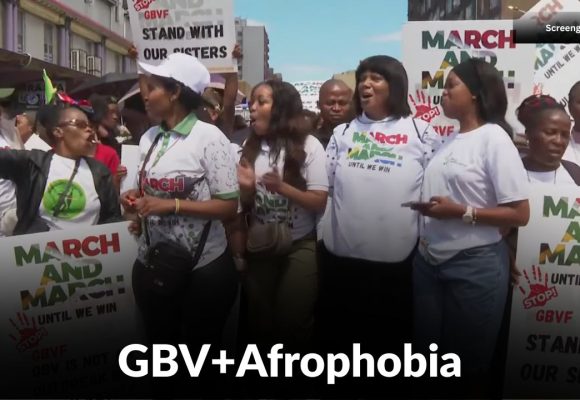
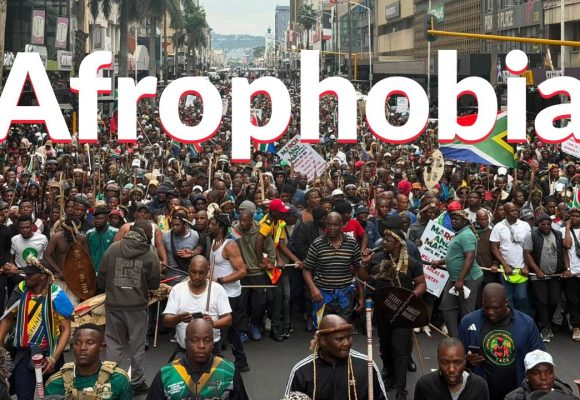
Malema’s audience on May Day included mineworkers. Some of them survived Marikana, fourteen years earlier, when 34 striking miners were shot dead by South African police protecting a platinum mine owned by Lonmin, a British company. None of them owns the land beneath their feet. None of them owns the minerals beneath that land. And on June 30, 2026, several of them marched through Rustenburg’s streets demanding the expulsion of Zimbabweans.
This is the story of who built that distraction, who benefits from it, and what it cost the continent that made South Africa’s freedom possible.
The Passport Emperor Haile Selassie Gave a Fugitive
In early 1962, a man with no legal travel document slipped across the South African border into Bechuanaland, now Botswana, and made his way north to Tanganyika, now Tanzania. From there, he traveled to Addis Ababa. He was wanted by the apartheid government, which considered him a terrorist. He was 43 years old.
To facilitate his travels, he was issued an Ethiopian passport in the name of David Motsamayi. The passport was granted by order of Emperor Haile Selassie. In Ethiopia, he was housed, given military training by the Ethiopian Kolfe Police Force, and handed 5,000 British pounds to fund the African National Congress’s armed struggle.
That man was Nelson Mandela.
His travels took him to Ethiopia, Tanganyika, Egypt, Tunisia, Morocco, Ghana, and Senegal, among other countries. Throughout his travels, Mandela gained political and financial support from Ghana, Mali, Senegal, Sierra Leone, Libya, and Liberia. He traveled to London. He received military training in Algeria with the National Liberation Front. And he moved through all of it on a document issued by a country that shared neither his language, his history, nor his ethnic identity, only his Africanness, and a conviction that his oppression was theirs.
He was arrested on August 5, 1962, near Howick in Natal, disguised as a chauffeur driving Cecil Williams, a white ANC member seated in the back. The arresting officer had never seen either man before but stopped the very car carrying the country’s most-wanted fugitive, a detail that has fueled six decades of theories about betrayal. The most substantiated of those theories points to the CIA.
American diplomat Donald Rickard reportedly admitted his role in a recorded interview shortly before his death, saying he had tipped off South African security services to Mandela’s location that night. That interview was made public in 2016, was cited by the Sunday Times, and was later corroborated by Daily Maverick and the BBC as part of the documentary “Mandela’s Gun.” Rickard had previously denied any involvement when a journalist confronted him directly, years earlier. The CIA has never confirmed the claim either way. He would not walk free for 27 years.
The question that should haunt every person marching in the streets of South Africa on June 30, 2026, is a simple one. What if Ethiopia had treated Nelson Mandela the way March and March treat Malawian gardeners? What if Haile Selassie had demanded he produce papers? What if the Kolfe Police Force had loaded him onto a bus and sent him back to the South African Special Branch that was hunting him?
The answer is not hypothetical. Without the Ethiopian passport, Mandela could not have traveled. Without those travels, uMkhonto we Sizwe would not have built the international coalition it needed. Without that coalition, the international sanctions regime that eventually broke the apartheid government’s economic spine would not have held. The liberation of South Africa was incubated, at high cost, in the soil of independent Africa.
The Tax Nigerian Schoolchildren Paid
Nigeria’s investment in South Africa’s freedom was not symbolic. It was structural, sustained, and sacrificial.
Nigeria became the first African government to deliver direct financial aid to the ANC in the early 1960s, predating more public support structures. By 1970, Nigeria was providing an annual five-million-dollar subvention to both the ANC and the Pan Africanist Congress. That figure, in 1970 dollars, represented an enormous commitment from a country still rebuilding from a civil war that had killed more than one million of its own citizens.
In 1976, Nigeria went further. The Nigerian government established the Southern Africa Relief Fund to provide relief to victims of the apartheid regime, provide educational opportunities, and promote general welfare. The military administration of General Olusegun Obasanjo contributed $3.7 million to the fund. Every civil servant and public officer made a two percent donation from their monthly salary. Nigerian students skipped lunch to contribute. Within six months, the popular contribution to the fund reached $10.5 million. The donations were widely known in Nigeria as the Mandela Tax.
Read that again slowly. Nigerian schoolchildren skipped lunch. For South Africa. For people they had never met and would likely never meet, who lived thousands of kilometers away, who spoke different languages, and who worshipped in different traditions. They skipped lunch because they understood, without being taught economics or geopolitics, that an injustice visited on any African was a wound on all of them.
Nigeria also set up the National Committee Against Apartheid as early as 1960, disseminating awareness of the apartheid regime through primary schools, universities, public media, markets, posters, and billboards across the country for over three decades. Nigeria also imposed a long-standing oil embargo on apartheid South Africa. Over the years, this policy is estimated to have cost the country approximately $41 billion in lost revenue. That was not a cost absorbed by Nigeria’s wealthy class. It was a national sacrifice.
A 2020 study published in the peer-reviewed journal Cogent Arts and Humanities on Taylor and Francis Online estimates that by the end of apartheid in 1994, Nigeria had contributed approximately $61 billion to the anti-apartheid effort, an estimate independently reviewed by the West African fact-checking organization Dubawa in June 2026 and found to be supported by the historical record. The estimate does not refer to a single cash payment. It represents Nigeria’s cumulative financial, economic, and diplomatic support over several decades.
Nelson Mandela acknowledged this debt in person. During his 1990 visit to Nigeria, Mandela thanked the Nigerian government and its people for their financial and material support to the liberation struggle, describing Nigeria as among the most generous donors to the movement and acknowledging the country’s scholarships for South African students and deployment of teachers, doctors, and architects.
Today, Nigerian shop owners in Johannesburg are having their businesses seized, their windows smashed, their stock thrown into the street. Their grandparents paid for this country’s freedom. Their parents were trained in its universities. And in 2026, South African marchers are demanding their expulsion. No African nation gave more to end apartheid than Nigeria. No African nation’s citizens have been more visibly targeted in the violence that followed. That is not a coincidence worth glossing over. It is the clearest single measure of how completely this history has been discarded.
What the Frontline States Paid
Nigeria’s sacrifice was the most thoroughly documented in financial terms. It was not the only one.
The Frontline States, including Tanzania, Angola, Zambia, Mozambique, and Zimbabwe, played a crucial role in providing sanctuary and support to the ANC and anti-apartheid activists. These impoverished African countries suffered significant economic losses and hardships for challenging apartheid, with an estimated $30 billion in lost development by 1988.
It was in Zambia that the main camps of uMkhonto we Sizwe, the ANC’s military wing, were based. Tanzania, beginning from the period under President Julius Nyerere, went out of its way to provide refuge for thousands of ANC and PAC exiles, many housed in training camps and schools. The PAC headquarters were in Dar es Salaam for over three decades, and the ANC’s Oliver Tambo was also based there for a significant period.
South Africa’s apartheid regime repaid that generosity with military raids. It attacked Botswana, Zambia, Zimbabwe, and Mozambique, killing local residents and South African refugees. It fomented civil war in Mozambique, providing weapons and logistical support to RENAMO, which terrorized civilians across wide areas of the country. In Angola, it launched repeated invasions to overthrow the MPLA government.
These countries absorbed South African military strikes. They accepted the economic cost of hosting liberation movements. They gave land, safety, food, and time to men and women fighting for a country that was not their own. Ghana provided ideological leadership and political sanctuary. Senegal, Mali, Guinea, Sierra Leone, Libya, and Sudan each played roles that were incompletely recorded but fully understood at the time. Malawi, now the country whose citizens are being processed through South Africa’s Beitbridge border post by the thousands, was itself listed among the Frontline States that provided support to the ANC.
The continent that gave everything to free South Africa is now watching South Africa deport the descendants of the people who paid.
When the State Becomes the Mob’s Administrative Arm
Malema’s minerals argument names the architect of the distraction. But a second crisis runs parallel to it, one with a different but related anatomy. It is the story of what happens when a constitutional democracy cedes law enforcement to a vigilante organization, then scrambles to contain the consequences.
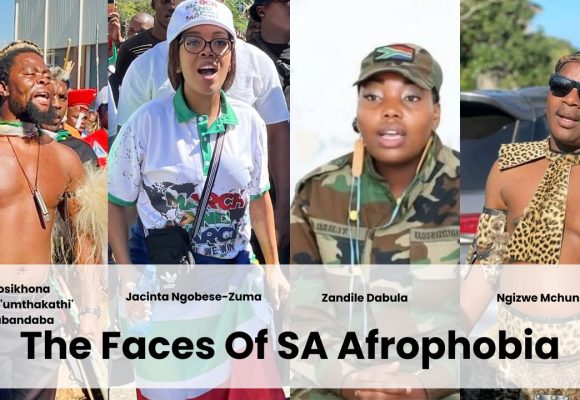
In November 2025, the Johannesburg High Court confirmed, in the matter of Kopanang Africa Against Xenophobia versus Operation Dudula and others, that only an immigration officer or a police officer has the power to demand that a private person produce a passport or identity document. No private person holds that authority unless expressly authorized by law. The court interdicted Operation Dudula, then-president Zandile Dabula, and the organization’s deputy chairperson from demanding identity documents from any person. Dabula resigned from Operation Dudula in May 2026 and is now an ActionSA candidate for Johannesburg’s Human Settlements MMC position.
Judge Leicester Adams went further. He blamed the South African government directly, noting that it had failed to implement its own National Action Plan to combat racism, discrimination, xenophobia, and related intolerance. “The government’s unexplained failures to give proper effect to critical components of the NAP are an unconstitutional violation of its duties,” he stated.
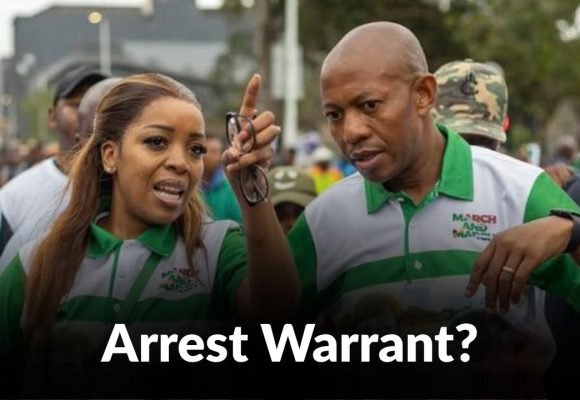
That judgment was handed down in November 2025. By June 30, 2026, not a single leader of March and March, or of Operation Dudula, had been charged with violating its terms. The marches proceeded. The identity checks proceeded. The social media incitement proceeded. The government’s response was to accelerate its own deportation machinery, processing more than 15,000 Malawians through Beitbridge while simultaneously telling vigilante groups they could not demand papers themselves.
This is the constitutional sleight of hand at the center of the crisis. The state did not formally deputize the vigilantes. It simply allowed them to operate, absorbed their demands into official policy, and then claimed the distinction between mob deportation and state deportation as a defense of its constitutional integrity. The International Commission of Jurists has called on President Ramaphosa, the South African police, and relevant government agencies to dismantle vigilante networks, noting that groups like Operation Dudula and March and March have engaged in campaigns targeting non-citizens even when their presence complies with domestic law.
The distinction between state power and mob power matters enormously in a constitutional democracy. When a government accelerates deportations in direct response to vigilante pressure, processes 109,344 deportations in a financial year while allowing the movements that demanded those deportations to march freely, meets privately with the movements’ leaders without naming them publicly, and frames its enforcement response as a policy initiative rather than a capitulation, the line between state and mob has not been held. It has been dissolved while preserving its paperwork.
As legal analysts noted after the November 2025 ruling, when self-appointed formations assume coercive functions, they erode constitutional order, displace rights-based policing with partisan persecution, and teach communities that protections are optional. What the Kopanang ruling interrupted at the level of formal law, the government’s own enforcement acceleration reinstated at the level of political reality.
The Script Is the Same. The Writer Is the Same.
South Africa holds local government elections on November 4, 2026, and researchers at the Human Sciences Research Council have warned for months that anti-immigrant sentiment risks becoming an electoral tool this cycle, with parties reluctant to challenge it publicly. Malema’s position puts him at odds with the current during the campaign season.
Malema said it at Rustenburg. He said it again from different angles across May and June. He named it with a specificity that most analysts have been reluctant to match.
“The same people who made us fight each other during apartheid are the same ones who are doing the same,” he said, as recorded by Politicsweb from his May 1 address. “The provinces that are fighting black-on-black violence are the same that did during apartheid. The tribe that is fighting black-on-black violence is the one that did during apartheid. At the centre of black-on-black hatred is a state-sponsored and capital-sponsored hatred to distract you from giving you economic opportunities.”
The historical claim is documented. During the 1980s and early 1990s, the apartheid government sponsored and armed the IFP’s violence against ANC-aligned communities in KwaZulu-Natal, a strategy known as the Third Force. The Truth and Reconciliation Commission found that state security structures trained, funded, and directed hit squads responsible for thousands of deaths in the same province where the June 30 marches were heaviest.
Malema is not saying the mining companies are financing March and March today. He is making a structural argument. The economic conditions that produced 32.7 percent unemployment, which left the communities around the platinum mines in endemic poverty while platinum prices rose above $1,600 per ounce, their highest in twelve years, were not accidental. The benefits of mining operations disproportionately favor mining companies and the state, often to the detriment of local communities.
No Zimbabwean owns Mogalakwena. No Nigerian owns the Bushveld Complex. No Malawian gardener has a share in Implats. When the men marching on June 30 finally expel every African migrant from South Africa’s townships, the platinum will still flow to London. The chromium will still flow to Zurich. The gold will still flow through the same channels it has flowed through since 1886. The only thing that will have changed is the ethnic composition of the people standing in the unemployment queue.
That is the distraction. And it is working.
The Distraction Has a Machine Behind It
Malema’s distraction argument gets unexpected confirmation from an unlikely source, the platforms themselves.
A Daily Maverick analysis published June 1, 2026, examined nearly four million posts on X between January and May 2026. Researchers at Murmur Intelligence found a single Operation Dudula-aligned account responsible for 37 percent of all posts in the dataset, despite representing just 15 percent of the users. Analysts flagged the pattern as a red flag for inauthentic coordinated behavior, the digital signature of a small number of accounts manufacturing the appearance of a mass movement.
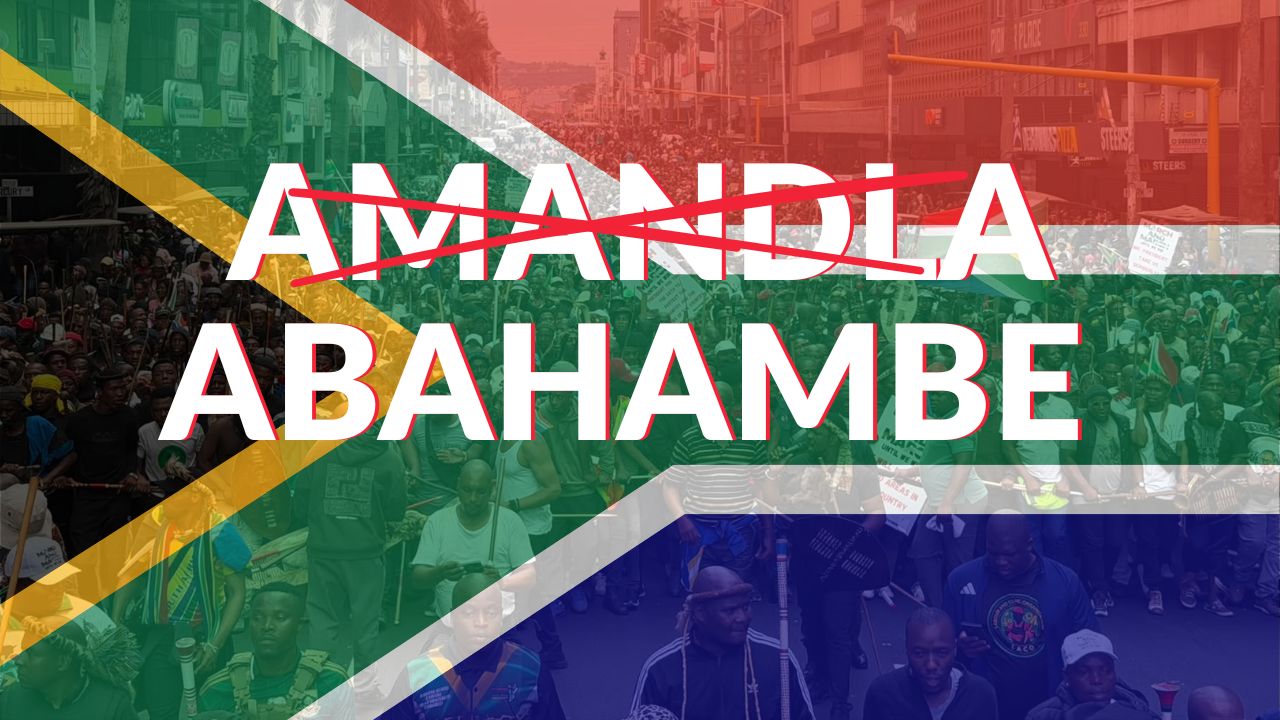
The campaign traces to a specific origin point. A missing-person case involving a young man named Mazwi Kubheka, amplified under the hashtags BringMazwiBack and JusticeForMazwi, became what researchers called the gateway issue that reignited a dormant anti-immigrant online ecosystem in early 2026. From there, coordinated networks pushed hashtags including Abahambe, meaning they must go, and BanNigeriansInSA, in what one analyst described as synchronized bursts designed to maximize visibility rather than organic public sentiment finding its own voice.
Aldu Cornelissen of Murmur Intelligence put the mechanism plainly. The best disinformation campaign convinces a few people that thousands are convinced.
None of this means the anger on South Africa’s streets is fake. Unemployment is real. The poverty in the platinum belt is real. What the data suggests is that the scale and intensity of the online campaign built around that real anger was substantially manufactured, amplified by a small, coordinated cluster of accounts rather than reflecting an organic groundswell of the size it was designed to project.
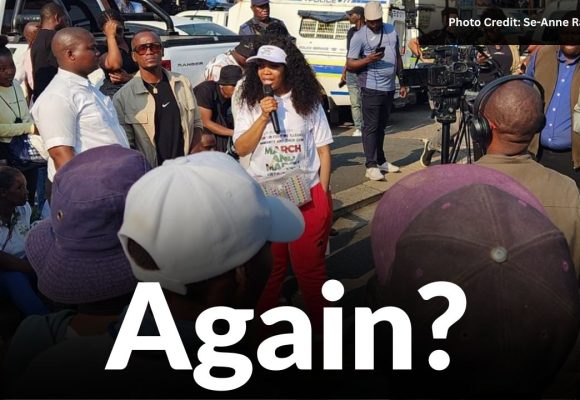
By June 30, 2026, the online campaign had become a street campaign. Speaking at a rally in Durban that day, Ngobese-Zuma told the crowd, “For the next six months, we are asking for our national resources to be used to take the illegal immigrants out of this country. From building to building, they must go,” a quote independently confirmed by Reuters. Days earlier, TikTok had banned her account entirely for policy violations tied to the movement’s rhetoric.
The machine and the man on the platinum belt are not the same thing. But the machine is what turned one man’s real grievance into a nationwide deadline.
The Argument That Only Works If Liberation Wasn’t Real
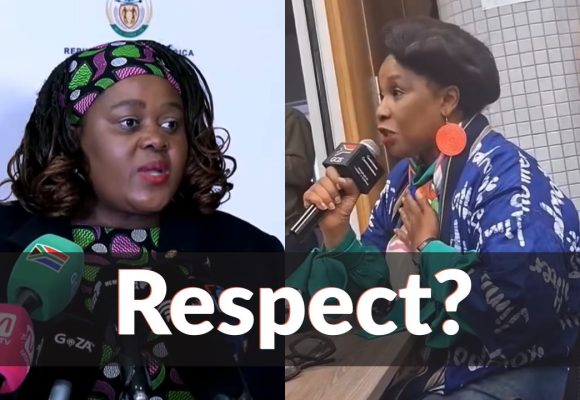
The claim has surfaced beyond social media and onto live television. During a July 17, 2026 broadcast of DASH TV’s “The Review,” an unidentified woman speaking live from Gauteng Province told the program, “They’re talking that they gave us $600 billion. They didn’t give it to the country. They gave it to the ANC.”
The figure itself does not hold up under any documented account. Nigeria’s cumulative contribution, the largest single figure in the academic record, is estimated at $61 billion over three decades, a tenth of the sum cited on air. But the number matters less than the distinction she is drawing. The argument holds that Nigeria’s support went to the ANC rather than to South Africa, and that the two are not the same thing.
The argument collapses on its own terms. The ANC did not seize South Africa’s institutions after 1994. It won them at the ballot box and became the government, the same government that today issues passports, staffs the Department of Home Affairs, and runs the Beitbridge border post processing thousands of Malawians a month. Every institution that the anti-apartheid movement helped deliver into democratic hands is now enforcing the policies that March and March demand.
The claim also gets the money wrong. Nigeria’s Southern Africa Relief Fund and its National Committee Against Apartheid were not structured as ANC-exclusive vehicles. Nigeria funded the Pan Africanist Congress alongside the ANC, and its $41 billion oil embargo hit South Africa’s entire economy, not one party’s accounts. Separating “the ANC” from “South Africa” only holds up if you believe the ANC never legitimately became South Africa’s government, a position apartheid’s own defenders held until the day they lost power.
The March That Avoids Cape Town
Malema named the racial double standard directly, in remarks TAV observed and that are consistent with his confirmed public statements. When is the march going to Cape Town, he asked. Because a lot of illegal immigrants, white immigrants, are in Cape Town. Let’s see them go to Cape Town asking whites to produce their IDs. The same goes for the North West, where many whites say they own land. If you ask them to produce a title deed, they don’t have one. They gave each other the land in the early 1990s when they saw democracy was coming.
The DA’s Minister of Foreign Affairs, Ronald Lamola, is responsible for immigration policy at the diplomatic level. March and March has not marched to his ministry. It has not marched to Cape Town. It has not issued ultimatums to white farm owners in Limpopo who cannot produce title deeds. It has not demanded that the mining houses provide audited accounts of how much platinum wealth left South Africa’s soil without a cent returning to the communities above it.
It has marched to Hillbrow. To Jika Joe settlement. To Sherwood. To the Durban Drive-In. To the places where the most economically vulnerable people in South Africa live, many of them Black Africans from neighboring countries who fled situations more desperate than anything most of the marchers have faced, and who occupy the bottom of an economic hierarchy whose top is not a Nigerian shopkeeper.
The march goes where the least powerful are. It always has.
Go Fetch Your Money From Mandela
Jacinta Ngobese-Zuma, another prominent March and March voice, has taken the argument further than distraction. She has denied that the debt exists.
Ngobese-Zuma has been quoted widely across African social media and news aggregators, including The Zambian Observer and pan-African commentary channels, saying, “If you believe Mandela took money from your country to fight for our freedom, then go and collect your money from Mandela and his family.” Ngobese-Zuma has previously denied making similar remarks and has challenged journalists to produce video evidence.
The claim shrinks a continental sacrifice into a personal invoice. Nigeria’s Mandela Tax did not go into Nelson Mandela’s pocket. It funded the ANC and the Pan Africanist Congress, the organizations, not the man. The Ethiopian passport was not a loan to a private citizen. It was Haile Selassie’s government deciding that a stateless freedom fighter deserved the protection of a state. Zambia housed uMkhonto we Sizwe’s camps. Tanzania sheltered the PAC’s leadership for three decades. None of that was billed to Mandela. It was Africa’s collective wager that his freedom and the continent’s were the same fight.
Reducing that history to a debt collectible only from his estate treats a man who gave 27 years of his life to a continental cause as a debtor rather than a debt someone still owes.
What Is Still Owed
This debt was extended for decades. In blood. In schoolchildren’s skipped lunches. In a passport issued to a stateless man by an emperor who owed him nothing. It can never be repaid the way a loan is repaid, dollar for dollar. What’s owed back isn’t currency. It’s goodwill. No accounting could settle this debt, and no generation of South Africans could write a check large enough to close it.
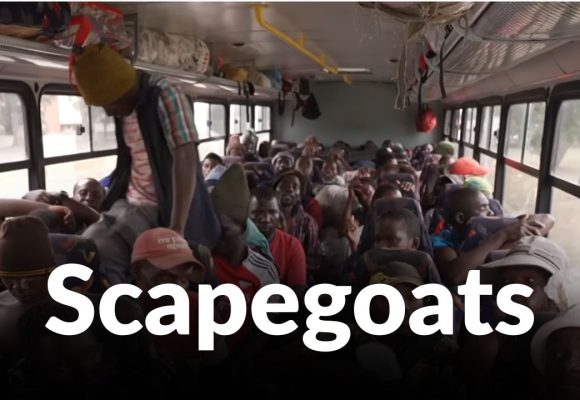
Goodwill would not allow African mothers and children to sleep in parking lots through winter’s cold. It would not allow African migrants to be scapegoated as drug dealers and blamed for a country’s problems, while the government’s own failures sit undisturbed. That is not gratitude deferred. It is gratitude abandoned.
It is also not a debt that is due. Nothing in this history grants Malawians, Zimbabweans, or Mozambicans a legal right to enter South Africa outside its immigration laws. Nothing here asks the state to open its borders as repayment. That is not the argument, and it does not need to be.
The argument is this. South Africa does not get to forget who it is dealing with. A Malawian gardener is not a threat to be processed at Beitbridge. He is the descendant of a country that gave up something real so South Africa could exist as a free nation. Treating him as disposable while white farmers in Limpopo hold land they cannot produce a title deed for is not policy. It is a choice about whose claims count and whose do not, and South Africa has already made that choice once, in apartheid’s favor.
That choice does not get made twice. Not against the people whose countries paid for the first one to end.
This is not a fringe position within South Africa, whatever the marches suggest. Former Home Affairs Minister Mangosuthu Buthelezi put it plainly: “Indisputably, South Africa owes a debt of gratitude to Nigeria, and to all of Africa, for supporting our liberation struggle. We owe our freedom to our friends as much as to our own people.” Minister of International Relations Ronald Lamola marked 30 years of diplomatic relations between Nigeria and South Africa in 2024 by calling Nigeria’s support “a gesture we will always cherish.” Catholic Archbishop Emeritus Buti Tlhagale went further still, telling the Southern African Catholic Bishops’ Conference in June 2026 that South Africa’s current conduct amounts to telling the world “we are ungrateful for what the world did during the apartheid years.” The Nelson Mandela Foundation, addressing the crisis directly in June 2026, recirculated Mandela’s own 1995 warning at a rally in Alexandra: “It saddens and angers me to see the rising hatred of foreigners. We had a legacy of unity and solidarity here.”
The African Commission on Human and Peoples’ Rights, in an April 2026 statement, affirmed that the xenophobic attacks constitute possible violations of the African Charter’s articles on equality, dignity, security of person, property, and the principle of African solidarity that underpins the Charter itself. The Commission called on South Africa to ensure victims have access to effective remedies and reparations.
A Malawian man was stoned to death in Pietermaritzburg on June 19. Nine Mozambicans are confirmed dead from attacks centered on Mossel Bay. Hundreds of homes were burned. Thousands of businesses were destroyed or seized. Fifteen thousand Malawian nationals were processed through Beitbridge in circumstances that blur the line between voluntary repatriation and forced expulsion.
The people of Malawi helped build the political conditions for South Africa’s democracy. The people of Mozambique bled under South African military raids because their government chose the side of liberation. The people of Nigeria skipped their lunch as schoolchildren so that South Africa’s schoolchildren could one day eat in a free country.
Thabo Mbeki, speaking on Africa Day in 2026, reminded South Africans that the continent did not stand aside during apartheid because it expected gratitude. It acted because it understood that no part of Africa is free while any part remains oppressed. That principle, which the ANC built its entire external mission around for three decades, is now the very principle being dismantled by movements whose leaders quote Martin Luther King to crowds that spent the morning stopping Black men at street corners and demanding their papers.
Martin Luther King was arrested 29 times. He was surveilled, bombed, and ultimately killed by a state that considered him an enemy of order. He quoted no scripture more often than the one about the arc of the moral universe bending toward justice. What he understood, and what the Malawian gardener threatened with a coffin in early June, and what Julius Malema understands, is that the arc does not bend by itself. Someone has to pull it.
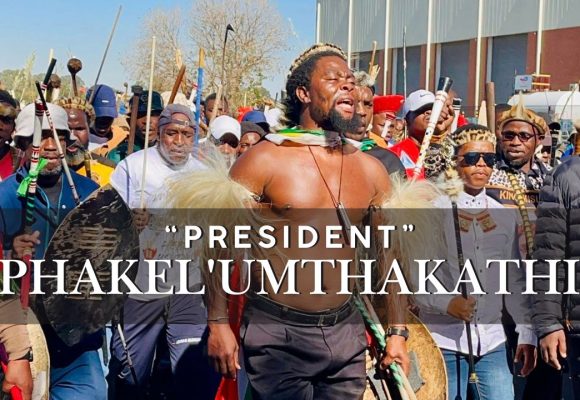
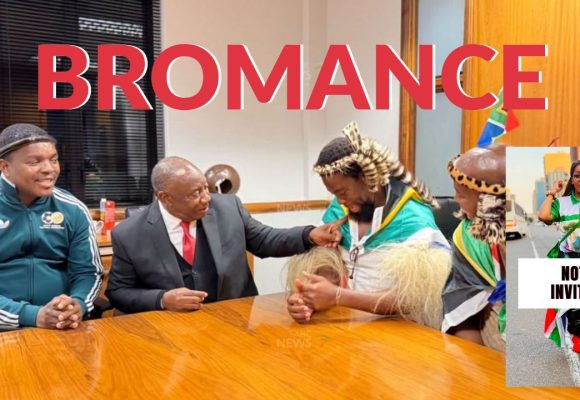
Pulling it in South Africa right now means refusing the distraction. It means asking, every time a march is announced, who benefits from this anger pointing here instead of there. It means standing in Rustenburg and asking why platinum prices are at a 12-year high while the community above the mine reports 40 percent unemployment. It means recognizing that the Mozambican woman who lost her home in Mossel Bay and the South African mineworker who lost his pension to a collapsed mining company share an enemy, and that enemy has never once marched in a Zulu warrior costume through a Durban street.
The minerals are being stolen. The land is still gone. And 15,000 Malawians just processed through Beitbridge, heading home to the country whose people once helped a South African freedom fighter reach Addis Ababa.
Methodology note: This essay draws on peer-reviewed academic research published in Cogent Arts and Humanities and Taylor and Francis, the Nelson Mandela Foundation’s archival records and public statements, South African History Online, the Anti-Apartheid Movement archives, statements from the African Commission on Human and Peoples’ Rights, rulings from the Johannesburg High Court, submissions from the International Commission of Jurists, reporting from Politicsweb, Reuters, Daily Maverick, AFP Fact Check, Dubawa, and the Southern African Catholic Bishops’ Conference, and secondary reporting on public statements by Jacinta Ngobese-Zuma and an unidentified DASH TV panelist.

LEAVE A COMMENT
You must be logged in to post a comment.