

|
LISTEN TO THIS THE AFRICANA VOICE ARTICLE NOW
Getting your Trinity Audio player ready...
|
Editor’s Note: The Africana Voice sought comment from the African Union Commission on the findings in this report, addressed to Chairperson Mahmoud Ali Youssouf. The commission did not respond.
In February 2025, the African Union’s Peace and Security Council issued a communiqué on the war in eastern Congo. It condemned M23 rebels by name for atrocities against civilians. It called Congo and Rwanda “two sisterly countries” and urged both to pursue “good neighbourliness.”
United Nations expert panels have documented Rwanda’s material support for M23 since 2012, including weapons transfers, troop deployments and direct command instructions from Kigali. That finding has been reconfirmed as recently as July 2025. In January 2026, the AU appointed Togolese President Faure Gnassingbé as chief mediator, backed by a five-member panel of former African heads of state, Olusegun Obasanjo, Uhuru Kenyatta, Mokgweetsi Masisi, Catherine Samba-Panza and Sahle-Work Zewde.
The panel has met repeatedly since then in Lomé, Kigali, and Kampala. Through all of it, the AU’s own Peace and Security Council communiqués have never once named Rwanda as a party to the conflict.
This is not a single oversight. It is the clearest evidence of a pattern that runs across two decades of AU communiqués, resolutions and silences.
The African Union was born in Durban in July 2002 with a specific promise. Unlike its predecessor, the Organization of African Unity, the AU claimed the right to intervene in any member state facing genocide, war crimes or crimes against humanity. That right has never been exercised against a sitting civilian leader, and it has never been exercised against a member state accused of arming a rebellion in a neighboring one.
Breaking From a Doctrine of Silence
The Organization of African Unity, or OAU, was founded in Addis Ababa in 1963 on strict non-interference, a principle meant to shield newly independent states from renewed foreign meddling. By the 1990s, that doctrine had become cover for atrocity. The OAU’s failure to prevent the 1994 Rwandan genocide became the clearest argument for replacing it entirely.
African heads of state, pushed by Libyan leader Muammar al-Qaddafi and buoyed by Thabo Mbeki’s African Renaissance framing, adopted the Constitutive Act of the African Union in Lomé in July 2000. The Act entered into force in May 2001. The AU launched formally in Durban the following year.
Article 4(h) of the Act gave the union the right to intervene in a member state facing crimes against humanity, a clause scholars call the sharpest break from state sovereignty in African international law. Article 4(m) committed member states to democracy and the rule of law. Article 4(p) rejected unconstitutional changes of government outright. None of these commitments carried an enforcement mechanism with teeth against a sitting leader who had not seized power through a coup, or against a member state accused of destabilizing another.
Coups Draw Punishment. Entrenchment Does Not.
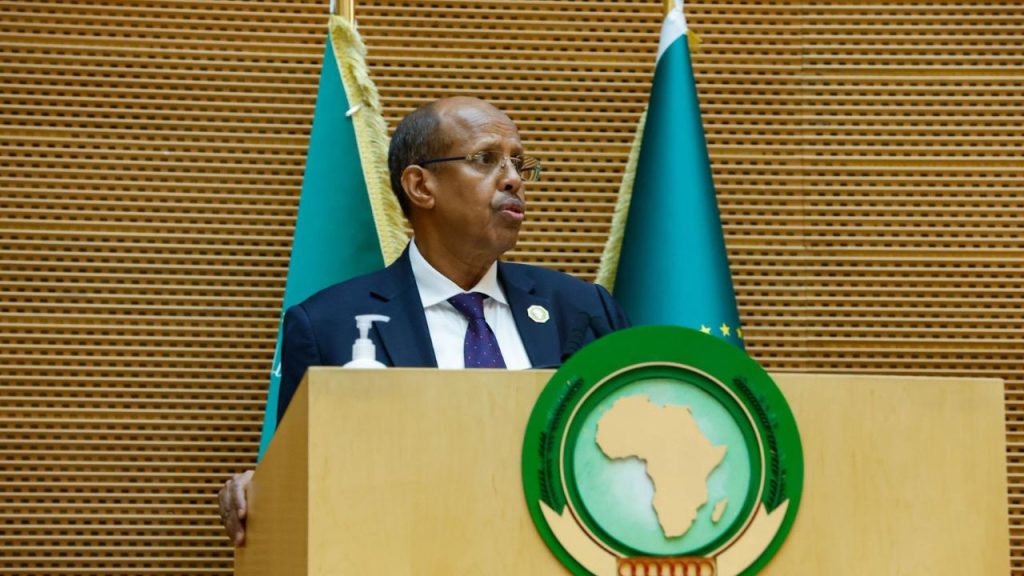
Photo: African Union / Facebook
The AU’s response to coups has been swift and consistent. As of 2024, roughly 15 percent of member states, eight countries, sat under suspension for unconstitutional changes of government. Civilian leaders who dismantle term limits or jail opposition figures for decades face no equivalent consequence.
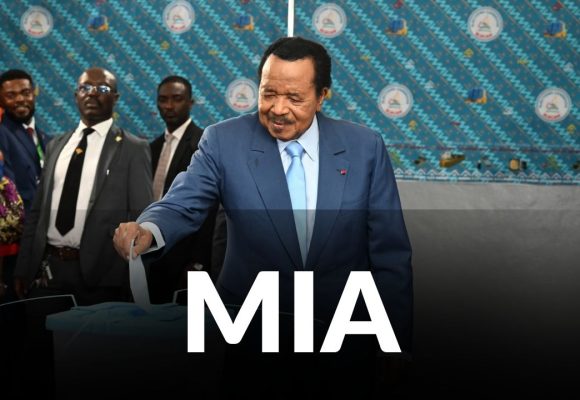
Paul Biya has governed Cameroon since November 1982. In October 2025, at 92, he won an eighth term, extending his rule to a potential 50 years by 2032. His opponent, Issa Tchiroma Bakary, rejected the results and claimed victory himself. Security forces killed opposition supporters in the protests that followed. The Anglophone Crisis, rooted in the marginalization of English-speaking Cameroonians, has killed thousands of civilians since 2016 by humanitarian estimates, with the toll still rising and precise figures disputed. No AU organ has formally censured Biya by name for either the crisis or the disputed election.
Cameroon is not the only case of an aging leader extending his rule while the AU stays silent.
Yoweri Museveni has ruled Uganda since January 1986. In January 2026, he won a seventh term, extending his rule past 40 years, defeating Bobi Wine for the third time. Human Rights Watch documented rights abuses in the run-up to the vote, including the killing of opposition supporter Mesach Okello by security officers in November 2025. The AU has never formally censured Museveni for any of it.
Two Leaders the AU Never Confronted
Teodoro Obiang Nguema Mbasogo has led Equatorial Guinea since 1979, when he seized power by executing his uncle. Amnesty International has documented four decades of repression under his rule. He has since positioned his son, Teodoro Nguema Obiang Mangue, as vice president and heir apparent, formalizing a dynastic succession.
Obiang’s government has not simply escaped AU censure. It has actively participated in the AU’s African Peer Review accountability system without ever being held to it.
The mechanism, established in 2003, is the AU’s voluntary self-monitoring tool; member states agree to have their governance record independently reviewed against African and international standards, covering democracy, economic management and human rights.
Equatorial Guinea joined it. But the mechanism has conducted no country review since 2012, and Equatorial Guinea acceded after that point, meaning its membership has never translated into an actual review. It is accountability in name only, a signature with no scrutiny behind it. As recently as July 2025, Obiang hosted AU Commission Chairperson Mahmoud Ali Youssouf on official business, with no acknowledgment of his government’s record.
Isaias Afwerki has led Eritrea since independence in 1993, without a single election in more than three decades. Human Rights Watch’s 2025 World Report reconfirmed what has been true throughout his rule, that political prisoners are held indefinitely without trial and independent media remains banned outright. In 2016, the United Nations Human Rights Council reached consensus among its 47 members calling on the AU to investigate Eritrean officials for crimes against humanity. The AU never acted on that call.
What the Pattern Reveals
Scholars studying the AU’s Democracy Charter have reached a consistent conclusion. Its compliance mechanism has never been fully operationalized. Kagame’s own 2017 internal reform report, commissioned by the AU itself, found the organization had adopted more than 1,500 resolutions with no reliable way to track how many were ever implemented. Member states saw limited value in the institution, the report concluded. Global partners found little credibility in it. Citizens had no trust in it at all.
Mahmoud Ali Youssouf of Djibouti became AU Commission chairperson in March 2025, succeeding Moussa Faki Mahamat. The pattern documented under his predecessor has continued under his own tenure. The Peace and Security Council’s December 2025 communiqué on the Congo conflict, issued nine months into Youssouf’s term, still described Rwanda and Congo only as “two sisterly countries.”
The AU has never removed a sitting civilian leader for governance violations outside a coup. It has never formally named a member state as the aggressor in another member state’s war.
A War the AU’s Own Headquarters Sits Inside
The Tigray war in Ethiopia shows what happens when the AU’s mediation is compromised by the location of its headquarters, and shows that the compromise has not ended. The war began in November 2020 and has been described by researchers as the deadliest conflict of the century, with estimates ranging from 300,000 to 600,000 deaths.
Then-AU Commission Chairperson Moussa Faki Mahamat opened the conflict by endorsing Ethiopia’s framing of it as a law enforcement operation, a position later disputed. Three Tigrayan opposition parties wrote to Faki in March 2021 stating the AU had forfeited its impartiality. When the AU’s human rights commission quietly closed its atrocity investigation in 2024, citing the peace agreement, it had never published findings or documented a field visit to Tigray.
The war did not stay closed. In February 2026, Ethiopian Prime Minister Abiy Ahmed told parliament that Eritrean troops had committed mass killings during the war, a far more direct admission than his earlier acknowledgment that Eritrean forces were merely present. Days later, Ethiopia’s foreign minister accused Eritrea of military aggression and occupation of Ethiopian territory, demanding withdrawal.
Late that January, Tigrayan forces and the Ethiopian federal government fought their first large-scale battles since the 2022 peace agreement. The AU, headquartered in the capital of one of the two governments now accusing each other of aggression, has issued no distinct response.
Sudan’s War, Still Unresolved
Sudan shows the same paralysis at a scale that has outgrown the AU’s capacity to address it. Since April 2023, the war between the Sudanese Armed Forces and the Rapid Support Forces has displaced more than 12 million people, the world’s largest displacement crisis. The RSF captured El Fasher, the last army stronghold in Darfur, in October 2025, after a siege that ended in what witnesses described as mass killings of civilians in the streets. The World Health Organization’s director-general called the violence “an atrocity of staggering scale.”
The AU and the regional bloc IGAD have convened six major mediation sessions since the war began in 2023. None has produced a ceasefire. A parallel process led by the United States and Saudi Arabia in Jeddah has similarly stalled. The AU’s own African Standby Force, declared fully operational in 2016, has never deployed to Sudan. The Mo Ibrahim Foundation estimates Sudan loses roughly $3 billion a year in illegal gold revenue, nearly matching the entire United Nations humanitarian appeal for the country, revenue that continues to flow regardless of which mediation track is, at any given moment, technically active.
South Africa’s Own Reckoning
South Africa’s Afrophobia crisis is the most current test of the pattern this report documents, and it is still unfolding.
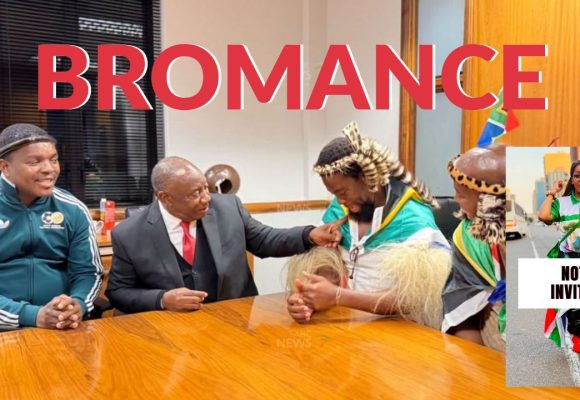
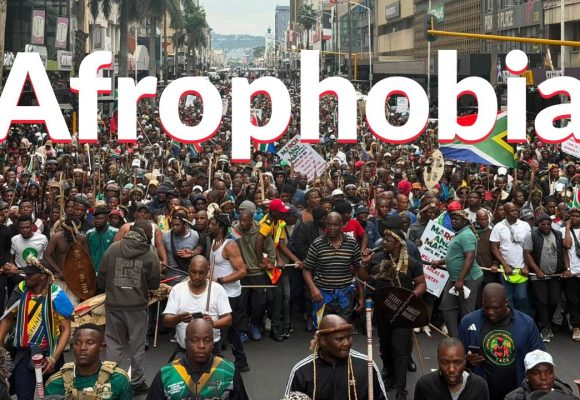
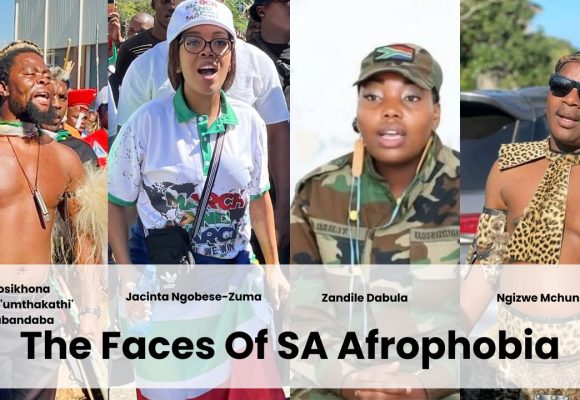
Mass anti-migrant marches swept South African cities through June and July 2026, with some organizers calling for undocumented migrants to leave the country by the end of June. Migrants fled by the thousands. South African police confirmed the deaths of two Mozambican men and an 18-year-old South African in Western Cape violence in early June; Mozambique’s government said five of its own citizens had been killed in the same unrest. President Cyril Ramaphosa met with several protest leaders in late June, a meeting Oxford migration scholar Loren Landau described as evidence the movement was negotiating directly with the state, telling Daily Maverick the government’s response had “functioned as institutional validation.”
Ghana formally petitioned the AU in May 2026 to place the crisis on the agenda of the AU’s Eighth Mid-Year Coordination Meeting, now scheduled for October 4, 2026, in El Alamein, Egypt. Five months will have passed between the petition and the meeting where it might finally be addressed.
Whether Ghana’s petition makes it onto the agenda at all remains to be seen. South Africa’s own Government Communication and Information System published a public rebuttal in July, denying the Afrophobia characterization and rejecting what it called misleading narratives from Nigeria and Ghana.
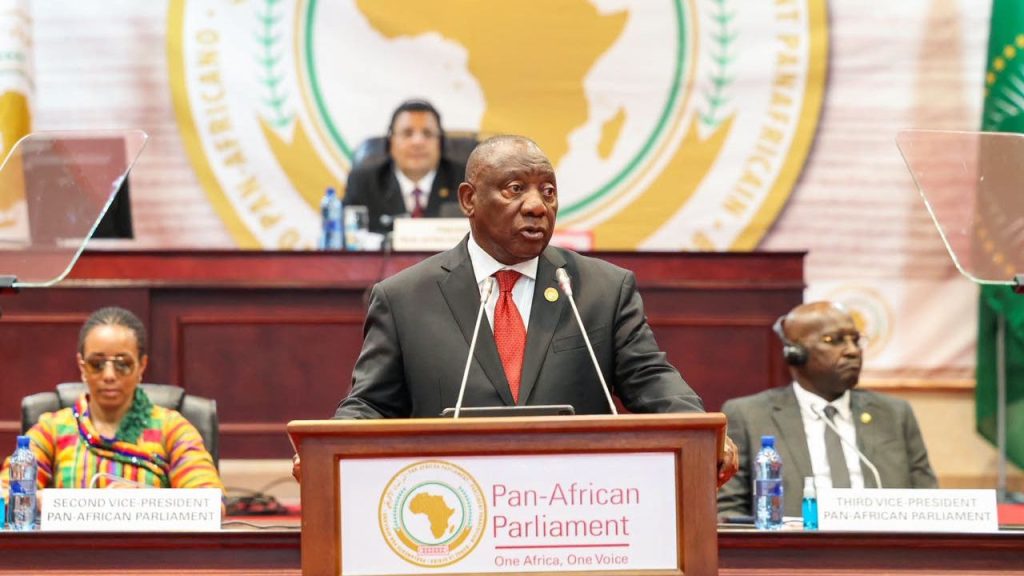
Ramaphosa himself has spoken more directly than his government’s official messaging. Addressing the Pan-African Parliament on July 27, 2026, he acknowledged that people had “been injured and some people have died and lost their lives,” which he said South Africa “deeply regrets and mourns,” and used the word Afrophobia himself rather than avoiding it. “We’ve taken a firm stand against hatred for people from other countries, xenophobia or afrophobia,” he said.
A Continent That Sends More Wealth Out Than It Receives
The AU’s accountability failures compound a deeper one. The institution meant to help Africa control its own resources has failed to build the independence required to do so.
A joint study by the African Development Bank and Global Financial Integrity found that Africa lost an estimated $854 billion in illicit financial outflows between 1970 and 2008, with total outflows potentially reaching $1.8 trillion. Those outflows grew at nearly 12 percent a year, outpacing incoming development aid by at least two to one. The finding led both institutions to describe Africa as a net creditor to the rest of the world, a continent that sends out more wealth than it takes in.
The AU adopted the Africa Mining Vision in 2009 specifically to reverse that dynamic. Seventeen years later, implementation remains piecemeal. External donors funded roughly 62 to 67 percent of the AU’s total budget in 2023 and 2024.
Mo Ibrahim, the governance advocate and billionaire, has publicly called member-state funding of the AU a farce. An institution that depends on Western donors to run its own peace and security operations cannot credibly challenge the same donor countries’ corporate interests in African resource extraction.
Even the AU’s own headquarters building was constructed and donated by China at its 2012 opening, another external power with its own extractive stake on the continent.
Headquarters Exposed to Chinese Spying
China’s stake in the AU goes beyond funding. In 2012, China constructed and donated the AU’s own headquarters building in Addis Ababa, a gift meant to symbolize the depth of the China-Africa relationship.
In January 2018, French newspaper Le Monde reported that data from servers inside the building had been transferred nightly to Shanghai for five years, undetected, and that listening devices had been found hidden in the building’s walls and desks.
China’s government called the allegations absurd and preposterous. Then-AU Commission Chairperson Moussa Faki dismissed the report as “all lies” while standing beside China’s foreign minister in Beijing, on the same visit during which the AU announced it would open a new office there. The AU did replace its compromised servers and reroute its communications away from Chinese-linked infrastructure, but the fix may not have held.
In December 2020, Reuters reported that a China-linked hacking group stole security camera footage from inside the same building, gaining access to meeting rooms, hallways and parking areas. What, if anything, the AU did in response to that second breach has never been publicly disclosed.
No Vote for the Sixth Region
The AU’s failure to build real financial independence has a parallel in its failure to build real diaspora inclusion, and the two failures share a root cause.
In May 2012, the AU formally designated the global African diaspora as the continent’s Sixth Region. The designation gave the diaspora an advisory seat on the Economic, Social and Cultural Council, the AU’s civil society arm. It gave no binding vote, no veto and no seat in the Assembly of Heads of State or the Peace and Security Council. African Americans, despite holding an estimated $1.8 trillion in spending power as of 2023 and comprising more than 12 percent of the U.S. population, have no formal representation in any AU decision-making body.
That gap has not gone unnoticed inside the diaspora itself. It has fed a genuine rupture over what the relationship to Africa should even be.
A Parliament Waiting for Its Own Members to Empower It
The Sixth Region’s powerlessness has a parallel inside the AU’s own institutional architecture, one that shows the pattern extends beyond diaspora exclusion into the AU’s treatment of its own organs.
The Pan-African Parliament was written into the AU’s founding design in 2002, under Article 17 of the Constitutive Act, and held its first session in Midrand, South Africa, in March 2004. For 22 years, it has operated as a consultative body only, able to question officials and review the AU’s budget but unable to pass binding law.
In 2014, AU heads of state adopted the Malabo Protocol, meant to convert the parliament into a genuine legislative organ. It requires ratification by 28 member states to take effect. As of mid-2026, 15 states have ratified it.
South Africa, the country that has hosted the Pan-African Parliament since its founding, is not among them.
Ramaphosa acknowledged this directly, and without notes, addressing the parliament’s seventh legislature in Midrand on July 27, 2026. Departing from his prepared text, he told members the Malabo Protocol “has not yet been ratified by many countries,” and said he would call on his own government to ratify it. “You must not be members of a toy telephone,” he said. “You must be a parliament that really delivers.”
It was a rare moment of a sitting AU-aligned head of state naming the gap between the union’s founding ambitions and its practice, live and unscripted, in front of the body most directly affected by it.
Rejecting the Pan-African Premise Entirely
Since 2016, a loosely organized current in Black American political life has argued for the opposite of pan-African unity. American Descendants of Slavery, founded by commentators Yvette Carnell and Antonio Moore, argues that Black Americans descended from U.S. slavery deserve a distinct ethnic designation and reparations claim, separate from Black immigrants and the broader African diaspora.
ADOS’s founding has documented ties to the American anti-immigration movement. Co-founder Yvette Carnell served on the board of Progressives for Immigration Reform, an organization the Southern Poverty Law Center has identified as a front for the Federation for American Immigration Reform, an extremist group built by white nationalist John Tanton.
The pushback has come from within Black political life, not only from outside it. Writing in Black Agenda Report in March 2025, activist Jacqueline Luqman argued that ADOS promotes a reactionary ideology that abandons anti-imperialist and pan-African solidarity in favor of exclusive American claims. She wrote that the movement’s rejection of figures like Marcus Garvey, on the grounds that Garvey was a Jamaican immigrant, reflects a deeper break with the pan-African tradition Garvey helped build.
The AU’s Sixth Region designation cannot resolve this rupture by itself. It was never built to. An advisory seat with no vote gives the diaspora no forum to work through a disagreement this fundamental, let alone a binding role in shaping the institution meant to represent it.
Pan-Africanism’s Caribbean Foundation Predates the AU
The diaspora’s claim to a real role in continental governance did not begin with the Sixth Region designation. It predates the AU entirely, and much of its intellectual foundation came from the Caribbean, not the African continent.
Marcus Garvey, born in Jamaica in 1887, built the largest Black mass movement in history around the idea that pan-Africanism required organized diaspora political power, not sentiment. Trinidad’s C.L.R. James grounded pan-African revolutionary theory in the Haitian Revolution through his 1938 work “The Black Jacobins.” Martinique’s Aimé Césaire founded the Négritude movement and wrote the anti-colonial framework that shaped a generation of African liberation thinkers.
Frantz Fanon, also of Martinique, wrote “The Wretched of the Earth” in 1961, still the foundational text on the psychology of colonial exploitation. Guyana’s Walter Rodney documented, in “How Europe Underdeveloped Africa” in 1972, the exact mechanism of extraction the AU’s Mining Vision was later built to reverse, and never did.
None of these figures were African by birth. Under the logic ADOS applies to reparations claims inside the United States, their contributions to pan-African thought would be dismissed as the work of outsiders.
CARICOM Moves Closer as the AU Stalls
That gap is starting to close, at least rhetorically. The AU Assembly designated 2025 the Year of Justice for Africans and People of African Descent Through Reparations, and the second Africa-CARICOM Summit convened in Addis Ababa that September under the banner of reparatory justice. CARICOM Secretary-General Carla Barnett called the summit a homecoming for the Caribbean and urged joint advocacy on financial reform and climate justice.
The relationship deepened further in June 2026, when Ghana hosted a high-level conference in Accra to advance a United Nations resolution recognizing the transatlantic slave trade as among the gravest crimes against humanity. Barbados Prime Minister Mia Mottley told the gathering that repair comes after recognition and called for unity of purpose between Africa and the Caribbean.
Ghanaian President John Mahama, whom the AU has since named its coordinator for reparations, used the summit to merge CARICOM’s decade of reparations advocacy with the AU’s own framework into a single document for presentation at the United Nations General Assembly.
That kind of coordination shows what real Africa-Caribbean partnership can look like when it moves past declarations. It also underscores what the Sixth Region framework still lacks. Mahama’s reparations coordinator role exists because he leads an AU member state. No equivalent standing role exists for a Caribbean or African American representative, because the Sixth Region has no formal seat to fill.
A binding diaspora chair, rotating among Caribbean, African American, and other diaspora representatives and seated within the AU’s own structures, would close that gap without requiring any change to who holds the union’s top office.
What a Successor Institution Would Actually Require
Kagame’s own 2017 reform report diagnosed the AU’s implementation crisis honestly. It did not fix the deeper problem. Centralizing efficiency inside an institution still built on the immunity of sitting heads of state does not solve an accountability gap. It just makes the gap run faster.
Comparable institutions elsewhere show what real enforcement requires. The European Court of Human Rights allows individuals to bring binding cases against signatory states. The AU’s own African Court on Human and Peoples’ Rights lacks that individual petition right against most member states. ECOWAS has shown more willingness to act, deploying force to remove Yahya Jammeh from power in the Gambia in 2017 after he refused to accept electoral defeat. The AU has never matched that willingness against a member state’s civilian leadership.
A successor institution, or a genuinely reformed AU, would need to close each of these gaps directly. Financial independence from donor states, likely through a continental revenue mechanism rather than voluntary member contributions that never materialize. An independent prosecutor’s office inside the African Court, empowered to act without waiting for a referral from the same Assembly that shields its own members.
Binding diaspora representation, not an advisory council, extended to a Caribbean and African American population whose demonstrated political and economic weight already exceeds its institutional voice by any measure. A functioning African Standby Force with a budget that donor withdrawal cannot gut.
A Pan-African Parliament with the legislative power its own founding documents already promised it, and enough member states willing to ratify that promise into force. And an explicit mandate to review and challenge resource contracts signed on terms no functioning state would accept today.
None of that requires abandoning the AU’s founding language. Article 4(h) already promised intervention against atrocity. Article 4(m) already promised democratic accountability. The Constitutive Act was never short on ambition. What it lacked, and what its successor cannot lack again, is anyone willing to enforce it against a member of its own club.
Where This Leaves the Continent
The AU still exists. Its Assembly still meets. Its Peace and Security Council still issues communiqués condemning atrocities it will not name a perpetrator for. None of that will change on its own.
The Africana Voice contacted the African Union Commission twice in July 2026, once regarding its institutional accountability record and once regarding Afrophobic violence in South Africa, with specific questions on the Rwanda-M23 framing, the absence of formal censure against sitting leaders, donor dependency, the Sixth Region’s lack of binding power, and whether the AU considers South Africa’s conduct a breach of its Constitutive Act obligations. The commission did not respond by the requested deadline.
That delay extends to the question this report opened with. Ghana’s petition on Afrophobic violence in South Africa is still waiting for a meeting that will not convene until October, five months after it was filed. The AU did not address the petition’s status in response to our inquiry
What has changed is who is watching, and who is willing to say so out loud. CARICOM nations are showing up at AU summits with reparations demands the AU itself now formally endorses in name. A sitting head of state broke from his own prepared remarks to compare the continent’s parliament to a toy telephone. A faction of Black America has concluded the relationship with Africa is not worth keeping at all, and that conclusion did not form in a vacuum. It formed in the space an advisory-only Sixth Region left open.
An institution built on real enforcement, real financial independence, and real diaspora power would not need twenty-four years to answer the question Durban asked in 2002. It would not need another Kagame report finding that member states see limited value in resolutions nobody tracks. It would not need to be asked twice, in writing, whether it plans to respond at all.
The Constitutive Act was never the problem. Its enforcement was. Africa and its diaspora, Caribbean, American and continental alike, have spent a generation waiting for an institution willing to keep its own promise. The wait has a cost, and every year it continues is another year that cost compounds.
Methodology Note
This report draws on African Union institutional documents, peer-reviewed scholarship, United Nations and NGO human rights reporting, established news organizations across Africa, the Caribbean and the United States, and The Africana Voice’s own prior reporting on the Sudan conflict. Sourcing prioritizes named African and Caribbean scholars, journalists and officials for interpretation; Western sources are used for data and documentation only. The African Union Commission was contacted twice for comment in July 2026 and did not respond by publication.



LEAVE A COMMENT
You must be logged in to post a comment.