

|
LISTEN TO THIS THE AFRICANA VOICE ARTICLE NOW
Getting your Trinity Audio player ready...
|
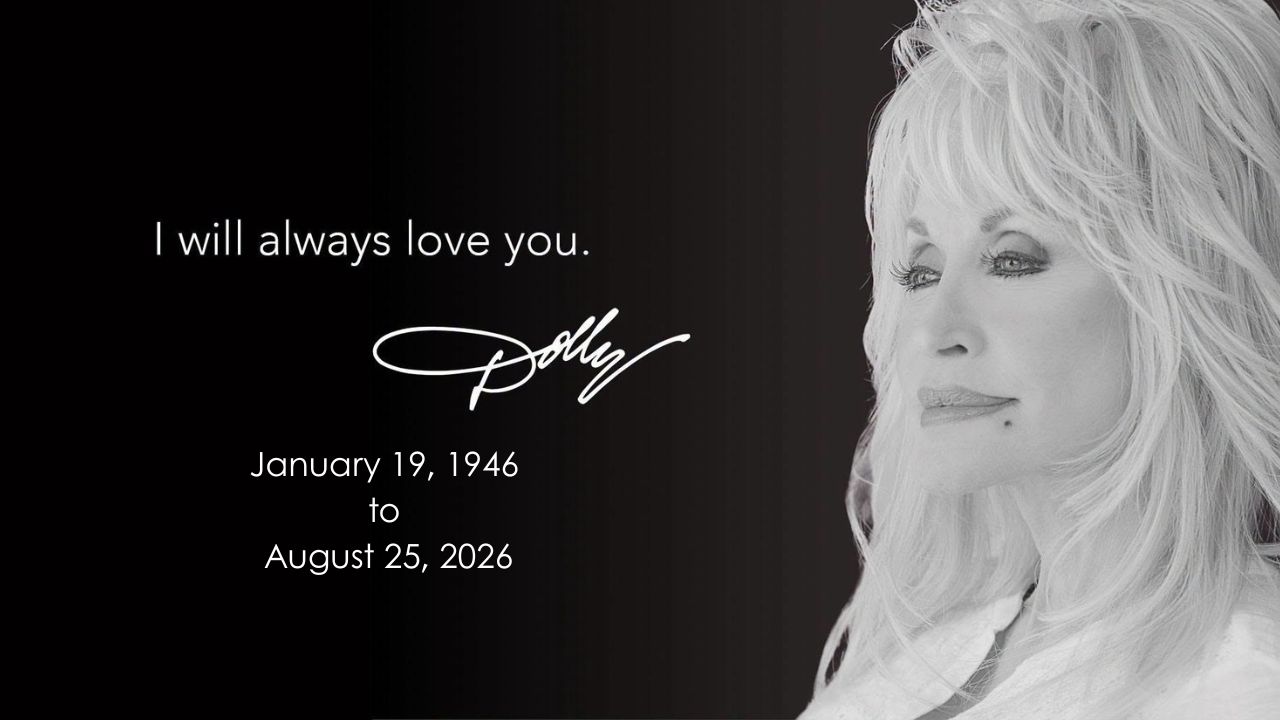
Dolly Parton died Tuesday at the Vanderbilt-Ingram Cancer Center in Nashville.
She was 80.
Her representatives said she died peacefully after bravely facing a brief battle with cancer.
Parton was born January 19, 1946, in Sevier County, Tennessee.
Her death closes a seven-decade career that reached far past Nashville and into homes across Africa.
A Songwriting Legacy That Outgrew Its Author
Parton wrote “I Will Always Love You” in 1973.
Two decades later, Whitney Houston recorded it for “The Bodyguard” soundtrack.
Houston’s version became one of the best-selling singles in music history.
Parton often said the royalties from that cover secured her financial independence for life.
The two versions remain one of the most celebrated songwriting stories in American music.
A Voice That Traveled Continents
Parton’s music found genuine footing in Africa long before streaming made global reach easy.
In Zimbabwe, her records sat alongside the most requested country music for decades.
That popularity grew out of real cultural exchange, not accident.
Her clearest African collaboration came through Ladysmith Black Mambazo, the Grammy-winning South African vocal group.
The two acts recorded “Knockin’ on Heaven’s Door” in 1997 for the group’s album “Heavenly.”
Parton’s voice and the group’s harmonies produced a version that introduced her to new African listeners.
A year earlier, the pair had already recorded “Peace Train” together for Parton’s album “Treasures.”
Archival footage of Ladysmith Black Mambazo performing alongside Parton, followed by stills of Zulu harmony traditions and Joseph Shabalala.
Islands in the Stream Remains Her Most Enduring Duet
Parton’s partnership with Kenny Rogers produced one of the most enduring duets in American music.
Their 1983 hit “Islands in the Stream” topped the charts on release.
It cemented a musical friendship that lasted until Rogers died in 2020.
Few country pairings matched the warmth or staying power of that collaboration.
A Public Figure Who Kept Her Politics Private
Country music has long been associated with conservative politics in the United States.
Parton built a rare exception to that pattern.
She told USA Today in 2020 that she avoided politics because her fans split evenly across party lines.
She repeatedly declined to endorse presidential candidates across several election cycles.
In 2016, she walked back a comment widely misread as an endorsement of Hillary Clinton.
Parton described herself instead as an entertainer whose job was to unite audiences rather than divide them.
That refusal to pick sides helped her keep a fan base that crossed political and cultural lines most artists could never bridge.
It also helped her music travel into African markets without the political baggage often attached to American exports.
Youthful Presence Well Into Her Eighties
Parton stayed visible and active well into her final years.
She kept the same energy and stage presence fans had followed for decades.
Her glamorous, curvaceous image became as central to her public identity as her music.
She often joked about that image herself rather than shy away from it.
Health challenges slowed her travel schedule in her final two years.
She still managed public appearances and new recordings through 2026.
A Legacy Measured In Books and Bridges
Parton’s Imagination Library sent free books to children in communities well beyond the United States.
Her family asked that donations in her memory go to that program instead of flowers.
Parton leaves behind a catalog that found audiences her own government exports rarely reached.
Her willingness to collaborate across borders gave African artists a global stage decades before “crossover” became an industry buzzword.
That willingness, more than any single hit, may be what African listeners remember longest.








LEAVE A COMMENT
You must be logged in to post a comment.