

|
LISTEN TO THIS THE AFRICANA VOICE ARTICLE NOW
Getting your Trinity Audio player ready...
|
Africa is now the center of world Christianity.
Between 2010 and 2020, sub-Saharan Africa passed Europe as home to the largest number of Christians, and it was the only region where the faith grew as a share of the population.
Meanwhile, across North America and Europe, churches keep losing ground as people walk away from religion.
Yet for all that loyalty, the relationship between Africans and the church has too often been that of master and servant.
It was not always that way.
In Christianity’s first five centuries, North Africa was one of the faith’s great centers, and it produced three popes.
Victor I, who led the church from about 189 to 199, pressed churches to celebrate Easter on Sunday and is often called the first Latin-speaking pope.
Miltiades, pope from 311 to 314, guided the church as Emperor Constantine ended the persecution of Christians.
Gelasius I, born in Rome to a family of African descent, served from 492 to 496 and set out a division between church and state power that shaped Catholic thinking for centuries.
No African has held the office in more than 1,500 years.
Today, Africa is home to roughly one in five of the world’s Catholics, but only 18 of the 135 cardinals eligible to elect the current pope were African.
In practice, the church has offered Africans a distant acceptance: welcome in the pews, rare in the seats of power.
Papal Proclamations
That distance did not begin in the conclave; it began more than five centuries ago, in papal orders the church has only now apologized for.
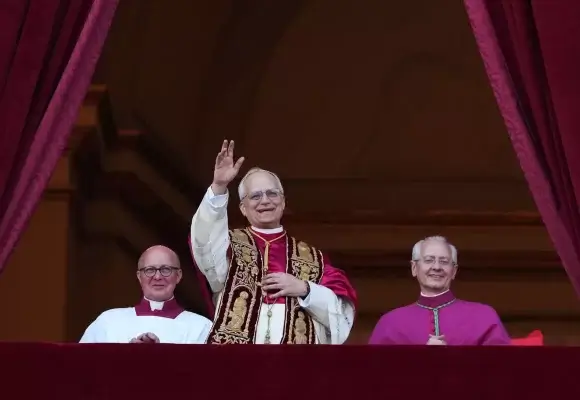
In May, Pope Leo XIV asked forgiveness for those orders, which once blessed the enslavement of Africans.
His apology settled one old argument and reopened a larger one.
For African believers, that argument is not about the distant past.
Churches are deciding now who will lead them, what history they will teach, and what they owe for the harm they blessed.
Africans fill those churches, but the numbers at the top in Rome tell a different story.
Knowing how faith was once used to rule Africa is the first step toward making sure it never is again.
Did missionaries lure Africans into slavery and colonial rule?
Asked that way, the question points at the wrong target.
Missionaries rarely needed to invent a lie about Africa, because Europe had already written one.
Popes supplied the legal claim, philosophers supplied the science, and many missionaries carried both into nearly every corner of the continent.
Nigerian philosopher Emmanuel Chukwudi Eze and Congolese philosopher V.Y. Mudimbe spent their careers showing how that verdict was built.
Read alongside the continent’s own history, their work reveals one project with many hands, and an African nation that refused it.
Popes Wrote African Enslavement Into Church Law Before Missionaries Arrived
In 1452, Pope Nicholas V issued an order known as Dum Diversas.
It gave Portugal’s king the right to conquer non-Christians and “reduce their persons to perpetual slavery.”
Three years later, a second order, Romanus Pontifex, confirmed Portugal’s claims to conquest and trade along Africa’s coast.
Together with a later decree, Inter Caetera of 1493, they laid the groundwork for what became known as the Doctrine of Discovery, the theory used to justify seizing land in Africa and the Americas.
Portuguese ships carried that authority down the Atlantic coast, around the Cape and up to the Swahili towns of Mombasa and Malindi by 1498.
Pope Leo XIV cited both orders among four 15th-century papal decrees in Magnifica Humanitas, his first encyclical, a letter mostly about artificial intelligence released May 25.
“For this, in the name of the Church, I sincerely ask for pardon,” he wrote.
In 2023, the Vatican rejected the Doctrine of Discovery, yet it has never formally revoked the orders by name, as Indigenous campaigners have long asked.
Catholic Rome held that power alone because Protestant churches did not yet exist; the Reformation began in 1517.
Once they did exist, Protestant churches proved just as willing to bend scripture to the needs of empire.
A Christian King in Kongo Warned Portugal Its Traders Were Emptying His Land
One of the earliest surviving protests by an African ruler against the Atlantic slave trade came from inside the church.
Afonso I, king of Kongo, was a devout Catholic convert who welcomed Portuguese priests to his capital at Mbanza Kongo.
In 1526, he wrote to Portugal’s King João III that traders were kidnapping his people, including nobles and members of his own family.
He warned that “our country is being completely depopulated.”
Afonso asked Portugal to send only priests and teachers, along with wine and flour for Mass, and no more merchants.
Lisbon did not stop the trade, and Afonso was later pushed to regulate the traffic rather than end it.
Two centuries later, a young Kongolese woman named Kimpa Vita preached that Jesus and the saints were Kongolese.
Kongo authorities burned her in 1706, with the backing of Capuchin missionaries, according to historians of Kongo.
An African king had embraced the faith, and an African prophet had tried to make it her own.
Neither was allowed to control it.
Europe’s Leading Thinkers Ranked Africans at the Bottom of Humanity
Church law settled who could be conquered.
Europe’s philosophers soon claimed to explain why.
Swedish naturalist Carl Linnaeus sorted humans into varieties in the 1758 edition of his Systema Naturae.
His Latin entry for Africans, as commonly translated, called them crafty, lazy, and careless, ruled by whim rather than law.
Linnaeus believed his system mapped the order God had built into creation.
Scottish philosopher David Hume went further in a footnote to his essay “Of National Characters,” first added in 1753 and revised in later editions.
In its final version, he wrote, “I am apt to suspect the negroes to be naturally inferior to the whites.”
Hume dismissed Francis Williams, a Jamaican poet who wrote in Latin, by comparing his praise to that given a talking parrot.
German philosopher Immanuel Kant built on Hume in 1764.
Describing an African carpenter who had criticized white men, Kant wrote that the man’s blackness was clear proof his words were stupid.
Decades later, German philosopher Georg Wilhelm Friedrich Hegel went furthest of all and wrote Africa out of world history.
Hegel called Africa “no historical part of the world.”
None of these men ever set foot on the continent.
Believers and Skeptics Disagreed on Nearly Everything Except Africa
Religion did not unite these men.
Hume was a skeptic who attacked belief in miracles and doubted revealed religion.
His early footnote spoke of “four or five different kinds” of men, language that leaned toward separate origins for each race and away from Genesis.
Kant, by contrast, held to the Christian teaching that all humans share one family line.
Linnaeus was a devout Lutheran who believed God had guided his work.
They argued constantly over God, creation, and scripture.
About Africans, they agreed.
Europe also produced thinkers who rejected that ranking, which shows the others made a choice.
Johann Gottfried Herder, a Lutheran pastor who studied under Kant, rejected dividing humanity into races altogether.
Anatomist Johann Friedrich Blumenbach rejected claims that Africans were less intelligent and pointed to the work of Black writers as proof.
What Europe’s leading minds shared, in other words, was not a faith but a conclusion.
Eze Showed That Racism Was Built Into Europe’s Idea of Reason
Eze, who was born in Nigeria in 1963 and died in 2007, refused to treat these passages as embarrassing footnotes.
In his 1995 essay “The Color of Reason,” he argued that Kant’s racism belonged inside his philosophy, not beside it.
Kant, Eze noted, was among the first German philosophers to teach anthropology as a regular university course, beginning in the winter of 1772.
Those lectures sorted humanity into races with unequal gifts for reason, beauty and self-rule.
In his physical geography lectures, Kant placed white Europeans at the top and ranked Africans near the bottom.
He suggested Africans could be trained, a word he did not use for Europeans.
For Kant, reason marked a full human being.
Anyone judged short on reason could then be judged fit to be guided, governed, or corrected by others.
Eze gathered evidence in his 1997 book Race and the Enlightenment, setting the racial writings of Europe’s most admired thinkers side by side.
His point was simple and hard to escape.
Europe’s claim to universal reason came with a list of people who supposedly lacked it.
Philosopher Ovett Nwosimiri answered Hume and Kant in a 2017 article, pointing to African philosophy itself as the rebuttal.
Still, Africans should never have had to prove their humanity by passing Europe’s tests.
Mudimbe Named the Machine That Carried the Verdict Into Africa
Mudimbe, who left Mobutu Sese Seko’s Zaire for exile in 1979, asked a different question.
How did Europe’s verdict travel from lecture halls to villages?
In his 1988 book The Invention of Africa, he called the answer the “colonial library.”
By that he meant the body of writing that invented Africa as a place of difference: travel diaries, missionary reports, ethnography, government files and scholarship.
No single author wrote it.
Every author borrowed from it.
Mudimbe described colonization as three linked projects.
They were control of physical space, the remaking of African minds, and the folding of local economies into Western history.
Missionaries worked at the center of the second project, and often the first.
A missionary did not need to read Kant to repeat Kant.
Words like “heathen,” “savage,” and “dark” came ready-made from the library, and mission reports used them as plain description.
Explorers added their own volumes.
In 1863, British explorer John Hanning Speke credited the kingdoms of the Great Lakes to supposed pastoral migrants from northeastern Africa, a claim later developed into the Hamitic hypothesis.
His theory denied the region’s own people credit for the states they had built.
Senegalese scholar Cheikh Anta Diop answered both Hegel and Speke in 1954.
His book Nations nègres et culture argued that ancient Egypt was a Black African civilization and that Africa had a deep history of its own.
Sorbonne examiners first rejected his doctoral thesis, though he earned his doctorate there in 1960, and many Egyptologists still dispute parts of his case.
His central charge, that European scholarship had cut Africa off from its own past, later shaped the UNESCO General History of Africa, where he wrote the chapter on the origins of the ancient Egyptians.
Mudimbe’s framework explains why missionaries from different nations, churches, and centuries produced such similar results across Africa.
Scripture Itself Was Edited to Keep Enslaved Africans Obedient
In 1807, a London missionary society published Select Parts of the Holy Bible for the use of the Negro Slaves in the British West-India Islands.
Its editors cut the Exodus story, in which God frees the Israelites from slavery in Egypt.
They also removed a verse from Galatians declaring that in Christ there is no difference between the enslaved and free.
Ephesians 6:5 stayed in: “Servants, be obedient to them that are your masters.”
Fisk University, a historically Black university in Nashville, owns one of only three known copies, the university says; the other two are in Britain.
Across the Americas, verses such as Ephesians 6:5, Colossians 3:22 and 1 Peter 2:18 anchored sermons preached to enslaved Africans.
Teachings at the heart of the Gospel, such as loving one’s enemies and storing up treasure in heaven, took on a political use in those settings.
Preached to the enslaved, they urged patience with the master and hope in the next life rather than this one.
Africans on the continent never received that exact book.
Many would later accuse mission Christianity of the same bargain, though: comfort in heaven in exchange for land on earth.
Anglican missionaries did more than preach to enslaved Africans; they owned them.
From 1712 to 1838, the Church of England’s mission society, the Society for the Propagation of the Gospel, ran the Codrington sugar plantations in Barbados.
Profits from enslaved labor paid for a college to train clergy.
Archbishop Howard Gregory, primate of the Anglican Church in the West Indies, has called that arrangement “an irony of contradiction.”
In 2023, the society’s successor apologized and pledged 7 million pounds in reparations to Codrington communities.
Berlin Made Missionaries Protected Partners in the Carve-Up of Africa
In 1884 and 1885, 14 powers met in Berlin to set rules for claiming African territory and trade.
Those rules sped up the continent’s carve-up.
No African was invited.
Their General Act bound the powers to protect religious and charitable works that aimed at “bringing home to them the blessings of civilization.”
It then named Christian missionaries, scientists and explorers as “objects of especial protection.”
Article 6 applied across a free-trade zone that stretched from the Congo basin to the Indian Ocean coast.
In one treaty, the mission joined the explorer and the trader as a partner in colonial occupation.
Diplomatic deals made around the conference also helped Belgium’s King Leopold II take the Congo as his personal colony.
Under his rule, soldiers and hired militias forced Congolese villagers to harvest rubber, and the population suffered a catastrophic decline. However, the lack of reliable census data makes its scale hard to measure.
Missionaries were not all silent.
William Henry Sheppard, an African American Presbyterian missionary from Virginia, documented atrocities in the Kasai region in 1899.
He reported counting 81 severed hands after a single raid.
Belgian rubber interests sued him for libel, and a Congo court acquitted him in 1909, backed by 20 witnesses from the Kuba people of the Kasai.
Sheppard’s courage shows that missionaries could choose differently, just as Herder and Blumenbach did.
Many did not.
In Zimbabwe, a Missionary’s Pen Helped Hand Rhodes a Kingdom
Southern Africa shows how a mission station could become the doorway to conquest.
In 1888, King Lobengula of the Ndebele was pressed to sign away mineral rights to agents of Cecil Rhodes.
Charles Helm, a London Missionary Society missionary and a trusted adviser at the king’s court, served as interpreter.
Helm signed a statement that he had “fully interpreted and explained” the document to the king.
Lobengula was told no more than 10 white men would come to mine, but that promise never made it into the written text.
Some Zimbabwean accounts allege that Rhodes’ agents also paid Helm and two of the king’s senior advisers to win the king’s signature.
Lobengula soon published notices denying he had sold his country, but it was too late.
Rhodes used the paper to win a royal charter in 1889, and his Pioneer Column occupied Mashonaland in 1890.
Five years later, the territory carried Rhodes’ own name.
In South Africa, a Church Divided Itself Before the State Divided the Country
South Africa shows how a church can write segregation into doctrine before a government writes it into law.
In 1829, the synod of the Dutch Reformed Church ruled that communion should be served to all members together, whatever their color.
Twenty-eight years later, the synod gave ground.
Its 1857 ruling still called shared worship desirable but allowed separate services “because of the weakness of some,” meaning white members’ prejudice.
By 1881, the church had created a separate mission church for people of mixed race, and separate churches for Black and Indian members followed in the 20th century.
What began as a concession to white prejudice hardened into church policy and later helped make the state’s racial separation look normal and godly.
Religion also gave Afrikaner nationalism its founding story.
Before the Battle of Blood River on Dec. 16, 1838, Voortrekker fighters vowed to God in exchange for victory over King Dingane’s Zulu army.
White South Africa kept the date as a sacred holiday, the Day of the Vow, until democratic South Africa first marked it as the Day of Reconciliation in 1995.
When the National Party took power in 1948, the church was ready to supply the scripture.
Critics called the Dutch Reformed Church “the National Party at prayer.”
In 1974, its synod adopted a report later published as Human Relations and the South African Scene in the Light of Scripture, which offered a biblical defense of apartheid.
Hendrik Verwoerd, the prime minister known as the architect of apartheid, was the son of a Dutch Reformed assistant evangelist and began university as a theology student.
His own case for apartheid leaned less on scripture than on nationhood.
He dressed apartheid up as “separate development,” claiming Black South Africans belonged to separate tribal nations rather than to South Africa.
On that claim, his government pushed Black South Africans toward tribal “homelands” on about 13 percent of the country’s land and denied them any say in the rest.
Still, he claimed heaven’s approval for his rule.
Taking office in 1958, he told the nation in a radio address, TIME reported, that his selection had been made “in accordance with His will.”
His hold on the church was tested after police killed 69 protesters at Sharpeville in March 1960.
In December 1960, church leaders met at the Cottesloe Consultation in Johannesburg and declared that no believer could be excluded from a church because of race.
Verwoerd publicly attacked the declaration, and the Dutch Reformed synods that had taken part soon rejected it.
Beyers Naudé, an Afrikaner minister and one of the delegates, stood by it.
In 1963, church leaders forced him to choose between his pulpit and his new Christian Institute, and he left the ministry.
When the church served the state, the state honored it.
Once it questioned the state, the state brought it to heel.
Black Christians answered with their own theology.
In 1982, the World Alliance of Reformed Churches declared apartheid a sin and its theological defense a heresy.
Three years later, a group of mostly Black theologians working in Soweto issued the Kairos Document.
It named apartheid’s religion “State Theology” and defined it as “the theological justification of the status quo.”
A year after that, the Dutch Reformed Mission Church adopted the Belhar Confession, which declared that the church’s unity could not be divided by race.
In the end, the church family that had split its own members by color was called to account by the congregations it had set apart.
In Rwanda, Missionary Race Theory Hardened Into Labels That Killers Later Used
In Rwanda, the colonial library produced its deadliest chapter.
Catholic missionaries and Belgian officials adopted Speke’s Hamitic idea and taught that the Tutsi were a superior people from the north.
Bishop Léon Classe, the colony’s leading Catholic figure, backed placing Tutsi chiefs in charge in the 1920s.
Belgian colonialists and missionaries turned those racial ideas into official categories between 1927 and 1936, as a study published by Pambazuka News details.
Hutu, Tutsi, and Twa identities existed before colonial rule, as did inequality, but people could marry and move between groups.
Colonial rule and mission teaching recast them as fixed, inherited races.
During the 1930s, Belgium wrote those labels into censuses and identity documents for every Rwandan.
In 1992, politician Léon Mugesera revived the old claim and cast Tutsi as foreign invaders who should be sent back north.
Two years later, killers used the same identity cards to find their victims, and more than 800,000 people, mostly Tutsi, were murdered in about 100 days.
Colonial race theory did not cause the genocide on its own, but it hardened the categories and myths that extremists later turned into weapons.
Rwanda’s Catholic bishops apologized in 2016, and Pope Francis asked forgiveness the next year for priests and nuns who took part in the killing.
Kigali replied that the apology did not go far enough, since some genocide suspects had been shielded inside church institutions.
Kenya Shows How the Bible, the Map and the Gun Moved Together
On the Kenyan coast, Johann Ludwig Krapf, a German missionary with the Anglican Church Missionary Society, opened a station near Mombasa in 1844.
Within weeks, his wife and newborn child died of malaria, and he buried them at Rabai.
Krapf dreamed of a chain of mission stations stretching across Africa from the Indian Ocean to the Atlantic.
His fellow missionary Johannes Rebmann became the first European known to report seeing Kilimanjaro in 1848, and a year later a Kamba trader named Kivoi guided Krapf to a view of Mount Kenya.
Their reports of snow on the equator set off debate in Europe and sharpened European interest in East Africa’s interior.
Maps followed the missionaries, and armies later followed the maps.
In 1895, two British traders, Peter West and Andrew Dick, tried to force a trade monopoly on the Nandi, according to histories of the Nandi resistance.
Dick had two Nandi warriors who had surrendered whipped, bound, and drowned, those accounts say, and Nandi fighters then killed West.
For the next decade, Orkoiyot Koitalel arap Samoei led the Nandi against British rule and the railway cutting through their land.
On Oct. 19, 1905, British officer Richard Meinertzhagen lured Koitalel to a sham truce meeting and shot him dead.
Sosten Saina, whose great-uncle served as one of Koitalel’s bodyguards, told The EastAfrican that Koitalel was shot as he reached out to shake hands.
Missionaries and colonial officials pressed the Agĩkũyũ of central Kenya to abandon much of their way of life, including their rites of passage, customs and forms of worship.
An early belief among the Agĩkũyũ held that a white settler and a white missionary were the same, according to a 2023 study in the journal Acta Theologica.
Tensions boiled over in 1929, and many Kikuyu left mission churches to build their own churches and independent schools.
When the Mau Mau war began in 1952, most mission churches sided with the colonial government.
Ethiopia Expelled the Missionaries and Kept Its Freedom
Ethiopia shows what happened when Africans kept control of their own faith.
Its church dates to the fourth-century kingdom of Aksum, a thousand years before Portuguese ships reached Africa’s coast.
In the early 1600s, Portuguese Jesuits won over Emperor Susenyos, who declared Catholicism the state religion in 1622.
Rome sent Afonso Mendes as patriarch, and he condemned Ethiopian customs, including the Saturday Sabbath and the church’s fasts.
Mendes told Ethiopian mothers that children baptized in their own church were in hell.
Revolt spread, thousands died, and in 1632 Susenyos gave up the effort and allowed Ethiopians to return to their faith.
His son, Emperor Fasilides, expelled the Jesuits, seized their lands, and later ordered their books burned.
When Fasilides heard the Portuguese had bombarded Mombasa, he blamed the Jesuit patriarch and banished the remaining missionaries.
Ethiopia then closed itself to Catholic missions for nearly two centuries.
Protestant missionaries fared little better; the kingdom of Shoa expelled them in 1843, and Krapf was among those forced out.
Krapf came back in 1867 as an interpreter for the British army invading Ethiopia.
Emperor Tewodros II had jailed several missionaries and British officials, and Britain sent some 13,000 troops to free them.
Records of the British and Foreign Bible Society show Krapf agreed to serve on one condition: that he could oversee Bible distribution in Ethiopia.
Amharic Gospels were shipped to Aden for handing out during the campaign.
British forces stormed Tewodros’ fortress at Magdala in April 1868, and the emperor took his own life rather than surrender.
Soldiers burned the fortress and carried off Ethiopian treasures, many of which remain in British collections that Ethiopia has long asked to have returned.
Yet the British left, and Ethiopia stayed free.
On March 1, 1896, Emperor Menelik II’s army crushed an Italian invasion at Adwa, the greatest African victory over a European army of the era.
Fascist Italy returned in 1935 with poison gas and occupied the country, but Ethiopian resistance and Allied forces drove it out by 1941.
Ethiopia’s lesson is not that Africans rejected Christianity. Ethiopians were Christians long before Europe’s missionaries arrived.
What they rejected was foreign control of their faith, and that refusal helped keep their country out of the colonial library’s grip.
Fanon Called the Colonial Church the Foreigner’s Church
Frantz Fanon, the Martinique-born psychiatrist who joined Algeria’s war for independence, saw the pattern across the continent.
In The Wretched of the Earth, published in 1961, he set Christianity beside the pesticide DDT.
Both, he argued, were used to wipe out what colonizers saw as disease in African life.
Fighting yellow fever and spreading the Gospel, he wrote, belonged on the same balance sheet.
Fanon’s verdict on the institution was short: “The Church in the colonies is the white people’s Church, the foreigner’s Church.”
He cited Kenya’s Mau Mau war several times in the book.
In one passage, he argued that Mau Mau drew strength from young Kenyans pushed off the land, a tide neither missionaries nor the colonial state could hold back.
His theory grew mainly from Algeria, yet he used Kenya as evidence that it held across Africa.
Africans Took the Bible and Turned It Against Its Carriers
Even so, the story does not end with Africans deceived.
Archbishop Desmond Tutu often retold an old African saying about missionaries who arrived holding the Bible while Africans held the land.
In his telling, Africans closed their eyes to pray and opened them to find the land gone and the Bible in their hands.
Tutu used the story to argue that the Bible could be a radical document and a powerful weapon, as noted on the African proverbs website of Nairobi’s Tangaza University.
Enslaved Africans in the Americas kept singing about Moses and Pharaoh long after editors tried to cut Exodus from their Bibles.
Across southern and western Africa, independent churches rose to claim the right to read scripture without a missionary standing over them.
Some took their name and hope from Ethiopia, citing the biblical promise that Ethiopia would stretch out her hands to God.
Apologies Arrive Without the Land, the Papal Orders or the Money
Churches are now apologizing, but their apologies stop short of repair.
Pope Leo XIV asked for pardon, yet the papal orders have never been revoked by name.
In 2023, then-Archbishop of Canterbury Justin Welby said it was time to act on “our shameful past” after research tied the Church of England’s endowment to the slave trade.
Its endowment managers, the Church Commissioners, pledged 100 million pounds to a Fund for Healing, Repair and Justice.
More than three years later, a legal challenge disclosed in July is delaying the fund’s registration as a charity.
Sarah Mullally, installed as Archbishop of Canterbury in March, now inherits that fight.
Neither apology addressed land, the first thing colonial rule took and the last thing it returned.
African Thinkers Remain Divided Over Whether to Keep the Faith or Leave It
None of this history settles what Africans should believe, and African thinkers themselves disagree.
Some argue Christianity was never Europe’s to give.
Ethiopia’s church predates European missions by a thousand years, and North Africa gave the early church three popes.
Gambian historian Lamin Sanneh argued that once the Bible was translated into African languages, Africans made the faith their own.
Ghanaian theologian Kwame Bediako went further, describing Christianity in Africa as the renewal of a non-Western religion.
Others see no path back into a faith that arrived alongside the gun.
Ugandan poet and scholar Okot p’Bitek accused missionaries and African Christian scholars, including Kenya’s John Mbiti, of dressing African gods in Western and Christian clothing.
Nigerian Nobel laureate Wole Soyinka has long defended the Yoruba Orisa faith, which he argues Islam and Christianity together failed to crush.
Both camps share a demand that Africans, not outsiders, define African faith.
For believers who stay, Ethiopia points the way: keep the faith, but keep it in African hands.
That means teaching the papal orders, the Slave Bible, and the Rudd Concession in African seminaries.
It also means pressing for a voice in Rome that matches Africa’s numbers, not for status but for a purpose.
African leadership would put African experience at the center of church teaching, not at its margins.
It would hold the church to its own claims of morality and equality.
Above all, it would ensure no pulpit is ever again used to hide or bless the subjugation of a people.
Those returning to older faiths can take heart from Soyinka’s point that Africa’s own religions were never as dead as the missionaries claimed.
Whichever path Africans choose, real repair still means formally canceling the papal orders, opening church archives and land records to African scholars, and returning what was taken.
What no African should accept is a church that asks for loyalty but can still be bent to justify ruling them.
Methodology note: The Africana Voice built this analysis from primary texts and published scholarship. Sources include papal documents and Vatican statements, the 1526 letters of Kongo’s King Afonso I, the 1885 General Act of Berlin, the Rudd Concession, and the writings of Linnaeus, Hume, Kant, and Hegel. African philosophers Emmanuel Chukwudi Eze, V.Y. Mudimbe, and Frantz Fanon frame the analysis, alongside African scholars who disagree over Christianity’s place in African life. Regional history draws on Zimbabwean, Rwandan, Kenyan and Ethiopian scholarship, church and missionary records, Nandi oral testimony and news reports on recent apologies.






LEAVE A COMMENT
You must be logged in to post a comment.