

|
LISTEN TO THIS THE AFRICANA VOICE ARTICLE NOW
Getting your Trinity Audio player ready...
|
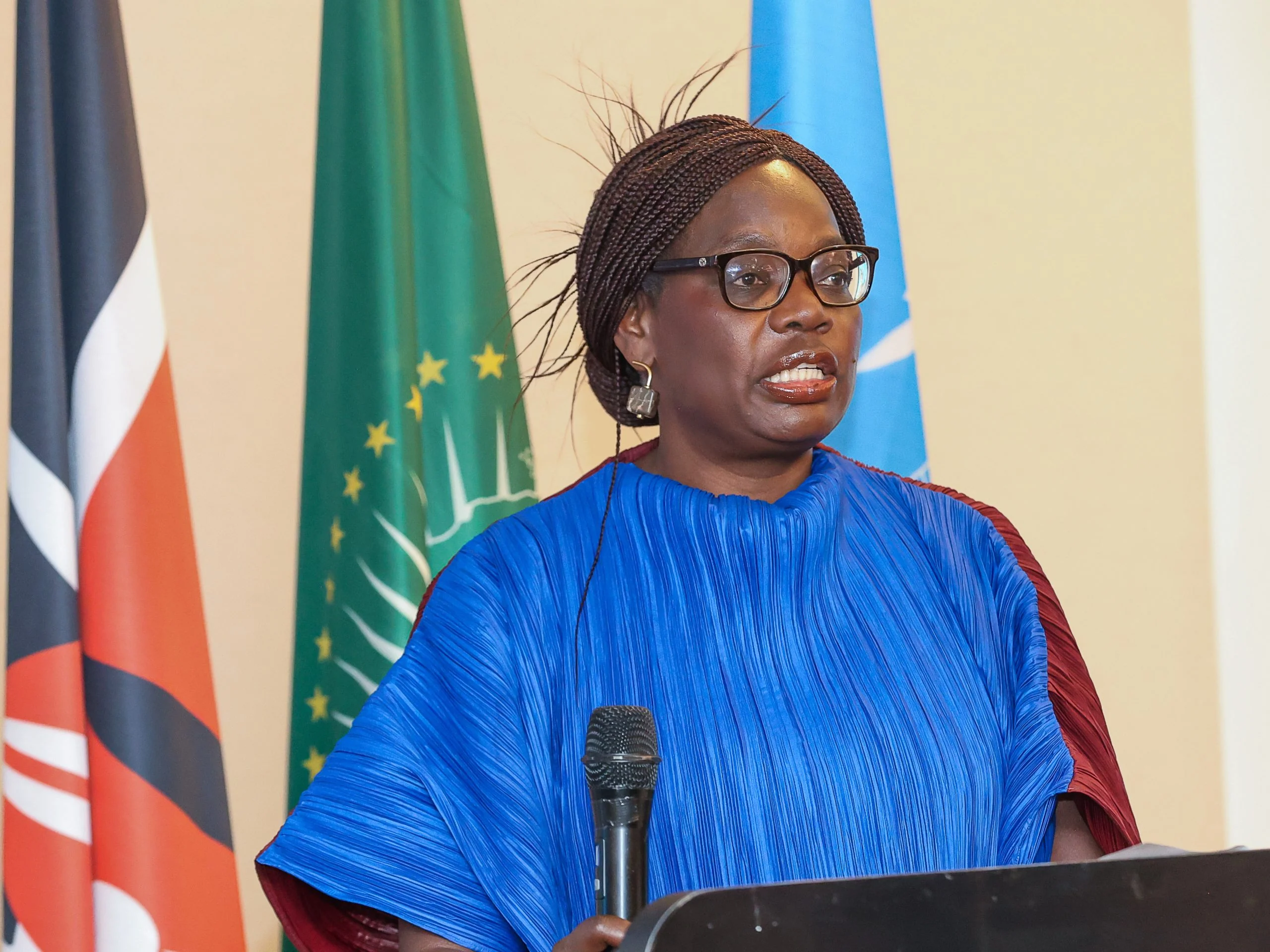
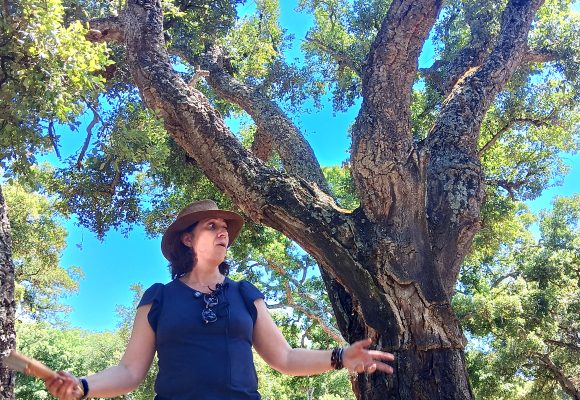
On the morning of November 3, 2026, in New York, a Kenyan legal scholar found herself at the centre of an election whose significance extended far beyond the diplomatic corridors in which it was conducted.
Professor Phoebe Okowa already made history last year, when she became the first Kenyan elected to the International Court of Justice (ICJ), the United Nations’ principal judicial organ. That appointment, however, was temporary. It followed the resignation of Somali judge Abdulqawi Ahmed Yusuf and would have ended in February 2027.
However, this time, the stakes were different.
Okowa was competing for a full nine-year mandate on a court that hears disputes between states, interprets international law and issues advisory opinions on some of the most consequential questions confronting humanity. The election involved nine candidates competing for five positions, with voting conducted separately by the UN General Assembly and Security Council.
The contest went through processes. In the first round of voting in the General Assembly, Okowa received 117 votes, above the required absolute majority of 97. But the Security Council did not immediately elect her. The voting continued. In the final ballot, she secured 183 votes in the General Assembly, while Peru’s Luz del Carmen Ibáñez Carranza received two. In the Security Council, Okowa won 13 votes, with two abstentions.
The result secured her place on the Court for the 2027-2036 term.
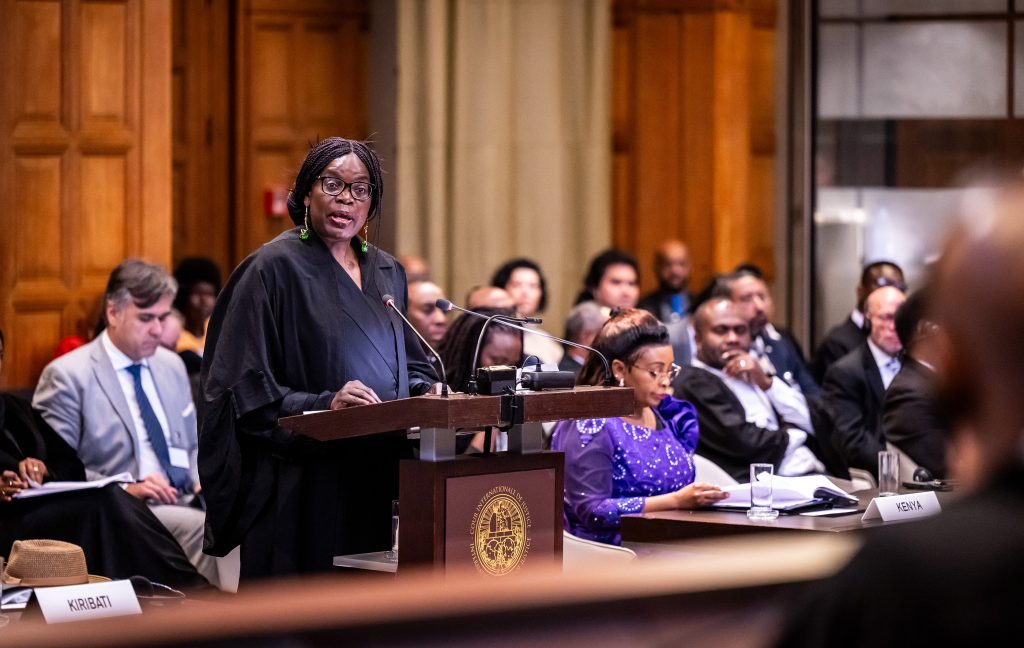
This was a big diplomatic victory for Kenya. The significance of her win also transcended Nairobi and was felt across Africa, as it meant the continent’s continued representation at the highest level of international judicial leadership. For women in law, it was another powerful demonstration of the possibilities of reaching institutions that have historically been dominated by men.
Even so, the significance of Okowa’s election cannot be adequately captured by the language of national pride.
Okowa has spent her career studying a world in which states invoke sovereignty to defend their interests, international institutions attempt to restrain power, and the legal consequences of war, environmental destruction and historical injustice remain fiercely contested.
From Kericho to the architecture of international law
Phoebe Okowa was born in Kericho, Kenya, on January 1, 1965. Her academic journey began at the University of Nairobi, where she graduated with a Bachelor of Laws degree with First Class Honours in 1987. She subsequently obtained a Diploma in Legal Practice from the Kenya School of Law in 1988 and was called to the Kenyan Bar in October 1990.
She then travelled to Oxford University on a Foreign and Commonwealth Office scholarship, graduating with a Bachelor of Civil Law in 1990 before completing her doctorate in public international law in 1994. Her doctoral supervisor was Ian Brownlie, one of the most influential international law scholars of his generation and the Chichele Professor of Public International Law at Oxford.
Her work has examined the responsibility of states for environmental harm, the protection of natural resources in conflict zones, the relationship between state responsibility and individual criminal accountability, and the application of international law by domestic courts.
Her academic career began at the University of Bristol, where she taught from 1994 to 2001, before moving to Queen Mary University of London. She became a professor of public international law and has also held visiting appointments at institutions including New York University School of Law.
Beyond the university system, she engaged governments and non-state actors on legal matters. She advised governments and non-governmental organisations on international legal questions, served as counsel before international tribunals, and became a member of the Permanent Court of Arbitration in The Hague between 2017 and 2022.
By the time she reached the ICJ, she was entering a judicial institution after decades spent studying, teaching and participating in the development and application of international law.
Challenged limits of historical accountability
One of the most consequential dimensions of Okowa’s scholarship concerns a question that remains politically sensitive across the world: Can international law provide a framework for accountability for colonial wrongs?
At Princeton University’s University Center for Human Values, where she was a fellow in 2024-2025, Okowa pursued research on international reparations for colonialism. Her work examined legal arguments that have traditionally been used to resist accountability for historical abuses, including the principle that conduct should be judged according to the law applicable at the time it occurred.
The issue is significant for Africa. Across the continent, questions of colonial dispossession, historical injustice and reparations remain part of political and legal debates. Yet the passage of time often becomes an obstacle in attempts to establish responsibility for abuses committed under colonial rule.
Okowa’s research interrogates the legal assumptions behind that obstacle. In her Princeton seminar, she explored whether the law applicable in colonised societies, rather than only the international legal framework established by colonial powers, could provide a starting point for examining responsibility for historical wrongs. She also considered how these questions intersect with contemporary climate accountability, particularly the responsibility associated with historical greenhouse gas emissions.
The implications are profound. For decades, international law has been criticised for developing within a system shaped heavily by European states and their historical interests. The question of whether that system can adequately address injustices committed during colonialism is not simply an academic debate. It concerns the legitimacy of the rules themselves.
The climate question
In July 2025, the ICJ delivered a landmark advisory opinion on the obligations of states in respect of climate change. The Court addressed questions about states’ legal obligations to protect the climate system and the consequences of failing to meet those obligations.
The opinion was significant because climate change raises questions about international responsibility, the protection of human rights and the legal obligations of states whose actions contribute to harm beyond their borders.
She has studied state responsibility for environmental damage, the protection of natural resources in conflict zones and the relationship between legal responsibility and accountability. She also appeared as counsel for Kenya, Namibia, Sierra Leone, The Gambia and the Commission of Small Island States in the climate change advisory proceedings before the ICJ.
For countries in Africa and other parts of the Global South, the question of climate responsibility carries particular weight. Many communities facing severe climate impacts have contributed relatively little to the accumulation of greenhouse gas emissions. At the same time, they may have fewer resources with which to adapt to droughts, floods, rising temperatures and other consequences.
The international legal debate therefore touches on questions of equity, historical responsibility and the obligations of states with different levels of economic capacity. Okowa’s research into the legal architecture of responsibility makes her professional journey especially relevant to this debate. It would be inaccurate, however, to suggest that her academic work determines how she will vote as a judge.
The importance of her appointment lies in the expertise she brings to an institution that must interpret international law in a world increasingly shaped by environmental disputes.
The Court’s climate opinion was delivered before Okowa’s full nine-year term begins. Her election therefore does not make her a judge in that particular advisory proceeding. But the climate question is likely to remain one of the defining legal issues of the period during which she serves on the bench.
The International Court of Justice’ Powers
The institution Okowa has been elected to is often described as the world’s highest court. The ICJ is the principal judicial organ of the United Nations. It is based at the Peace Palace in The Hague, Netherlands, and is composed of 15 judges elected by the General Assembly and Security Council for nine-year terms. Judges may be re-elected.
Its jurisdiction includes contentious cases between states and advisory opinions on legal questions submitted by authorised UN bodies and agencies.
Unlike the International Criminal Court, the ICJ does not prosecute individuals for genocide, war crimes or crimes against humanity. Its contentious jurisdiction concerns disputes between states.
The ICJ can determine whether a state has violated an international obligation, interpret treaties, resolve territorial disputes and clarify the legal consequences of conduct by states.
Its decisions are binding on the parties to a contentious case. However, the enforcement of a judgment is not automatic. Under Article 94 of the UN Charter, a state that fails to comply may be referred to the Security Council, which can consider measures to give effect to the judgment.
This is where the Court’s authority encounters the realities of global power.
International law operates in a world where states have vastly different military, economic and diplomatic capabilities. The ICJ does not possess its own police force. Its authority rests on law, the obligations undertaken by states and the international political system in which it operates.
The institution is therefore both consequential and constrained.
Its judgments can influence diplomatic relations, international legal arguments and the conduct of states. Yet the effectiveness of international justice may also depend on the willingness of governments to respect decisions they find inconvenient.
Okowa’s appointment comes at a time when these tensions are central to the credibility of the international legal system.
The significance of an African woman on the bench
When she was elected to the ICJ in November 2025, Princeton University reported that she became the first Kenyan and only the eighth woman to serve on the Court’s bench.
Her earlier election to the United Nations International Law Commission in 2021 had already marked a historic milestone. She became the first African woman elected to the Commission since its establishment in 1947.
The International Law Commission is not a court. It is a body of legal experts tasked with helping codify and progressively develop international law. Its work contributes to the preparation of legal frameworks and the clarification of rules that states may later adopt or apply.
The significance of Okowa’s election to both institutions is therefore not simply that a woman from Africa has occupied prominent positions. It is that she has participated in two different stages of international legal development: the work of examining and developing legal rules, and the judicial work of interpreting and applying them.
This is particularly important in a system where questions of representation are closely tied to legitimacy.
The ICJ Statute does not prescribe a formal regional quota for judges. Article 9, however, requires that the Court as a whole reflect the principal legal systems and forms of civilisation of the world.
The African Union’s UN Mission welcomed Okowa’s re-election as an important milestone in sustaining African representation and advancing gender equality, diversity and inclusivity in international judicial leadership.
Kenya’s diplomatic victory, and Africa’s calculations
Okowa’s election was also the outcome of a diplomatic campaign.
In the days preceding the November vote, Kenya’s Ministry of Foreign Affairs described its effort to secure her re-election as an intensive diplomatic undertaking involving engagement with UN member states. The campaign was led by Principal Secretary for Foreign Affairs Dr Abraham Korir Sing’oei.
Sing’oei’s congratulatory statement described the contest as a gruelling campaign involving nine candidates, of whom five would be elected. He presented the outcome as an affirmation of Kenya’s commitment to multilateralism, international justice and the rule of law.
President William Ruto similarly celebrated the election as an affirmation of Kenya’s legal expertise and contribution to the international community. Former Chief Justice David Maraga described the result as an affirmation of international confidence in Okowa’s ability to address questions of justice and the rule of law. Faith Odhiambo, the former president of the Law Society of Kenya, highlighted the importance of the achievement for young women aspiring to careers in law.
The African dimension was particularly notable. According to reporting by Kenya’s Citizen TV, Sierra Leone withdrew its candidate, Professor Charles Chernor Jalloh, and backed Okowa in an effort to retain Africa’s seat on the Court.
However, African representation is not the same as an African voting bloc, and a judge is not expected to represent the political interests of their country or region. Once elected, ICJ judges serve in their individual capacity, not as delegates of their governments.





LEAVE A COMMENT
You must be logged in to post a comment.