

|
LISTEN TO THIS THE AFRICANA VOICE ARTICLE NOW
Getting your Trinity Audio player ready...
|
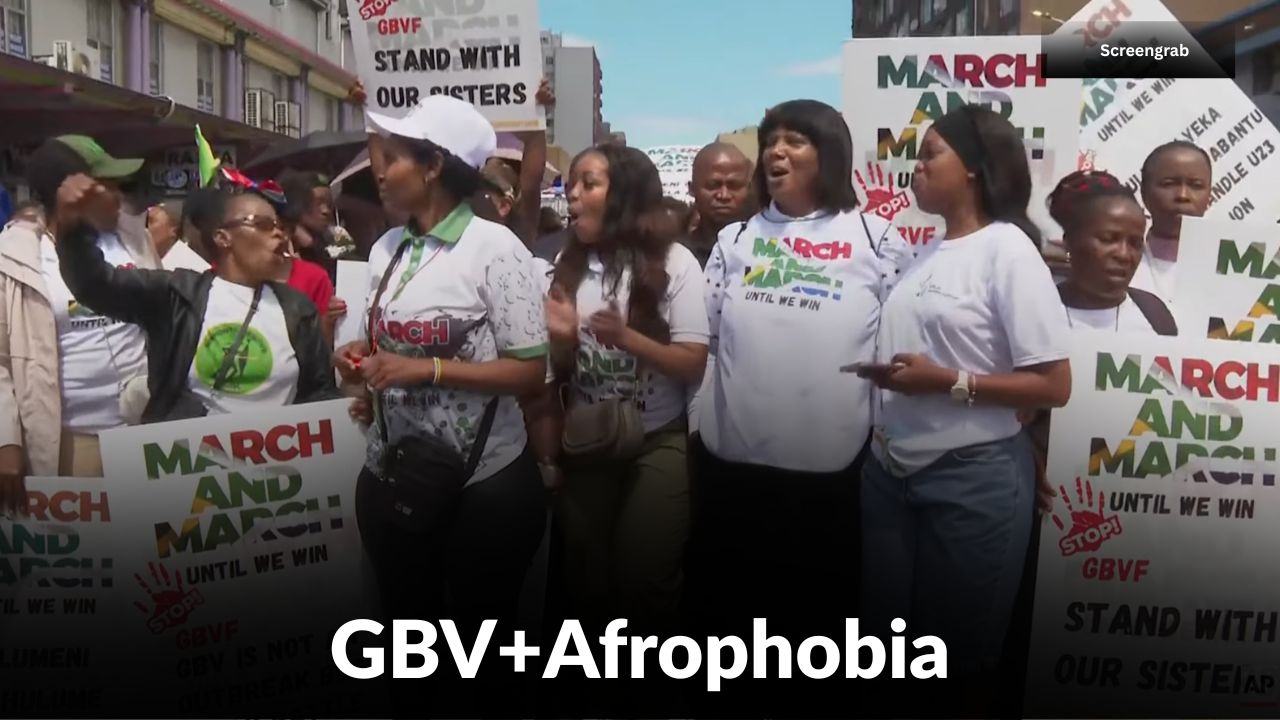
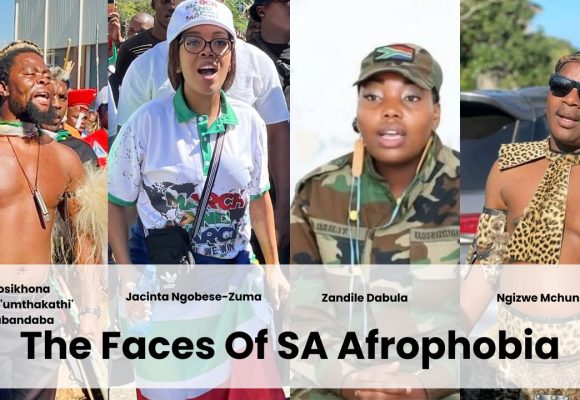
Jacinta Ngobese-Zuma’s March and March movement has spent the week since its Sept. 30 deadline repositioning itself around gender-based violence, after its anti-immigration mobilization badly underperformed its own projections.
The deadline carried no legal force, and no mass deportation followed, the same outcome as June 30.
The Turnout That Pushed the Pivot
March and March leader Sphelele Shinga told Africanews in early September that organizers expected up to 1.5 million people to join the Sept. 30 action.
GroundUp reporters counted hundreds of marchers in central Durban, about 25 at Cape Town’s Western Cape legislature and about 15 in Tshwane’s Church Square before national spokesperson Sandile Dube called off that march over rain and low numbers.
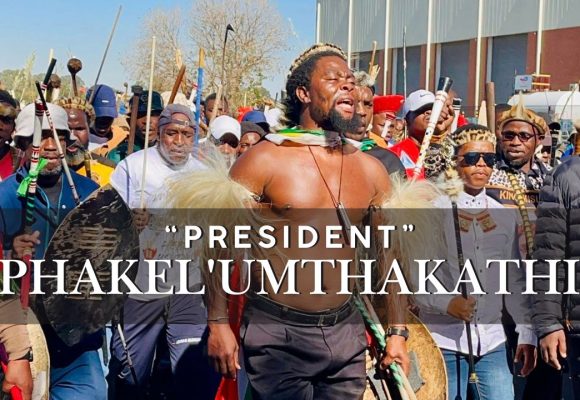
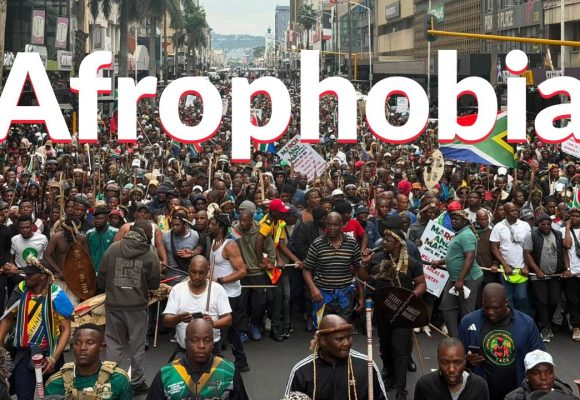
The Associated Press similarly reported “hundreds” in Durban, where marchers carried traditional Zulu weapons and sang cultural songs, a dramatic visual that outpaced the actual headcount; AP’s livestream of the march drew nearly 111,000 views, a reach far beyond the crowd on the street.
Police told AP they recorded no incidents of violence against foreigners during the march, a claim that conflicts with GroundUp’s reporting of an assault on a man mistaken for a foreign national on Point Road and intimidation of migrant-run shops nearby.
Johannesburg saw a small anti-xenophobia counter-gathering in Bertrams rather than a visible March and March crowd, GroundUp’s photos from the scene showed.
By comparison, June 30 drew thousands in Durban alone and led to more than 900 arrests nationwide, Salaamedia reported.
Days before Sept. 30, the movement had already rebranded the date as a “Men’s March against GBV and Crime,” tying it to the Ekurhuleni killings, though AP’s own framing of the march led with immigration and treated the GBV message as secondary.
The Rebrand Didn’t Fully Stick, Even on Day One
Despite the GBV framing, Ngobese-Zuma’s own remarks in Durban on Sept. 30 returned to her original message.
“We were raising another concern about our porous borders and the fact that we have overstretched resources that are not enough to take care of us,” she told reporters, adding that she wanted government to take “the cries of the people seriously, instead of trying to look good to the international world.”
Her husband, Xolani Zuma, who now leads the movement’s SA First Forum, delivered the GBV message in her place, telling GroundUp, “People have come to the march today to bring attention to GBV and the killing of women in South Africa.”
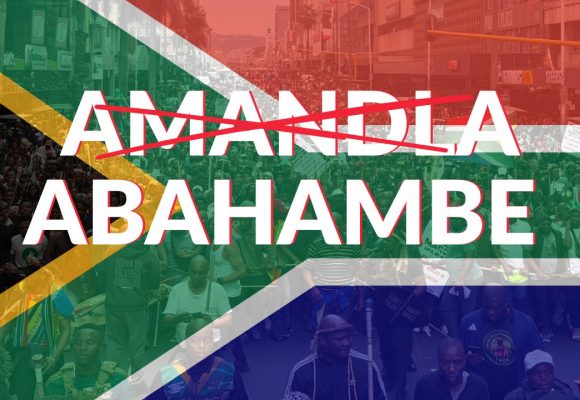
The poster advertising the Durban march mentioned only GBV, but marchers chanted “Abahambe,” meaning “they must leave,” GroundUp reported, and some carrying sticks, sjamboks and knobkerries visited immigrant-run shops and threatened those inside.
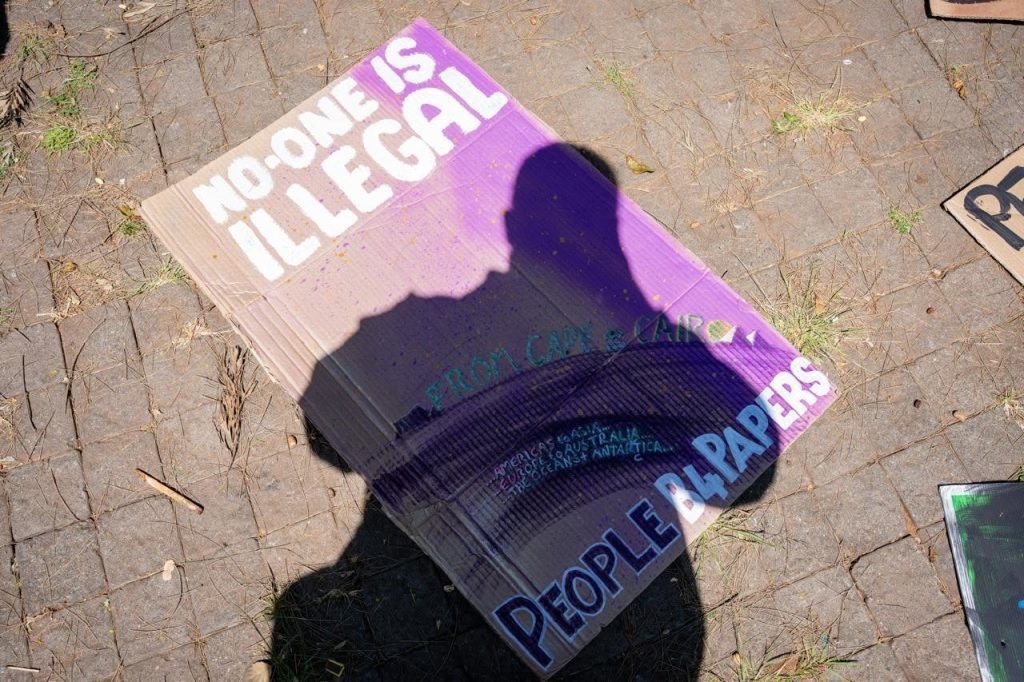
Chandra Gould of the Institute for Security Studies told GroundUp there is no evidence migrants are more likely than South Africans to commit gender-based violence, and activist Yeshelen Govender called the pairing hypocritical, citing migrant women and children the movement’s own weekly marches have displaced.
A 160-Organization Coalition Has Spent Months Documenting Alleged Abuse
The criticism from Govender’s group, Siyafana Sonke Action Campaign, is not new, and it predates the Sept. 30 flop by weeks.
On Sept. 3, roughly 100 March and March supporters descended on a Che Guevara Road encampment of refugees, mostly from Congo, Burundi and Rwanda, who had been living there for months, in what the movement called a “clean-up.”
The confrontation turned violent: four refugees were hospitalized, a March and March leader was struck in the mouth, and SSAC said two refugees had already died on-site, one from a medical condition it said was worsened by continued exposure to winter weather.
SSAC, a coalition of 160 organizations against xenophobia and Afrophobia, condemned the operation in a statement calling Che Guevara Road, named for an icon of international solidarity, “the site of a vicious xenophobic campaign targeting African refugees.”
The statement also disputed the framing of relocations to the Lindela Repatriation Center in Gauteng as voluntary, saying families who had lived in KwaZulu-Natal for years or decades were being forced out by municipal neglect rather than choosing to leave, and called the plan “a worrying disregard for the actual conditions on the ground.”
Ngobese-Zuma shared the statement on her verified Facebook page with a dismissive caption, writing that a man had lifted his middle finger at her as “part of their plan to incite violence then act like victims.” The post drew 1,300 reactions.
On Oct. 6, Daily Maverick published a database SSAC compiled from individualized interviews with displaced immigrants, documenting what it describes as months of violence by March and March in the run-up to the June 30 deadline.
The Murder Case Behind the Pivot Has Partly Unraveled
Three South African suspects, two women and a man, appeared in court over the killing of Jabulile Ntimba, the ninth of the Ekurhuleni victims, in what police described as a domestic dispute not necessarily connected to the other killings.
The suspect tied to the first, July killing, the one investigators initially flagged as possibly a foreign national, still has no officially confirmed nationality in mainstream reporting as of this week.
That leaves Ngobese-Zuma’s claim that foreign nationals are driving the Ekurhuleni killings resting on one unresolved case rather than a pattern, even as the GBV framing built around those killings continues.
Diplomatic and Legal Ground Has Shifted Against Her, Too
Nigeria’s parliament indefinitely suspended official visits and engagements with South Africa earlier in September over the tensions the campaign has driven, the Associated Press reported, the first measurable diplomatic cost of either deadline.
Home Affairs ordered refugee reception offices Sept. 28 to accept asylum applications from anyone seeking protection, including people who entered unlawfully, implementing a July Constitutional Court ruling rather than a new policy choice.
Ngobese-Zuma called the ruling “absolutely shocking,” and on Oct. 6 March and March members shut down Durban’s refugee reception center, with some shouting “kwerekwere,” a slur for African immigrants, at people in the queue, GroundUp reported.
In a Sept. 29 address, Ramaphosa committed additional money to gender-based violence programs rather than new immigration enforcement, the response the movement had been demanding.
A GBV Group Told Her to Stay in Her Lane
Women for Change, an established gender-based violence advocacy organization, wrote under a News24 post that March and March should “stop jumping on the GBV matter just for clout.”
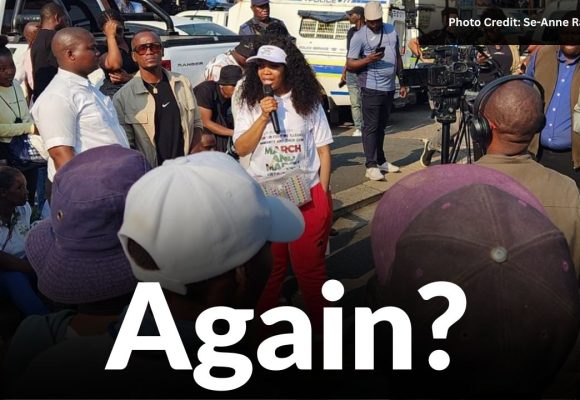
Ngobese-Zuma responded publicly, asking whether the group believed it “owns GBV marches.”
The exchange drew wider commentary, including from radio hosts MacG and Sol Phenduka, who questioned why Women for Change’s German-born founder should get to gatekeep South African GBV advocacy over a South African woman, turning the rebrand into a debate about who gets to lead the cause rather than a unifying message.
She’s Now Tied the Movement to the November Election
Ngobese-Zuma called for an Oct. 15 “take leave” action and told supporters the movement wouldn’t back any party in the Nov. 4 election without a clear answer on foreign nationals.
eThekwini Mayor Cyril Xaba said separately that foreign nationals camping in Durban had agreed to relocate to the Lindela Repatriation Center in Gauteng, a move his office credited to sustained pressure rather than to any court or legislative action, a framing SSAC disputes, saying the people involved had run out of other options.




LEAVE A COMMENT
You must be logged in to post a comment.