

|
LISTEN TO THIS THE AFRICANA VOICE ARTICLE NOW
Getting your Trinity Audio player ready...
|
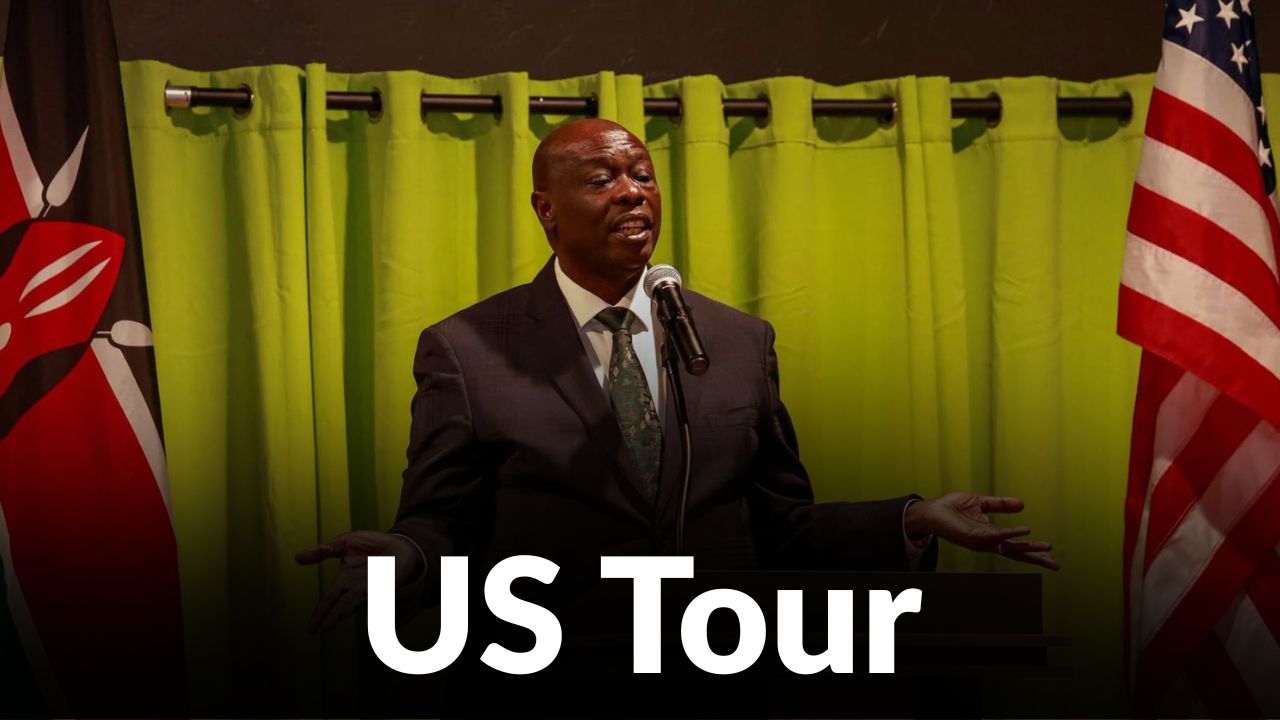
Former Deputy President Rigathi Gachagua says he is willing to serve as Nairobi Sen. Edwin Sifuna’s running mate in 2027, or have Sifuna serve as his.
He made the offer on Sept. 6 during a diaspora stop in Spokane, Washington, part of an extended U.S. tour.
His remarks matter because they came from the man widely seen as Mount Kenya’s kingmaker, aimed at a 44-year-old senator many assumed the region would resist.
They also revived a harder question critics have been asking since Gachagua’s 2024 impeachment: whether he is the right face for a movement built on the promise of better governance.
A Diaspora Stop Becomes a Campaign Announcement
Gachagua left Kenya on Aug. 26 for a U.S. tour expected to last roughly 50 days.
Spokane was one early stop on a route that also includes Portland, Kansas, Dallas and Boston through early October.
Speaking to Kenyans gathered there, the Democracy for the Citizens Party leader said the united opposition should not be boxed in by age or regional loyalty when picking its 2027 flag bearer.
“There is no problem, by the way, even I, Riggy G, can deputise Sifuna,” he told the crowd.
He added that Sifuna could just as easily deputize him, or that a blended ticket with Wiper leader Kalonzo Musyoka was possible.
Many Sifuna supporters welcomed the remarks, eager to see him become the unified opposition candidate against President William Ruto in 2027.
Family Ties and a Different Kind of Endorsement
Gachagua framed his openness to Sifuna as personal, not just tactical.
He described Sifuna as a cousin and said backing him would be simpler than the 2022 decision to back Ruto.
By his own account, Mount Kenya voters knew Ruto’s political past carried baggage when they supported him.
He argued Sifuna carries no comparable controversy, telling the crowd Sifuna had reached an age at which he could legitimately seek the presidency.
Whether that framing holds up under scrutiny from rival Mount Kenya politicians remains to be tested.
Atwoli’s Warning Meets a Blunt Rebuttal
Gachagua’s Spokane remarks followed a pointed challenge from COTU Secretary-General Francis Atwoli a day earlier.
Speaking at a UDA Western Region aspirants’ meeting in Kisumu on Sept. 5, Atwoli urged Sifuna to wait his turn.
“The time is not ripe for the young man,” Atwoli said.
Gachagua rejected the argument, telling the Spokane audience that Sifuna was well past any reasonable age threshold for the presidency.
He pointed to Barack Obama, whose father was Kenyan, becoming president at 47, arguing that if Obama could lead the United States at that age, Sifuna was more than capable of leading Kenya.
Gachagua also dismissed a separate objection from Senate Majority Leader Aaron Cheruiyot, who had questioned whether Sifuna’s support was confined to Western Kenya.
The Impeachment Record He Cannot Outrun.
Gachagua’s pitch to lead or co-lead an opposition ticket runs into his own history in office.
His deputy presidency ended in October 2024 when the Senate removed him on charges that included corruption, abuse of office and ethnic incitement.
Central to that case was a remark, widely dubbed the “shares” comment, in which Gachagua described Kenya as a company and suggested government jobs and development funds should follow how each community voted in 2022.
Critics at the time said the comment amounted to telling roughly half the country it was not entitled to state support unless the government chose to extend it.
Gachagua has since said he made the remark under pressure from his own community to demand a return on their votes.
Even so, the episode remains the clearest example his critics cite when questioning his fitness to lead a coalition built around good governance.
Gachagua’s critics also point to his record long before he reached national office.
He was dismissed from the civil service in 1997 while serving as a district officer in Laikipia under President Daniel arap Moi’s government.
Aden Duale, now a senior UDA official, has publicly described the dismissal as tied to gross misconduct.
Gachagua has not offered a detailed public account of the episode.
Sharp Pushback From Gachagua’s Critics
Not everyone welcomed Gachagua inserting himself into the Sifuna conversation.
Lawyer and longtime opposition commentator Miguna Miguna, a frequent critic of both Ruto and Gachagua, accused the former deputy president of dressing up ethnic bargaining as opposition unity.
“Essentially, Rigathi’s purported support for Edwin Sifuna and Kalonzo Musyoka is a call for a coalition of Bantus whom he refers to as ‘cousins’ or ‘kuzos,'” Miguna wrote on X, adding that the framing mirrored “a coalition of Nilotes” being pushed elsewhere in Kenyan politics. He called the arrangement “primitive, retrogressive and ethnocentric,” arguing it had “no relevance to the challenges of the 21st century.”
In a separate post, Miguna went further, calling Gachagua “the clueless, incompetent tribalist” and mocking his stated plan to remove Ruto first and write a governing manifesto afterward. “This is undiluted delusional lunacy,” he wrote on X, arguing Kenyans should refuse to hand power to anyone, Gachagua included, without a concrete program in place first.
Criticism has also come from younger corners of the diaspora.
A TikTok video posted in August by Kenyan diaspora commentator Duchess, who posts under the handle @duchessofkenyashire, has gone viral, drawing more than 70,000 likes and 7,000 comments.
“If Rigathi Gachagua is going to be on that ballot, whether as a presidential candidate or as a deputy president, most of us would abstain from that vote,” she said. “I think people are overestimating how much we hate Ruto. We don’t hate Ruto to the part where we’re willing to vote for Gachagua.”
The Price of Access on the Diaspora Circuit
Gachagua’s Spokane stop was not a single town hall event.
Flyers reviewed by The Africana Voice show a structured six-day program running Sept. 4 through 10, including a men’s dinner with Gachagua, a separate women’s high tea with his wife, Pastor Dorcas Rigathi, a community dinner, a church service, a Maasai cultural evening and a Labor Day golf outing.
One flyer, carrying a Democracy for the Citizens Party logo and hosted by a group identifying itself as Kenyans in Spokane, advertised the community dinner on tiered pricing: $100 for general admission, $150 for VIP and $250 for a VVIP tier explicitly marketed as securing “a moment with His Excellency.”
A separate flyer for the women’s high tea with Pastor Rigathi set a $50 minimum per ticket.
Paid-access dinners with supporters and well-wishers are a well-established feature of Kenyan diaspora politics, and Gachagua is far from the first politician to use one.
With a costly campaign against a well-financed Ruto camp likely ahead, raising money directly from Kenyans abroad, rather than relying only on domestic donors, is a practical and arguably shrewd way to build early financial support.
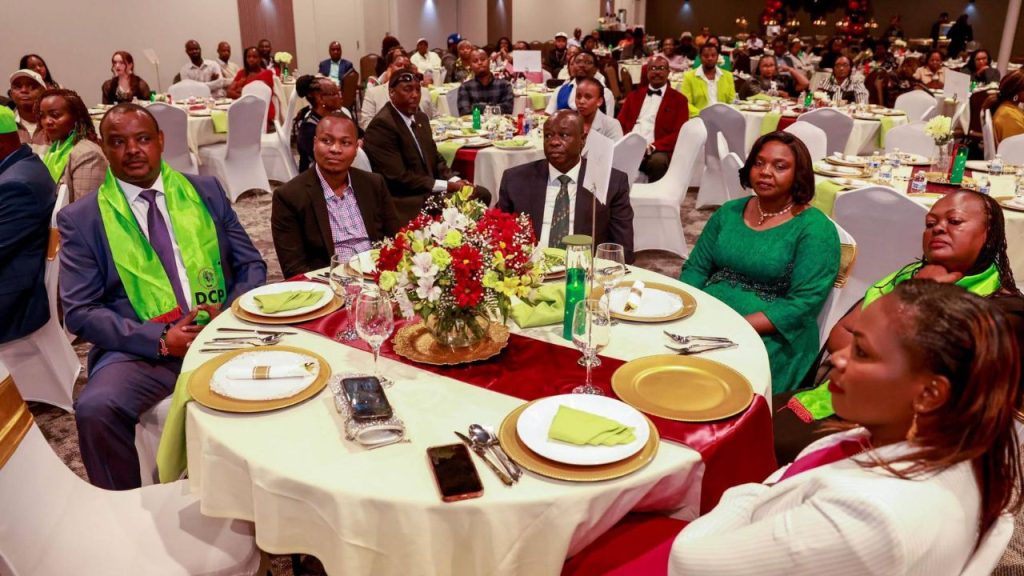
Photo/Facebook, Rigathi Gachagua
A Movement Already Reshaping Western Kenya
Sifuna’s Linda Mwananchi movement grew rapidly after his removal as ODM secretary-general earlier this year.
County rallies have drawn large crowds, though two turned violent, with a Homa Bay gathering in August leaving two people dead and a Meru rally disrupted by tear gas.
Organizers pressed ahead, and the movement held a peaceful rally at Jacaranda Grounds in Embakasi, Nairobi, on Sept. 13.
Thousands attended.
Days later, the National Police Service called the gathering a “blueprint for future political conduct.”
Its momentum had already prompted a visible response from Ruto allies, with Prime Cabinet Secretary Musalia Mudavadi and Atwoli meeting UDA aspirants in Kisumu on Sept. 5 to shore up Western Kenya.
Why the Diaspora Stage Matters
Gachagua chose a U.S. audience for his most significant 2027 statement so far, and that choice was no accident.
Kenyans abroad in a dozen countries, including the United States, are increasingly courted as a mobilization and funding base ahead of next year’s vote.
An extended diaspora tour lets a politician test messaging away from Nairobi’s daily news cycle while still generating coverage back home.
Gachagua’s Spokane remarks spread through Kenyan outlets within hours, a sign the diaspora circuit now works as a real campaign stage rather than a ceremonial one.
Nairobi Delivered the Crowd, but the Ticket Is Still Unsettled
Gachagua has said the opposition does not need to settle its ticket until March or April of next year, leaving months for the arithmetic he keeps referencing to shift again.
That timeline also serves him directly.
A slower, elder-led negotiation favors veteran principals like Gachagua and Musyoka, who can trade influence in private talks, over a decision driven by momentum built in the streets, where Sifuna currently has the advantage.
Setting the clock to March or April gives the negotiating table time to catch up to what Linda Mwananchi is building on the ground now.
Sifuna’s Sept. 13 rally answered one question Gachagua’s Spokane remarks raised: whether the movement could fill a venue in the capital.
It did, and without the violence that marred earlier county events.
Turning a crowd into a single opposition ticket is proving harder.
Siaya Governor James Orengo, who shared the Nairobi stage with Sifuna, has his own presidential ambitions, and Kenyan media have reported the two are set for talks.
On Sept. 21, Orengo also became chairman of The Ukombozi Alliance, the new name for Musyoka’s Azimio coalition.
Gachagua has since cast himself as a Mediator.
Speaking in Kansas City on Sept. 19, he said he had called Sifuna and Embakasi East MP Babu Owino separately after their supporters traded insults online.
He warned that the row was taking on a tribal edge between Luo and Luhya supporters.
Owino has since reaffirmed his support for Sifuna’s presidential bid.
He has also proposed keeping the Mwananchi Party for himself while Sifuna leads a separate party, with both working under the Linda Mwananchi umbrella.
Sifuna’s search for that party hit a wall when Registrar of Political Parties John Lorionokou rejected a plan to rename the United Democratic Party as the Ukombozi People’s Party.
Lorionokou’s letter, dated Sept. 8 and reported Sept. 21, said the name was too close to The Ukombozi Alliance.
Trans Nzoia Governor George Natembeya now says Sifuna will run on the United Democratic Party, and allies have pointed to early October for a launch.
None of that settles Gachagua’s offer.
It remains a conditional proposal, not a declared ticket, and Gachagua has not publicly withdrawn it.
Sifuna now has the street momentum Gachagua’s slower calendar was meant to absorb.
Whether he can turn it into a party and a ticket before March is the question that now matters.
Updated Sept. 25, 2026, to reflect the Sept. 13 Nairobi rally and later developments.






LEAVE A COMMENT
You must be logged in to post a comment.