

|
LISTEN TO THIS THE AFRICANA VOICE ARTICLE NOW
Getting your Trinity Audio player ready...
|
When the Competency-Based Curriculum was launched in 2017, it promised to reset Kenya’s education. It aimed to move away from rote learning and recognise that children learn differently, at different speeds, and in different ways. However, nearly a decade later, that promise remains distant for many children with hearing impairment.
Kenya’s shift from the 8-4-4 education system to the Competency-Based Education was meant to improve learning by focusing more on practical skills and individual abilities but teachers of learners with hearing impairment say some structural barriers remain unchanged. Across Kenya, such learners struggle to access lessons in classrooms that were not designed with them in mind. Schools do not have enough teachers trained in Kenya Sign Language (KSL), interpreters are scarce, and learning materials are not fully adapted for deaf students.
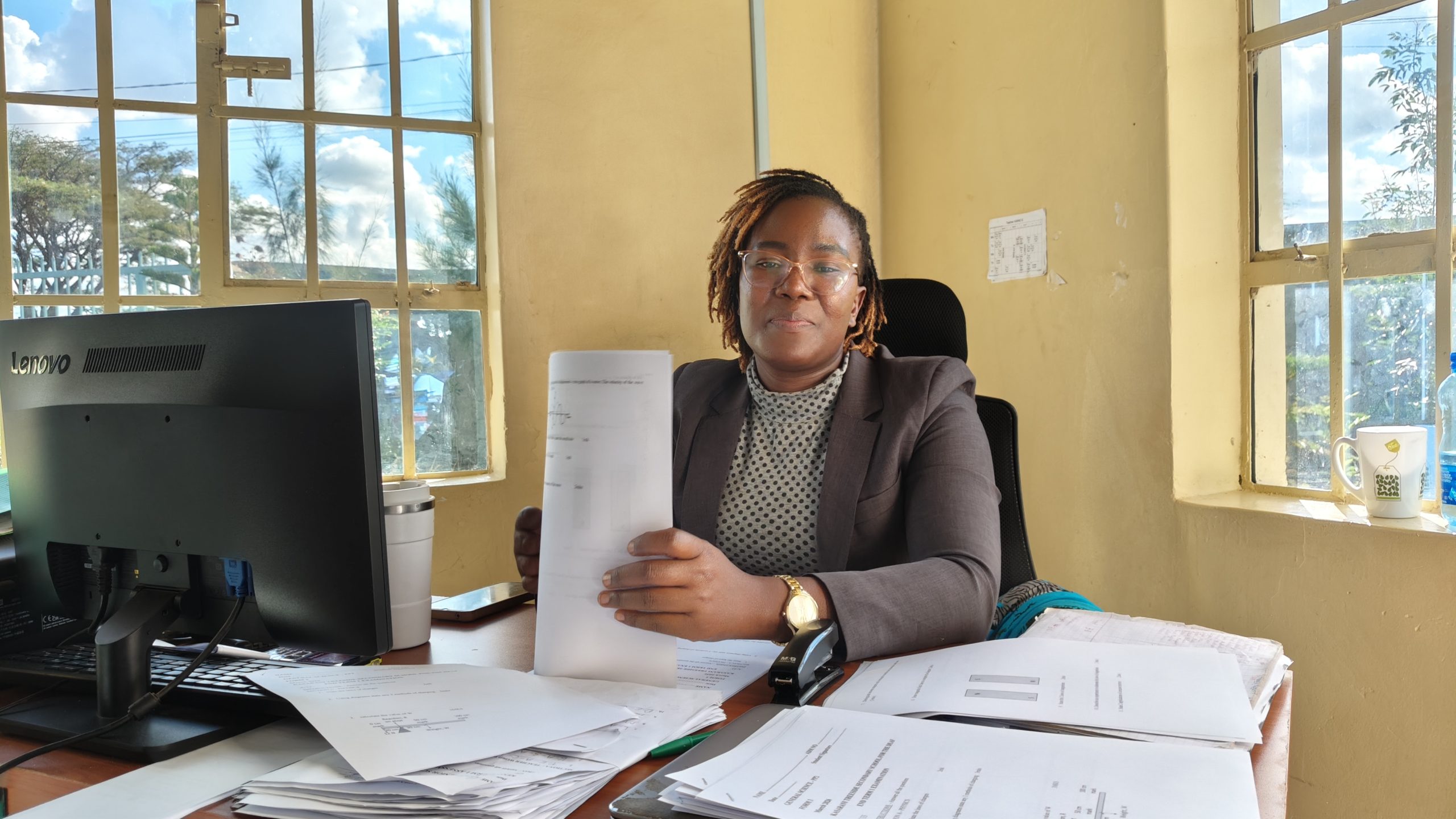
At Kasarani Treeside Secondary School for the Deaf in Nairobi, teacher Eve Awino Ongere says the biggest challenge is the mismatch between how deaf learners communicate and how the curriculum is delivered. While their first language is KSL, the curriculum largely uses English as the language of instruction. English is much more complicated and varies in grammatical structure from KSL.
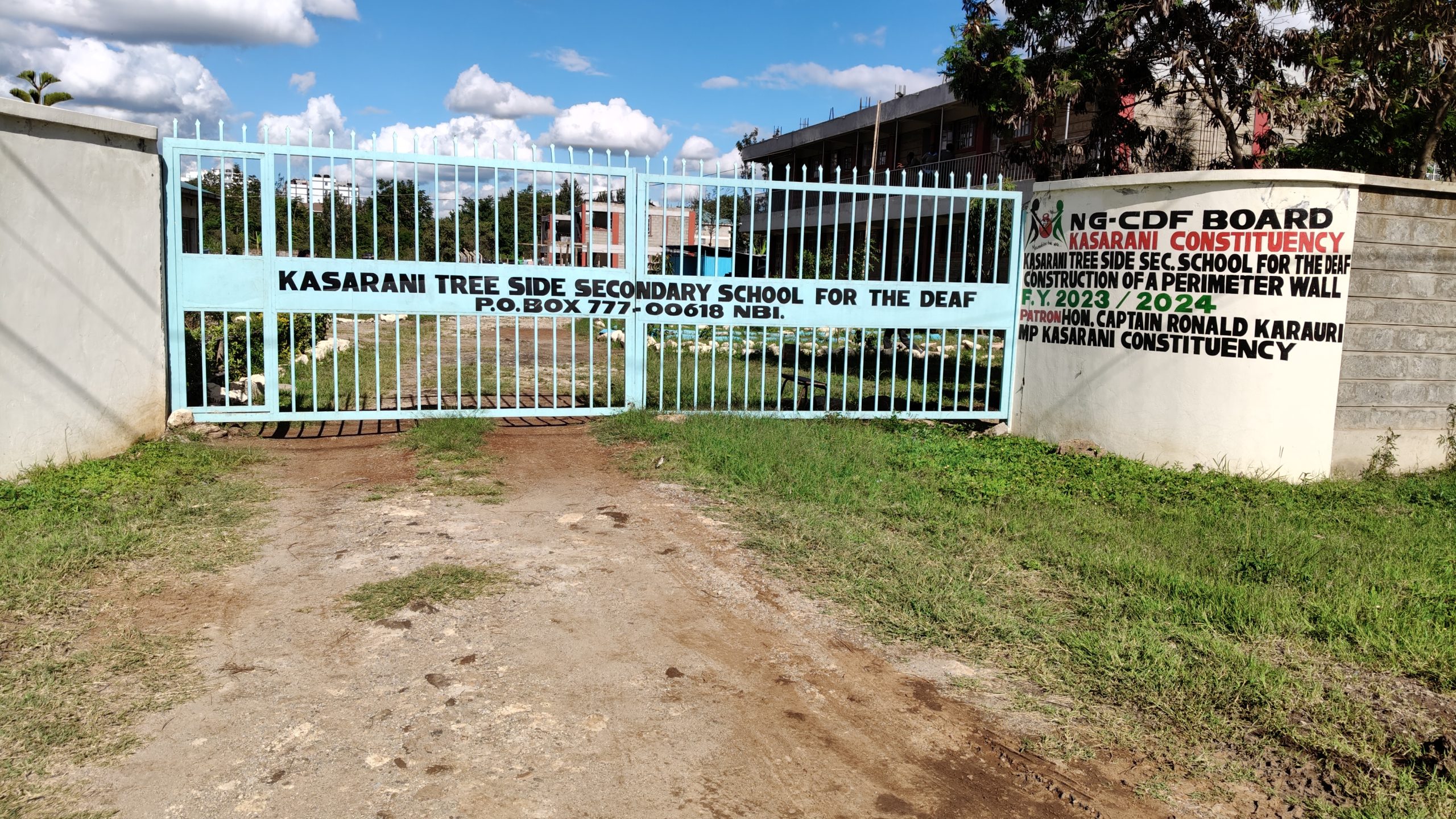
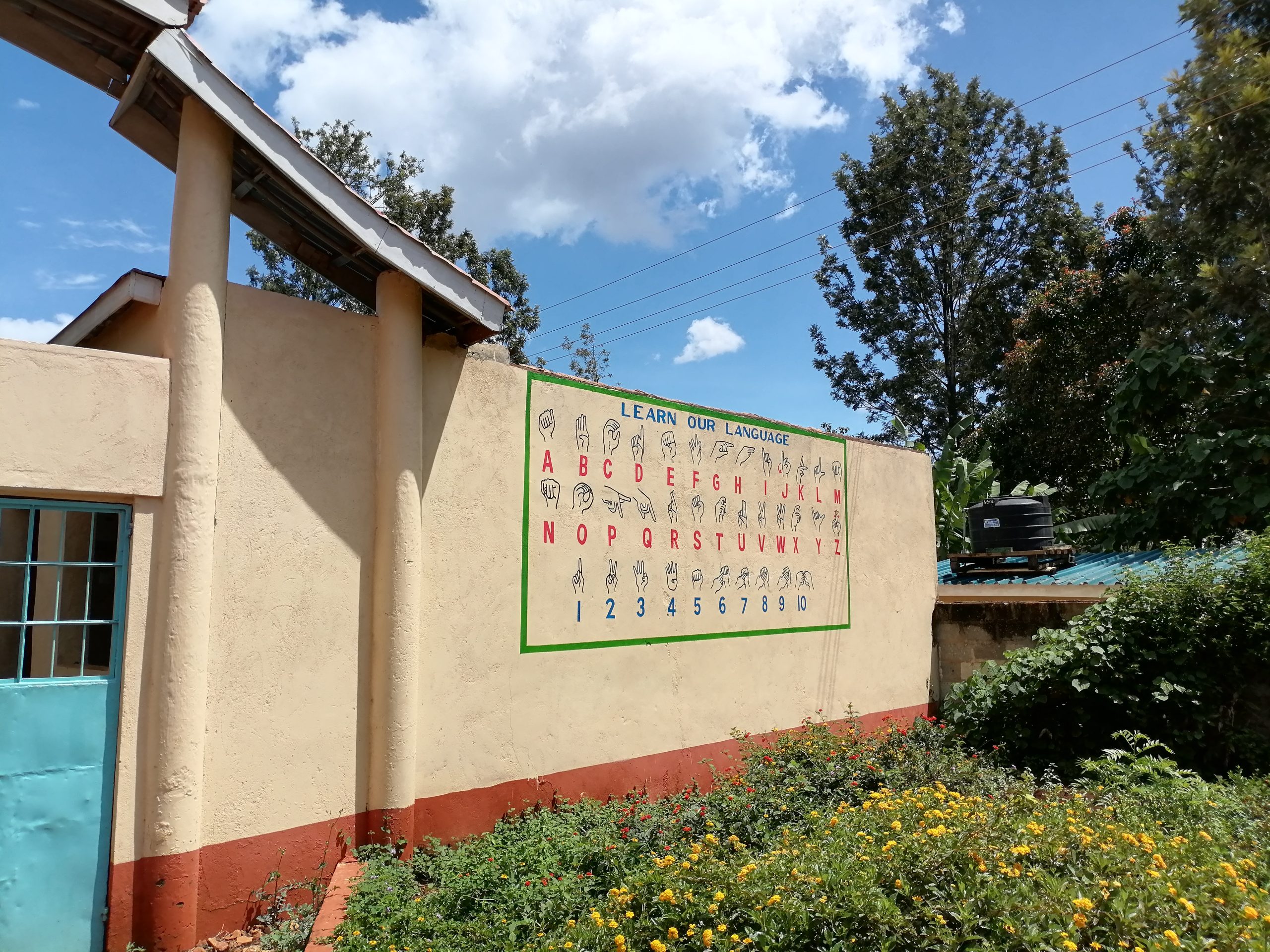
“Learners who are Deaf use a visual language,” she says. “Their language is signed. It is not spoken and it is not written.”
Ms Ongere, who has worked with learners with disabilities since 2013 and specifically those with hearing impairment since 2018, says many lessons still depend heavily on written and spoken English.
“You can give a learner a whole passage to read, but comprehension becomes a challenge because that is not the language they are used to,” she says. “They are used to information being signed.”
This gap often becomes visible when learners try to express themselves in writing.
“Many of them write using the structure of sign language,” Ms Ongere explains. “When someone else reads it, they may see broken English. But in school, we understand that they are writing using the structure of their visual language.”
According to Ms Ongere, the consequences extend beyond the classroom. “When they finish secondary school and go out into society, communication becomes a challenge because very few people understand how they write.”
Better With Practical Subjects
Some aspects of the CBE could still benefit deaf learners, she says. The system places greater emphasis on practical subjects such as ICT, sports and vocational skills.
“Learners who are deaf often perform better when they are given practical tasks,” she says. “They may struggle with long theoretical lessons, but when they practise a skill, they can show what they know.”
But if assessments continue to rely heavily on written responses, she warns, the same barriers could persist.
Vincent Owino is a deaf advocate and production assistant at eKitabu, an organisation focused on accessible digital education. He has spent years working to make learning materials accessible to deaf children.
At eKitabu, he coordinates the production of educational content in Kenyan Sign Language. His work includes supporting teacher training and sign language assessments, and helping expand digital storybooks designed so deaf children can access reading through sign-supported storytelling.
But Mr Owino says the barriers deaf learners face run far deeper than access to books.
Less Specialised Teachers
From the schools he has visited, staffing shortages remain one of the most immediate pressures. Government policy recommends a teacher–learner ratio of one teacher for every twelve students in schools for the deaf. In practice, however he says, the numbers are often much higher.
“Most special needs schools are experiencing staffing gaps,” he says. “You can find one teacher handling up to 28 learners. That is unmanageable.”
Some schools also lack teachers for newer subjects under the CBE, particularly at the junior school level. Others struggle to find subject specialists, especially for science. He notes that while the Kenya Institute of Curriculum Development has developed KSL learning materials for the early learning grades, adapted textbooks and assistive technologies remain scarce.
Funding constraints compound the problem. According to Mr Owino, the resources allocated to special needs schools are often not enough to cover the additional support services required. When parents delay paying school fees, schools can find it difficult to maintain day-to-day operations.
The government allocates about Sh57,974 annually for each learner in special needs education, with parents contributing Sh12,790 for boarding-related costs. However, education advocates believe this funding — about KES 70,000 per learner each year — falls short of what is needed to provide specialised teaching, learning materials and assistive devices.
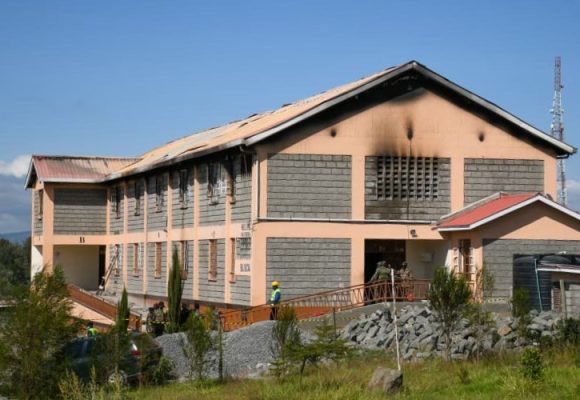
“Infrastructure is another challenge,” he says. “Some schools operate in aging buildings with limited classroom space or overcrowded dormitories. In other cases, facilities are simply not designed with accessibility in mind.”
Teacher training, he adds, is also uneven. “Teachers often lack sufficient training on how to handle learners with special needs,” he says.
Uneven Exams and Assessment With Hearing Learners
Bob Owuor, a parent, shares some of his deep concerns. His daughter was among the first cohort of deaf students under the CBE and is now in Grade 10. He says the promise of inclusion often feels hollow during national assessments.
“These are special children,” he says. “Why are they undertaking the same assessments as hearing children?”
Under the current system, deaf learners sit the same papers, under the same time limits, and are graded on the same scale as their hearing peers. The only difference, he says, is that one language paper is taken in Kenyan Sign Language instead of Kiswahili. “Mathematics is mathematics. English is English. The timing is the same. The grading is the same.”
His daughter has felt the pressure first-hand. During one exam, he recalls, she told him she was still working when the invigilator stopped the test and took her paper. These children have different challenges in how they learn,” he says. “If we don’t take that into account, how can the system be fair?”
Besides exams, Owuor says he is concerned with the structural gaps. Nairobi, a city of more than four million people according to the 2019 national census, has only one specialised secondary school for deaf learners, and it is a boarding school. For families whose children cannot board, options are limited.
“Let there be a day secondary school for the deaf,” Owuor says. “Not every child can stay in a boarding school. I know of more than five parents whose children have not transitioned into senior school because they live in Nairobi, and their children cannot join boarding school because of multiple disabilities that require them to be day scholars.”
Language Becomes a Barrier
Robinson Mbogo lives in Kerugoya with his family. While his daughter spent all her education in Kerugoya School for the Deaf, she moved to Nairobi for her senior secondary education. This move, he says, brought a needed change of environment.
At home, KSL is the primary language. “We all got trained in KSL so that we can communicate with her. My son, her mother and I, are all conversant with the language.”
However, outside home and school, he admits there are still huge language gaps his daughter faces.
Despite being made an official language in Kenya in 2010, knowledge of the Kenya Sign Language remains significantly low, he explains. This makes it harder for deaf children to integrate into the society around them. “Many churches, for instance, do not have sign language interpreters. So at church, people are at a crossroads on how to communicate and even interact with them.”
Owuor points out that KSL is not as accessible online as other sign languages, such as the American Sign Language (ASL). “When I search online for sign language materials, most resources are in ASL, not KSL, making revision a challenge. This makes it harder for parents like me to support our children’s studies at home.”
Agnes Wangithi, Alicent’s mother and a primary school teacher, finds that supporting her daughter’s learning at home becomes more difficult as her daughter advances through school.
“It was easier when she was younger,” she says. “But the older she grows, the more complicated her education becomes.”
While she tries to assist where she can, she says her support is often limited to mathematics. Other subjects, she says, are harder to translate into sign language in a way her daughter fully understands.
“Sometimes I look for the best signs to explain concepts,” she says, “but she is still struggling to understand some of them.”
She adds that the lack of specialised support makes the situation harder.
“At times it can be disheartening for both of us,” she says.



LEAVE A COMMENT
You must be logged in to post a comment.