

|
LISTEN TO THIS THE AFRICANA VOICE ARTICLE NOW
Getting your Trinity Audio player ready...
|
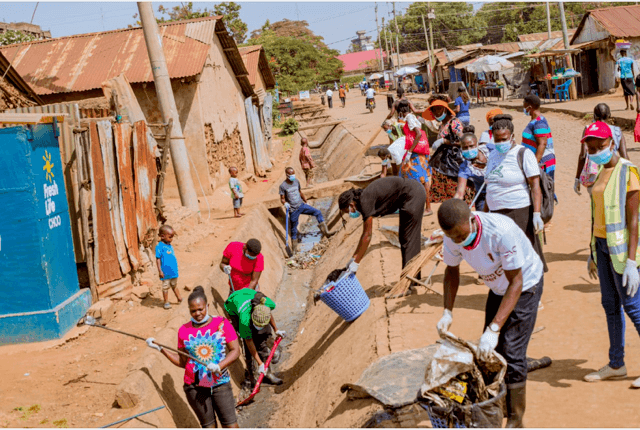
When the morning breeze drifts through the crowded informal settlements of Kisumu, a lakeside city in western Kenya, near the shores of Lake Victoria, the thick, choking smell of burning garbage is no longer what it used to be.
For years, however, that smell was a constant. In Kisumu’s poorer neighbourhoods, the open burning of waste was a daily routine. The residents in the settlements had no alternative, and were thus forced to dump and openly burn their waste. The garbage piled up. The smoke never really cleared.
But now change is stirring in Kisumu, the largest city on the northern shore of Lake Victoria, the world’s biggest tropical lake. Slowly but steadily, a new United Nations backed pilot project is shifting the tide. A pilot project that carries the promise and hope of setting the tone for Africa’s future waste management solutions.
Kisumu, Kenya’s third-largest city and one of East Africa’s most prominent lakeside hubs, has become a testing ground for what looks like an ambitious attempt to shift waste management from chaos to circularity, a transformation that is being closely watched by the continent and beyond.
This pilot project is part of a larger effort to implement a continental roadmap to eliminate open waste burning in Africa, spearheaded by Engineering X and developed through extensive research, advocacy, and political negotiation. Its co-author, Professor Desta Mebratu, says the roadmap is a blueprint and a wake-up call for Africa to put its rooms in order, literally.
“This started way back in 2021,” Professor Desta says, “with a broad overview of the situation in Africa regarding open waste burning. We found that most African cities are operating without proper planning when it comes to waste. As a result, about 85 percent of waste in urban centres is either dumped or openly burned.”
In 2022, in a promising step, African environment ministers meeting in Dakar, Senegal, endorsed the resolution to eliminate open burning. The roadmap that followed was a direct response to that resolution. The roadmap offers policy recommendations, and an actionable blueprint for change. In July 2025, the African Ministers Conference for Environment (AMCEN) sitting in Nairobi, Kenya, approved the adoption of this roadmap with the aim of eliminating open burning of waste across the continent.
Africa Has Always “Solved” Its Waste By Open-burning
Burning waste is not a new phenomenon in Africa. “It has existed for millennia,” says Professor Desta. “What has changed is the nature of waste. We now have plastics, toxic chemicals, and materials that, when burned, release carcinogenic pollutants. These pollutants harm the immediate environment, and travel into the food chain, into breast milk, into our lungs. We are poisoning ourselves.”
Statistics point to a bigger problem. According to a 2024 report by the UN Environment Programme (UNEP), nearly 90 percent of municipal waste in sub-Saharan Africa is dumped untreated, and much of it ends up burned in open spaces. The practice is estimated to contribute to between 400,000 and 1 million deaths annually in the Global South, from diseases like cancer, heart disease, and malaria.
The UNEP report, “Beyond an Age of Waste,” warns that the world’s waste is piling up fast, and the cost of dealing with it is rising just as quickly. In 2023, the world produced 2.3 billion tonnes of waste. By 2050, that could grow to 3.8 billion tonnes. In 2020, governments spent about USD 252 billion managing waste, but when you include the hidden damage like air pollution, poor health, and climate change, the true cost was around USD 361 billion. If countries don’t act now, that number could nearly double by 2050.

The report reveals that Sub-Saharan Africa has the worst waste crisis on the planet. Nearly 9 out of 10 bags of trash, about 87% of all municipal waste, are dumped without any proper treatment. That’s around 150 million tonnes of waste each year, mostly left in open dumps or informal sites. In contrast, Europe manages to keep this figure below 6%, and in North America, it’s almost zero.
This problem, the UNEP’s chief states, has a direct impact on the economic growth and GDP of the African nations. “Waste generation is intrinsically tied to GDP, and many fast-growing economies are struggling under the burden of rapid waste growth,” says Inger Andersen, UNEP’s Executive Director.
Kisumu Begins to Turn the Tide on Waste
Back in Kisumu, where the pilot began in April 2024, the numbers are stark, but something is being done about it. “We are getting around 272 tonnes of waste daily,” says Joel Ombok, who manages the Kisumu pilot project on behalf of Practical Action, the implementing partner. “Of this, over 60 percent is organic.”
“Before the pilot came into being, the situation was not very good,” he says. “We had a lot of illegal dumpsites and the issue of open dumping and burning were prevalent. Waste handlers were not recognized and not equipped. And there were critical gaps in policy and legislation in waste management.”
Thus, Ombok says, the choice of Kisumu for the pilot was not by accident. The city, he says, had all the right conditions; a visible waste problem, political goodwill, and grassroot community networks. Practical Action began by mapping informal settlements like Obunga, Nyalenda, and Nyawita. These are areas where waste burning was rampant due to limited or non-existent waste collection services.
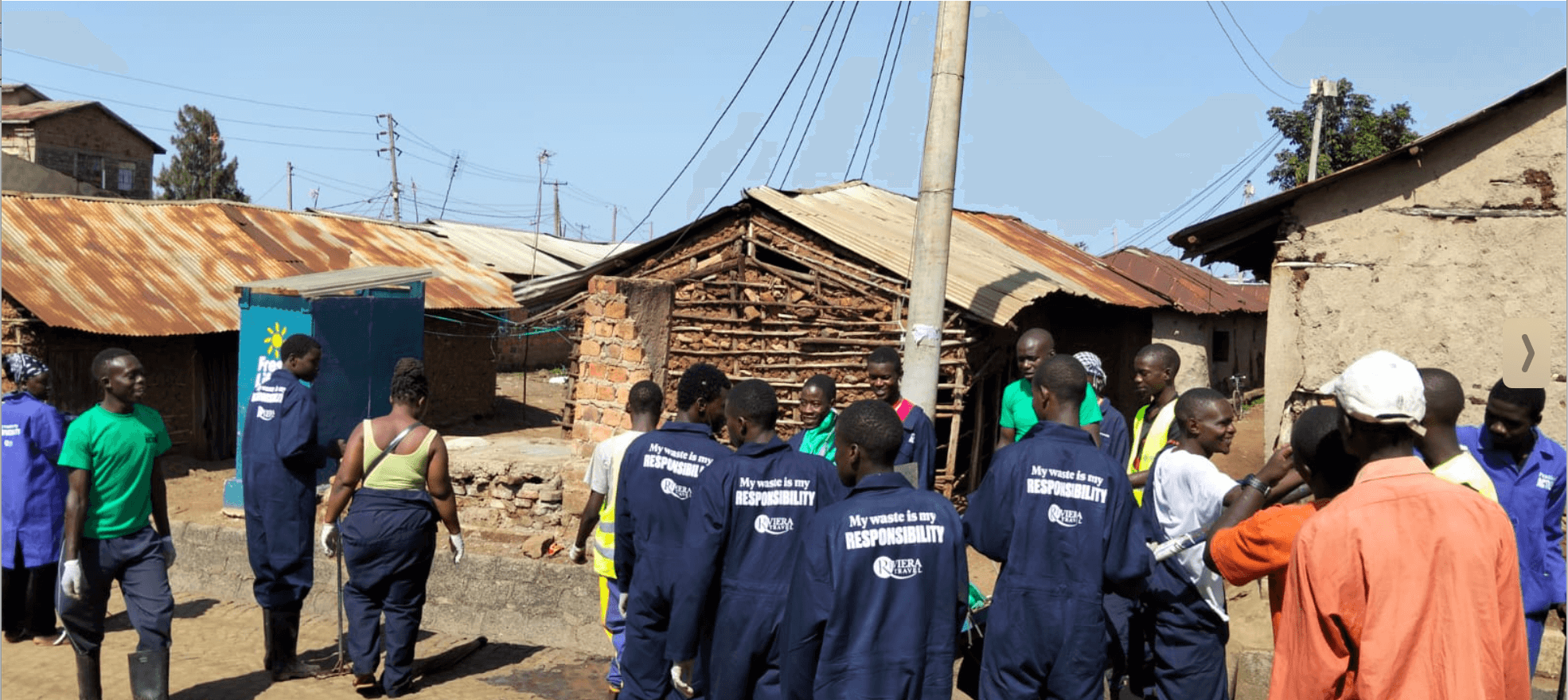
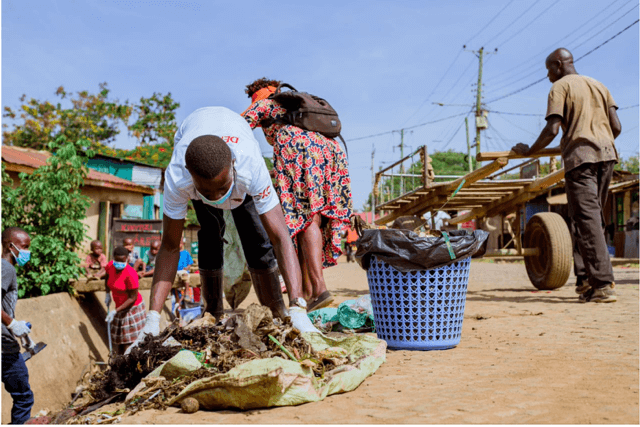
“We started with 15 youth waste-handling groups, trained them, and linked them with 3,000 households,” Ombok explains. “Each household got bins for separating waste. The youth collect and sort waste, organics and recyclables, and take them to material recovery centres. There, plastics are shredded, sorted, and sold to recycling firms in Nairobi. The youth get paid per kilo.”
Since the pilot began, the impact has been palpable. Waste hotspots in slums have reduced. Air pollution has dropped. Children in local schools have become waste segregation ambassadors, influencing household practices. “We’ve employed over 2,250 youth, 55 percent of whom are women,” says Ombok. “I could say that this is an environmental transformation with an immediate social impact.”
Circular Economy
What Kisumu demonstrates is the viability of circular economy principles at the grassroots level. According to Professor Desta, about 80-85 percent of urban waste in Africa is recyclable, either organic or other recoverable materials. “If we can convert this into resources, compost, energy, and recycled products, we automatically solve the bulk of our waste problems.”
But that transformation requires planning, infrastructure, and behavioural change. “The biggest challenge that we found was about adoption of behaviour change, especially with the households,” Ombok says. “There was also a lack of access to waste collection services. So that made them a little sluggish to change. Once we gave them bins and education, the uptake followed.”
Still, challenges remain. Of the 14 material recovery facilities Kisumu needs, only seven exist. Access to skips, trucks, and more waste bins remains limited. If we have waste separation bins at each of the households, which means waste is separated in each household, then very limited waste is going to be burned. So there will be a time when we will have a very clear skyline.”
Scaling Across African Cities
Ombok believes that Kisumu’s model is replicable across Africa. Professor Desta agrees, but with caution and reservations. “Transplanting is one of the major sources of the problems of Africa,” he says. “There are these groups running around African cities which try to sell incinerators as a solution to the African waste problem. They are completely wrong because incineration works when you have at least 60 percent and above combustible waste. In Africa, 80 percent of the waste is non-combustible.”
Instead, he argues, solutions must emerge from within, tailored to each city’s waste composition, climate, and economic realities. The roadmap is careful not to prescribe one-size-fits-all approaches. “Even Europeans are moving away from incineration, and we shouldn’t be dumping ground for this kind of technology.”
Desta holds out hope that this problem can be solved by Africa, and there are examples of success across the continent. “It can be done,” he says. “For example, in Mauritius they have made significant transition from open dumping to more managed waste disposal and they are now moving to circularity. Kigali in Rwanda has combined policy action with community behavioral change and with proper infrastructure and today Kigali is one of the cleanest cities in Africa.”
But There Is a Mismatch of Priorities by African Governments
One of the most pressing concerns Professor Desta raises is the disconnect between city and national priorities. “Cities struggle with waste daily, but at national level, it is not a priority. Financing institutions are willing to help, but governments must elevate waste management in their development agendas. This is not just a city or municipality issue, it is much broader than that and they need to recognise that waste management has a very significant impact on the social and environmental dimension of any country.”
The UNEP report echoes that urgency, and calls for a paradigm shift in global waste thinking. “Waste prevention and circularity are not optional,” it says. “If change does not happen at speed and scale, humanity will face unmanageable quantities of waste with irreversible impacts on health and climate.”
The report models show that full adoption of zero-waste policies could generate a global net gain of over USD 108 billion annually by 2050, a stark contrast to the projected USD 640 billion cost of inaction.
“Pollution from waste knows no borders, so it is in everyone’s interest to commit to waste prevention and invest in waste management where it is lacking,” says Zoe Lenkiewicz, the lead author of the United Nations report. “The solutions are available and ready to be scaled up. What is needed now is strong leadership to set the direction and pace required, and to ensure no one is left behind.”







LEAVE A COMMENT
You must be logged in to post a comment.