

|
LISTEN TO THIS THE AFRICANA VOICE ARTICLE NOW
Getting your Trinity Audio player ready...
|
I met Namatai Kwekweza on a cold Wednesday morning in late November, 2025, in a quiet room in Berlin. The 27 year old young woman was wearing a mustard top, a long black skirt printed with soft purple-and-yellow flowers, a blazer draped loosely around her shoulders, and boots that rose confidently above the knee, to keep the biting cold at bay.
Kwekweza is a soft-voiced yet sharp-edged, bubbly yet battle-hardened, and carrying the fire of a continent in her chest. She greeted me with a warm, disarming smile as I gestured her to a seat placed at an angle near the rear door of the room. Golden rays were falling from the ceiling above.
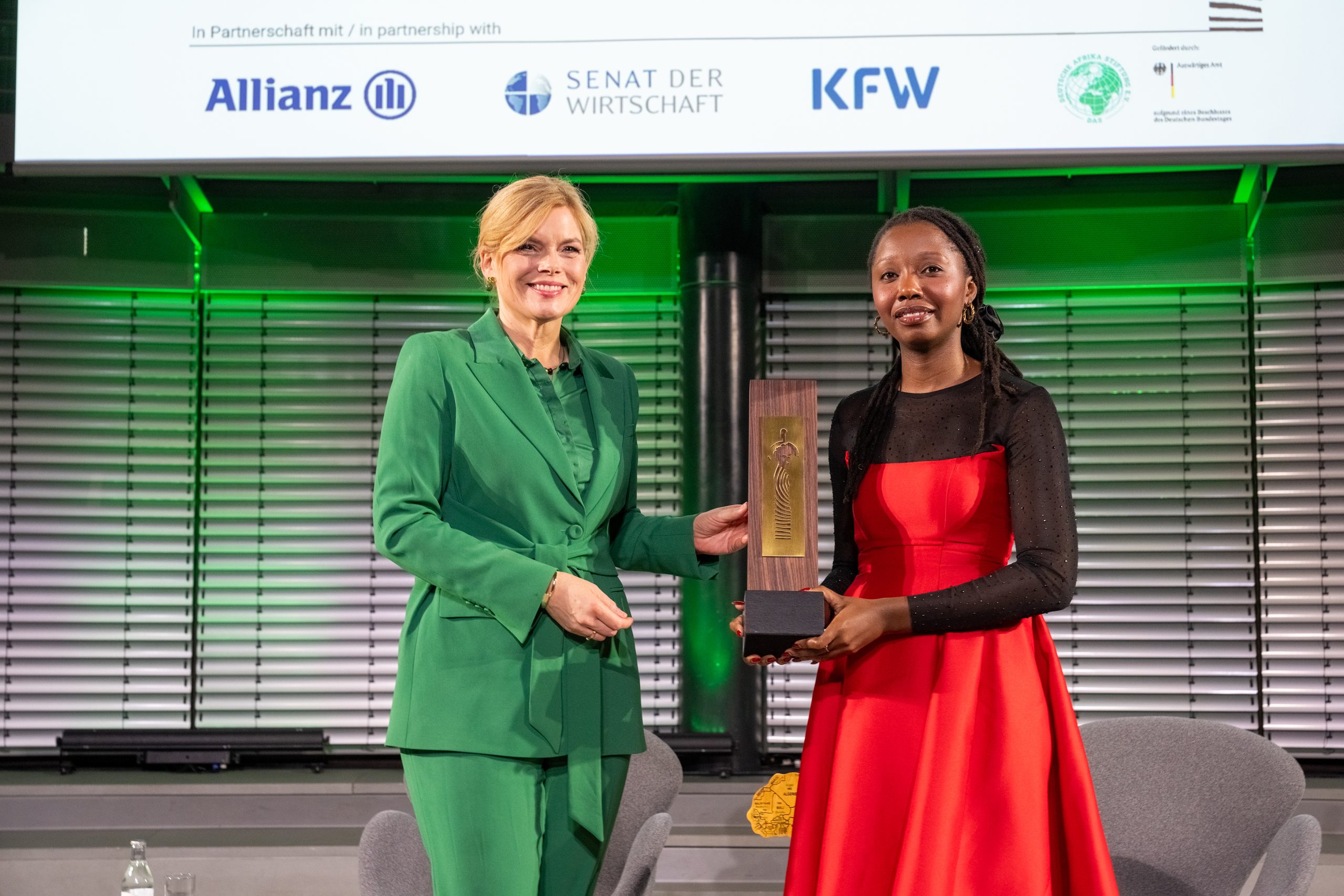
Hours later, that same woman would walk into the glittering hall of the Allianz Forum, across from the legendary Brandenburg Gate, totally transformed, wearing a deep red dress, with the bodice and sleeves enveloped in a sheer, smoky-black layer, decorated with a faint shimmer of tiny metallic dots. She would stand under a beautiful cocktail of German lights and accept the German Africa Prize, one of Europe’s most respected recognitions of African leadership and civic courage. She would dedicate it to the millions of young Africans who “refuse to accept life as it is.”
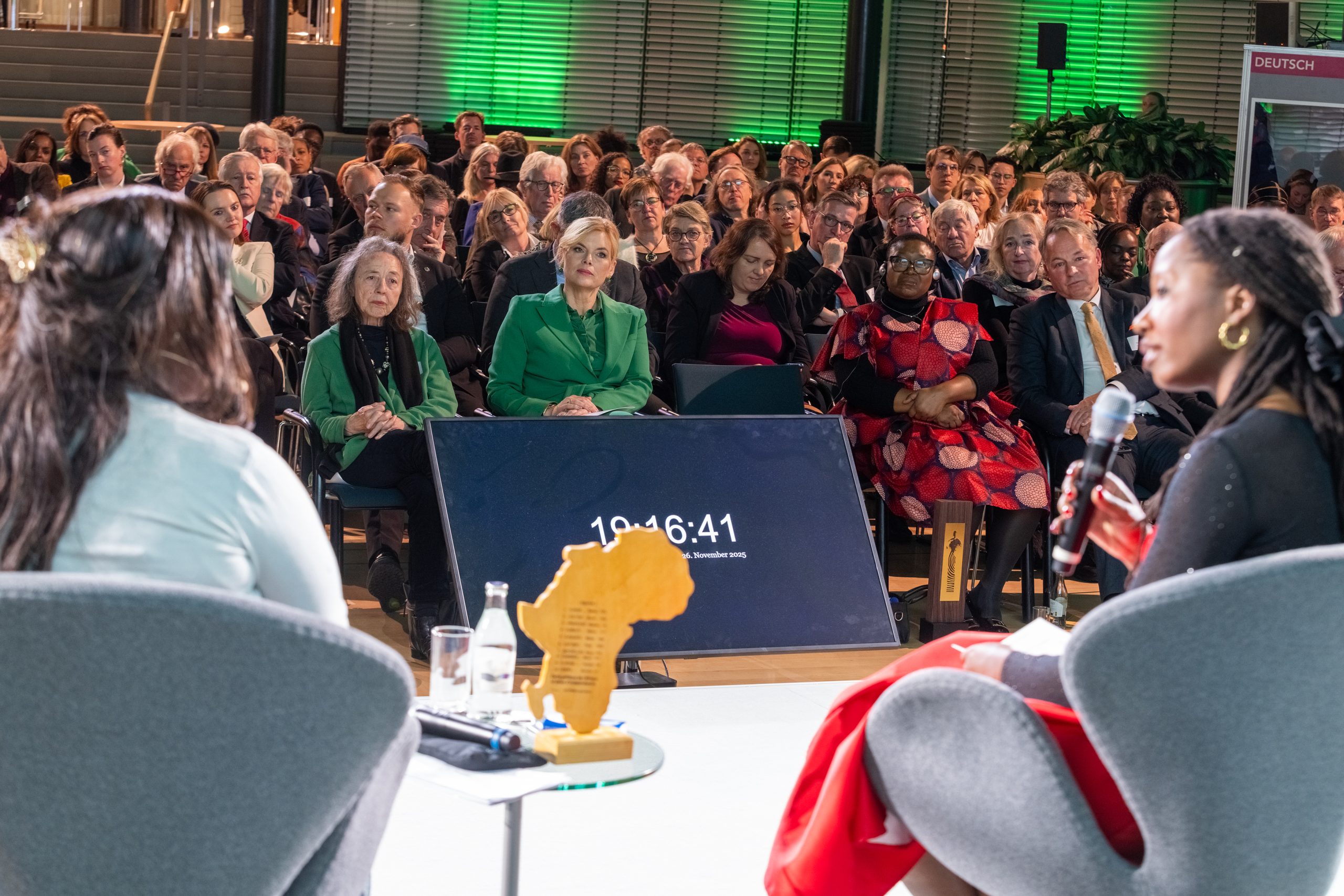
But before the applause, before the cameras, before the speeches and standing ovations, there was her story. Hers is a story woven through war, memory, inflation, hope, hunger, arrest, resistance, and the tireless insistence that freedom is a right, not a privilege.
This is that story.
“Namatai means to pray,” she told me that morning. “It was an intergenerational promise. My grandfather prayed for his children, and for his unborn grandchildren. My mother named me in a moment of spiritual awakening.”
She was meant to be Karen. But 1998 was a storm of a year, Zimbabwe’s currency was wobbling, corruption was tightening its grip, and public discontent was rising. Her mother, struggling through her own emotional battles, felt the need for something deeper than a Western name. Something rooted. Something ancestral.
So Namatai she became; the granddaughter of a Malawian man who once woke up before dawn to sing in his mother tongue, the girl born into a country on the verge of a slow, painful collapse.
A Childhood of Mud, Dust, Laughter, and Tremors
She speaks of her childhood with tenderness and a wave of nostalgia.
“I remember playing in the mud after the rain,” she said. “Playing in the dust with the neighbourhood kids until your whole body was coated. Our neighbours took care of each other’s children. It was safe. I remember being happy.”
For a moment, she smiles like a girl again, carefree, barefoot, running through Harare streets without fear. But her childhood was marred by national trauma. Zimbabwe in the early 2000s was a volcano that had not yet erupted. By 2007–2008, it did, loudly, violently, and in billions.
“I remember, I was a billionaire once,” she laughs. “I went to school with ten,or twenty billion in my pocket. I was richer than Elon Musk at some point, and Bill Gates. There was so much inflation that you would buy a loaf of bread in billions, because the Reserve Bank was just printing money.”
This is not an exaggeration. At the height of hyperinflation in 2008, Zimbabwe’s monthly inflation reached 79.6 billion percent, the second-highest recorded inflation in world history. A loaf of bread could cost 10 billion Zimbabwean dollars at breakfast and 35 billion by lunchtime. Shops emptied out. ATMs froze. Salaries were paid in loads of money that became worthless by the time workers reached home.
In that chaos, little Namatai and her friends spent hours in bread queues, after bread trucks had arrived.
“I have so many vivid memories of having to wait in line for bread,” she said. “And there was a lot of corruption. So you had to find a way to go and wait in line. And then when the bread truck came, rich people would use their connections to get it. So we had to wait in line, unfortunately. And I remember it so vividly because it took time from playtime. So I didn’t like it very much, because I wanted to play.”
Her mother, like millions of Zimbabweans, became a cross-border traveller, roving to Mozambique, Botswana, and South Africa to buy groceries because shops back home had become museums of empty shelves.
In these stories, you hear resilience, but you also hear something else: the beginning of her political consciousness. The beginning of the fire she says she inherited from the women who came before her.
The Fall That Broke Her, and Made Her
She speaks about her mother with profound gratitude. A woman who held the center of her family together when Zimbabwe started falling apart. A woman who worked 17 years at an NGO, until one day, politicians and judges colluded to allow mass layoffs without compensation.
Her mother lost her job. And with it, the last chance for stability.
For three years, the girl who always topped her classes could not go to university. Not because she lacked intelligence. In fact, she had been offered a calling letter from the University of Zimbabwe to do a degree in economics. But she could not go to university because “there was simply no money”.
“And there was a time when you’d be in town, and you’d see some people from school, you’d just cross the road to avoid them, because they’d ask, ‘Hey, so what are you up to? What are you doing now?’ But I think it was quite very, very tough,” she said.
This was the period she calls the crack in her life, the moment when everything she thought she was fell away.
She began reading more than she ever had; leadership books, African history, poetry. She began interrogating herself; not the child prodigy, not the public speaker, not the top student, but the person underneath all the validation.
“That was when I learned to validate myself,” she said. “When everything external fell away.”
She learned to improvise. To think on her feet. To work with her hands.
“I can drive a truck,” she said, laughing. “I got a class two driver’s licence, which allows me to drive large vehicles like trucks. Because at some point, life was not clear that I thought I would be a truck driver. I raised chickens. Every time I tell this story to my Kenyan friends, they laugh. Because they say, Kasongo (President William Ruto of Kenya’s moniker) said he was a chicken farmer. But yes, I know how to raise chickens.”
The Spark at 18
At 18, when most people are figuring out themselves, identity, school, relationships, the young girl from the outskirts of Harare was figuring out a nation.
She had always had a passion for leadership. She had always been a sharp public speaker. As a teenager, she became a Junior Member of Parliament, winning her constituency with over 4,000 votes. But the collapse of her home, the layoffs of her mother, the injustice built into the system, all of it sharpened her focus.
“WeLead,” she said, “was born out of necessity. Out of belief. Out of insisting that young people can lead even before they have proven themselves.”
In 2017 she registered WeLead Trust, and in 2019 she expanded it to include advocacy, after witnessing Zimbabwe’s January 2019 fuel protests, where soldiers beat civilians, the internet was shut down, and women were reportedly raped by security forces.
She was 20. And her path was becoming clearer.
Why WeLead Threatens the Establishment
WeLead does two things: youth leadership development, and advocacy for political participation. But to say it that simply is to insult its depth.
WeLead trains young people in constitutionalism, governance, Pan-Africanism, feminist leadership, professional etiquette, public speaking, systems literacy, and perhaps the most important skill in an autocratic environment: how to understand power and navigate it.
Its signature philosophy, iSERVE, insists on humility, the idea that a leader must always be smaller than the institution.
“We are tired of strong men and women,” she said. “We want strong institutions.”
WeLead trains young people to run for office and also govern once they’re in office. They learn how to build systems, how to manage administrators, how to make constitutional decisions that affect millions.
This work, empowering the youth in a country where 70% of the population is under 35, is political dynamite. Powerful politicians know that the moment Zimbabwe’s youth understand the system, they will break it open.
Which is why the system came for her.
The Abduction
Her face changes when she tells this story, still calm, still composed, but the air around her shifts.
She had been arrested before. That was nothing new. Many activists in Zimbabwe have been jailed under vague charges like “inciting public violence” or “subverting a constitutional government.”
But what happened last year was different.
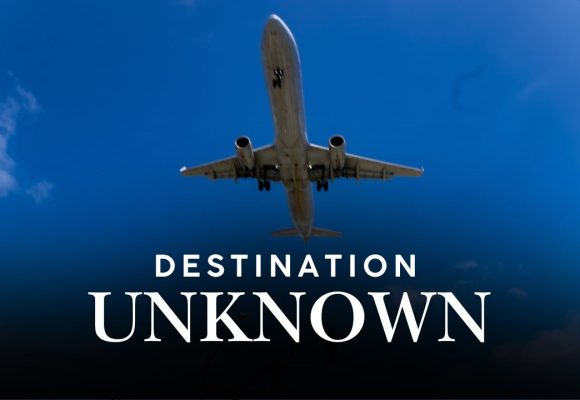
She was on a domestic flight to Victoria Falls, heading to a philanthropic conference. The plane doors were shut. The engines were running. And then, suddenly, they stopped.
Security agents ordered the plane to remain on the ground. They pulled five people off the aircraft. She was among them.
“We were abducted,” she said quietly. “Not arrested, abducted.”
They were tortured. They were interrogated. The men asked who was planning protests before Zimbabwe assumed the SADC chairmanship. They accused them of plotting. They beat one of the men with her until she thought he died.
Her passport disappeared, likely seized permanently by the state. “My passport had been taken by the people who abducted us. I never got that old passport back up to now. I had to apply for a new one,” she said. “And I discovered I had been put on a blacklist. It’s called a stock list. So I couldn’t get an ID. I couldn’t get a passport. I had to go through a lot of different processes, bureaucratic, legal, to be able to get my ID and to eventually get a passport.”
She says she was targeted because she is visible. Because she is loud. Because she is inconvenient.
“I’m always quite vocal on social media, on X, etc. So I think already, you’d always be on their radar. And I think that there’s always this underlying thought that you might be doing something vile or evil, or planning something,” she said.
Zimbabwe has a brutal tradition of discrediting activists; calling them Western puppets, prostitutes, sellouts, traitors. She says the psychological warfare is sometimes worse than the beatings.
“Oftentimes, you’ll be told that you are a Western puppet, you’ll be told that you are a slut, you will be named things that are so vile, and degrading, and dehumanising, you’re going to be named, they will name you, you are this, you are that,” she said
But she refused to let them stick.
“If you are not rooted in your own being and in your own person, if you have not named yourself, if you have not told yourself that I am Namatai, and I am this, I am an activist, I am loving, I am a sister, I am all of this, and you allow those things to slip into your spirit, it will rot you from the inside out, it will destroy you from the inside out.”
The Red Dress, the Lights, the Moment Berlin Stood Still
By the time evening fell over Berlin, the city glowed, lights bouncing off the Brandenburg Gate, the cold air turning every breath into smoke. Inside the Allianz Forum, the atmosphere felt ceremonial, almost sacred.
The German Africa Prize has been awarded to outstanding Africans since 1993. Uschi Eid, former member of parliament and President of the German Africa Foundation, speaking at the ceremony said: “Young people are Zimbabwe’s symbol of hope.”
Then came Julia Klöckner, President of the Bundestag, who said Germany should support democratic developments worldwide and in Africa, because democracy is under pressure globally. However, she noted that in recent years, young people in Africa are resisting the trend as they strive for democracy and rule of law, and Namatai is one of those leading from the frontlines.
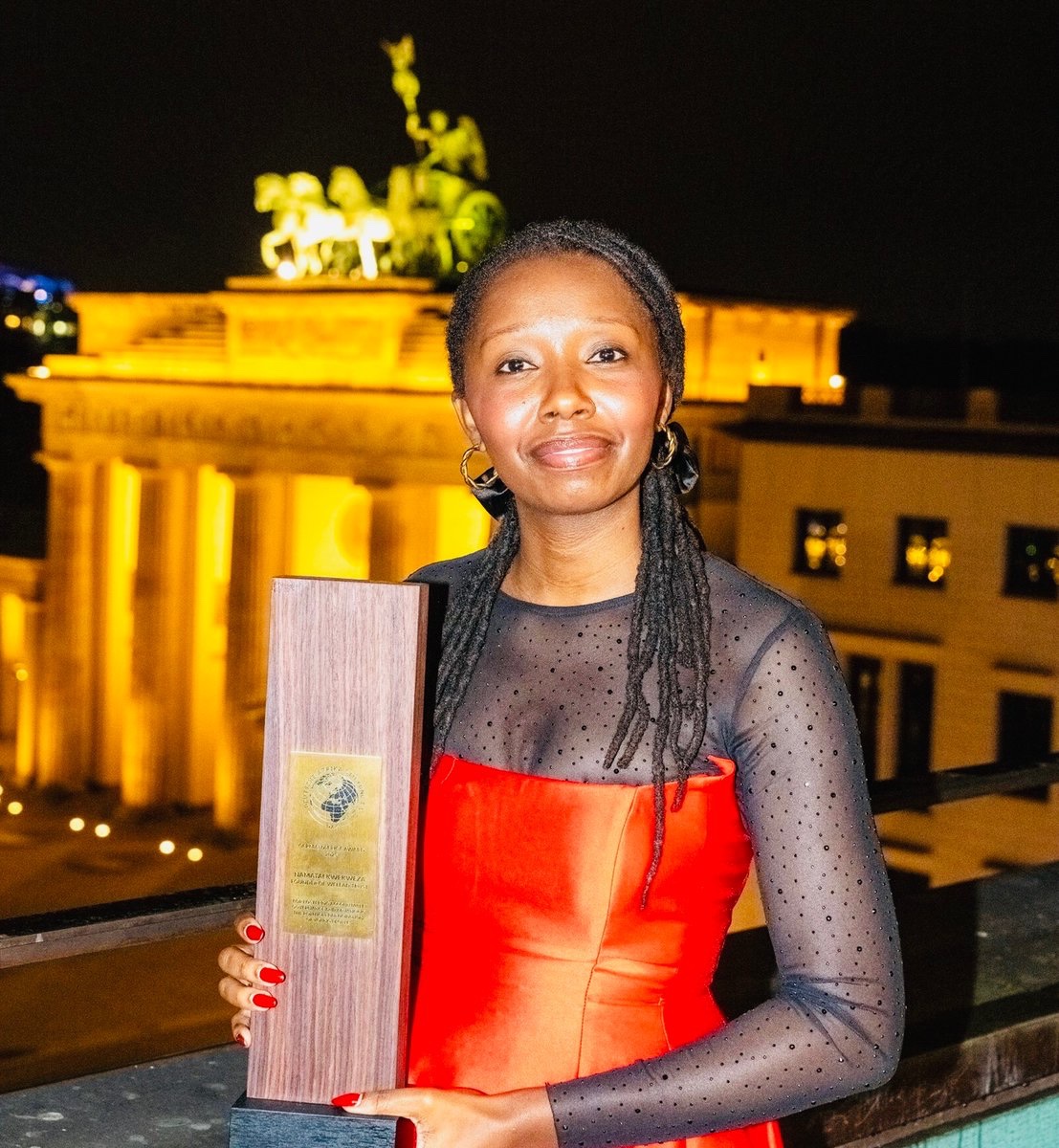
When she finally walked on stage in her deep red dress, black mesh twinkling with metallic flecks, she looked both small and immense under the lights. She looked like someone who had carried fire through a storm and somehow kept its flame alive.
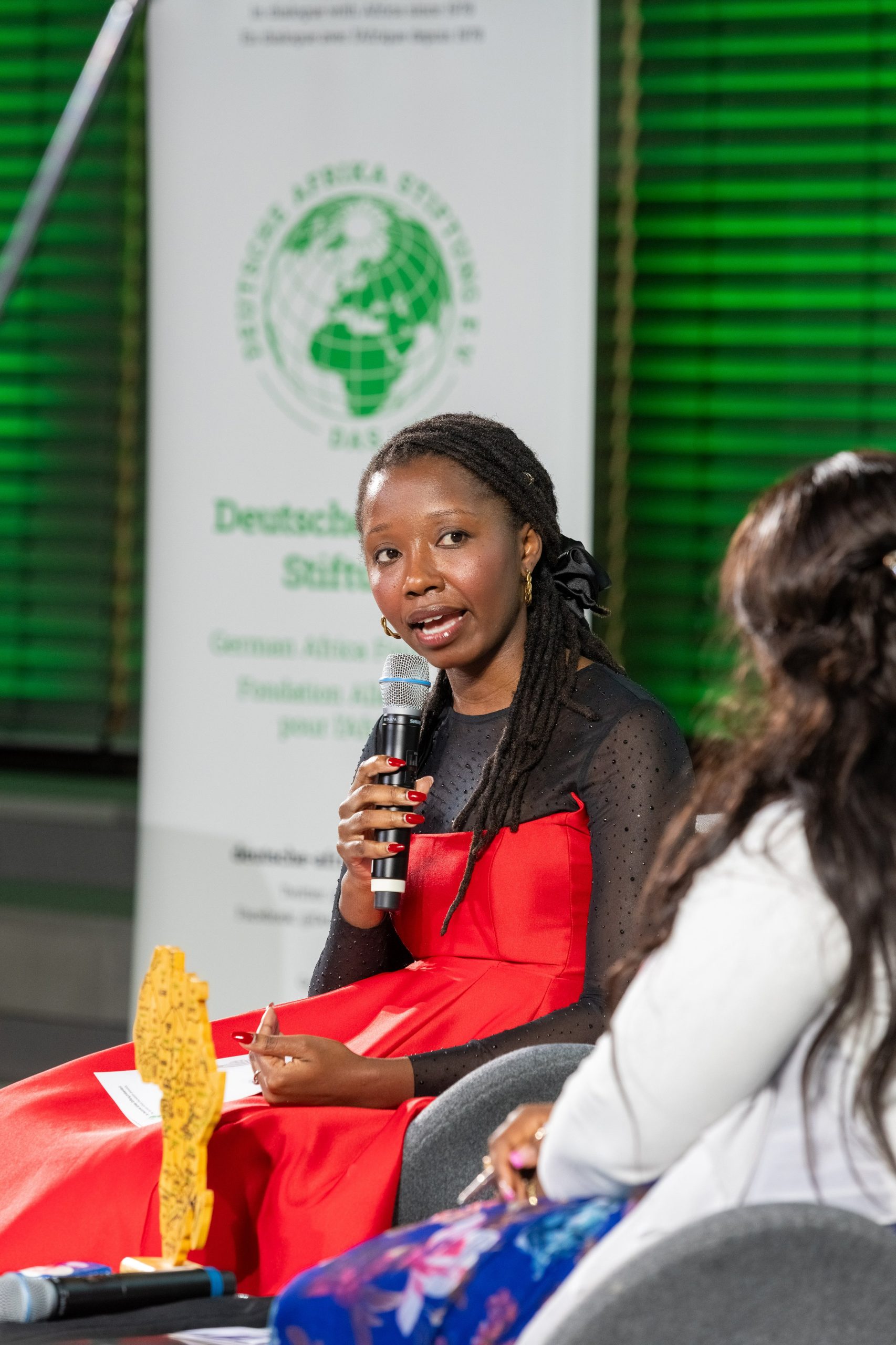
When she began to speak, the auditorium fell silent. She spoke about privilege; that she could stand in Berlin while activists across Africa are tortured or killed. She spoke about her grandmother, who defied racial laws in colonial Rhodesia. She spoke about youth across southern Africa who dream of democratic futures.
She spoke about WELEAD’s work, now expanding across Zimbabwe, Namibia, Botswana, Zambia, South Africa. She spoke about generational rights, and the idea that young people deserve a political space of their own. She spoke about solidarity across countries, across struggles, across histories.
When the last applause faded, she said the sentence, perhaps the only line that captures the entirety of who she is: “Believe in young people, even before they have achieved anything.”



LEAVE A COMMENT
You must be logged in to post a comment.