

|
LISTEN TO THIS THE AFRICANA VOICE ARTICLE NOW
Getting your Trinity Audio player ready...
|
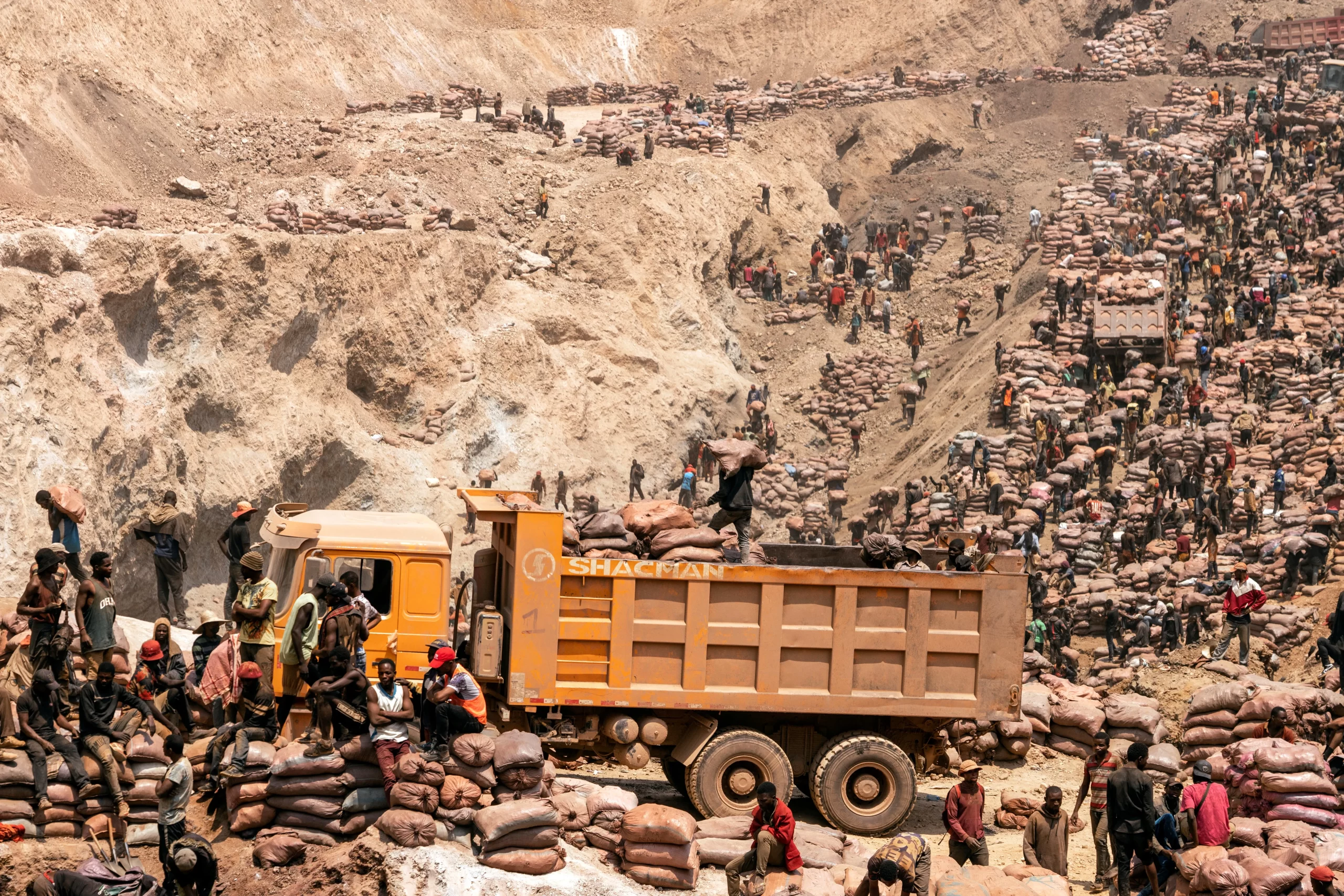
The Democratic Republic of Congo is preparing to suspend all cobalt exports from 30 November, in a renewed attempt to arrest falling prices in a market where it remains the world’s largest producer. The measure, announced on 23 November by the country’s Authority for the Regulation and Control of Strategic Mineral Substances Markets (ARECOMS), will remain in force until further notice.
It covers cobalt from industrial mines as well as artisanal and small-scale operations. Mining companies have been instructed to complete their November exports by 29 November. Even shipments that previously received export authorisation will not be exempt if they have not left the country by the deadline. The regulator says the suspension will give it time to revise the export quota system and bring shipments more closely into line with global demand.
The decision comes after a year in which the Congolese government tried to manage the market through export quotas rather than a blanket ban. That system had itself replaced an earlier suspension imposed in February 2025. The return to a full export halt reflects the difficulty of sustaining higher prices through restrictions when global consumption is weakening and supply continues to come from other producers.
For a country responsible for roughly three-quarters of the world’s mined cobalt, the stakes extend well beyond the mining sector. Cobalt is used in rechargeable batteries, including those found in electric vehicles, smartphones and other electronic devices. It is also used in aerospace and defence applications. The DRC’s latest decision will therefore be watched by mining companies, battery manufacturers, commodity traders and governments seeking secure supplies of minerals used in the energy transition.
Why Kinshasa is intervening again
ARECOMS said the decision followed a significant and sustained decline in cobalt prices since the end of the first half of 2026. It cited slowing global consumption, growing inventories and speculative activity in the market. The authority plans to review the suspension after four months, taking account of price developments, available stocks and the balance between global supply and demand. That review will not automatically reopen exports. A separate decision will be required to specify when shipments can resume, the volumes allowed and the conditions governing the revised quota system.
Market data illustrates the pressure facing producers. S&P Global’s Platts assessment of European cobalt metal stood at $18.15 per pound on 20 November, down 24 per cent since the beginning of the year. Its assessment of cobalt hydroxide, the principal intermediate product exported from the DRC, was $12.70 per pound on 23 November, a fall of 49 per cent since the start of 2026. Both prices had recovered slightly from lows recorded in October and November, but remained substantially below their earlier levels.
Cobalt hydroxide is not the finished battery material. It is an intermediate product that is processed into compounds such as cobalt sulphate, which can then be used in the production of battery materials. Much of the DRC’s cobalt therefore leaves the country before it reaches the stages of processing and manufacturing that supply battery producers.
The export restrictions are intended to reduce the quantity of Congolese cobalt entering the international market. With fewer shipments available, the government hopes to ease the surplus that has weighed on prices. But the market is not determined by Congolese supply alone. Demand, inventories, production in other countries, recycling and changes in battery technology all influence the price.
The first ban and the quota experiment
The current measure is the second major export suspension in less than two years. In February 2025, the DRC halted cobalt exports for an initial four-month period, citing oversupply and low prices. The suspension was extended before being replaced by a quota system that took effect on 16 October 2025.
Under the system, the annual export ceiling for 2026 and 2027 was set at 96,600 tonnes of contained cobalt. This included a base allocation of 87,000 tonnes and a strategic quota of 9,600 tonnes, which ARECOMS could allocate at its discretion for projects considered nationally important. The quotas were distributed among eligible producers, largely according to their historical export volumes.
The first intervention had a substantial effect on prices. Cobalt hydroxide, which was assessed at around $5.80 per pound before the February 2025 restriction, rose sharply as the suspension constrained shipments. The price later reached about $26 per pound during the first months of 2026 before declining again. The price increase demonstrated the influence of Congolese supply restrictions, but it did not produce a lasting recovery.
The quota system was also designed to give the government greater control over the timing and volume of exports. In June 2026, ARECOMS withdrew unused first-half export quotas and reassigned them to its strategic allocation. The regulator said the measure would support projects of national interest, including domestic processing and greater value addition. Producers also faced tighter administrative requirements and deadlines for using their allocations.
The return to a blanket suspension suggests that the government considers the existing limits insufficient to address current market conditions. It also means that companies which had secured export allocations will have to wait for a new regulatory decision before shipping any cobalt that has not left the country by the deadline.
A market changing beyond the DRC’s borders
One of the main challenges facing Kinshasa is that the global cobalt market has changed since the first export ban. The DRC remains dominant in mining, but other countries are increasing production and the battery industry is not using cobalt in every battery chemistry.
According to the US Geological Survey, the DRC accounted for an estimated 73 per cent of global mined cobalt production in 2025. Indonesia was the second-largest producer, with 14 per cent. Indonesian production has expanded rapidly, partly through the growth of facilities that recover cobalt as a by-product of nickel processing. This gives battery manufacturers an alternative source of supply when Congolese exports are restricted.
Battery chemistry is another factor. Lithium iron phosphate (LFP) batteries do not use cobalt, unlike nickel-manganese-cobalt (NMC) batteries. LFP technology has gained a substantial share of the Chinese battery market, particularly in electric vehicles. S&P Global reported in October that LFP batteries accounted for about 82 per cent of China’s battery output, while production of NMC batteries had declined. The shift reduces the extent to which growth in electric vehicle production translates into additional cobalt demand.
Cobalt still remains crucial in several battery chemistries, particularly those used in some electric vehicles and consumer electronics. The Cobalt Institute reported that global cobalt demand reached 276,000 tonnes in 2025, an increase of 13 per cent from the previous year. Batteries remained the largest source of demand growth, while aerospace and defence applications also contributed to consumption. But global supply reached 295,000 tonnes, leaving the market in surplus.
The combination of expanding supply and changes in battery technology has made it harder for the DRC to influence prices through export restrictions alone. Even when Congolese shipments are limited, producers elsewhere can supply part of the market, while battery manufacturers can adjust their technology mix.
The gap between mining power and processing power
DRC extracts most of the world’s mined cobalt, but much of the processing and manufacturing takes place elsewhere.
China is the leading producer of refined cobalt and a major consumer of the metal. The US Geological Survey’s 2026 summary identifies China as the world’s leading producer of refined cobalt and its largest consumer, primarily through the lithium-ion battery industry. UN Trade and Development (UNCTAD) has also highlighted the concentration of higher-value processing activities in a small number of economies. Its 2026 analysis estimates that China accounted for 78.6 per cent of global refined cobalt production in 2025.
This means that the DRC’s dominance at the extraction stage does not translate into equivalent control over the entire supply chain. The country exports much of its cobalt in intermediate forms, while refining, production of battery chemicals, cathode manufacturing and battery-cell production are concentrated in other countries.
The government has repeatedly stated its intention to retain more value from its mineral resources. The quota system included a strategic allocation for projects of national importance, and the broader policy direction has included tighter controls over mineral exports and efforts to encourage local processing. In August 2026, the government also prohibited exports of copper and cobalt concentrates, with limited scope for exemptions, as part of its effort to encourage the export of more highly processed products.







LEAVE A COMMENT
You must be logged in to post a comment.