

|
LISTEN TO THIS THE AFRICANA VOICE ARTICLE NOW
Getting your Trinity Audio player ready...
|
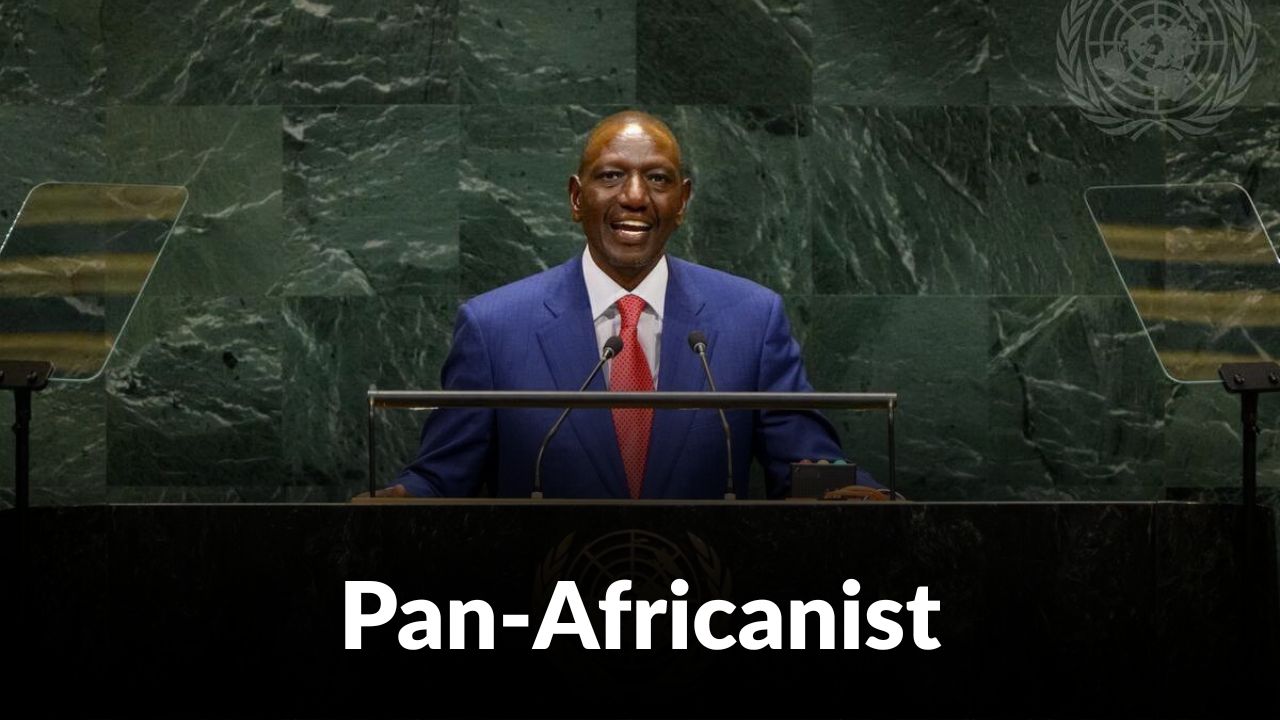
Kenyan President William Ruto has won continental praise after using Kenya’s national statement to the General Assembly on Wednesday to criticize the concentration of permanent power among five countries, saying it left Africa without a permanent voice on the Security Council.
“You cannot claim to be United Nations while disregarding the voice of 54 nations,” Ruto said, channeling his pan-African bona fides. “Africa is no longer willing to wait in the margins of global governance, while decisions about peace, security and development are made without our understanding, without our perspectives and without our voice.”
His demand is two decades old, and what blocks it has as much to do with Africa’s own choices as with the world’s great powers.
Ruto Says Africa Is Discussed but Never Seated
Ruto noted that the U.N. has 193 member states, but only five hold permanent seats on the Council.
Africa’s 54 member states make up more than a quarter of the Assembly, he said, yet the continent has no permanent voice on the Council.
“Permanently discussed yet permanently excluded,” Ruto said.
Kenya’s president also tied reform to trust, arguing that the world does not lack laws but confidence that they are applied consistently.
He paired the seat demand with a push to reform the international financial system.
His position matches the Common African Position, which seeks at least two permanent seats with full powers, including the veto, plus more non-permanent seats.
Ruto made the same case a day earlier on the sidelines, at the Kenya-EU Partnership for Multilateralism Summit.
African Leaders and the UN’s Top Officials Are Aligned
Kenya is not alone. Sierra Leone President Julius Maada Bio, who coordinates the AU Committee of Ten on Council reform, spoke during the debate’s opening session.
A Caribbean column tracking that session reported Bio demanded permanent African seats with full veto rights, plus a dedicated rotating seat for small island developing states.
That second demand links Africa’s campaign to the Caribbean, whose small island states would gain a regular voice at the table.
U.N. Secretary-General António Guterres, whose term ends Dec. 31, said Wednesday that Africa’s lack of a permanent seat is unjust and indefensible.
General Assembly President Khalilur Rahman of Bangladesh emphasized Africa’s underrepresentation in his opening address.
Two Decades of Promises Have Not Produced a Seat
Africa’s formal demand dates to 2005. Under the Ezulwini Consensus, it seeks two permanent seats with the veto and five non-permanent seats.
Outside powers remain divided. France and Britain back two African permanent seats with veto power, while the U.S. supports African seats without it. China backs African seats, and Russia warns against making the Council too broad.
In 2024, the Biden administration proposed two permanent African seats, but the AU had already rejected denying veto power to the new members.
Any change needs a Charter amendment ratified by two-thirds of U.N. members, including all five permanent members.
Washington’s current posture offers little encouragement. In his own address Tuesday, President Donald Trump attacked the U.N. Human Rights Council, UNESCO and the International Maritime Organization.
Africa Has Never Agreed on Who Would Sit
External pressure is only half the problem. ACCORD has noted that the African group has not agreed on criteria for selecting its two candidates.
That gap, ACCORD argues, lets the permanent five assess contenders one by one.
ISS Africa has noted that how the AU would choose its representatives on a multipolar continent remains unclear.
Ruto has named that weakness himself. At a 2025 C-10 summit, he said Africa must agree on how it will choose its representatives.
On the evidence, his call will not be answered this session. Its best chance lies in Africa settling who sits.
Tying the Seats to the AU Chair Would Answer Who Sits
One model would give Africa’s two permanent seats to the sitting AU chair and the immediate past chair.
Past debates came close. In 2005, AU leader Alpha Oumar Konaré said an African seat might go to one country permanently or be contested in elections every four years.
Researchers in the AU’s own library have documented that rotating members on the permanent seats has been raised, alongside questions over which countries would go first.
No AU document reviewed for this report ties the seats to the chair itself.
Several features make it workable. The chair serves one year, rotates among Africa’s five regions and must win consensus or a two-thirds vote.
Pairing current and past chairs gives each state two years at the table, matching elected members’ two-year terms.
Under that model, today’s seats would go to Burundi’s Évariste Ndayishimiye, who took over the AU chair in February, and Angola’s João Lourenço, who handed it to him.
African elected members already speak this way. Liberia’s President Joseph Boakai told the Assembly last year that while Liberia’s name was on the nameplate, the seat belonged to Africa.
A Rotating Seat Needs Legal Design, Not Just Goodwill
Only states can join the U.N., so the AU cannot hold a seat directly. A Charter amendment would need to create regional seats filled by AU-designated states.
Consultation rules would need teeth. A standing mandate from the AU Peace and Security Council could guide routine votes, with the AU’s New York mission coordinating.
Veto use is the hardest test, since Council votes can move in hours. Africa could require Peace and Security Council approval before any veto, with recusal when a seat holder is party to a dispute.
Critics could fairly ask whether one-year chairs, often picked through regional bargaining, would bring the continuity permanent membership demands.
A phased deal might ease resistance from the permanent five. Some analysts have discussed an interim model adding two African permanent members with delayed veto powers.
Ruto asked whether the U.N. can claim to speak for the world while leaving Africa outside. The faster Africa answers its own question of who sits, the harder it becomes to ignore.







LEAVE A COMMENT
You must be logged in to post a comment.