

|
LISTEN TO THIS THE AFRICANA VOICE ARTICLE NOW
Getting your Trinity Audio player ready...
|
Cameroon’s President Paul Biya left the country on June 7 for what his office called a brief private stay in Europe.
Ten weeks later, at 93, he has not returned, and his government will not say when he might.
The absence is not really the story.
The system that made it possible to govern from Geneva without consequence is.
Biya’s Scorecard, By the Numbers
Cameroon is Africa’s 17th most populous nation, home to more than 30.6 million people.
Its economy ranks 14th on the continent by GDP, a mid-tier position for a country with significant oil, timber and agricultural wealth.
Cameroonian economist Eugène Nyambal called Biya’s economic record a failure as the president marked 40 years in power.
“The record is negative, and our youth is sending a clear message,” he said, pointing to the number of educated young Cameroonians leaving the country.
Roughly 12,000 Cameroonian university graduates left the country in 2024 alone, according to credit-risk analysis from Coface.
He Seeks Treatment Abroad That His Own Health System Cannot Offer
The pattern is not new.
Biya has spent extended stays in Geneva hotels and discreet Swiss locations for years, repeatedly triggering questions about who actually runs Cameroon day to day.
A six-week disappearance in 2024, following a China trip, drew the same rumors and the same denials from his cabinet chief.
Cameroonians have grown used to these absences over four decades, many of them tied to his health.
The government has offered contradictory accounts of this stay.
Communication Minister René Emmanuel Sadi denied in June that Biya had been hospitalized in Geneva.
Separate reporting says Biya was admitted to a private Swiss clinic after falling ill at a national day reception on May 20, an account the presidency disputes.
Whatever the exact circumstances, Biya can access the kind of private Swiss care most Cameroonians will never see inside their own country.
Cameroon’s government spent just 3.9 percent of GDP on healthcare in 2022, far short of the 15 percent African governments pledged in the 2001 Abuja Declaration.
Households cover nearly 72 percent of the country’s total health financing out of pocket.
A cluster of patient deaths in May 2026 led Cameroon’s National Order of Physicians to suspend about a dozen doctors for negligence and surgical errors tied to inexperience.
Douala’s Laquintinie Hospital, one of the country’s busiest public facilities, is known locally for slow service and chronic staff shortages.
Cameroonians who cannot afford public hospital fees often turn to unlicensed clinics instead.
The president who cannot say when he is coming home has never had to wonder whether the hospital would be ready for him.
Cameroon Is Not the Only Country Watching an Aging Leader in Public
Biya’s fitness to govern has been questioned in public before.
Video from the December 2022 US-Africa Leaders’ Summit showed him led to the stage by protocol officers, seemingly unaware of where he was.
“Who are all these people?” he asked.
A separate account of the same appearance has him asking an aide, “Oh wow, so I have become a celebrity?”
The clip circulated widely across Cameroonian and pan-African social media before Yaounde offered any response.
Cameroon is not alone in this.
South Sudan’s Salva Kiir, 74, has faced the same question, more starkly.
Video from a December 2022 road-commissioning ceremony showed him urinating on himself as he stood for the national anthem.
He was reported to be suffering from a urinary tract infection, common in older men.
South Sudan’s government responded not with a health update but with the detention of six state broadcast journalists suspected of leaking the footage.
The instinct in both capitals was the same.
Manage the image, not the governance question underneath it.
Cameroonians and South Sudanese alike were left to draw their own conclusions about who was actually making decisions on their behalf.
Four Decades of Rule Produced Patronage Instead of Institutions
Biya has led Cameroon since 1982, longer than most Cameroonians have been alive.
Analysts describe his presidency as the center of an elaborate patronage system, one that distributes state resources and balances regional and ethnic loyalties while relying on high levels of political repression.
Transparency International scored Cameroon 26 out of 100 on its 2025 Corruption Perceptions Index, unchanged from the year before.
That places the country 142nd out of 182 nations ranked, with impunity for corrupt officials and restricted civic space cited as persistent drivers.
The economic record follows the same pattern.
Cameroon’s GDP per capita ranks 152nd in the world, and poverty has stagnated near 22 percent of the population for more than two decades despite the country’s oil, timber and cocoa wealth.
Cameroon ranks 155th out of 193 nations on the UN’s Human Development Index.
Unemployment figures are contested: Cameroon’s own statistics agency and World Bank data put it near 9.5 percent, while ILO-modeled estimates, using a narrower definition of active job-seeking, put it closer to 3.6 percent.
The gap reflects how much of the economy runs on informal, unregulated work rather than any real improvement underneath it.
Biya’s own anti-corruption campaign, Operation Sparrowhawk, has run since 2006.
It has jailed former ministers and state company executives.
Civil society figures argue it has never touched the president’s inner circle.
Cameroonian anti-corruption advocate Hilaire Kamga has said the operation’s own commission never investigated allegations tied to Biya himself or those closest to him, targeting less consequential figures instead.
How Biya Keeps Winning Despite Falling Trust
Biya’s repeated victories are not really a measure of his popularity.
Afrobarometer found trust in the president fell to 47 percent in 2024, down from 55 percent the year before.
Trust in his ruling party stood at just 27 percent.
More than 22 percent of Cameroonians describe their country as outright nondemocratic, and another 42 percent call it a democracy with major problems.
What keeps Biya winning is patronage, ethnic-regional loyalty and a fragmented opposition, reinforced by state control of the electoral machinery.
Biya belongs to the Bulu subgroup of the Beti community, whose organizational strength in the Center and South regions has delivered consistent electoral majorities since multiparty politics began in 1992.
Elites from that Beti-Bulu axis have occupied a disproportionate share of senior government, military and bureaucratic posts throughout his rule.
Analysts say it is not simple bloc voting along ethnic lines.
Researchers describe it as a patronage system, one where opposition supporters have coined derogatory terms for ruling-party loyalists tied to the distribution of public resources for political support.
Freedom House attributes the ruling party’s dominance to its control of appointments, its access to state resources and media, and harassment that keeps the opposition fragmented rather than unified behind one challenger.
Other regions read the arithmetic differently.
Maurice Kamto draws his base from the Bamileke of the West region, while northern Muslim communities have historically backed Biya on the understanding that a future president would come from neither the Beti-Bulu nor Bamileke camp.
Anglophone voters have had shrinking room to vote for anyone.
Independent observers have described a series of fraudulent elections carried out under Biya’s control of the electoral commission and judiciary.
A 1961 Union Set Up the Divide Biya Inherited and Deepened
Cameroon’s Anglophone-Francophone tension did not begin with Biya, but he has governed through nearly all of it.
British Southern Cameroon and the French-administered Republic of Cameroon formed a federal republic in October 1961, following a UN-supervised vote.
Anglophone leaders quickly accused the Francophone-led government of ignoring the federal model and governing through the centralized structures of the earlier unitary constitution.
A 1972 referendum, held under President Ahmadou Ahidjo, replaced the federation with a unitary state, a shift that more than 98 percent of voters approved.
Anglophone leaders who helped negotiate the original union felt betrayed.
John Ngu Foncha, a former vice president of the federal republic and one of its architects, resigned in protest, writing that Anglophones had been mocked as traitors while the constitutional protections meant to shield them were stripped away.
Biya succeeded Ahidjo in 1982 and governed the unitary system for decades without resolving the grievance.
A 1996 constitution promised decentralization, but power stayed concentrated in the presidency, and implementation stalled.
The dispute turned violent in 2016.
Lawyers, teachers and students in the Anglophone regions launched peaceful protests after the government assigned French-speaking judges and teachers to English-speaking courts and schools.
Cameroon’s government responded with force rather than negotiation.
Security crackdowns and internet shutdowns during the protests eroded what trust remained between Anglophone activists and Yaounde, reviving a movement for federal autonomy that had persisted since the 1970s.
The conflict has since hardened into an armed separatist war.
More than 6,500 people have been killed and nearly a million displaced, with government forces criticized for indiscriminate violence, including village destruction and the alleged use of rape and torture.
It is now in its ninth year with no negotiated settlement in sight.
Journalists Have Paid a Direct Price for Covering Any of This
Reporters Without Borders has documented five journalists killed under Biya’s rule and one held for nine years before a 32-year sentence.
CMTV journalist Samuel Wazizi died in military custody in 2019 after covering the Anglophone crisis.
His death was concealed by authorities for nearly ten months, attributed to severe sepsis, with no investigation ever made public.
Radio host Martinez Zogo was abducted and killed in 2023.
The case against alleged masterminds, including a former state intelligence official, remains unresolved more than two years later.
The October Election Tested Whether Dissent Would Be Tolerated
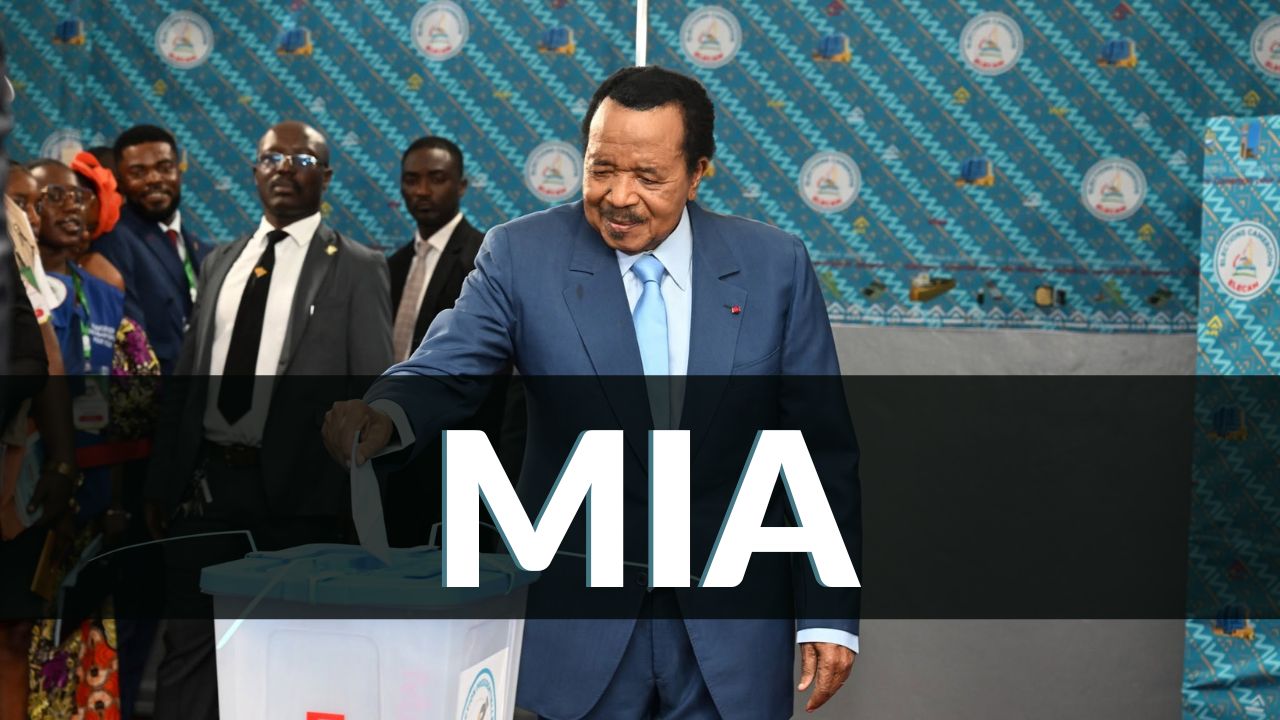
Biya won an eighth term in October 2025 with 53.66 percent, against 35.19 percent for Issa Tchiroma Bakary, a former government minister running as his top challenger.
Tchiroma rejected the outcome and alleged fraud.
Protests broke out in opposition strongholds.
Cameroon’s government said 16 people were killed in the unrest; opposition figures and human rights groups allege the toll exceeded 55.
Anicet Ekane, the 74-year-old leader of the African Movement for New Independence and Democracy, was arrested October 24 on insurrection charges tied to his support for Tchiroma.
He died in military detention on December 1, after his lawyer alleged he was denied treatment despite struggling to breathe.
Human Rights Watch has called for an independent investigation, noting the arrest came amid mass detentions on charges lawyers describe as applied indiscriminately to critics of the election.
Cameroon’s defense ministry attributed the death to natural causes.
The African Union Has Congratulated Him, Not Challenged Him
Cameroon’s most powerful outside institution has offered congratulations, not consequences.
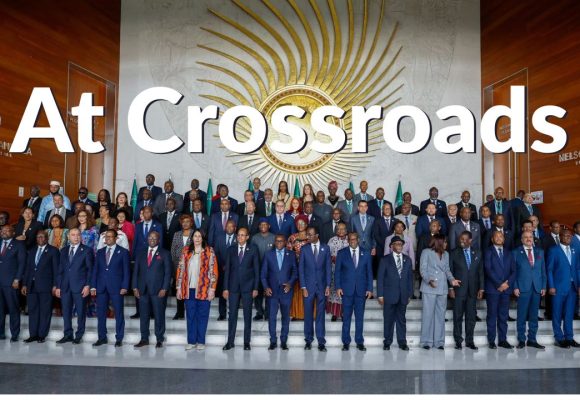
African Union Commission Chairperson Mahmoud Ali Youssouf congratulated Biya on his October 2025 re-election, while voicing grave concern over reported violence and arrests tied to the vote.
No sanctions followed.
The AU’s own framework helps explain why.
Continental sanctions apply to coups, not to incumbents who dismantle term limits or jail opposition figures for years.
As of 2024, roughly 15 percent of AU member states, eight countries, sat under suspension for unconstitutional changes of government, while civilian leaders who dismantle term limits or jail opposition figures for decades face no equivalent consequence.
Kamto’s party has tried to force the issue anyway.
The Cameroon Renaissance Movement petitioned the AU in April 2026, arguing the new vice-presidential law amounted to an unconstitutional change of government, and called for sanctions.
The AU has not acted on the petition.
The Succession System Depends on Biya Naming a Successor While He Can
Biya’s absence lands on a succession system that works only if he makes a choice while he is still alive.
Parliament created the office of vice president in April 2026, with a presidential appointee automatically assuming power if the presidency falls vacant.
Critics call it a further concentration of authority rather than a safeguard.
The reform does account for what happens if he dies before naming anyone.
If the vice presidency remains empty, Cameroon’s constitution falls back to its older rule: the Senate president becomes interim head of state and must organize a new election within 20 to 120 days.
That fallback has never been tested in practice, and it depends entirely on political actors agreeing to trigger it.
Cameroon’s government has avoided declaring even a temporary vacancy through ten weeks of Biya’s unexplained absence, despite mounting pressure to do so.
An untested mechanism, run by actors who have shown no appetite to use it quickly, is not the same as a system built to withstand an actual crisis.
Cameroon has avoided a national civil war for decades, but that has never really meant peace.
An armed conflict has run in its Anglophone regions for nine years.
Opposition figures have died in custody.
Elections have ended in repression rather than resolution.
What Cameroon has built is a tense equilibrium, held in place by patronage, security forces and one man’s continued presence, not genuine national peace.
Succession is the test of whether that equilibrium survives him.
Editor’s note: The vice presidency remains vacant.
No decree naming a vice president appears in Cameroon’s official record as of early August 2026, and Sadi has confirmed the post is unfilled.
A document claiming Biya had appointed his son, Franck Emmanuel Biya, circulated in April 2026 and was independently found to be fabricated by Africa Check, Ghana Fact and other fact-checking organizations, not merely unconfirmed.
A second forged document, attempting to name a vice president through state broadcaster CRTV, was rejected by CRTV staff in June and disavowed by the government.
No individual currently holds the office.
Moody’s has cited the absence of a clear succession plan and the concentration of decision-making in Biya’s hands as explicit risk factors weighing on Cameroon’s credit rating.
Sadi addressed the president’s absence directly in early August.
“I cannot tell you exactly when President Paul Biya is returning,” he told RFI, adding that Biya would come back soon without offering a date.
Biya built a state that runs on his continued presence, however distant that presence has become.
What he did not build, in 44 years, is a way for Cameroon to function, resolve its oldest internal divide, or hold anyone accountable, without him.
Twice now, someone has tried to forge the succession he never planned for.
The African Union congratulated him anyway.




LEAVE A COMMENT
You must be logged in to post a comment.