

|
LISTEN TO THIS THE AFRICANA VOICE ARTICLE NOW
Getting your Trinity Audio player ready...
|
Pan-African solidarity has a crack in it. It is loud, it is public, and it is wearing a Mexico jersey.
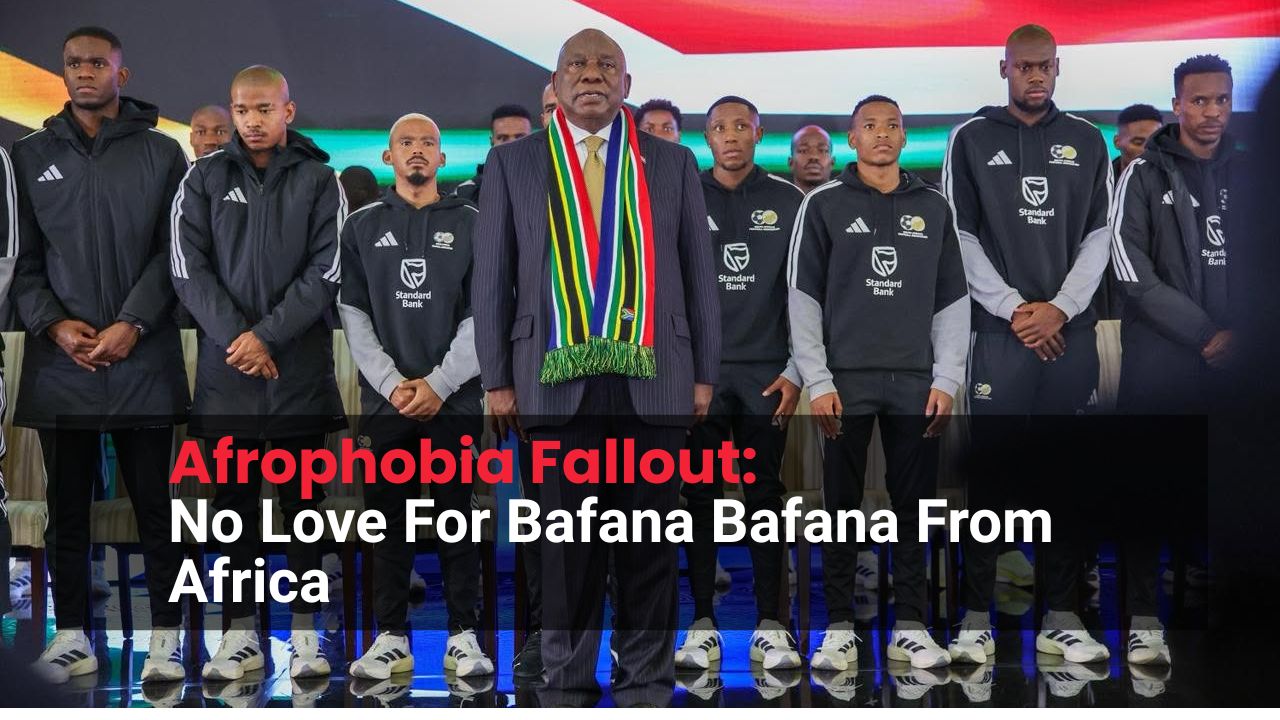
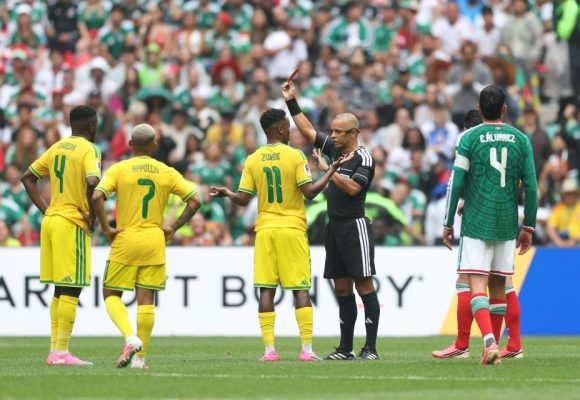
When South Africa’s Bafana Bafana take the field at Mexico City’s Estadio Azteca on June 11, much of the continent will be cheering for the other side. Not out of indifference to African football, but out of fury at what South Africa has done to African people within its own borders.
Kenyan digital outlet PlugTV Africa captured the mood precisely: a wave of xenophobic violence against African migrants in South Africa, it editorialized, “has cracked pan-African solidarity, and that crack is now loud and public.” That crack has been building for months. On June 11, it becomes visible to the entire world.
The Protest in Plain Sight
Mexico’s support movement is not subtle. It is organized, vocal, and continent-wide. From Nairobi to Accra, African fans, commentators, and media outlets have spent the days leading up to the opener openly declaring that they want South Africa to lose.
The Kenya Times published commentary from analyst Waruhiu stating that South Africa “should lose all their matches in the World Cup,” citing xenophobia as his explicit reason. Meanwhile, Deutsche Welle Africa published a video report on June 10 under the headline “Why Africans Are Turning Against Bafana Bafana?”, stating that attacks on Africans in South Africa have driven fans across the continent to back the country’s World Cup rivals. These are not fringe voices. They are mainstream African media making a clear editorial judgment.
The protest carries added weight because it targets South Africa’s opening match against a host nation. African supporters often rally behind the continent’s teams at the World Cup. Yet South Africa enters this tournament under very different circumstances.
Bafana Bafana last appeared at the World Cup in 2010, when South Africa hosted the tournament as a continental celebration. Sixteen years later, the team returns to a global stage where many Africans now want it to lose.
What Broke the Solidarity
South Africa’s Afrophobia, the specific targeting of fellow Black Africans by South African citizens and vigilante groups, has a long and documented history. Yet what changed in 2026 is scale and timing. Human Rights Watch documented in May 2026 that vigilante groups, including Operation Dudula, carried out violent attacks on African migrants in Pretoria, Johannesburg, and Durban in the April-May period, just months before the World Cup opener.
Six African governments responded. Reuters confirmed in May 2026 that Kenya, Malawi, Lesotho, Zimbabwe, Nigeria, and Ghana all issued official warnings to their citizens living in South Africa. Ghana went further still. Foreign Affairs Minister Samuel Okudzeto Ablakwa stated publicly that his government would not rule out “formal legal action in competent international courts.” That statement landed five days before kickoff.
Veteran Ghanaian journalist Kwesi Pratt Jnr provided the historical argument that underlies the protest. Broadcast on Ghana’s Metro TV in May 2026, Pratt stated: “The problem of xenophobia is a continuation of the apartheid system of governance.” For many African fans, that framing is precisely why the support for Mexico feels justified. South Africa fought for its freedom with the help of the rest of the continent. It has not extended that solidarity inward.
The Dissenting Voice
Not every African football voice has joined the protest. The most substantive pushback comes from Vincent Okumagba, Chairman of the Unified Supporters Club of Nigeria and Vice President of the African Football and Sports Supporters Association. Speaking to The Guardian Nigeria’s veteran sports journalist Gowon Akpodonor, Okumagba argued firmly against withdrawing continental support from Bafana Bafana.
“We feel the pain of Nigerians in South Africa,” he said. “However, we must distinguish between the politics of hate and the spirit of the game. If we withdraw support, we let the perpetrators of violence win by killing the very oneness that football is supposed to foster.”
He added, “African football is a platform to demand better for all Africans. We simultaneously demand that the government of South Africa ensure the safety of all Africans on their soil.”
Okumagba’s position is principled. Even so, it is the clearest signal of how serious the protest movement has become. The official Nigerian supporters association felt compelled to publicly argue against backing Mexico. Movements that require formal institutional rebuttals are not fringe.
What the Continent Is Saying
Zimbabwean journalist and Al Jazeera columnist Tafi Mhaka wrote in February 2026 that Africa should consider boycotting the 2026 World Cup altogether on humanitarian grounds. His argument, that African political memory recognizes the power of collective withdrawal to expose global injustices, found a different expression in the Mexican support movement. The continent did not boycott. Instead, it found a sharper and more visible way to register its verdict.
A Reckoning Delivered on the Pitch
Beyond the fan sentiment, the diplomatic fallout has been equally pointed. Al Jazeera reported June 9 that Nigeria-South Africa tensions are escalating sharply, with Nigeria threatening retaliatory measures and hundreds of Nigerians being repatriated from South Africa. Furthermore, South African President Cyril Ramaphosa said in early June that his government will act against groups fueling xenophobic violence. The statement arrived days before the opener and was met with measured skepticism across the continent.
African football solidarity is one of the sport’s most powerful forces. It carried the continent through decades of under-representation at global tournaments. It is the reason African fans cheer for teams they have no national connection to. South Africa built its entire 2010 World Cup brand on that solidarity. On June 11, it will discover how much of it remains.
Bafana Bafana will take the field carrying the flag of a country with a great deal to answer for. The continent will be watching closely, and not all of it will be cheering.
The 2026 FIFA World Cup, which runs June 11 through July 19, is the first in the tournament’s 96-year history to be hosted across three countries simultaneously, with the United States, Canada, and Mexico sharing duties across 16 cities. For the first time, 48 nations compete on football’s biggest stage.




LEAVE A COMMENT
You must be logged in to post a comment.