


|
LISTEN TO THIS THE AFRICANA VOICE ARTICLE NOW
Getting your Trinity Audio player ready...
|
Football, or soccer, as some call the most popular sport in the world, has never been just a sport. The 2026 FIFA World Cup is making that point before a single whistle blows.
Running from June 11 through July 19, it is the first World Cup in the tournament’s 96-year history to be hosted simultaneously across three countries, with the United States, Canada, and Mexico sharing duties across 16 cities.
It is also the first edition to feature 48 nations, expanded from the previous 32. The ambition is historic. The execution, in two of the three host countries, has been anything but.
Canada, to its credit, has kept its house in order. The United States and Mexico have not.
Africa Got the Invitation, Not the Welcome
Of the 48 nations that qualified for the 2026 World Cup, fans from Côte d’Ivoire, Senegal, Iran, and Haiti are all subject to Trump administration travel restrictions. Unless they obtained visas before the ban took effect, attending matches on U.S. soil is not an option. The United States is hosting 78 of the tournament’s 104 matches. Three-quarters of the entire competition. The practical consequence is severe. Senegal, one of Africa’s most decorated football nations and a genuine contender, will play without a meaningful home crowd.
The Trump administration’s travel ban, which has suspended entry for nationals of more than a dozen countries since early 2025, was never designed with football in mind. Yet its consequences for this tournament are direct and severe. Senegal and the Ivory Coast are among the affected nations, with the administration citing “screening and vetting deficiencies” as justification. No specific cases or evidence accompanied that language. The framing is the message. FIFA knew the ban was in place when it confirmed the United States as the primary host. It chose to proceed anyway.
African supporters from both Senegal and the Ivory Coast have had their World Cup plans upended entirely. Those without existing U.S. visas cannot make the journey. Many will watch from their living rooms rather than from the stands. “I don’t know why the American president would want teams from certain countries not to take part,” Senegal supporter Djibril Gueye told the Associated Press at the Africa Cup of Nations in Morocco. “If that’s the case, they shouldn’t agree to host the World Cup.”
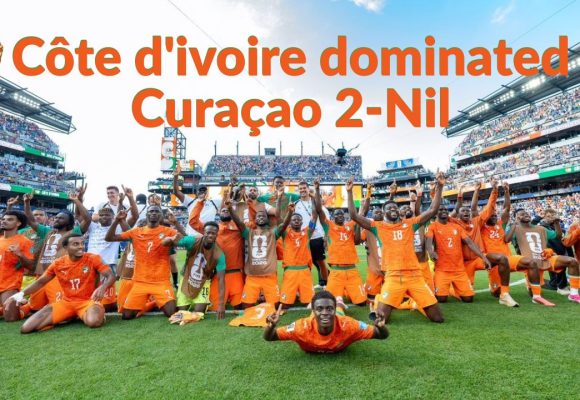
Ivory Coast players, including captain Franck Kessie, acknowledged there was little they could do. Their coach offered a slim reassurance that ticketed fans might eventually be allowed in. It was not a guarantee. It was hope dressed up as strategy.
Somali Referee denied US Entry
The most vivid symbol of what this World Cup has become emerged on Saturday, June 7, when Omar Abdulkadir Artan, a Somali referee selected to officiate at the tournament, landed at Miami International Airport after flying from Istanbul and was denied entry into the United States.
U.S. Customs and Border Protection says Artan was denied admission “due to vetting concerns” following additional inspection upon arrival. FIFA has since confirmed that he cannot train or officiate at the tournament.
Somalia is on the Trump administration’s travel-ban list, part of the same sweeping policy locking out fans from Senegal, the Ivory Coast, and several other nations. FIFA knew this when it selected Artan. It credentialed a referee from a banned country to officiate at a tournament hosted by the country banning him. The outcome was entirely predictable.
Artan was on the cusp of becoming the first Somali national to officiate a World Cup match. By every professional measure, he is qualified.
Ciise Aden Abshir, a senior adviser to Somalia’s Ministry of Youth and Sports and a former national team captain, has condemned the decision in comments to Agence France-Presse. Artan is “among Africa’s most respected referees,” he said, and the decision “undermines football’s commitment to fairness, merit, and the spirit of fair play.”
CAF named Artan its male referee of the year in 2025. That recognition carries weight across the continent. At U.S. customs, it carried none.
FIFA has issued a carefully worded statement in response. “A host government ultimately determines who receives a visa and who is admitted into their country,” it said, adding that Artan’s status will not change.
Translation: FIFA has accepted the decision and moved on.
When Football Meets a War
Iran was the first country to qualify for the 2026 World Cup. It is scheduled to play in Los Angeles and Seattle. Between qualification and kickoff, however, the United States and Israel launched joint military strikes on Iran in late February, killing Supreme Leader Ayatollah Ali Khamenei and senior military officials.
Iran’s football federation president Mehdi Taj responded directly. “After this attack, we cannot be expected to look forward to the World Cup with hope,” he said. “The U.S. regime has attacked our homeland, and this is an incident that will not go unanswered.”
Trump’s response was characteristically oblique. On Truth Social, he wrote that Iran’s team was “welcome” but that he did not believe it was “appropriate” for them to attend, citing their safety. When pressed by Politico, he was blunter still. “I really don’t care,” he said. “I think Iran is a very badly defeated country. They’re running on fumes.”
Iran did ultimately participate. Yet the episode exposed something FIFA has long tried to obscure. It has no sovereign authority over the countries that host its events. A government can strangle the tournament’s reach, and FIFA’s stated principles count for very little in practice.
Mexico: The Host With a Security Problem
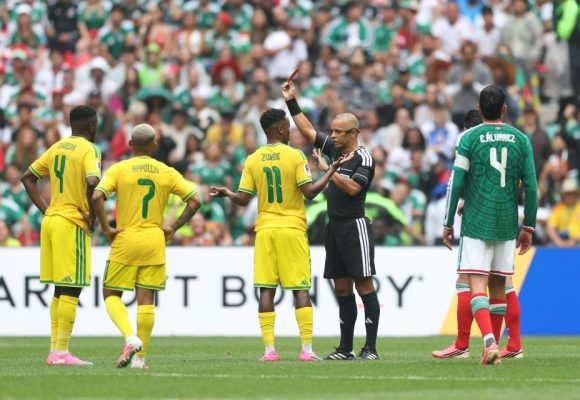
The tournament opens in Mexico City, where co-hosts Mexico take on South Africa on June 11. Yet Mexico’s role as host carries its own shadow. Cartel violence reached alarming levels earlier this year following the killing of Jalisco New Generation Cartel leader Nemesio Oseguera Cervantes. Around 30 security officials and a similar number of cartel members died in the wave of retaliatory violence that followed.
Airlines, including Air Canada, United Airlines, Aeromexico, and American Airlines, temporarily suspended flights to Puerto Vallarta after the cartel reprisals. In response, Mexican President Claudia Sheinbaum deployed around 100,000 troops across the tournament’s host cities. Guadalajara, one of those cities, sits in Jalisco, the cartel’s operational heartland.
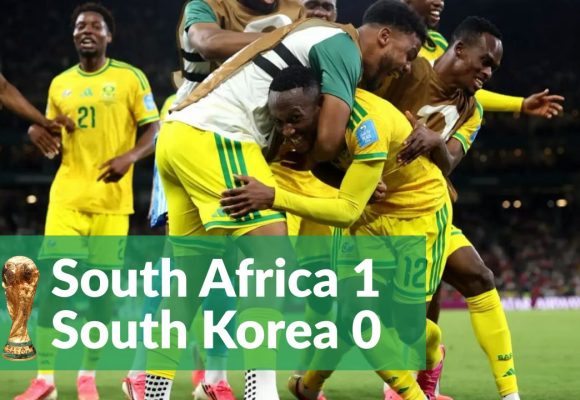
Experts have warned that structural risks tied to organized crime and missing persons in Guadalajara and Monterrey remain unresolved, even as the government insists security will hold. For African teams playing group matches in Mexico, this is not an abstract concern. South Africa plays its opener in Mexico City. Several African squads will move between all three host countries across the group stage. The logistics of that movement, for players and the small number of African fans who can legally enter the United States, is a burden designed by no one and planned for by almost no one.
FIFA’s Comfortable Silence
Throughout these crises, FIFA has issued statements, provided monitoring, and declined to act. Its president, Gianni Infantino, posed for photographs with Trump in the White House in August 2025. He has not changed a single policy. Meanwhile, the International Sports Press Association wrote to FIFA, calling the treatment of African and Iranian media professionals “countless and unacceptable” and demanding intervention. Nothing followed.
It is worth noting what comes next. The 2030 World Cup will be spread across six countries on three continents. FIFA is not retreating from multi-national hosting. It is doubling down. That makes the failures of 2026 not an anomaly to be corrected but a precedent quietly being normalized.
Africa Is Still Waiting for an Answer
The question African football federations, fan groups, and policymakers must now answer is not whether this World Cup has been politically poisoned. It has been. The real question is whether 2026 becomes the moment Africa demands that global football governance reflects the world’s actual geography. The alternative is to absorb these insults quietly and wait for the next tournament to deliver more of the same.
The whistle blows on June 11. Much of Africa will be watching from home.




LEAVE A COMMENT
You must be logged in to post a comment.