

|
LISTEN TO THIS THE AFRICANA VOICE ARTICLE NOW
Getting your Trinity Audio player ready...
|
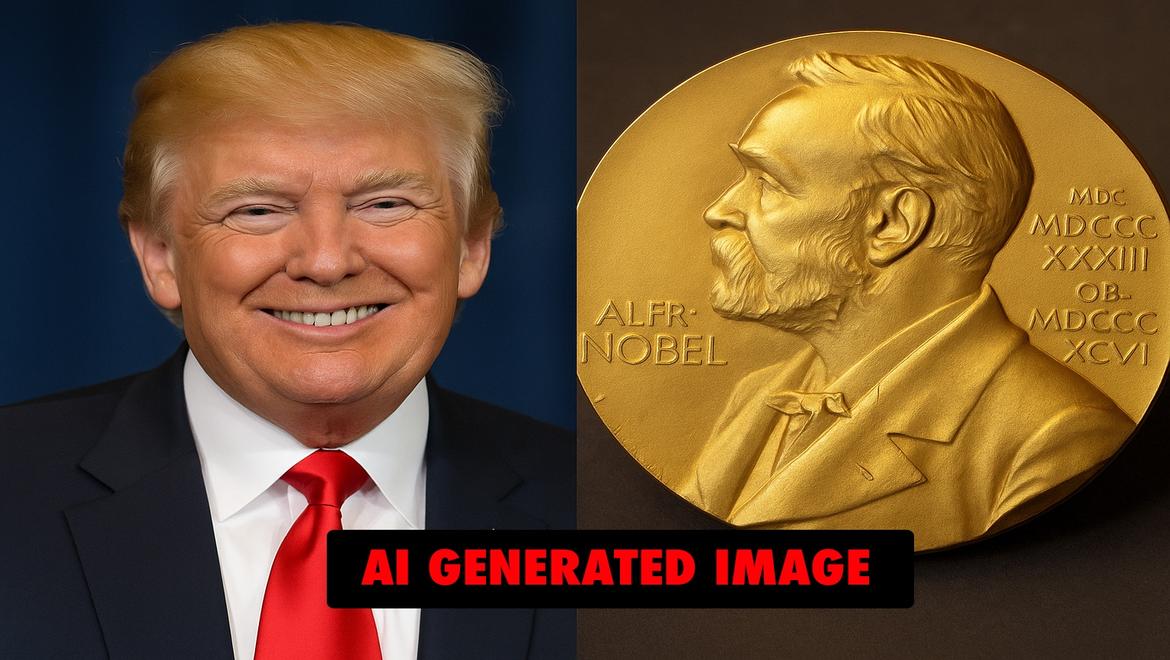
CAIRO, Egypt (TAV) – Cautious optimism is sweeping through the Middle East as Israel’s cabinet approved a U.S.-brokered ceasefire with Hamas, marking the most significant halt in hostilities since the Gaza war began nearly two years ago. The truce arrives on the eve of the Nobel Peace Prize announcement and amid growing speculation that President Donald Trump’s motivation may be as much about Oslo as it is about peace.
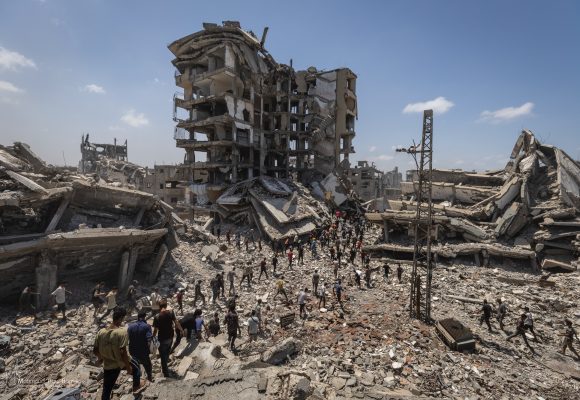
If the deal holds, it would end a brutal conflict that began with Hamas’s surprise attack on Israel on Oct. 7, 2023, which killed about 1,200 Israelis and saw hundreds taken hostage. Israel’s fierce retaliation turned Gaza into rubble. According to the United Nations Office for the Coordination of Humanitarian Affairs and Gaza health authorities, nearly 70,000 Palestinians, many of them children, have been killed. A U.N. Commission of Inquiry in September concluded that Israel’s military operations in Gaza constituted acts of genocide, a finding Israel strongly denies.
A War Losing Global Support
As the war’s toll grew, even Israel’s closest allies began to distance themselves. Several Western governments, including the United Kingdom, France, Belgium, and Canada, formally recognized the State of Palestine, joining more than 140 UN member nations that now do so, according to Al Jazeera and The Associated Press.
The ceasefire reflects Israel’s awareness that global patience had run out and that the humanitarian disaster had become a moral and diplomatic crisis.
A Deal of Pressure and Precision
According to The Associated Press, the truce was born from a mix of persistence and what one diplomat called “a productive misunderstanding.” When Hamas sent a conditional acceptance of Trump’s plan, the president announced it as a full acceptance, publicly locking both sides into a peace deal neither had fully endorsed.
AP reporters wrote that Trump “refused to take no for an answer,” turning a vague reply into a diplomatic fait accompli. His declaration, “I believe they are ready for a lasting PEACE,” forced Prime Minister Benjamin Netanyahu and Hamas to proceed rather than risk appearing as spoilers.
Inside Trump’s 20-Point Gaza Blueprint
The White House released what it called “President Donald J. Trump’s Comprehensive Plan to End the Gaza Conflict,” a sweeping 20-point framework posted on X that goes beyond a ceasefire to outline a complete reconstruction and governance overhaul for Gaza.
Among its most striking features:
• A “deradicalized, terror-free” Gaza: The plan envisions Gaza transformed into a “terror-free zone” under international monitoring, with all militant infrastructure dismantled and weapons permanently decommissioned.
• Hostage and prisoner exchanges: Within 72 hours of Israel’s formal acceptance, Hamas would return all hostages, alive or deceased, in exchange for the release of more than 1,900 Palestinian prisoners, including women and children detained since the Oct. 7, 2023, attacks.
• A new governing authority: Gaza would be run by a temporary technocratic Palestinian committee overseen by an international “Board of Peace,” chaired personally by Trump and including global figures such as former British Prime Minister Tony Blair.
• An international stabilization force: A U.S.-led International Stabilization Force (ISF) would deploy to maintain security, train Palestinian police, and coordinate with Israel and Egypt to prevent weapons smuggling.
• Trump’s economic vision: The proposal calls for a “Trump Economic Development Plan” to rebuild Gaza’s infrastructure and create a special economic zone offering investment incentives, aiming to turn the devastated territory into what the plan calls a “thriving modern miracle city.”
• No occupation, no annexation: Israel would not retain Gaza territory once it is deemed secure, though a limited perimeter presence would remain until demilitarization is verified.
The plan also hints at a future Palestinian state, stating that “when reform is faithfully carried out, the conditions may finally be in place for a credible pathway to Palestinian self-determination.”
Unusual Envoys and Quiet Skepticism
The negotiation lineup added intrigue. Israel’s lead negotiator, Strategic Affairs Minister Ron Dermer, did not travel to Cairo but joined remotely. Trump instead dispatched Jared Kushner, his son-in-law and former White House adviser, despite Kushner holding no government post.
PBS NewsHour confirmed his presence alongside Trump ally Steve Witkoff. At the same time, Hamas accepted terms it had long rejected, including international oversight of Gaza and partial disarmament.
In September, Hamas official Osama Hamdan told Reuters the group “would not accept disarmament.” Yet weeks later, it signed on to a plan that includes external weapons monitoring, raising questions about the quiet incentives or pressures at play.
The Nobel Prize Factor
In an analysis for The Guardian titled “Truly, madly, deeply: Trump’s desire for a Nobel peace prize is driving diplomacy,” journalist Andrew Roth wrote that Trump’s “fervid pursuit of the award” has become an open secret in Washington.
Roth reported that Trump’s allies have been campaigning on his behalf, with U.S. and Israeli politicians praising him on television as the Nobel announcement approaches. Trump even called Norway’s finance minister earlier this year to discuss “the Nobel peace prize … and tariffs.”
“If I were named Obama, I would have had the Nobel prize given to me in 10 seconds,” Trump quipped last year, a reference to former President Barack Obama, who won the prize in 2009 “for his potential” as a peacemaker.
Diplomats quoted by The Guardian joked that Trump’s obsession has become “a running theme” in foreign circles, influencing his decisions from Ukraine to Gaza.
“Anytime he is talking about solving seven wars,” one European envoy said, “he is really sending a message: give me the Nobel.”
The Timing Question
According to The Guardian and AP, Trump’s team viewed the Nobel timeline as part of their diplomatic countdown. Negotiators believed a deal “would be ready by Friday,” the same day the Nobel Committee announces its choice.
In a touch of irony, however, the Norwegian committee had already finalized its decision two days before Trump posted his “peace achieved” announcement on Truth Social.
Still, critics and even some supporters wonder if Hamas and Israel were willing to “play along” for global optics. The Guardian, citing The Washington Post, quoted former Israeli negotiator Doron Hadar as saying, “Everyone understands this timeline.”
Fragile Peace, Fierce Debate
For now, Gaza is quiet. Aid convoys are moving. Families in Tel Aviv and Rafah are cautiously hopeful. Yet deep questions remain, about Hamas’s long-term commitments, Israel’s reconstruction plan, and whether Trump’s personal ambition will outlast his attention span.
As The Guardian put it wryly, “Once he figured out Ukraine was too hard, we are back to Gaza.”
Whether the Nobel Committee agrees or whether this peace holds beyond its announcement is another question entirely.





LEAVE A COMMENT
You must be logged in to post a comment.