

|
LISTEN TO THIS THE AFRICANA VOICE ARTICLE NOW
Getting your Trinity Audio player ready...
|
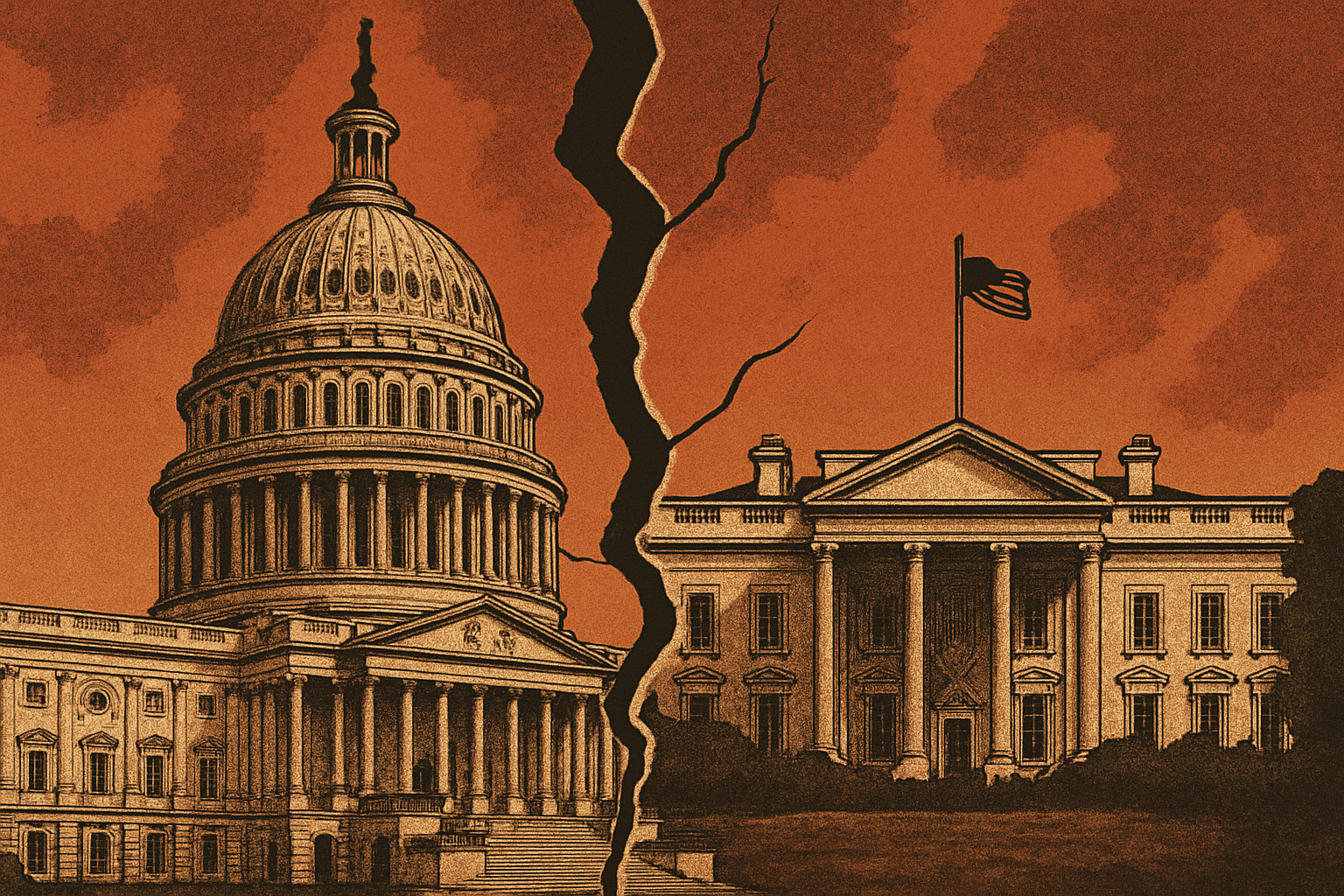
WASHINGTON (TAV) — Yes, it has happened again. The United States government has ground to a halt. As of October 1, Congress failed to pass a spending bill, triggering a shutdown with no end in sight. While lawmakers spar over policy priorities, the impact is being felt far beyond Capitol Hill.
According to the Associated Press, about 750,000 federal employees are furloughed without pay. Another several hundred thousand, including TSA officers, military service members, and air traffic controllers, must continue working but will not be paid until the government reopens.
In past shutdowns, these “essential workers” received retroactive lump-sum pay once funding resumed, but for now, they are effectively working without immediate income. The Office of Personnel Management (OPM), in its official guidance dated September 28, 2025, emphasized that while Congress has historically authorized back pay, payment is never guaranteed until legislation is enacted.
For the average American, the consequences stretch well beyond Washington politics.
Delays in the Skies
Air travel could be one of the most visible pinch points. TSA screeners and air traffic controllers are on duty but unpaid. CBS News reported that during previous shutdowns, many officers called in sick or sought alternative employment, resulting in longer lines at security checkpoints and occasional delays.
A traveler scheduled to travel to Kenya on October 5 said he’s worried that the shutdown might negatively impact his plans.
“I will arrive early, just to make sure I make it through the TSA line in time and not miss my flight,” Seth Gumo said.
According to AP, travelers are advised to plan for possible slowdowns at U.S. airports, including longer TSA lines and flight delays.
Military Families on Edge
Roughly 1.3 million active-duty U.S. service members remain on duty without pay, according to Reuters. Defense officials confirmed that paychecks will be withheld until Congress provides funding for the government.
This creates immediate strain for military families, particularly junior enlisted troops. Many rely on tight budgets to cover rent, groceries, and childcare. For African immigrant communities, where military service is often a pathway to stability and citizenship, the uncertainty is deeply personal.
Health, Housing, and Education
The Department of Health and Human Services has furloughed 41% of its workforce, according to Reuters. The Centers for Disease Control and Prevention is operating with limited staff, and the National Institutes of Health has furloughed up to 75% of employees. For African nations that partner with these institutions on public health programs, the U.S. slowdown risks delaying joint initiatives.
In the U.S., new applications for Social Security benefits, disability claims, and Medicare cards face processing delays. Housing is also affected: the National Flood Insurance Program is not issuing new policies, which means some home sales and mortgage closings are stalled.
The Department of Education has furloughed nearly 90 percent of staff, according to the Associated Press. While Pell Grants and FAFSA disbursements continue, the processing of new applications and certain support programs has slowed.
Immigration Backlogs Worsen
Non-detained immigration courts are largely shuttered, the American Immigration Council reported, adding to already severe case backlogs. Shutdowns in the past have pushed hearing dates back months, leaving asylum seekers, workers, and families in limbo.
Visa services at U.S. consulates abroad may continue for now, but reduced staffing across agencies often slows coordination. For immigrants navigating paperwork or renewal deadlines, the risk of delay is high.
The Politics Behind the Shutdown Pain
President Donald Trump’s administration insists the shutdown is necessary to rein in spending and block what it calls “wasteful programs.” Vice President J.D. Vance told TIME that layoffs of federal workers could happen “very soon,” framing the shutdown as an opportunity to shrink government permanently.
Democrats counter that the layoffs are unlawful and retaliatory. According to Politico, federal employee unions have already sued, arguing that mass firings during a shutdown violate the Antideficiency Act, which bars agencies from making new commitments without congressional approval.
One flashpoint is health care. Some Republicans argue that Democrats are prolonging the shutdown because they want to provide government-funded health insurance to undocumented immigrants.
That claim is false.
Federal law explicitly bars undocumented immigrants from purchasing coverage through the Affordable Care Act (ACA) marketplaces or receiving ACA subsidies. Lawfully present immigrants may qualify, but undocumented immigrants are excluded. Emergency Medicaid covers urgent hospital treatment regardless of immigration status, but it is limited and does not equate to Obamacare.
The real fight centers on whether to extend Obamacare subsidies that are set to expire at the end of 2025. Democrats want the extension included now, arguing families need certainty before open enrollment begins on November 1. Senate Majority Leader Chuck Schumer told reporters that Democrats would not support a bill that “ignores the subsidy cliff just as open enrollment begins,” according to the Associated Press.
Republicans want to separate the subsidy issue from the shutdown. House Speaker Mike Johnson said he would block any attempt to tie subsidies to the current stopgap, remarking: “That’s a December policy issue, not a September funding issue.”
Some House conservatives are pushing to let the Obamacare subsidies lapse, and Politico has reported that outside conservative policy groups are lobbying Republicans not to extend them.
Echoes of Project 2025
Democrats now warn that the shutdown is being used as a backdoor to advance a conservative restructuring agenda. On October 2, Trump announced he would meet with OMB Director Russell Vought, a key architect of Project 2025, to decide which agencies and programs should be cut, some permanently. Both the Associated Press and Reuters reported on Trump’s comments, noting that he described plans to target “Democrat Agencies” while federal funding remains stalled.
During the presidential campaign season, Trump publicly distanced himself from Project 2025, a Heritage Foundation-backed policy blueprint that outlines how a second Trump administration could reshape the government.
The plan calls for consolidating executive power, reducing federal bureaucracy, dismantling climate, labor, and health oversight agencies, and rolling back regulations. Central to the project are proposals to fire tens of thousands of career civil servants, replace them with Trump loyalists, and eliminate diversity, equity, and inclusion (DEI) programs across the federal government.
The American Federation of Government Employees (AFGE) warns that Project 2025 could put up to one million federal jobs at risk. In January, Trump signed Executive Order 14151, requiring agencies to terminate all DEI programs and submit lists of DEI staff to the Office of Management and Budget. Critics view that directive as a first step in implementing the ideological purge outlined in Project 2025.
By openly embracing Vought’s role and linking shutdown decisions to these priorities, Trump has given Democrats fresh ammunition to argue the budget fight is not just about spending but about reshaping the federal government along ideological lines.
Public opinion appears to favor Democrats. A poll published by Politico on September 29 found that 45 percent of voters would blame Republicans in Congress for a shutdown, compared with 32 percent who would blame Democrats. Even among Republican voters, one-third (33%) said their own party would bear responsibility, while only 22% of Democrats said the same of their party. Independent voters were also more likely to fault Republicans (41%) than Democrats (24%).
The economic costs are significant. The Guardian reported that a White House memo by the Council of Economic Advisers, obtained by Politico, estimated the shutdown could cause a $15 billion loss in U.S. GDP every week it continues. A month-long shutdown could result in an additional 43,000 unemployed workers.
What It Means for the African Diaspora
Shutdowns ripple into communities worldwide. Families in Africa and the Caribbean may see reduced remittances as U.S.-based relatives tighten budgets. Students on federal aid face uncertainty. U.S. aid programs, exchange initiatives, and public health projects risk stalling.
Even those not directly tied to government programs feel the strain at airports, banks, and classrooms. A Nairobi parent waiting for tuition support from a child in the U.S. federal workforce may suddenly face shortfalls.
A student might struggle with delayed FAFSA processing, and a military spouse may be forced to stretch family savings until back pay arrives.
A Call for Patience and Courtesy
Shutdowns place frontline workers in challenging positions. TSA officers, air traffic controllers, and service members continue to perform critical duties without pay. OPM guidance emphasizes that these employees are designated as “excepted” and must report to work regardless of their pay status.
While travelers and citizens may feel frustrated by delays, it is worth remembering that these workers are themselves under financial strain. A little patience and courtesy, especially in crowded airports and federal facilities, goes a long way.
A High-Stakes Gamble
This shutdown is unlike previous ones because of the Trump administration’s threats of permanent layoffs, a break from decades of precedent. The result is heightened uncertainty for federal employees, families, and communities that depend on government services.
For now, ordinary people bear the brunt of political brinkmanship. As services stall and workers wait for paychecks, the shutdown reveals how deeply U.S. governance, or its dysfunction, touches not only Americans but also global communities connected through family, work, and study.










LEAVE A COMMENT
You must be logged in to post a comment.