


|
LISTEN TO THIS THE AFRICANA VOICE ARTICLE NOW
Getting your Trinity Audio player ready...
|
Every school day, kitchens in Nairobi turn out hundreds of thousands of meals. One of them, the Giga Kitchen, runs on solar power and steam. The food arrives in schools through a system that pays local farmers, employs thousands of people, and runs on a payment app built for the job.
This is Food4Education, started by nutritionist Wawira Njiru in 2012, and it has grown into something that looks less like a charity and more like a small industry.
On August 19, Njiru was named a recipient of the German Africa Prize 2026. Germany’s Federal Minister for Economic Cooperation and Development, Reem Alabali Radovan, will present the award to her on November 4 in Berlin. That’s worth noting, but it’s not really the story. The story is what she built to earn it.
From 25 Kids to 660,000
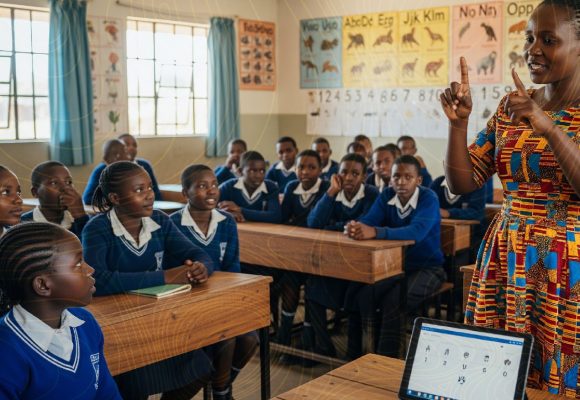
Food4Education began by feeding 25 schoolchildren. It now reaches more than 660,000 children in over 1,900 schools across Kenya. Njiru says the organisation has served 230 million meals over its 14 years, a figure she shared publicly after the prize announcement. The goal is to feed a million children daily by 2027.
Most school feeding programmes run on a fragile cycle. Donor money shows up, the programme grows, the money moves on, and the programme shrinks or dies. Food4Education tried to break that pattern by mixing its funding sources from the start.
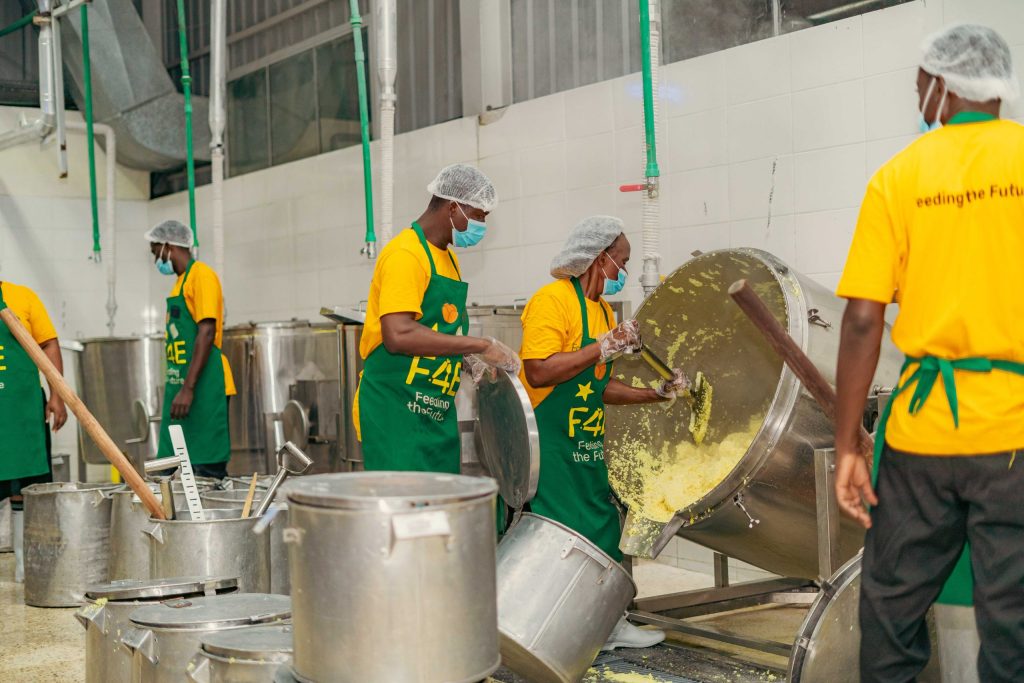
In its model, families pay something small toward each meal, the government contributes, and philanthropic money fills gaps instead of carrying the whole thing.
That mixed funding model only works because of Tap2Eat, the platform F4E built to run it. Families tap a wristband or a card to pay their share of a meal. It’s a small thing, but it means parents are contributing, instead of just receiving. On the back end, the same platform lets F4E plan exactly how much food to buy, cook, and deliver each day, across all its kitchens.
That mix produces a meal costing about 30 cents to produce, with less than 2% of the food going to waste.
Jobs for Local Small-Scale Farmers
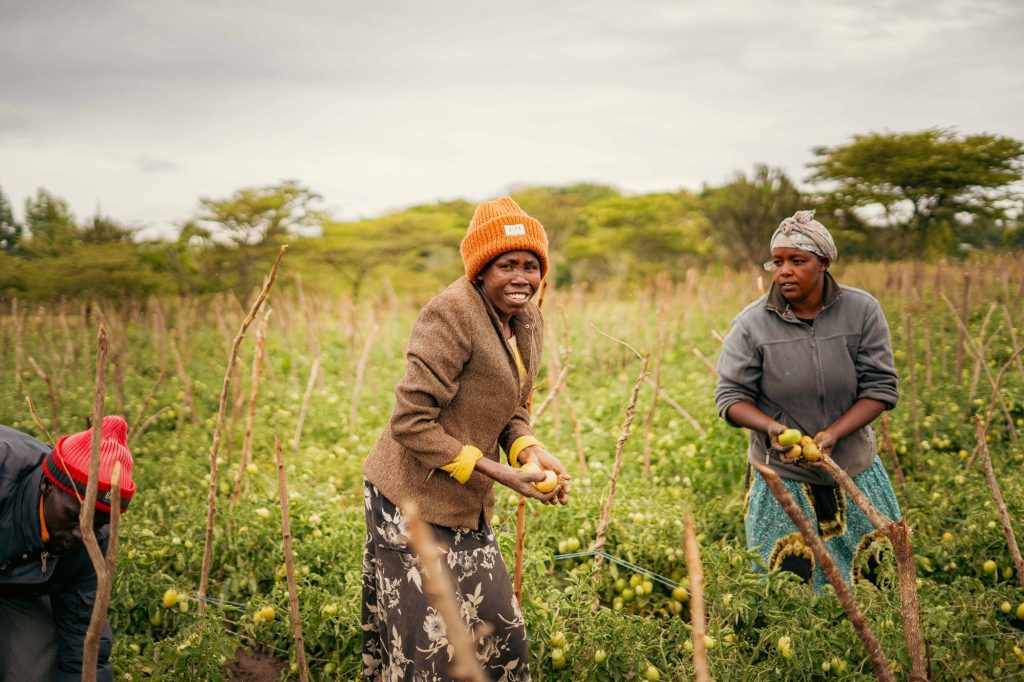
About 80% of the food F4E serves comes from local smallholder farmers. That’s the part of the model that matters most. In a way, it means farmers get a buyer they can count on, instead of selling into a market that swings wildly from one season to the next.
The organisation now employs over 6,000 people, mostly women and young people, many in their first real job. They work as kitchen managers, food safety staff, logistics coordinators, and software engineers. A school feeding programme, run at this size, ends up looking like a food company and a tech company at once.
Njiru has said as much herself. In a statement following the prize announcement, she said school feeding was treated as charity for too long, and that Food4Education has proven it is economic infrastructure.
“African governments are no longer asking us how many children we can feed,” she said. “They are asking how many jobs we can create, how many farmers we can connect to markets, and how much of their own budget is reinvested in local communities.”
Seeking to Expand Wings Across the Borders
Food security is under pressure everywhere right now, between the war in Iran, the war in Ukraine, and climate shocks messing with supply chains. A model that doesn’t depend on aid arriving on schedule, and instead builds something local and self-sustaining, looks a lot more attractive in that climate.
That’s roughly the case the German Africa Prize jury made. Claus Stäcker, who chairs the jury and runs Africa programming at Deutsche Welle, said Njiru had connected food security to economic participation and strengthened local supply chains, an African answer to a problem that isn’t only African.
After 14 years building the model at home, Food4Education has started sharing what it learned with other governments. In June, the organisation signed a four year agreement with Zambia’s Ministry of Education to help strengthen that country’s own national school feeding system as it grows from 4.6 million to 5.6 million children.
The role is advisory. Zambia’s government keeps control of delivery, and Food4Education is not opening kitchens there, it is helping the ministry with policy, data systems, financing and infrastructure.
Njiru called Zambia’s commitment a signal for the rest of the continent. “Zambia is doing something that the continent needs to see,” she said when the partnership was announced. “It is putting its own treasury and the weight of several ministries behind its own children.”









LEAVE A COMMENT
You must be logged in to post a comment.