

|
LISTEN TO THIS THE AFRICANA VOICE ARTICLE NOW
Getting your Trinity Audio player ready...
|
The images are difficult to comprehend.
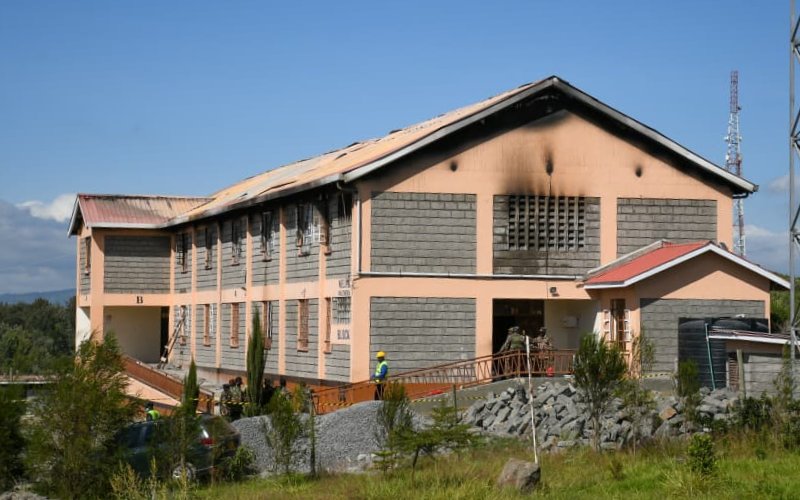
A dormitory that once echoed with the laughter, conversations and dreams of hundreds of schoolgirls now stands silent, scarred by fire and loss. Mattresses are reduced to blackened shells. Metal bed frames are twisted by intense heat. Walls that once sheltered young lives are stained with soot.
Sixteen students are dead.
Dozens more were injured.
Hundreds of families have been left grappling with trauma and unanswered questions.
And as investigators piece together the events that unfolded at Utumishi Girls Senior Secondary School in Gilgil in the early hours of May 28, the emerging findings suggest an even more disturbing possibility: that the deadly inferno may not have been an accident at all.
Kenyan investigators now say forensic analysis of surveillance footage has enabled them to identify seven students suspected of participating in the planning and execution of the fire that turned a school dormitory into a death trap.
The revelations have shocked a nation already haunted by a long history of deadly school fires.
But beyond the criminal investigation lies a story about grief, institutional responsibility, school safety, adolescent behaviour, surveillance, and a national education system that has repeatedly promised to learn lessons from tragedy.
But how did this happen, again?
A Night That Changed Everything
According to police, the fire broke out shortly after 1:00 a.m. inside a dormitory housing more than 200 students.
Within minutes, flames spread rapidly through the building.
Students who had been asleep suddenly found themselves trapped in a race against smoke, heat and panic.
Some managed to escape.
Others suffered injuries while attempting to flee.
Several reportedly jumped from upper sections of the dormitory in desperate attempts to save themselves.
For sixteen girls, escape never came.

Authorities later confirmed that all sixteen victims died as a result of severe burns.
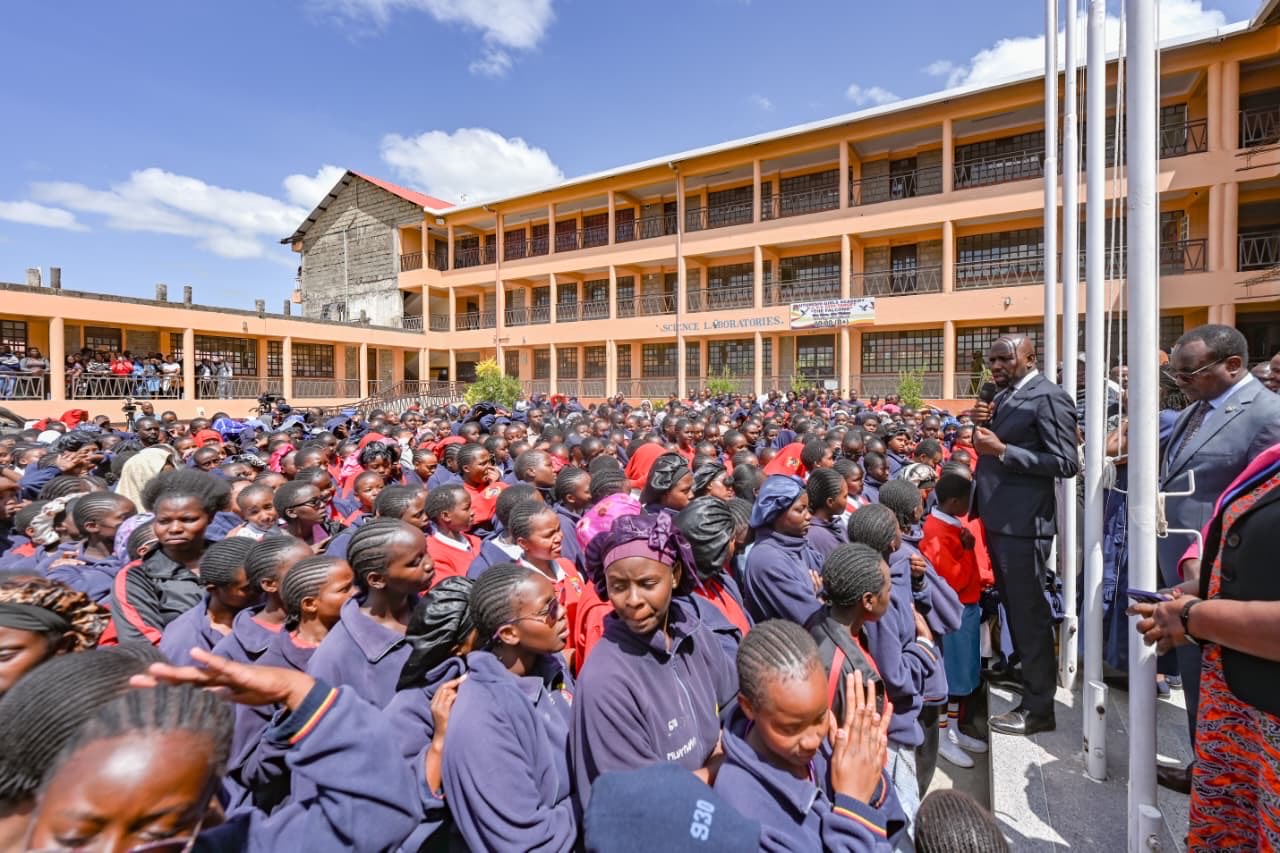
The scale of the disaster immediately transformed the school into a scene of anguish.
As emergency responders battled the flames through the night, parents began arriving at the school, many having received frantic phone calls or messages from students.
Others learned of the fire through news reports and social media.
What followed were hours of fear and uncertainty.
One distraught parent, who had been constantly pushed back by the authorities to wait for information from the school kept nagging the police as he attempted to jump over the fence and jump into the burnt dormitory. The shirtless man whose clip has now gone viral was emotional and kept pleading with, almost pushing, the authorities for information.
“Don’t you understand? I just want to know if she is dead or alive! I want to see my daughter, that is all”
For many families, those words captured the agony of a night that seemed endless.
The CCTV Footage Investigators Say Changed the Case
In the days following the tragedy, homicide detectives launched an extensive investigation involving forensic specialists, crime scene experts and digital analysts.
Initially, authorities were cautious about discussing possible causes.
But as investigators reviewed surveillance footage recovered from the school, a very different picture began to emerge.
According to the Directorate of Criminal Investigations (DCI), forensic experts enhanced and analysed footage obtained from the school before conducting a detailed review at the National Police Service Forensics Laboratory.
The DCI says that process led to a significant breakthrough.
In an official statement, investigators said:
“Following the ongoing in-depth investigation into the tragic fire incident that occurred on Thursday, May 28, 2026, at Utumishi Girls Senior Secondary School in Gilgil, Nakuru County, in which sixteen students lost their lives, the Directorate of Criminal Investigations has achieved significant progress and a major breakthrough.”
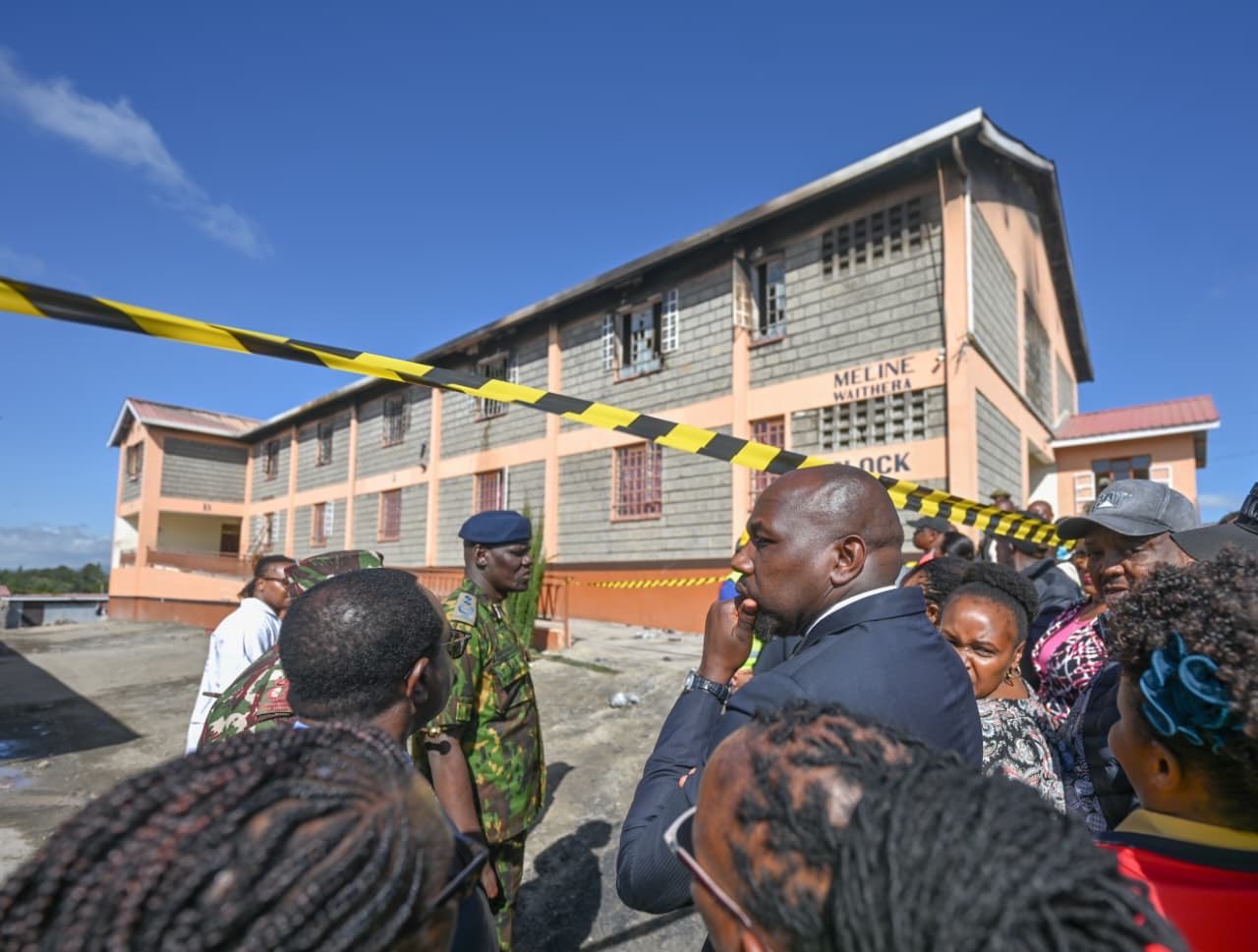
The agency added that forensic analysis and enhanced imaging had enabled investigators to positively identify students allegedly involved in starting the fire.
“A positive identification of the students who lit the fire has been realized.”
According to investigators, seven students have now been linked to the incident.
Six were already in custody following earlier arrests.
A seventh student, who had reportedly been released to her parents before the forensic review was completed, later became the subject of renewed police efforts.
The DCI said investigators were working to trace and arrest her.
What Detectives Believe Happened
Information emerging from the investigation suggests authorities believe the fire was carefully planned rather than spontaneous.
Investigators reviewing the footage say groups of students were allegedly captured moving through sections of the dormitory shortly after midnight.
Authorities believe the students checked whether their dormitory mates were asleep before proceeding with the attack.
Detectives allege that flammable material, including kerosene or paraffin, may have been used to accelerate the fire.
The operation, according to investigators, lasted only a few minutes.
Yet the consequences would be catastrophic.
Once ignited, the flames spread rapidly through sections of the upper floor.
Students who woke up early reportedly alerted others, triggering a desperate evacuation effort.
But by then smoke had already begun engulfing parts of the dormitory.
For some girls, every second mattered. However, for sixteen of them, help came too late. They did not survive.
Murkomen: “I Struggled to Sleep”
Among those who reviewed portions of the CCTV footage was Interior Cabinet Secretary Kipchumba Murkomen.
His reaction offered a glimpse into the disturbing nature of the evidence investigators say they uncovered.
Speaking publicly after viewing the footage, Murkomen said the images left him deeply unsettled.
“I was reviewing the CCTV footage of Utumishi Girls and I felt very sad. I even struggled to sleep.”
The Interior CS said what troubled him most was the apparent deliberateness of the act.
“Because we could see the kids who were coming to light the fire. Very brilliant kids. Some who have scored the best, because that is a national school.”
Murkomen then posed a question that has resonated across the country.
“But for them to just get paraffin and a matchbox and burn a dormitory, really consciously, seeing their colleagues sleeping there and walk out and leave them to die, that is the most demonic thing I saw.”
The remarks sparked debate, with some Kenyans supporting his condemnation while others cautioned that investigations and court processes should be allowed to run their course.
Still, his comments underscored a wider concern about discipline, values and student welfare within schools.
“It is not enough to be brilliant,” Murkomen said.
“It is important to have the right character and the necessary skills to navigate life.”
The Grim Work of Identifying the Dead
As detectives pursued suspects, another painful process was unfolding at Naivasha Sub-County Referral Hospital Mortuary.
Pathologists conducted post-mortem examinations on the bodies of the sixteen victims.
The examinations were led by pathologist Dr Dorothy Njeri.
According to the DCI, all sixteen students died from severe burns.
The intensity of the fire created additional challenges for investigators and grieving families alike.
DNA samples had to be collected from relatives to assist in confirming the identities of some victims.
Meanwhile, Kenya Red Cross teams provided psychosocial support to parents confronted with the unimaginable task of identifying the remains of their children.
For many families, the trauma is likely to endure long after the investigation concludes.
A Dormitory Frozen in Time
When journalists later gained access to the scene, the devastation remained starkly visible.
Burnt mattresses lay scattered across the structure.
Suitcases had been reduced to charred fragments.
Beds stood blackened and warped.
The remains of personal belongings painfully pointed to the fact that this had once been a living space occupied by teenagers planning their futures.
Even some of the surveillance equipment that ultimately helped investigators had been destroyed.
Yet amid the destruction, one aspect of the scene puzzled investigators and observers alike.
Reports indicated that while the upper section suffered catastrophic damage, parts of the ground floor appeared relatively intact.
Beds reportedly remained neatly arranged and personal items were still visible.
The contrast has become one of many issues investigators continue to examine as they reconstruct the movement of fire and smoke through the building.
Kenya’s Long and Troubling History of School Fires
The tragedy at Utumishi Girls is not an isolated incident.
It is the latest chapter in a grim pattern that stretches back decades.
Perhaps the most infamous case occurred in 2001 at the former Kyanguli Secondary School in Machakos County.
Sixty-seven students died after fellow learners allegedly set fire to a dormitory.
The disaster remains Kenya’s deadliest school fire.
More recently, the country was shaken by the 2024 dormitory fire at Endarasha Academy in Nyeri County, where 21 boys lost their lives.
Investigations into school fires have repeatedly pointed to a combination of factors including arson, poor infrastructure, inadequate supervision and non-compliance with safety regulations.
The recurrence of such tragedies has raised questions about whether recommendations made after previous disasters have ever been fully implemented.
A nationwide assessment by Kenya’s Ministry of Education in 2024 found widespread safety shortcomings in schools.
Among the concerns identified were dormitories with grilled windows, single exits and doors that opened inward—features that can severely hinder evacuation during emergencies.
The assessment also found congestion to be common in many boarding facilities.
Following the review, hundreds of institutions were ordered to address deficiencies, with some facing closure.
Yet the Utumishi tragedy has reignited concerns that many schools may still be vulnerable despite years of warnings and reforms.
The New Debate: Security Versus Privacy
Even as investigators focus on criminal accountability, another debate has erupted across Kenya.
The same CCTV footage credited with helping detectives identify suspects has prompted questions about surveillance inside student dormitories.
Some critics argue that dormitories are private spaces where students sleep, change clothes and spend much of their daily lives.
They question whether surveillance cameras belong in such environments.
Activist Hanifa Adan was among those who raised concerns, arguing that cameras positioned at entrances and corridors could potentially achieve security objectives without extending surveillance deeper into living spaces.
Others see the issue differently.
Constitutional lawyer Willis Otieno argued that surveillance in dormitory corridors is not inherently unlawful if governed by strict safeguards and clear protocols.
He warned against allowing the privacy debate to overshadow the tragedy itself.
“Sixteen lives were lost, others sustained life-altering injuries, and numerous families have been irrevocably devastated,” he wrote.
Otieno noted that the footage had played a crucial role in helping establish what happened and identifying those allegedly responsible.
Lawyer Caroline Oduor similarly argued that both conversations deserve attention.
“Concerns about privacy and dignity deserve serious consideration,” she said.
“Equally important are questions of security, accountability and the role surveillance may play in protecting learners and establishing the truth.”
The debate is likely to continue long after the criminal investigation ends.
For now, detectives say their work continues.
The DCI has appealed for patience as investigators pursue additional evidence and witness statements.
The agency has also thanked students, parents and school officials who have cooperated with the inquiry.












LEAVE A COMMENT
You must be logged in to post a comment.