

|
LISTEN TO THIS THE AFRICANA VOICE ARTICLE NOW
Getting your Trinity Audio player ready...
|
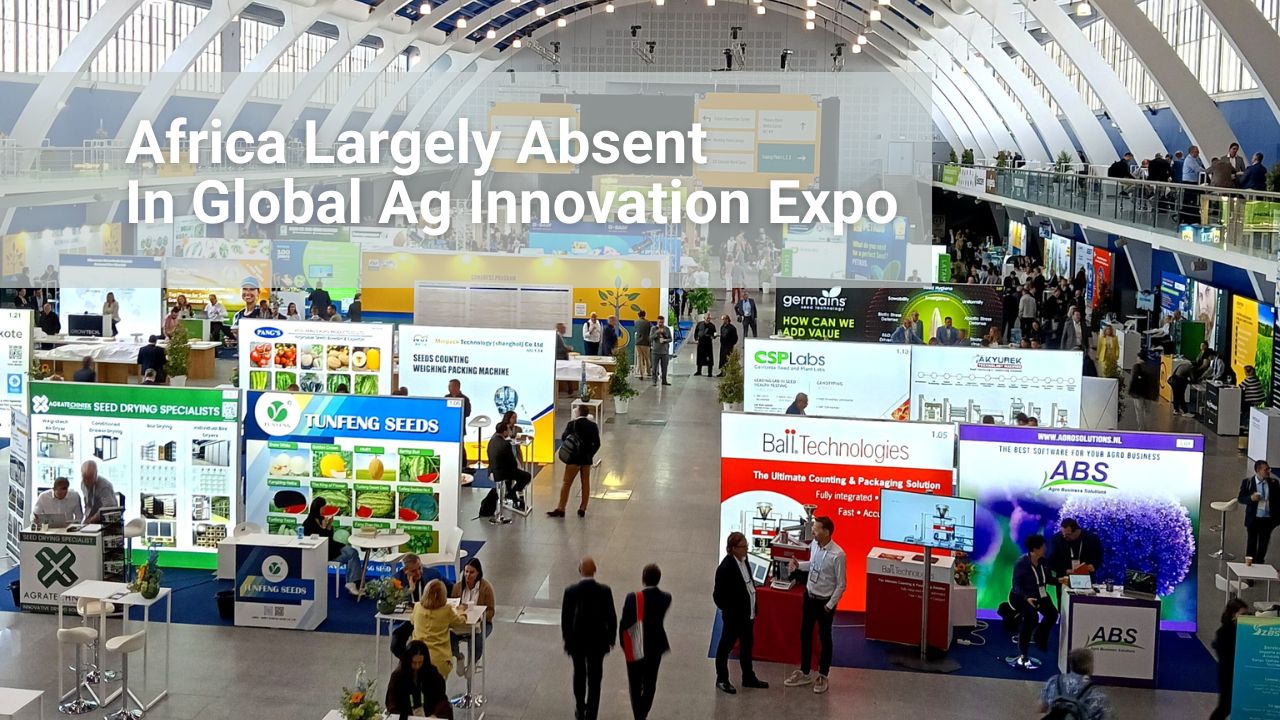
The halls of the World Seed Congress in Lisbon did not look anything like the Africa many people imagine when they hear the word agriculture.
There were giant digital screens flashing crop data in real time. Conversations about artificial intelligence and gene editing drifted between exhibition booths. Men in suits negotiated seed deals over coffee while startup founders demonstrated technologies capable of revamping entire farms without a farmer carrying a knapsack through the fields.
However, Africa, a continent whose economies and livelihoods still depend heavily on agriculture, once again remained largely absent from the global rooms where the future of food was being decided.
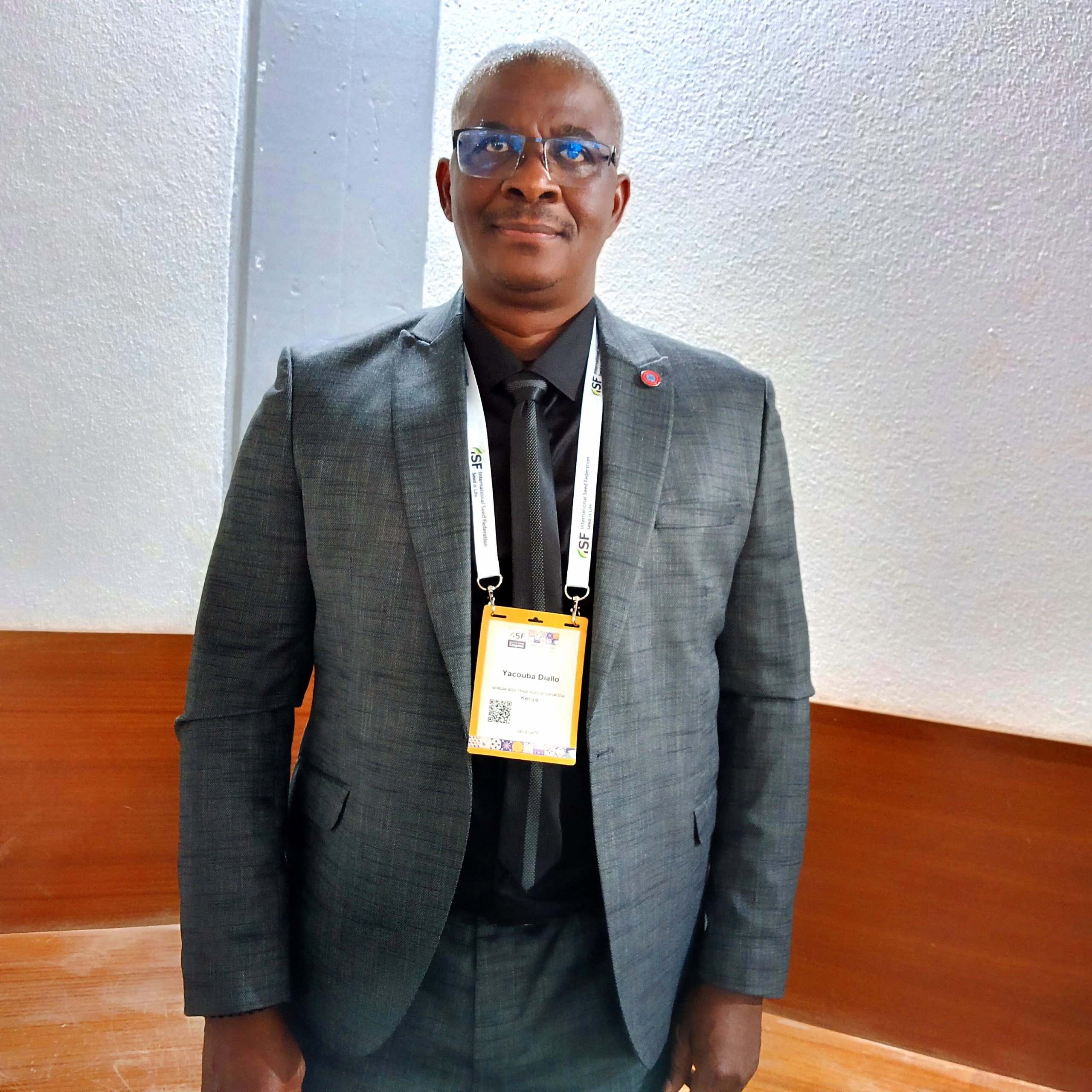
“I can count almost all the Africans here,” Yacouba Diallo told me, scanning the congress venue in Lisbon from atop the media working platform of the congress.
Diallo is the Secretary General of the African Seed Trade Association (AFSTA), a Nairobi-based organisation formed in 2000 to represent private seed companies and push for stronger seed systems across Africa. The organisation works on seed trade, policy harmonisation and farmer access to improved seed varieties across the continent.
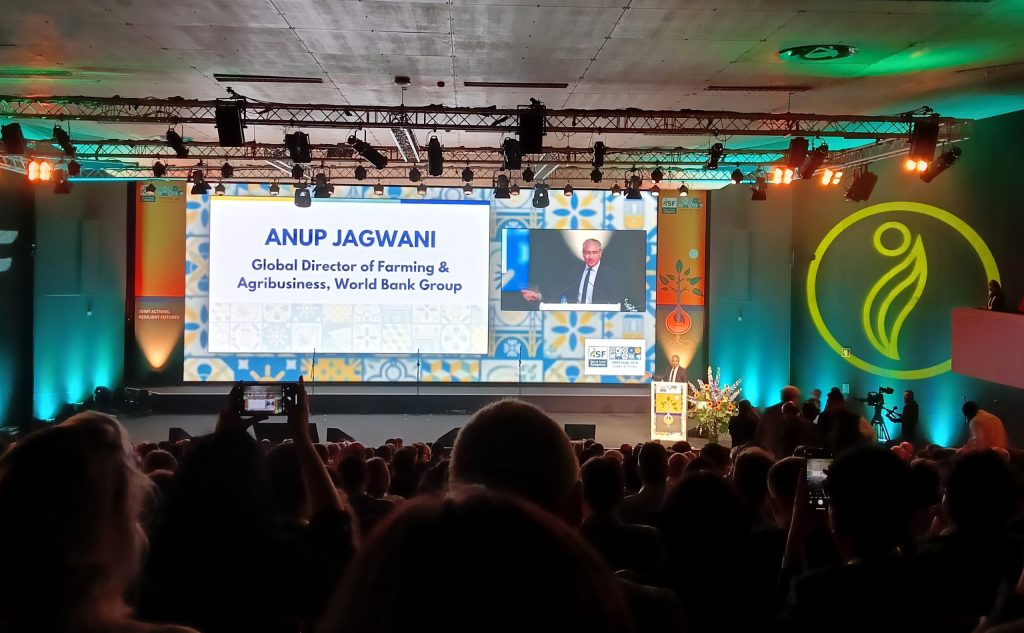
This year’s World Seed Congress, which was organised by the International Seed Federation (ISF), brought together more than 1,800 delegates from 78 countries and over 900 companies and organisations under the theme “Joint Actions, Resilient Futures.”
The conversations revolved around climate change, trade disruptions, seed innovation, biotechnology and the growing pressure facing global food systems.
I sat and listened to Diallo for exactly 57 minutes, and it became clear this conversation was about far more than agriculture. It was about power; about who controls food systems, who shapes agricultural technology; who profits from innovation. And who gets left behind. And the role of various African governments in this.
Africa’s Seat at the Table
“If we are not there, others will decide for us.”
Diallo, a soft-spoken towering figure, said it calmly, almost casually, but the sentence hung heavily in the air for the rest of the interview.
For decades, Africa has remained one of the world’s most agriculturally dependent regions while simultaneously having limited influence over many of the global systems shaping agriculture itself. The continent imports billions of dollars worth of food annually despite possessing nearly 60 percent of the world’s uncultivated arable land, according to the African Development Bank.
And yet inside the congress halls in Lisbon, African voices remained comparatively few. Diallo estimated that out of nearly 1,800 delegates attending the congress, fewer than 200 were Africans.
That absence matters because modern agriculture is no longer simply about farmers planting seeds in the soil. It is now deeply connected to data systems, biotechnology, trade policies, climate adaptation strategies, artificial intelligence and billion-dollar research investments.
During the congress, organisers repeatedly emphasised the urgency of building “resilient food systems” as climate shocks, geopolitical tensions and trade instability increasingly threaten global agriculture.
“The discussions in Lisbon were not only about the challenges before us, but more importantly, about the responsibility- and opportunity – of the seed sector to help shape what comes next,” ISF Secretary General Michael Keller said in a statement released at the close of the congress.
The Quiet Crisis Inside African Agriculture
One of the recurring frustrations in Diallo’s remarks was Africa’s inability to fully implement systems it has already designed for itself.
“In Africa we have nice policies,” he told me. “The regulations are there. The problem is implementation.”
Regional frameworks already exist through blocs like COMESA and ECOWAS to harmonise seed regulations across countries. But in practice, moving seeds from one African country to another remains complicated, expensive and bureaucratic.
Meanwhile, adoption of certified or improved seed varieties across much of Africa remains low despite worsening climate conditions.
“It’s not because technologies are not there,” Diallo said.
He pointed to West Africa, where more than 1,000 improved seed varieties have already been released for major crops under regional harmonised catalogues.
“But if you go to the field,” he said, “you have less than 30 of these varieties really on the market.”
The gap between research laboratories and ordinary farmers remains enormous.
And climate change is making that gap increasingly dangerous.
According to the United Nations Food and Agriculture Organization, African agriculture is already experiencing severe disruptions linked to droughts, floods, rising temperatures and unpredictable rainfall patterns.
“The world is becoming hotter,” Diallo said. “And the innovation will continue.”
Why African Youth Are Walking Away From Farming
Diallo laughed while describing how agriculture is still marketed to many African youths.
“You cannot ask somebody who has done a master’s degree to go back and farm exactly like his grandfather,” he said. “They will not go.”
Across much of rural Africa, farming is still associated with hardship rather than opportunity. Most subsistence farmers toil with bent backs on tiny farms mostly using hoes, and sometimes, for the privileged, ox-plowing. Unpredictable weather with little profits at the end paint agriculture as a route that any educated youth should avoid at all costs.
However, the agriculture on display in Lisbon looked nothing like that image known to most Africans.
There were AI-assisted crop systems, climate-resilient breeding technologies, automated irrigation systems, among other technologies whose deployment would completely revolutionize agricultural practices on the continent as elsewhere across the world.
Agriculture, globally, has become deeply technological. And that may be Africa’s biggest communication failure.
“We don’t need all of us to farm like our grandfathers,” Diallo said. “Agriculture today is processing, AI, machinery, logistics, export, import, technology.”
He argued that the sector can still attract young Africans, but only if it becomes economically viable and technologically modern.
“Give them good loans,” he said. “Give them technology. They will go.”
The GMO Debate Africa Cannot Escape
No part of the conversation carried more emotional weight than genetically modified crops. Few subjects trigger stronger reactions across Africa.
For some people, GMOs represent scientific progress and climate resilience. For others, they symbolise foreign interference, corporate control and potential health risks.
Diallo dismissed many claims linking GMOs to cancer as unsupported by credible scientific evidence.
“I haven’t seen a serious study conducted by independent scientists able to say this person has cancer because of GMO products,” he said.
Still, even he acknowledged that African distrust around food technologies did not emerge from nowhere. Food is intimate. It is also deeply tied to culture. And in societies shaped by colonial extraction and unequal trade systems, suspicion around multinational involvement in food systems often runs deep.
But Diallo fears Africa risks isolating itself from technologies that could become essential as climate pressures intensify. “Why are Africans waiting for other regions to develop these technologies for Africa?” he asked.
Women Power and the Future
This year’s congress also carried historic symbolism.
Lorena Basso was elected as the first female President in the 102-year history of the International Seed Federation, a milestone celebrated throughout the event as a sign of changing leadership within global agriculture.
In her remarks after the election, Basso spoke about the importance of opening doors for future generations and recognising women working across the seed sector, “in the field, in laboratories, in companies, in associations, in leadership roles, and many times behind the scenes.”
That message felt particularly relevant to Africa, where women continue to make up a significant share of the agricultural workforce while remaining underrepresented in decision-making spaces.
Diallo acknowledged this imbalance.
“On the farm, we have so many women. In the decision area, there are not. That is unfortunate. And in terms of economic power, they are not also there.”
He said that most women lack the financial ability to attend such crucial meetings where their input could be so important and called out African governments for letting women down and Africa in general for not sponsoring them to such conferences, “while prioritising not-very-important matters”.




LEAVE A COMMENT
You must be logged in to post a comment.