

|
LISTEN TO THIS THE AFRICANA VOICE ARTICLE NOW
Getting your Trinity Audio player ready...
|
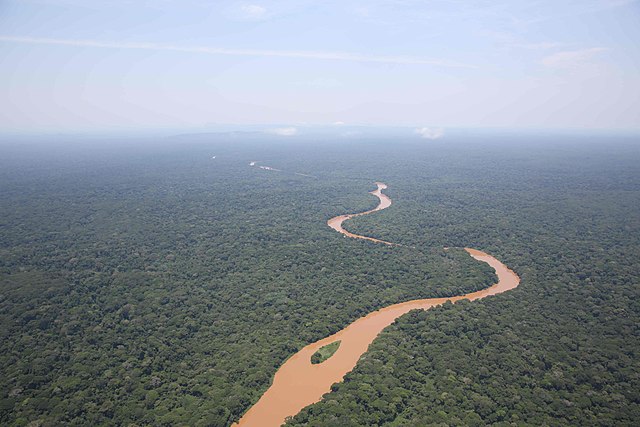
Across Africa, from the Congo Basin to the miombo woodlands of southern Africa, governments have embraced tree planting as a flagship climate solution. Promises to restore millions of hectares have become centrepieces of national climate pledges under the Paris Agreement.
But a new study from ETH Zurich, Switzerland’s premier technical university, reveals that not all reforestation is equal. Planting trees in the wrong places can actually warm the planet, while strategic reforestation in tropical Africa could deliver the same global cooling effect using half the land area.
The findings are particularly significant for Africa as it has emerged the continent holds a key role to global cooling.The continent is home to some of the world’s most effective natural cooling engines, like the rainforests of the Congo Basin, the moist forests of West Africa, and the woodlands of East and Southern Africa. It is also the region where reforestation delivers the strongest double climate benefit, which is absorbing carbon while releasing cooling water vapour.
“The sheer number of trees isn’t really the deciding factor,” says Nora Fahrenbach, a PhD candidate at ETH Zurich and lead author of the study. “Where we plant trees is just as important or even more important than how many we plant.”
Why Africa’s Tropics Are Irreplaceable
In tropical regions, including the Amazon basin, Southeast Asia, and large parts of West, Central and East Africa, trees generate a “double cooling effect” that is absent in northern latitudes.
First, they absorb carbon dioxide. Second, they release water through evapotranspiration. That water evaporates and cools the surrounding air, much like sweat cooling human skin.
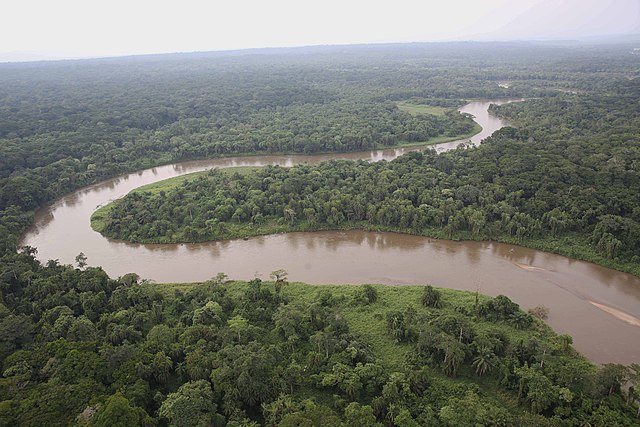
Photo: MONUSCO/Abel Kavanagh via Wikimedia Commons (CC BY-SA 2.0).
“It’s quite similar to when humans sweat,” Fahrenbach explains. “This evaporation provides direct cooling to the surrounding area.”
For African countries, this means that restoring forests in the Congo Basin, the Guinean forests of West Africa, or the Eastern Arc mountains of Tanzania will do more than sequester carbon. It directly reduces local temperatures, which is a key adaptation benefit for communities in the regions.
According to the Intergovernmental Panel on Climate Change, the United Nations’s body for assessing climate change, Africa is warming faster than the global average, and heatwaves are expected to become more frequent and intense across the Sahel, East Africa, and southern Africa.
The Northern Latitudes Paradox
The study’s most counterintuitive finding concerns high northern latitudes; the regions in Siberia, Alaska, central USA, and northern Europe. In these regions, dark forests planted over snowy ground absorb sunlight rather than reflecting it. This results in a warming effect that can partially or entirely cancel out the carbon benefit.
“That’s quite similar to when we wear a black t-shirt in summer; you heat up much more than in a white one,” Fahrenbach says.
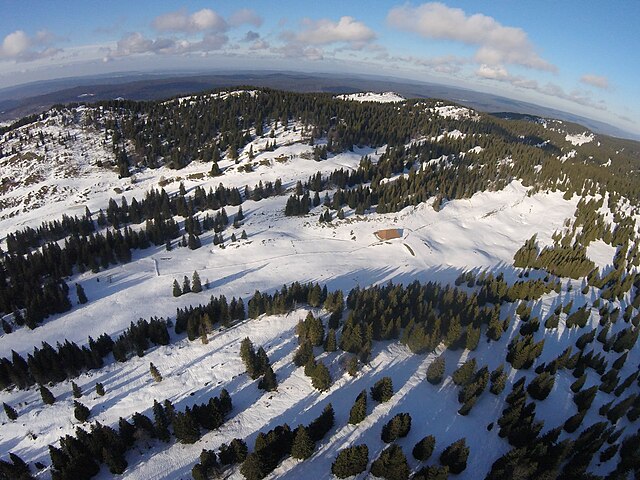
Africa has no such problem. The continent’s tropical and subtropical zones lack persistent snow cover, so the albedo effect (the measure of how much light a surface reflects versus how much it absorbs) does not undermine reforestation. This makes every hectare of restored forest in Africa more valuable to global climate stability than a hectare planted in, say, Siberia or Canada.
However, the Fahrenbach cautions that even in Africa, the type of trees matters enormously.
The Eucalyptus Warning
Fahrenbach warns against fast-growing monocultures, using Portugal as a cautionary example. There, widespread planting of non-native eucalyptus, a genus native to Australia, increased wildfire risk and depleted groundwater.
“There have been huge problems with that in Portugal, where they planted a lot of eucalyptus which is not very local to that region at all and has very high fire risk,” she says.
The eucalyptus tree is also very popular in Africa, thanks to its fast growth rate which translates to money through timber and firewood. Large-scale eucalyptus plantations have expanded in Ethiopia, South Africa, Uganda, and Kenya for timber, pulp, and charcoal. But research has linked them to reduced stream flow and soil degradation. Instead of exotic tree species, Fahrenbach advocates for native species. “In Africa, native species will be naturally adapted to a local usually very warm climate and will be much more resilient to heat waves and further will be very good at using water,” she says.
Forest Farming and Agroforestry
The study’s most practical insights for Africa involve working with, rather than against, rural economies. Deforestation across the continent is driven primarily by agricultural expansion, smallholder farmers clearing land for food crops, and commercial plantations for palm oil, cocoa, or rubber.
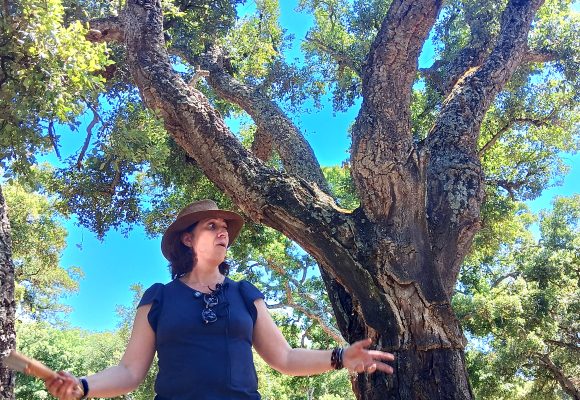
Fahrenbach points to forest farming, which is growing high-value, shade-tolerant crops beneath the canopy of standing rainforests. She says cocoa, wild coffee, medicinal plants, and rattan can all thrive in shade. This keeps the forest intact while providing income.
You can listen to a corresponding podcast episode here.
“For agriculture, one way would be to promote things like forest farming or understory cropping where farmers would grow very high value but shade tolerant crops like cocoa, medicinal plants or wild coffee under the canopy of the existing rainforests,” she says.
Agroforestry for already deforested land: Mixing trees with food crops restores soil fertility, provides firewood and fruit, and sequesters carbon. It also gives farmers a financial stake in reforestation.
“If an area is already deforested, maybe we can move more towards agroforestry, the idea of mixing trees or reforesting but also planting food crops,” Fahrenbach says. “That can help to restore the soils and will also give the farmers an income while also encouraging them to reforest.”
Should the Global North Pay for Africa’s Forests?
Despite the promise of tropical reforestation, the study contains a limit. Even under the most optimistic scenarios, covering vast suitable areas with new forest, the maximum global cooling achievable by 2100 is just 0.25°C.
“We’re at the moment fighting for every tenth of a degree,” Fahrenbach acknowledges. “That is a very valuable contribution. But it also makes clear that we can’t plant our way out of this climate crisis. Reforestation can only ever support, but not replace, rapid reduction of fossil fuel emissions.”
The study raises an unavoidable equity question. If tropical reforestation delivers the greatest global cooling benefit, and if high-latitude tree planting is less effective or even counterproductive, should wealthy northern countries finance forest protection in Africa?
Fahrenbach points to a recent mechanism. “Since COP30, there is the Tropical Forest Forever Facility. The idea is to treat a standing forest like a high-value asset. It provides countries with a fixed amount of annual payment for every hectare of forest they keep alive.”
Several developed nations have contributed. The facility is not yet fully capitalised, but it represents what Fahrenbach calls “a first step in the right direction.”








LEAVE A COMMENT
You must be logged in to post a comment.