

|
LISTEN TO THIS THE AFRICANA VOICE ARTICLE NOW
Getting your Trinity Audio player ready...
|
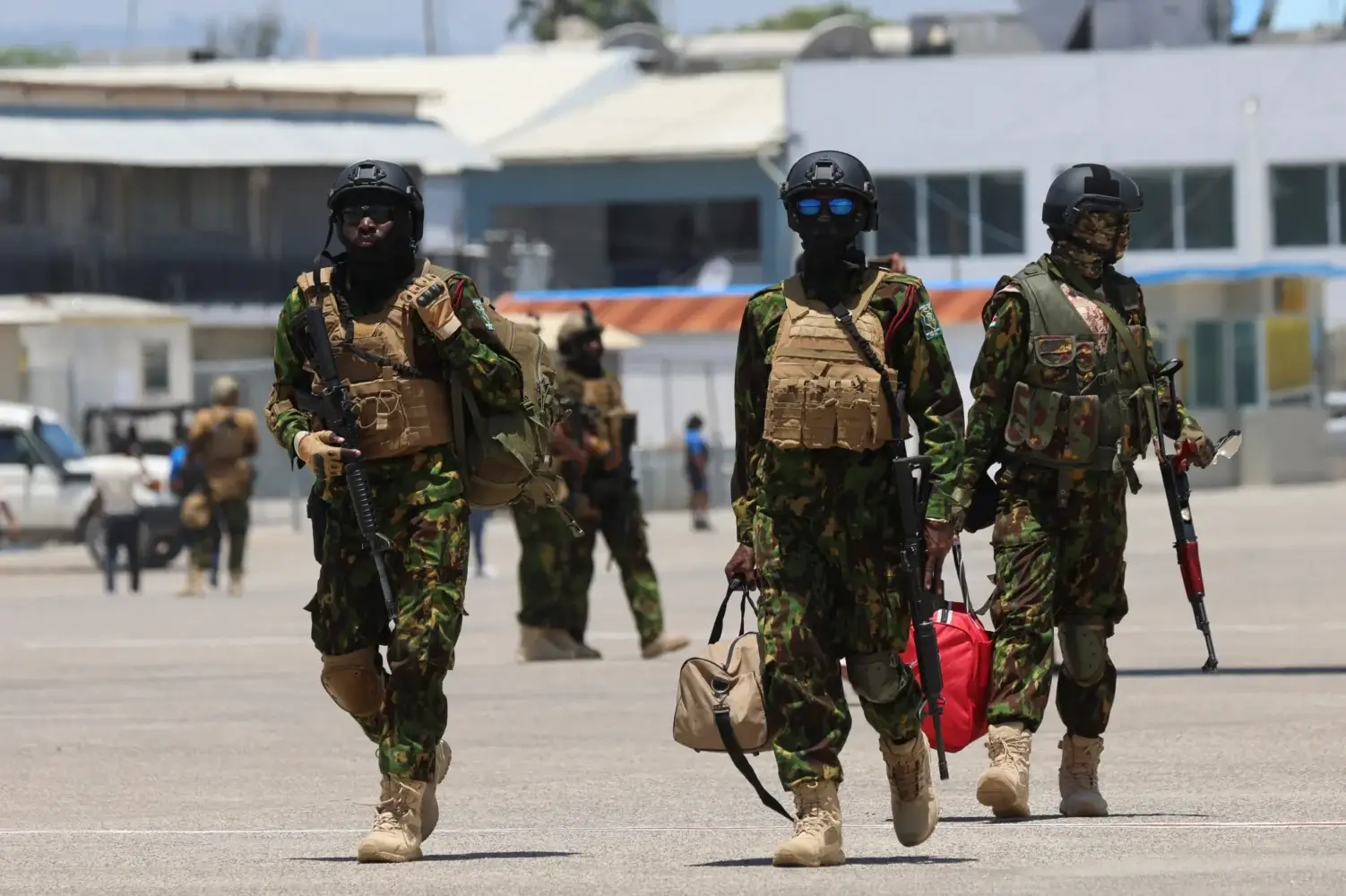
Port-au-Prince is a city under siege, but the shockwaves of its chaos are being felt 11,000 kilometers away in Nairobi. When the United Nations voted this week to scrap its faltering mission in Haiti and replace it with a tougher force to crush the gangs, it was a turning point for the Caribbean nation, and a test of Kenya’s gamble on global security. With 735 Kenyan officers already on the ground, and three dead in the line of duty, Nairobi must now decide whether to dig in deeper or bring its police back home to a country battling its own crime wave.
The October 2 resolution, numbered 2793, marked the official end of the MSS and created a new, far stronger intervention force: the Gang Suppression Force (GSF). The mission, authorized for 12 months and backed by 12 of the 15 Security Council members, will deploy more than 5,500 police and military personnel. Unlike its predecessor, which mainly propped up the overstretched Haitian National Police, the GSF will have a Chapter VII mandate, which will allow offensive operations to neutralize gangs, secure key infrastructure, and restore basic state control.
It is, on paper, the kind of mission Nairobi has been pleading for since it agreed to lead the MSS.
Haiti’s Descent Into Chaos
For years, Haiti has been in the grip of armed gangs that have overrun much of the capital, Port-au-Prince. State authority is fractured, with neighborhoods carved up into gang-controlled enclaves, crippling access to hospitals, schools, and even food supplies. The UN estimates that more than 2,500 people were killed by gang violence in the first half of 2025 alone, a staggering toll in a country already battered by poverty and political instability.
The MSS, authorized in 2023, was meant to be a stopgap, a multinational police support mission to buy time for Haiti’s government. But the operation was hampered from the start: underfunded, under-equipped, and heavily reliant on Kenya, which supplied nearly three-quarters of its manpower. Broken donor promises, unreliable logistics, and poor intelligence left the mission operating at less than half capacity.
For Kenyan officers, the toll was personal. Three have been killed in action since June 2025, including one in a roadside ambush, and dozens have been injured.
Kenya’s Gamble
Kenya’s decision to deploy in Haiti was bold, some would say risky. President William Ruto framed it as a matter of principle: that Africa must not be a bystander in global security and that Nairobi could play a convening role when others hesitated. “Our engagement in Haiti has always been anchored in the protection of vulnerable communities,” the Ministry of Foreign and Diaspora Affairs said in a statement welcoming Resolution 2793.
That leadership drew praise. U.S. officials, including Secretary of State Marco Rubio and Ambassador to the UN Mike Waltz, lauded Nairobi for stepping up when larger powers demurred. The Caribbean bloc CARICOM likewise rallied around Kenya’s willingness to act.
But at home, the mission has been politically divisive. Critics accuse Ruto of pouring scarce resources into a faraway conflict while Kenyans struggle with runaway inflation, tax protests, and rising insecurity in Nairobi and other cities. Former presidential adviser Moses Kuria called the mission a “misadventure,” urging that returning officers be redeployed to “daylight mugging hotspots” in the capital.
A Stronger Force, But at What Cost?
The GSF is designed to correct the MSS’s flaws. With more than 5,500 personnel and a dedicated UN technical office to coordinate logistics and funding, it promises scale and predictability. Besides supporting local police, it will conduct intelligence-led raids, dismantle gang networks, and hold critical infrastructure.
Kenya, however, faces the question of whether to remain at the forefront of this more dangerous mission. President Ruto has already said that any continued deployment must come with reliable funding, proper equipment, and clear objectives. “If we are sending an additional security team to Haiti, the mandate must be clear, and we must have a predictable resource package,” he told reporters last month.
So far, Nairobi has not confirmed whether its 735 officers will transition into the GSF or return home. Principal Secretary for Foreign Affairs Korir Sing’oei said only that “this is a policy decision to be made in due course.”









LEAVE A COMMENT
You must be logged in to post a comment.