

|
LISTEN TO THIS THE AFRICANA VOICE ARTICLE NOW
Getting your Trinity Audio player ready...
|
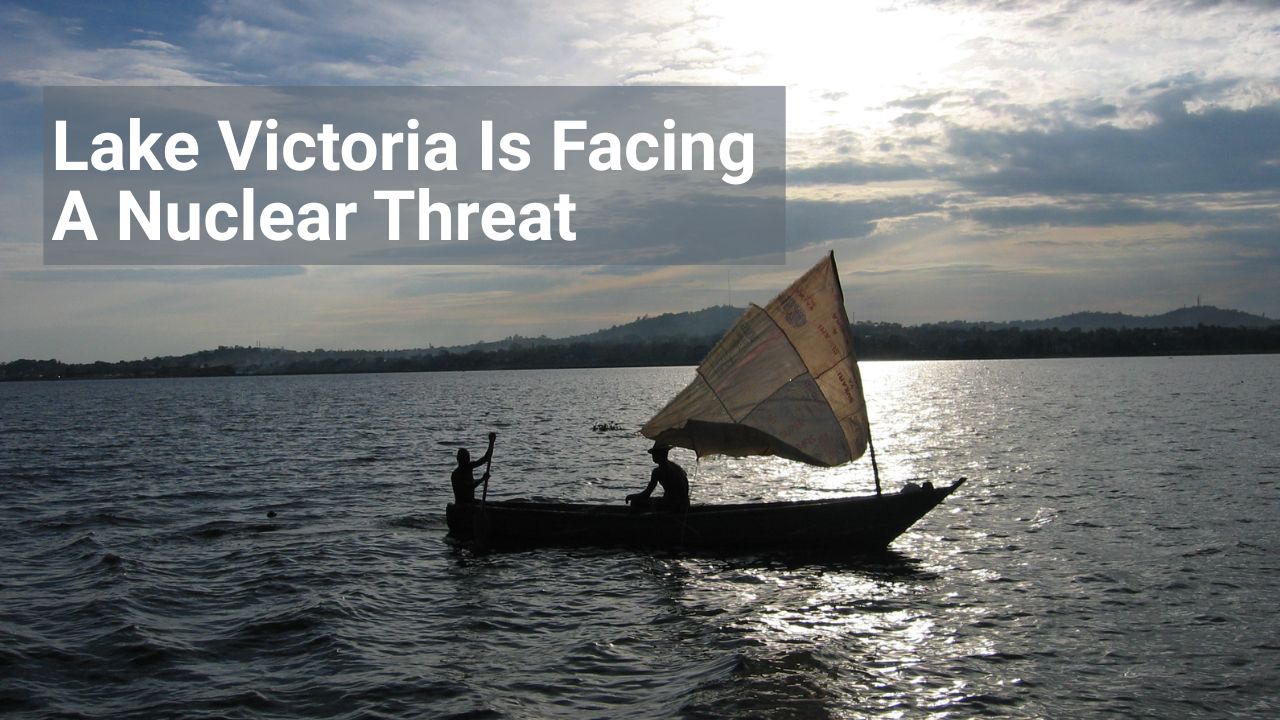
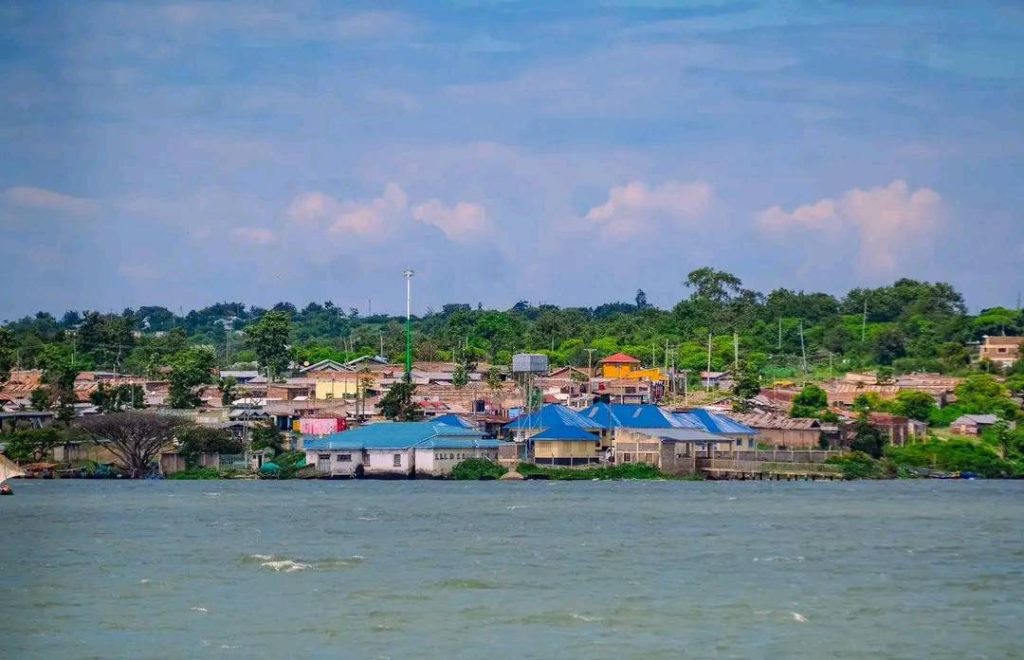
A petition calling on the Kenyan government to halt construction of a nuclear power plant on Lake Victoria is gathering momentum. Its principal author is Steven Omamo, a resident with a home overlooking Lake Victoria in Utonga village, West Sakwa, Siaya County. Omamo did not hear about Kenya’s plans to build the country’s first nuclear power plant on his doorstep through a public consultation.
He found out the way most Siaya residents did: through a government announcement. He is one of several members of the Anti-Nuclear Pollution Forum, an informal network of residents, professionals, and community stakeholders pushing back against a project that was chosen for their county before anyone asked them. Click here to access the petition.
What the people of Siaya are demanding is not the obstruction of a national project. They are honoring a condition set by the late former Prime Minister Raila Odinga, the project’s most passionate advocate and the most revered political figure in Luo Nyanza.
Odinga was not ambivalent about nuclear energy. At the Jaramogi Oginga Odinga University of Science and Technology (JOOUST) conference in Bondo in June 2025, he was emphatic. He wanted 5,000 MW, not 1,000. He wanted construction to begin immediately, not in 2034. “If we have made a decision now, we begin to order straight away,” he said. “There’s no reason why we should start in 2034.” He called nuclear power “a game changer” and compared those who feared it to people who confused nuclear energy with nuclear bombs.
But Odinga also said this: “Site selection for a nuclear power plant is critical. It is important that there be a genuine and detailed engagement with the people, the leaders, and all stakeholders, and have all concerns raised and addressed. I therefore urge you all, especially our local leaders and community members, to engage actively in this dialogue. Ask the tough questions, demand clarity.”
That was the floor set by the man who wanted 5,000 MW by 2030. Not a reluctant hedge from a cautious critic. A minimum standard from the project’s most enthusiastic champion. The government has taken Odinga’s enthusiasm and discarded his condition.
There has been no genuine community engagement in Siaya. No concerns have been formally raised and addressed. No tough questions have received published answers. What the people of Siaya are doing is exactly what Raila demanded. The government’s response has been to accelerate the project before opposition can organize. Odinga is no longer here to hold anyone to account.
The petition argues that “the transparency and honesty of the information shared about this project are questionable, with twisted facts and outright falsehoods being propagated.”
What Nuclear Catastrophe Looks Like
At 1:23 in the morning of April 26, 1986, Reactor No. 4 at the Chernobyl Nuclear Power Plant in Soviet Ukraine exploded. It blew the reactor’s 1,000-tonne lid clean off the building and sent a column of radioactive fire into the night sky. Two workers died instantly. Within weeks, 28 emergency responders were dead from acute radiation sickness, and firefighters called in without adequate protection.
Within 36 hours, the entire city of Pripyat, with a population of 50,000 and roughly the size of Siaya town itself, was evacuated. Residents were told to bring identification and three days of food.
Most never returned.
A 30-kilometer exclusion zone, roughly the footprint of Nairobi, became a permanent no-go area. Some 350,000 people were displaced permanently. Radioactive contamination spread across 13 European countries. Land deemed too contaminated for human habitation, roughly the size of the entire county of Siaya, remains off-limits today, nearly 40 years later. Independent researchers place the long-term death toll at 60,000 or more. Estimated economic cost: $700 billion. That land will not be safe for thousands of years.
On March 11, 2011, a magnitude 9.0 earthquake off the coast of Japan triggered a tsunami that struck the Fukushima Daiichi nuclear power plant. Three reactors melted down. Radioactive water has been leaking into the Pacific Ocean for more than a decade.
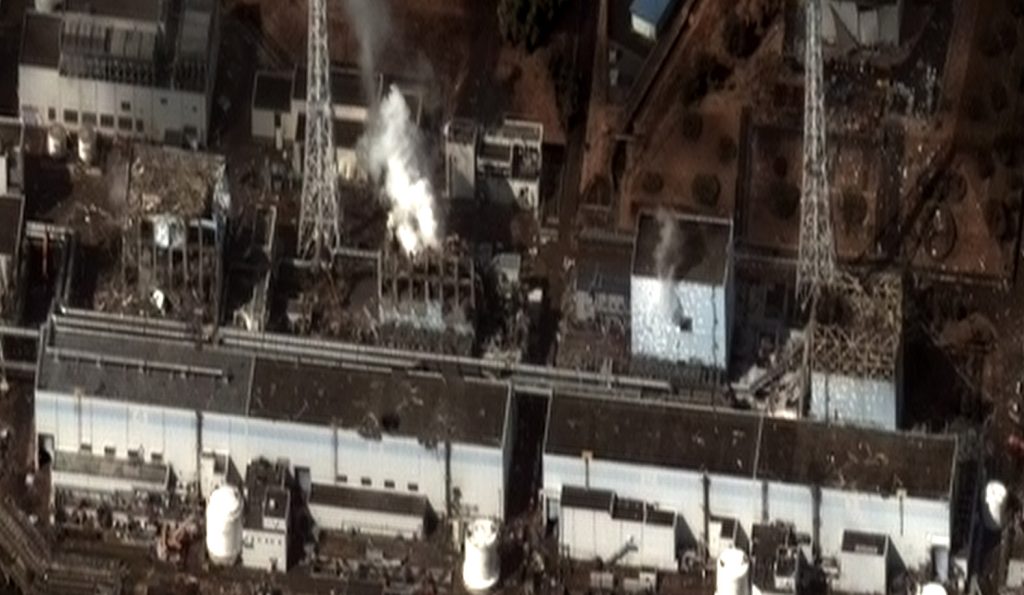
Photo credit: DigitalGlobe / Wikimedia Commons, CC BY-SA 3.0
Some 154,000 people were evacuated, roughly the combined population of Siaya County’s Bondo, Ugenya, and Gem sub-counties. Families uprooted overnight from homes where their grandparents are buried, from land their children were meant to inherit, told to leave and never certain they could return. Towns like Futaba, Okuma, and Tomioka became ghost towns. They remain largely empty today.
Of the three major nuclear disasters, Fukushima is the one that most closely resembles Siaya. A seismic event generated a wave that overwhelmed a plant built beside a large body of water. But the Pacific Ocean is vast. Contamination disperses. Lake Victoria has nowhere to go. It is a closed, shared freshwater system feeding three nations. A cooling failure, a seismic tremor, or a slow leak would directly contaminate the drinking water of millions of Kenyans, Ugandans, and Tanzanians, and from there flow into the Nile. Fukushima poisoned a fishery. A Siaya disaster would poison a continent’s water supply.
Another accident occurred on March 28, 1979, a partial meltdown at Three Mile Island in Pennsylvania, USA, which released radioactive gases into surrounding communities. Some 140,000 people fled voluntarily. Cleanup took 14 years and cost $1 billion in 1979 dollars. Decades of studies have found elevated cancer rates in surrounding communities.
Nuclear advocates will tell you these accidents are rare. They are right, in the same way that a plane crash is rare. But when a plane crashes, it comes to a stop in one place. When a nuclear plant fails, it poisons land for thousands of years, empties cities permanently, and hands the cleanup bill to generations not yet born. Roughly 440 reactors operate worldwide. Major accidents have occurred at three sites, all in countries with decades of experience, robust regulators, and hundreds of billions for cleanup. Kenya has none of those buffers. Rarity is not reassurance when the consequences are irreversible, and there is no safety net.
Fifteen Years of Promises, Zero Accountability
Kenya’s nuclear ambition did not emerge from a popular mandate. It emerged, in 2010, from a recommendation by the National Economic and Social Council, a boardroom decision, not a community consultation. The agency created to carry it forward has rebranded three times in 15 years: from the Nuclear Electricity Planning Committee in 2010, to the Kenya Nuclear Electricity Board in 2012, to the Nuclear Power and Energy Agency (NuPEA) under the Energy Act of 2019. Three names. One pattern of delay, escalating cost, and zero delivered output.
Every deadline NuPEA has set has passed without result. First, 1,000 MW was to be operational by 2027. Then 2031. Then 2034. The capacity figure has now doubled to 2,000 MW, as announced by President William Ruto at the ICoNE 2026 conference in April of this year. The projected cost has escalated from an initial estimate of KES 500–600 billion to over KES 1 trillion. No published explanation exists for the increase.
NuPEA’s Chief Executive Officer is Justus Wabuyabo, a lawyer. The agency tasked with designing Kenya’s nuclear future is led by a man whose professional training is in law, not nuclear physics, not engineering, not radiation safety. In January 2025, the Cabinet dissolved NuPEA and cut its KES 1 billion budget entirely. Weeks later, the program was quietly reconstituted. No explanation was given for either decision.
NuPEA’s own Strategic Environmental and Social Assessment (SESA) “repeatedly mentions nuclear waste but only cites the existence of regulations without offering any concrete strategies.” Kenya has no finalized radioactive waste management policy. There is no published answer to where spent fuel goes or for how long, given that the waste remains dangerous for tens of thousands of years. Kenya holds an IAEA Phase 2 status, meaning preliminary infrastructure studies are complete. What is missing is a transmission grid study capable of accommodating a nuclear unit, or a business case comparing nuclear to Kenya’s existing world-class renewable capacity. NuPEA’s own SESA states the national grid must reach 10,000 MW before it can safely host a 1,000 MW nuclear unit. Kenya’s current peak demand is roughly 2,000 MW.
This matters because Kenya already generates close to 90% of its electricity from clean sources and holds an estimated 33,000 MW of untapped renewable potential, nearly double the projected 2030 demand. Kenya’s peak demand grew by only around 1,000 MW over the past two decades. The argument that Kenya urgently needs nuclear power to keep the lights on is not supported by the evidence it has produced.
Kilifi: What Happens When Communities Fight Back
In 2023, NuPEA identified Uyombo in Kilifi County as its preferred site, adjacent to the Arabuko-Sokoke Forest, a UNESCO Biosphere Reserve, and bordering Watamu Marine National Park. The people of Uyombo are fishermen, beekeepers, butterfly farmers, and ecotourism workers. NuPEA did not arrive to ask their views. It arrived to announce a decision.
“They just came here. They tell you this is the place that we have chosen to build the power plant. That’s all. And then you lose everything.”
Uyombo community resident, quoted by rights monitors.
In July 2023, lawyers filed a lawsuit challenging the process as “rushed,” “illegal,” and “clandestine.” In September 2023, armed police broke up a community human rights training session. In May 2024, police responded to a peaceful protest with live rounds and tear gas canisters, according to KIOS and Right Livelihood.
Two environmental defenders were arrested. The UN Special Rapporteur on Human Rights Defenders, Mary Lawlor, formally raised concern. The Business and Human Rights Resource Center documented the pattern of intimidation systematically.
“Even if you kill us, just do it but we do not want nuclear power in our Uyombo community.” Juma Sulubu, Kilifi community member.
Governor Mung’aro eventually declared, “We are not ready as an area to host a nuclear plant. That’s the position of the entire leadership of Kilifi.” The Cabinet dissolved NuPEA. Anti-nuclear campaigners celebrated. The celebration lasted weeks.
The project did not stop. It relocated.
The Political Stitch-Up: How Siaya Was Chosen
NuPEA’s own 2023 SESA had explicitly eliminated the Lake Victoria region, including Siaya County, on geological grounds. The SESA identified the East African Rift System as causing the ground to be too unstable, citing active volcanic hazards, fast-moving pyroclastic flows, debris falls, and the risk of lake tsunamis. The agency’s own scientists said no.
Kenya’s National Environment Management Authority (NEMA) then commissioned an independent review from the Netherlands Commission for Environmental Assessment (NCEA), which concluded the SESA “does not meet the standards of good practice prescribed by the IAEA” and “therefore does not constitute a basis for well-informed decision-making.” Kenya’s own watchdog funded a review that said the science was not good enough. The project moved forward anyway.
In June 2025, the Ministry of Energy announced at a university conference in Bondo that Luanda Kotieno in Siaya County was now the preferred site. No new geological studies had been published. No new environmental assessment had been completed. The science that had disqualified Siaya had simply been set aside.
The reason, according to NuPEA’s own engineer Francis Agar, was not scientific. In a March 2026 interview, Agar admitted the re-prioritization of Siaya was driven in part by “the political side of it” and the fact that “there was outstanding political support from the communities in Siaya more than in Kilifi.” A senior engineer at a nuclear agency, explaining a site selection decision by referencing political endorsement.
Governor James Orengo has been the project’s most vocal local champion, telling NuPEA officials: “We are committed to making this project a success. The county government will provide office space for NuPEA in the shortest time possible.” He has described nuclear power as “a calculated risk worth taking” and declared: “I have no fears at all.” But it is a remark he made in March 2026 that best captures how this project is being driven. Speaking at ICoNE, Orengo said: “I urge that before the nuclear lobby, the anti-nuclear lobby, invades Siaya, we move.”
Siaya County governor is not urging careful consultation. He is urging speed, specifically to get ahead of organized opposition. That is not a leader protecting his people. That is a leader trying to outrun them.
The lesson being taught is stark: resist a nuclear plant and face tear gas, arrests, and live rounds. Welcome it through your politicians and receive infrastructure promises. This is not community consent. It is the manufacture of political consent in its place. It is a pattern that Mongabay’s investigation documented in damning detail: communities moved around a map in service of political calculations, not scientific ones.
Lake Victoria Is Not a Cooling Tank
Greenpeace Africa has named the problem precisely. Lake Victoria is Africa’s largest freshwater lake, the primary source of the White Nile, and a lifeline for populations across Kenya, Uganda, Tanzania, South Sudan, Sudan, and Egypt. Each year, 800,000 metric tons of fish are pulled from its waters, supporting more than 200,000 fishing families. Nuclear plants require 15-25% more cooling water than coal plants. The warm water discharged back disrupts fish breeding cycles. Lake Victoria is already under severe ecological stress. Thermal pollution from a nuclear cooling system is not a manageable inconvenience. It is an accelerant to an ongoing catastrophe.
Radioactive contamination does not stop at the Kenyan border. It flows north into Uganda, Sudan, and Egypt. None of these countries was consulted. None has consented. This is a potential violation of the United Nations Convention on the Law of the Non-Navigational Uses of International Watercourses, which obligates states to notify and consult neighbors before undertaking projects that could cause significant harm to shared waterways.
Kenya has done neither.
Egypt’s silence is the most telling detail. Cairo derives over 98% of its freshwater from the Nile and has 110 million people depending on it. A February 2026 diplomatic analysis shows Egypt signed a strategic agreement with Kenya, including a $100 million fund, largely to keep Kenya diplomatically close over Nile water politics. Cairo is cultivating Nairobi, not confronting it. Egypt’s silence on the nuclear project should not be mistaken for consent.
The petition names what Kenya’s diplomats will not: “Shockingly, these countries haven’t been consulted about a project that will likely affect them as well. This lack of dialogue is deeply negligent.”
The Economics of a Bad Bet
Kenya is not alone in being sold this idea. In Nigeria, Philip Jakpor of the Renevlyn Development Initiative has raised the same alarm about Rosatom, the Russian state nuclear company, which is also bidding on Kenya’s project: “These technologies African countries are embracing are obsolete and are being phased out globally.” A nuclear plant in a country with security challenges also becomes a potential terrorist target, one that could require a permanent foreign military presence. The sovereignty implications have not been publicly debated.
The government says the plant will cost KES 1 trillion, roughly $7.7 billion. Global data says otherwise.
A first-of-its-kind nuclear plant costs between $6,200 and $10,000 per kilowatt. For 2,000 MW, that is $12 to $20 billion before overruns, which, according to Boston University research, average 102.5% for nuclear projects globally.
The UK’s Hinkley Point C was budgeted at £18 billion and now stands at £48 billion. France’s Flamanville came in at seven times its original estimate.
Kenya would be building its first plant with no nuclear workforce, no domestic supply chain, and no institutional experience. The KES 1 trillion figure is not a budget. It is an opening bid on a debt future generations will be left to pay.
“A technology that you buy yet never own does not deserve the hard-earned money from Kenyans and the yoke of debt that spans generations to come.”
Center for Justice, Governance and Environmental Action (CJGEA)
And then there is the question of competence.
Consider what happened in Nairobi in March 2026. Heavy rains that the Kenya Meteorological Department had forecast days in advance killed at least 49 people, displaced more than 9,000 households, and turned the city’s expressway into what residents called “the longest swimming pool in the world.” The Africana Voice reported that the disaster exposed “questions about Kenya’s preparedness for climate change-related disasters, the effectiveness of urban planning in Nairobi, and the role of corruption.” Senator Edwin Sifuna called the outcome “an indictment” and “a sum total of many failures, mostly failures of leadership.” The Kenya Red Cross said simply: “It’s all human fault.” This is the government being asked to manage spent nuclear fuel that remains lethal for tens of thousands of years. It could not manage a rainstorm it saw coming.
Sign It. Share It. Demand Better
Omamo is one voice in a widening movement. It includes fishermen and farmers on the lakeshore, lawyers who have filed suit in the Environmental Court, Greenpeace Africa, the Center for Justice Governance and Environmental Action, the UN Special Rapporteur on Human Rights Defenders, and the Netherlands Commission for Environmental Assessment, the independent body Kenya’s own NEMA commissioned, and which found the government’s environmental assessment unfit for decision-making. The government’s ability to dismiss this opposition as uninformed or politically motivated grows weaker by the day.
What happened in Kilifi matters here. The government did not abandon Kilifi because it developed a conscience. It abandoned Kilifi because the resistance made the political cost too high.
Siaya was chosen precisely because resistance there had not yet formed. That can change.
Africa is not a testing ground. Lake Victoria is not a cooling tank. Every leader who has championed this project represents communities that live on the shores of that lake, communities where their families and relatives draw water, catch fish, and grow food. Radioactive contamination in a closed freshwater system does not discriminate by political rank or county office. Siaya’s leaders are gambling with the water their own people depend on, and with the lives of 40 million people across six countries who were never consulted.
Kenya has 33,000 MW of untapped renewable energy sitting idle. Safer and cheaper alternatives exist. This project is not a necessity. It is a choice, and it is the wrong one.
Sign the petition to stop the construction of a nuclear power plant on Lake Victoria. Share it. Every signature is a demand that science, not politics, decides what gets built on the shores of Africa’s greatest lake.
Sources: NuPEA SESA (NEMA) | CJGEA Nuclear Fact Sheet | Greenpeace Africa | Mongabay Lake Victoria | Mongabay Land Rights | Right Livelihood Foundation | KIOS: Police Assault Protesters | Business & Human Rights Resource Centre | ANS / ICoNE 2026 | Power Magazine | KenGen MoU | The Star: Orengo Backs Nuclear | Raila Odinga Speech, JOOUST June 2025 | Orengo ICoNE Speech, March 2026 | Horn Review: Egypt Diplomatic Analysis | AIT Nigeria: Rosatom Warning | Boston University: Nuclear Cost Overruns | Morningstar: Hinkley Point C | The Africana Voice: Nairobi Floods | Change.org Petition







LEAVE A COMMENT
You must be logged in to post a comment.