

|
LISTEN TO THIS THE AFRICANA VOICE ARTICLE NOW
Getting your Trinity Audio player ready...
|
There is a soap dispenser on my kitchen sink that I will never look at the same way again.
For years, whenever it ran out, my family put on what now feels like a small domestic circus. Someone opened the cabinet under the sink, bent into the dark, narrow space, unscrewed the bottle, refilled it, twisted it back into place, and crawled out with the quiet satisfaction of someone who had completed a difficult but necessary task.
It never occurred to any of us that the entire operation was ridiculous.
Then my mother came to visit.
One day, while doing the dishes, she noticed the dispenser was empty. Without ceremony, without calling for assistance, without even pausing long enough to make the moment dramatic, she lifted the pump from the top, poured in the soap, replaced it, and returned to washing dishes.
When she turned around, our faces must have told the whole story. We stared as though she had just performed a miracle, or perhaps broken the laws of plumbing.
“What?” she asked.
We explained our method. The cabinet. The bottle. The crawling. The years of unnecessary suffering.
Then she laughed.
Mom was cheerful by nature and quick to laugh. When she had a funny story to tell, the laughter often came before the story. She would laugh for so long before getting to the joke, then keep laughing while trying to tell it, that the rest of us could barely follow along.
By the time she stopped to explain what was so funny, the punchline was usually ruined.
I used to tease her, saying she didn’t need to tell me the joke at all. She had already laughed on my behalf.
That was the laugh that filled my kitchen that day, warm, full, and completely unself-conscious. It was the kind of laugh that made correction feel like affection, and left everyone else laughing too, even when we were the joke.
“Americans make things easier,” she said. “When you are dealing with American gadgets, always seek the simpler solutions first.”
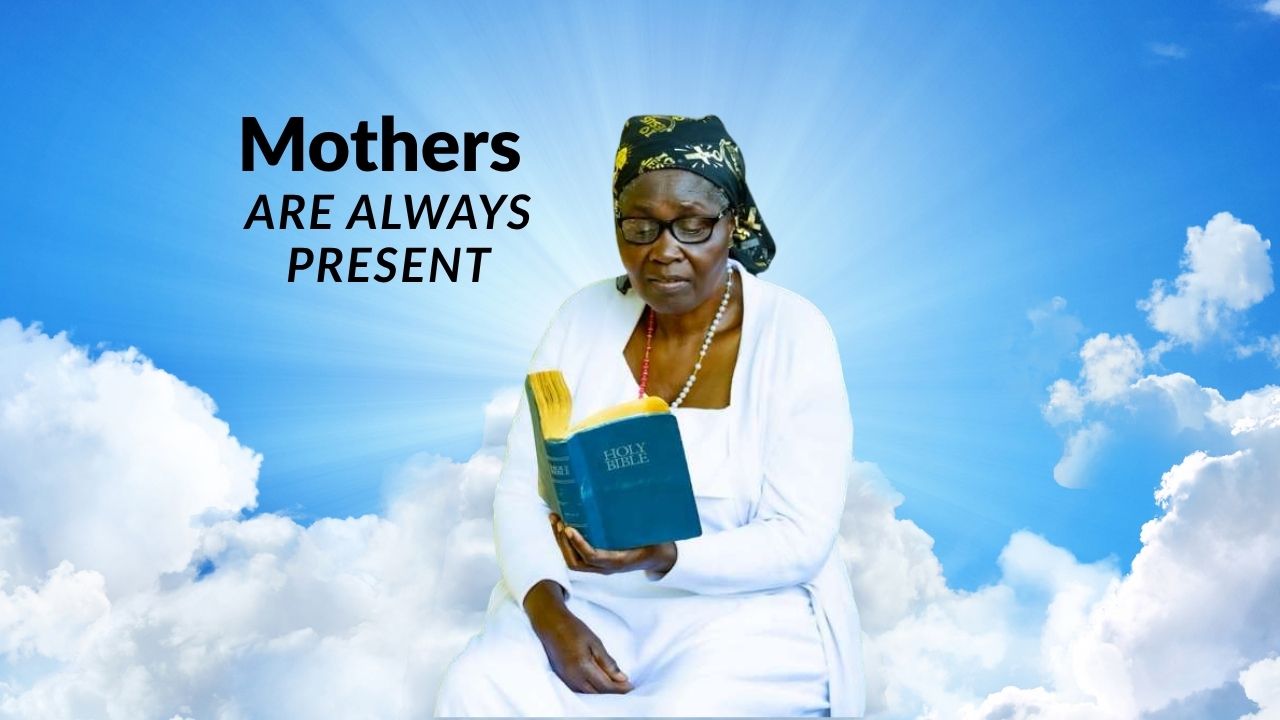
That was my mother. Practical. Observant. Funny without trying to be. Able to see, within seconds, what the rest of us had missed for years.
A nurse whom people trusted
My mother, Magdalene Oloowere, was born in South Nyanza, Kenya, in 1949, when the country was still under British rule. She grew up in a large family, in a home where responsibility came early and idleness was not encouraged.
At 15, soon after Kenya gained independence, she left home for Kaplong Nursing School. It sounds impossibly young now, but that was the path available to bright, determined girls of her generation who wanted a profession and were ready to grow up quickly. She completed her training in 1967 and began a nursing career that would stretch across 37 years.
My mother was not sentimental about work. Nursing, to her, was not something to romanticize. Patients needed care, medicine, clean hands, steady eyes, and someone who would not panic. So she worked.
Over the years, she served in various hospitals and clinics, including one in Nakuru, where she specialized in ophthalmology and pulmonary nursing. Those were technical fields, but the work often demanded something beyond training. It required patience, courage, and the ability to meet people when they were frightened, hurting, or unsure of what came next.
That became especially clear during the HIV and AIDS crisis in Kenya. In those years, fear and stigma were almost as heavy as the illness itself. Some patients were avoided by relatives, neighbors, and even people who should have known better. My mother was chosen to work in the HIV/AIDS clinic, and she accepted the assignment.
She was not fearless in some dramatic way. She simply believed the work had to be done, and if a patient came through the door, that person deserved care.
Through her work, she formed lifelong friendships with some of her patients and colleagues. One such friendship with a lady we just knew as Mama Muthoni led to a business partnership that saw us farming maize and beans in different parts of the Kenyan Rift Valley.
Hands that were never idle
Retirement did not slow my mother down. It only gave her more room to work.
After leaving nursing, with the support of friends in Fresno, California, she founded a nursery orphanage and established a scholarship foundation that supported underprivileged students. She also started a roasted-peanut business that brought additional income to our family.
Resilience, in her world, was not a slogan to print on a poster. It was something you built with your hands, your back, your prayers, and your stubborn refusal to quit.
She served as a Eucharistic minister at St. Paul Newman Catholic Center. Among the Kenyan community and the wider parish, she was known for showing up. She came for Mass, for service, for family gatherings, for hospital visits, and for the quiet emergencies people do not always announce.
When someone was grieving, struggling, or simply tired, there was a good chance my mother would appear with prayer, food, a rosary, a scarf, or some combination of all four.
She raised six children, gave away rosaries to anyone who needed comfort, and knitted scarves by hand for her family. Not because anyone demanded it. Not because anyone was keeping score. Her hands were happiest when making something useful, beautiful, or comforting.
That was how my mother loved. Not loudly. Not performatively. But steadily, through things you could hold.
The day she stood her ground.
My mother was a disciplinarian, and anyone who grew up under her roof knew that love did not protect you from accountability. But when justice was on your side, she became your strongest defender.
When I was in high school in Kenya, students in my boarding school went on strike and destroyed property. The principal responded by suspending the entire school for two weeks. During that suspension, my mother asked me the same question every day.
“Did you participate?”
Every day, I told her the truth.
I had not.
A few days before returning to school, she asked me the same question, then followed up with a few more.
“Did you know the strike was going to happen?” she asked. It was a tricky question I needed to answer quickly, or Mom would suspect I was hiding something and ask more questions.
“Yes, I heard the rumors,” I replied nervously, wondering where she was going with this line of questioning.
Mom was notorious for asking questions she already knew the answers to, just to test for honesty. I knew she was speaking regularly with one of my classmates’ mothers, and she may have gathered some intel, and I didn’t want to get in trouble.
She believed me and thanked me for telling her the truth. A few months later, she told me it would have bothered her if I had no clue a strike was about to take place.
“You must always be aware of what’s going on around you,” she said.
When school reopened, I was cleared of any wrongdoing. But the administration had decided that every student, guilty or innocent, would receive six strokes of the cane. No exceptions.
My mother politely refused and argued that punishing innocent kids sent the wrong message.
The deputy headmaster threatened to expel me if she refused to comply. For many parents, that threat would have ended the argument. But my mother was not fazed.
She stood there and held her ground.
That day, I was the only student to return to school without being caned.
At the time, I was a teenager, so I was far more aware of my embarrassment than of my blessing. I did not yet understand the size of what I had witnessed.
Years later, I realized my mother had given me a lesson I would carry into journalism, into fatherhood, and into every room where power tries to dress unfairness as policy.
Justice, she taught me, is not a negotiation. A threat is not a reason to abandon what is right.
Called back by family
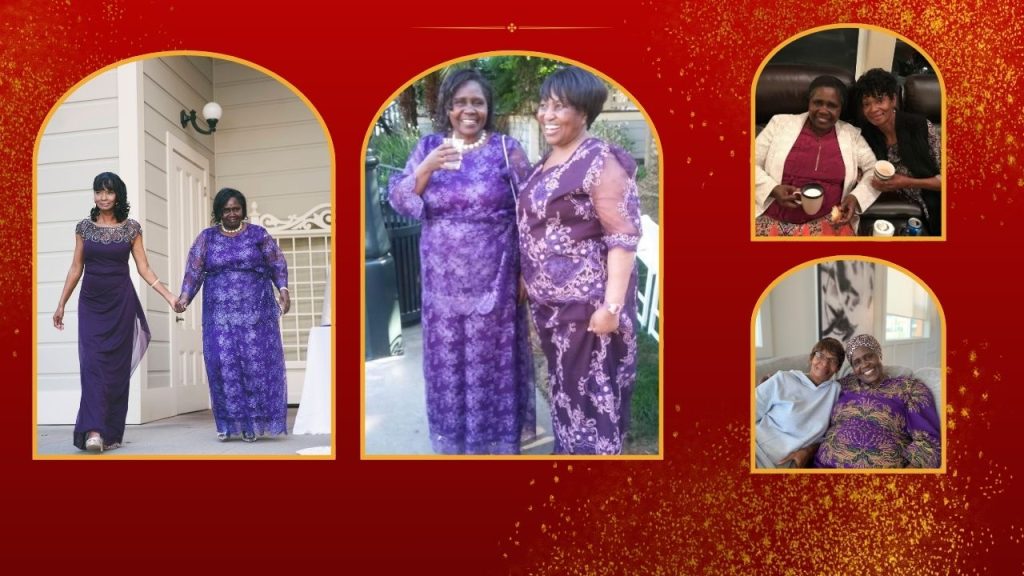
Having family and friends in both Kenya and the United States gave my mother a gift in her retirement years: two homes, two communities, and a reason to keep crossing the ocean.
For a season, she returned to Kenya, drawn back by work that still needed her attention. There was the orphanage. There was St. Martin’s Catholic Church in Usenge, where she remained active. There was also a community that still counted on her.
Then sorrow called her back to California.
In October 2025, Mama Sheila Collins passed away. She was part of our extended family and had become close to my mother. They were two mothers and grandmothers from different worlds who found each other through their children’s marriage and stayed connected through warmth, humor, and faith.
Their friendship was easy, though not without differences. They came from different places and did not always see the world the same way. Still, they could sit together, talk openly, and make each other laugh.
Mama Sheila’s passing weighed on my mother. Family, she believed, must show up in moments of grief. So she traveled from Kenya to California in November, attended the funeral, and offered what comfort she could through prayer, song, and presence.
Afterward, she stayed.
The funeral had ended, but the grief had not. My mother understood that people often need support after the crowd thins and everyone else has gone home.
We did not know it then, but her visit would become a final gift to us: one more chance to be near her, hear her laugh, and watch her show up for the people she loved.
Despite the pain of her loss, we thank God for giving us the opportunity to be with her one more time.
Her final day of service
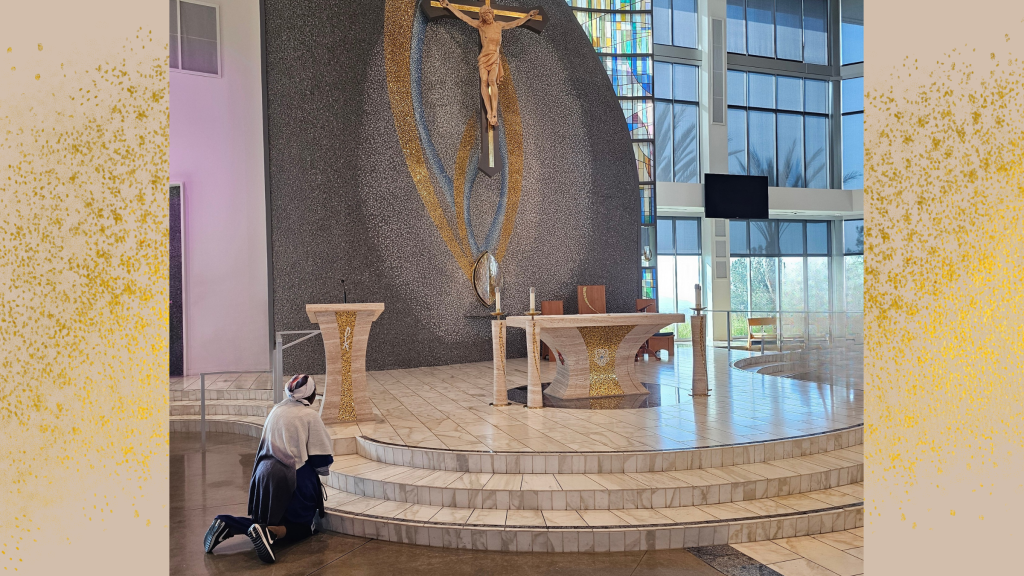
None of us knew this would be her final time attending Mass in person, but this photo captured the faith, humility, and devotion that defined her life.
For my mother, prayer was never a performance. It was part of who she was. | Photo by son, JP Otolo
On the morning of Dec. 6, 2025, my mother volunteered with my brother’s church community in San Diego to prepare blankets for people experiencing homelessness. Those who saw her that day said they saw a joyful woman, who sang her favorite song, “Ni Upendo katika Yesu bwana.” (There’s love in Jesus), and she showed no signs of illness.
That evening, she suffered a stroke and was rushed by ambulance to a nearby hospital.
Her last full day of health was spent the way she had spent so many ordinary days: helping where help was needed and singing praise songs with a church community.
There is something almost too perfect about that, except those of us who knew her understand it was not unusual. It was simply my mother being my mother, useful to the end, faithful to the end, busy with other people’s needs until her own body could no longer carry her.
On Nov. 30, she had knelt alone before the cross at a church in San Diego. Her head was bowed, rosary in hand, her body completely still in prayer. It was the last time she attended Mass.
My mother died Dec. 20, 2025, at Sharp Chula Vista Medical Center near San Diego, surrounded by her children. She was 76.
A son and a journalist, finding the right distance
I have been a journalist for many years, but writing about my mother’s passing has been one of the hardest assignments I have ever faced.
Not because I had nothing to say. I had too much.
Every attempt left me at a crossroads. Should I write as a son and give a day-by-day account of my grief, with all its what-ifs, anger, and confusion? Or should I step back and attempt the impossible work of being objective about my own mother?
Neither approach felt honest.
A journalist is trained to gather facts, present them clearly, and maintain some distance from the story. But there was no clean distance here. I was not just reporting a loss. I was living inside it.
So I waited. Not procrastinated.
I have concluded there is no perfect way to write about these things. There may not even be a right way. Grief does not come with a structure, and love does not fit neatly into one.
What has helped, more than any sentence I tried to write alone, has been the ordinary conversations with family. The calls. The memories. Laughter over things mom said and did. Her videos, rosaries, and African outfits spread across all our homes.
Maybe that is where this story began to take shape, not at my desk, but in those conversations. Not as an attempt to solve grief, but as a way to sit with it, together.
A community steps forward
When my mother fell ill, people came from across California. They prayed with us, visited us, sat with us, brought food, and offered the kind of comfort that needs few words.
Others gave generously, helping us meet the financial and logistical challenges of arranging funeral services in California and Kenya, and returning my mother home to be laid to rest beside my father, who had passed away 16 years earlier.
The Central Valley community, led by Francis Mwangi, known to many as “the governor,” and David Mwangi, organized regular Zoom prayer sessions during the holiday season. Our cousins, led by Peter Kojwang, arranged prayer and fundraising meetings with relatives in Kenya through WhatsApp. My sister Christine rallied her friends to help with logistics.
In the village, my mother’s church friends held prayer vigils at her home and prepared to receive her with dignity.
The Kenyan communities in California’s Central Valley and San Diego rallied around us. So did St. Paul Newman Catholic Center in Fresno and St. Martin’s Catholic Church in Usenge, which became the two anchors of her farewell. One community held us in California. Another held us in Kenya.
My mother had spent many years showing up for others. When our family needed help, people showed up for her.
Their support said something about the relationships she had built over time, one visit, one prayer, one meal, and one act of service at a time. That kind of love cannot be summoned at the last minute. It grows slowly, through ordinary acts of care, until one day it is strong enough to carry a family through its hardest season.
The simpler solution
This Mother’s Day, I think of my mother at my kitchen sink, laughing at her children for spending years crawling under the counter while the answer sat in plain sight.
That small moment has become a parable for me.
Seek the simpler solution. Work smart, look again. Do not assume suffering is necessary just because you inherited the method. Do not make life harder than it needs to be.
To the Fresno community that knew her, prayed with her, and was served by her, she was yours too.
To the family and friends in Kenya who walked with her, worked with her, and loved her, she never really left you.
And to those of us lucky enough to call her Mama, the lesson remains.
Faith can be practical. Love can be handmade. Justice can be quiet and immovable. A life can stretch from South Nyanza to Fresno, from a clinic to an orphanage, from a church kitchen to a hospital room, and still be held together by one simple truth.
Show up.
My mother did.
Again and again and again.
We thank you, Mama. We miss you. We will celebrate you forever.


LEAVE A COMMENT
You must be logged in to post a comment.