


|
LISTEN TO THIS THE AFRICANA VOICE ARTICLE NOW
Getting your Trinity Audio player ready...
|
Nigerian journalist Ireti Bakare-Yusuf faced unwarranted hostility Sunday after asking a South African Cabinet minister to apologize for suggesting Nigerians run drug operations. She got no apology. Instead, an official approached her and appeared to threaten to remove her from the room.
The confrontation happened during a briefing of the Inter-Ministerial Committee on Migration at Tshedimosetso House in Pretoria. Bakare-Yusuf, who hosts Nigeria Info’s Borderlines program, read back a comment Minister in the Presidency Khumbudzo Ntshavheni had made earlier in July. Ntshavheni was responding to Nigeria’s push for compensation over property abandoned during recent anti-migrant violence.
Rather than address compensation, she said she would rather Nigeria show South Africa “where the drug dens of Nigerians are.” She added that authorities wanted to “clean the drugs in South Africa quite urgently.” At the same briefing, Ntshavheni rejected compensation claims outright. She argued that South Africa would recognize only legally registered property and that informal settlements carried no legal standing at all.
Ntshavheni’s framing did not emerge in isolation. It echoes language vigilante groups have used for years to justify attacks on Nigerians. Operation Dudula president Zandile Dabula said in 2023 that Nigerians “specialize in drugs and body parts,” a claim rights groups have challenged as a generalization used to justify violence against an entire nationality. A Cabinet minister using the same framing as a vigilante leader is not a coincidence. It suggests the government has absorbed a stereotype it claims to reject.
There is a deeper failure inside Ntshavheni’s demand. Asking Nigeria to identify drug locations shifts a policing responsibility onto the people it accuses. South Africa’s own law enforcement bears that duty, not the nationality it suspects. Framing compensation around a demand for street addresses is not a policy position. It is an abdication.
Bakare-Yusuf’s question was pointed but grounded in fact. She noted that Nigerians in South Africa work as doctors, immigration lawyers, and other professionals. Her own father and friends who are Nigerian are not drug dealers, she said. She then asked why a Cabinet minister chose to frame an entire nationality around narcotics instead.
A minister’s defense collapses under its own logic
Justice Minister Mmamoloko Kubayi denied the plain reading of a public statement. She said Ntshavheni “never said all Nigerians are drug dealers.” Kubayi insisted the comment reflected complaints South Africans themselves had raised about drug activity in Hillbrow and Sunnyside. That defense asks the public to read a minister’s language charitably. Meanwhile, her government withholds any accommodation from Nigerians who lost homes and businesses to mob violence.
Acting Police Minister Firoz Cachalia went further still. He told Bakare-Yusuf that criticism of South Africa needed to be weighed against what he called “a lot of misinformation and inflammatory rhetoric.” A government facing scrutiny over an actual minister’s actual words is not the victim of misinformation. It is the subject of accountability.
Ntshavheni herself has not backed down. When former Senator Shehu Sani criticized her framing, she responded on social media, “I didn’t stutter.” Nigeria’s Ministry of Foreign Affairs called the original remark inflammatory and unacceptable. It also warned the comment could fuel hostility against Nigerians living in South Africa. Pretoria’s answer to its own foreign ministry counterpart was silence. Its answer to a journalist who asked the same question was a security escort to the door.
Respect is not owed to a government mid-crisis
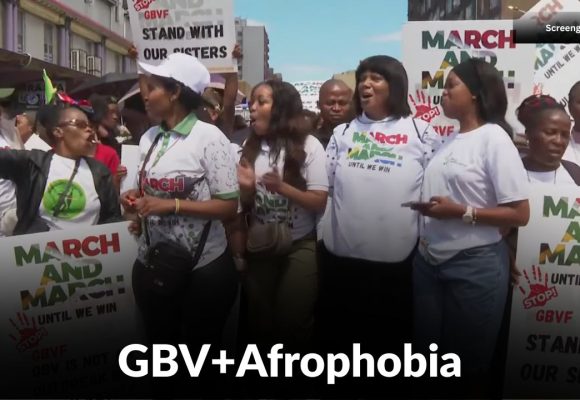
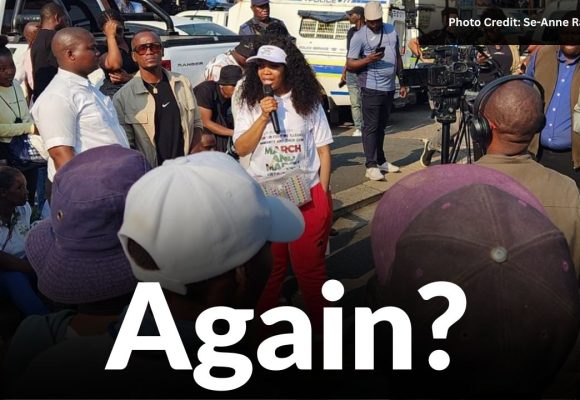
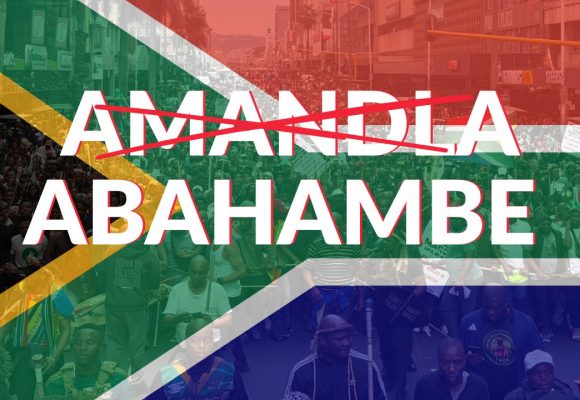
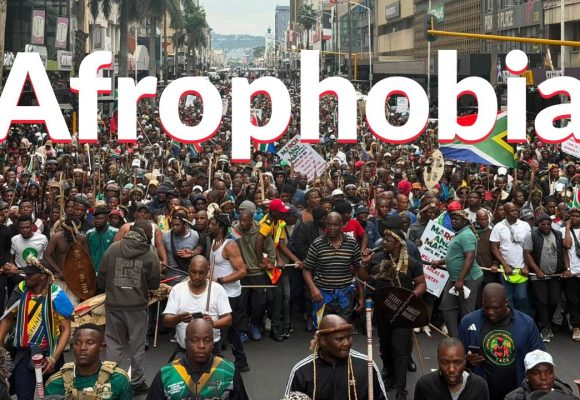
South African officials have spent this briefing cycle asking for decorum. Kubayi appealed directly to Bakare-Yusuf, asking to finish her own answers before taking further questions. That request lands differently given the backdrop. TAV has documented the June 30 Operation Dudula and March and March deadline since it happened. Vigilante ultimatums told foreign nationals to leave or face violence. Thousands of Nigerians fled to evacuation flights afterward.
Nigeria evacuated more than 850 of its citizens in four batches by early July. Waves of xenophobic violence had forced Nigerian-owned businesses and homes to empty out first. A government managing that scale of displacement does not get to demand deference from the journalists documenting it. Decorum is not the issue. Accountability is.
The question was never disrespectful
Bakare-Yusuf’s question deserved an answer, not a minder. The footage of an official approaching her mid-briefing is not a breach of etiquette on her part. Instead, it is a record of what happens when African journalists refuse to let bureaucratic language soften African-on-African harm. That refusal is the job. Pretoria’s discomfort with it is not evidence that she overstepped. It is evidence that the question landed exactly where it needed to.
South Africa can have credibility on this file, or it can have comfort. On the evidence of this briefing, it has chosen comfort and is asking the region to call it dignity.







LEAVE A COMMENT
You must be logged in to post a comment.