

|
LISTEN TO THIS THE AFRICANA VOICE ARTICLE NOW
Getting your Trinity Audio player ready...
|
Few World Cups in recent memory have been this thrilling. Erling Haaland has been unplayable, scoring seven goals through the round of 16 and dragging Norway into its first-ever quarterfinal with a stunning upset of Brazil. Mbappe and Messi have traded blows atop the Golden Boot race all tournament. Fan zones from Los Angeles to Philadelphia have turned American host cities into genuine carnivals, with supporters from every continent filling stadiums in face paint and national colors, turning strangers into instant friends through a shared language of football.
None of that excitement has stopped this tournament from producing some of the ugliest off-field drama in World Cup history. Here is the drama, from the opening whistle to now.
The travel ban emptied stadium sections before a ball was kicked
Two Trump administration proclamations suspended travel for citizens of 39 countries, including World Cup qualifiers Haiti, Iran, Ivory Coast, and Senegal. Players, coaches, and support staff received exemptions. Fans did not. CNN described the list as targeting mostly non-white, African, or Muslim-majority nations.
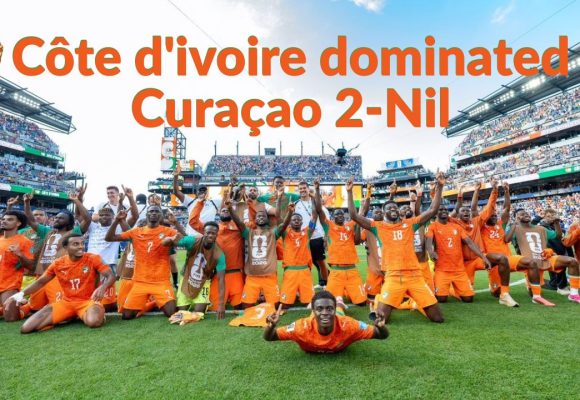
Empty sections and canceled trips followed. Ivory Coast’s fan association president told AFP that U.S. officials explicitly said they did not want supporters from Ivory Coast or Senegal on American soil, prompting most fans from both countries to cancel their travel outright. Visa denial rates for sub-Saharan African applicants have run between 30 and 60 percent, and Ghana saw 147 of 150 fan visa applications rejected. A separate bond program briefly required fans from five African nations to pay deposits up to $15,000 before it was suspended in May, but only for fans who already held tickets.
A Somali referee got turned away at Miami’s airport, and FIFA barely blinked
Omar Artan, named Africa’s best referee in 2025, arrived in Miami holding a valid FIFA-issued credential and visa. U.S. Customs and Border Protection denied him entry over what it called “vetting concerns,” reportedly questioning him for hours about al-Shabab, a militant group he said he knew nothing about. Somalia sits on the Trump administration’s travel ban list.
Artan flew home to a hero’s welcome in Mogadishu, greeted by government officials and thousands of fans. FIFA agreed to pay him in full for his tournament assignments. Infantino told critics to “chill and relax” when asked about FIFA’s failure to get him into the country. That response, more than the denial itself, showed where FIFA’s priorities sat once the U.S. government made its decision.
Iran’s team was exiled to Tijuana for its own World Cup
Iran’s federation agreed, at FIFA’s suggestion, to base the team in Tijuana, Mexico, after visa delays stranded coaching staff who were originally meant to train in Tucson, Arizona. Fourteen staff members, including the federation’s secretary-general and vice president, were denied visas entirely. FIFA separately revoked Iran’s fan ticket allocation for all three group matches.
Players were forced to fly into the U.S. only a day before each match and leave immediately after the final whistle, with no recovery time. Captain Mehdi Taremi did not hold back. “It’s a disaster World Cup, a disaster,” he said after Iran’s final group match. Infantino had personally promised the team’s concerns would be addressed, Taremi said, then never followed through. “Who wants to help us? If they want us to be out, then OK, let’s get out,” Taremi said. “But that’s not fair.”
A beloved superfan missed his country’s biggest match over a visa denial
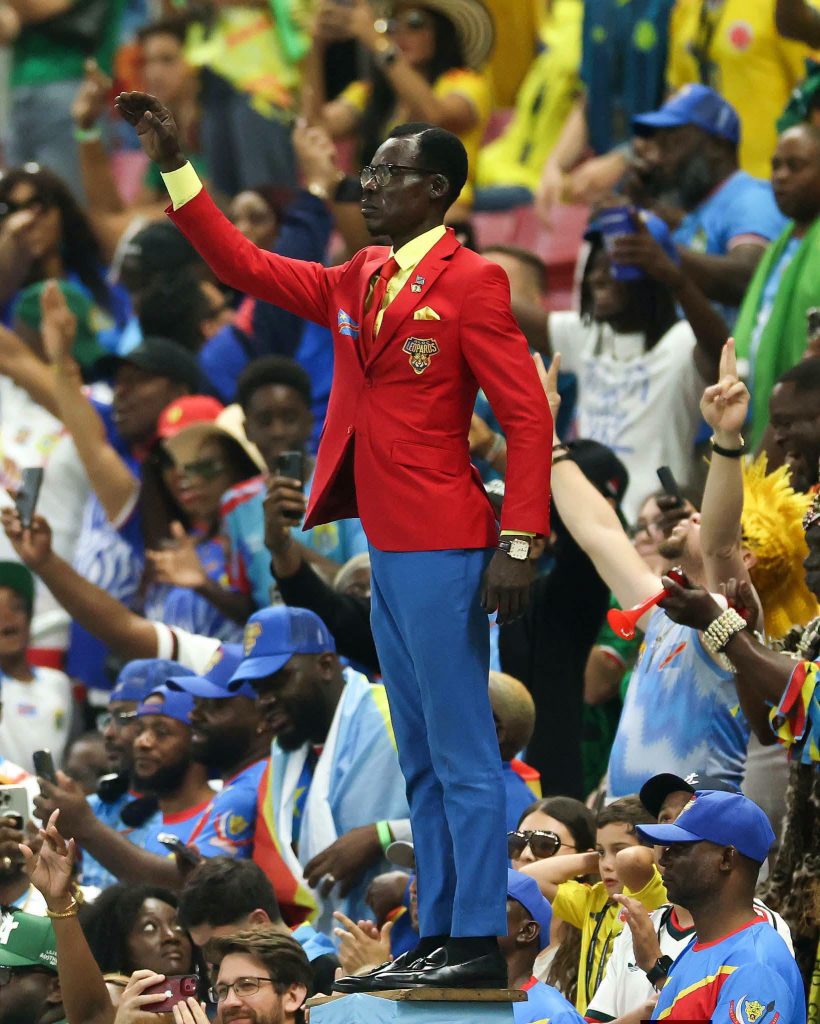
Michel Kuka Mboladinga, known as “Lumumba Vea” for his tribute to DR Congo’s first prime minister, became a continental celebrity after his motionless stadium performances at the Africa Cup of Nations. He was denied a U.S. visa and missed DR Congo’s must-win group match against Uzbekistan in Atlanta, a game Congo won to reach the knockout stage for the first time in its history.
Congo’s ambassador in Washington said she hoped he would be cleared to attend if the team advanced further. A tournament built on the promise of global access kept finding new ways to exclude the people it was supposed to welcome.
Trump’s red card call turned into a vibe killer for the US team
Referee Raphael Claus sent off Folarin Balogun in the round-of-32 win over Bosnia and Herzegovina after a VAR review flagged a boot to the ankle of Tarik Muharemovic. The red card triggered an automatic one-match ban under FIFA’s own rules. President Trump called Infantino directly and asked for a review.
Trump did not stop at asking for a review. He questioned the referee’s integrity outright, calling Claus “a little bit suspect if you check his past,” without offering specifics. He insisted the sendoff was not a foul at all, describing it as “two great athletes that crashed into each other and got entangled.” FIFA rejected the insinuation, calling Claus one of its most respected officials, and the Brazilian Football Confederation said nothing in his record supported any suspicion of wrongdoing.
FIFA suspended the ban anyway. Belgium objected. UEFA called the reversal a breach of the sport’s integrity, saying it “crossed a red line” and warned that bending an automatic rule mid-tournament would force officials to apply the same exception to every future case or risk accusations of favoritism. Former Liverpool manager Jurgen Klopp called the whole episode “crazy” and said football rules should not bend to political intervention.
Trump later tried to wave off the controversy entirely. Asked about it at an unrelated Oval Office event, he told reporters, “Nobody cares about that, right?” Senator Ted Cruz, standing beside him, thanked Trump anyway for “getting rid of that ridiculous red card.” Balogun played. The US still lost 4-1. Whatever momentum the reversal was supposed to create evaporated the moment Belgium took the field. Political muscle and a referee’s questioned integrity got Balogun onto the pitch. It did not get the US a single goal closer to the quarterfinals.
The irony writes itself, and nobody in Washington seems to have noticed
Balogun is American because of birthright citizenship, the exact constitutional guarantee Trump has spent his second term trying to dismantle. Balogun’s Nigerian parents were living in London in 2001 when his mother, seven months pregnant, was blocked from boarding a return flight from New York over safety concerns. She gave birth in Brooklyn weeks later. Under the 14th Amendment, which automatically made her son an American citizen, no paperwork was required.
Trump fought to strip that same guarantee from children born to undocumented parents and temporary visa holders. Federal courts blocked his executive order as unconstitutional. Balogun grew up in London, played for England at the youth level, and only chose the US senior team in 2023. He is exactly the kind of birthright citizen Trump’s policy targeted. He is also the player Trump fought to keep on the field. Consistency was never on the menu.
Belgium’s prime minister brought the joke to NATO
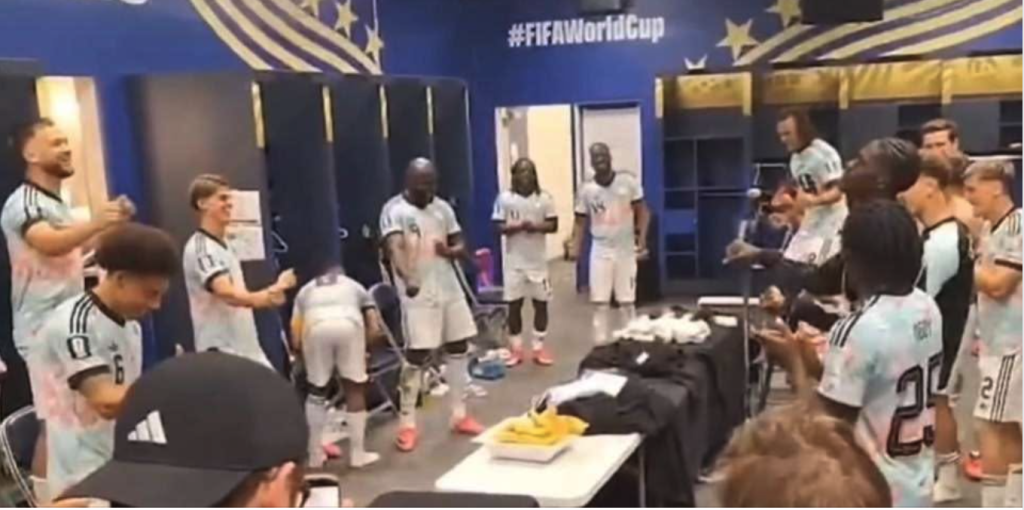
Belgian players danced to Trump’s signature “Y.M.C.A.” routine after the win, on the pitch and again in the locker room. Belgian Prime Minister Bart De Wever took the joke further. Speaking at a NATO summit in Ankara about an $80 billion military aid package for Ukraine, with Trump seated at the same table, De Wever called the aid “a very strong red card to Putin.” Then he added the line that mattered. “You can’t just take back a red card. You know that.”
De Wever later said he had not personally discussed the match with Trump. He did not need to. The joke traveled from a soccer pitch in Seattle to a NATO summit table in Turkey in less than 48 hours, and it landed exactly where it was aimed.
Mbappe had the right response to a racist Paraguayan senator
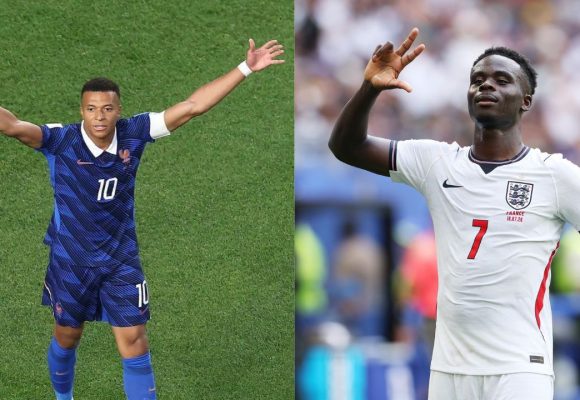
Paraguayan Senator Celeste Amarilla posted a racist attack on Mbappe after France eliminated Paraguay, invoking his Cameroonian heritage and questioning his literacy. Mbappe called her “a despicable woman and unworthy of your position,” and pointed out her comments erased the effort Paraguay’s own players had put into the tournament. The French Football Federation called her remarks “utterly abhorrent” and said it would pursue legal action. Paraguay’s own vice president distanced the government from her comments.
Mbappe’s response was direct, controlled, and correct. A sitting senator chose to attack a player’s heritage instead of his football. She earned every bit of the condemnation that followed.
IShowSpeed faced racist abuse from Argentina fans twice
Streamer IShowSpeed, whose real name is Darren Watkins Jr., was livestreaming Argentina’s round-of-32 win over Cape Verde on July 3 in Miami when a fan told him in Spanish to “go cry at the zoo.” Days later, during Argentina’s win over Egypt on July 7, a fan seated above his section performed a monkey gesture toward him while others shouted insults. Watkins is Black.
FIFA opened an investigation and issued a statement condemning “racism, hate and discrimination in all forms,” adding that anyone who undermines those values is “not welcome in our game.” Two racist incidents against two different public figures, Mbappe and Watkins, in the same week say something ugly about who still feels entitled to target Black athletes and personalities in this sport.
Egypt’s collapse against Argentina ended in a formal complaint to FIFA
Egypt led Argentina 2-0 with 11 minutes left in regulation before Argentina scored three times in the final 13 minutes to win 3-2. Egypt’s federation filed a formal complaint with FIFA afterward, accusing officials of “double standards” and demanding that referee François Letexier and his team be investigated and pulled from the rest of the tournament. Egypt disputed two calls specifically: a VAR review that disallowed Mostafa Zico’s second-half goal for an earlier foul in the buildup, and a no-call on a shirt pull against Hamdy Fathy moments before Argentina’s stoppage-time winner. Coach Hossam Hassan called the result unjust. “We have been cheated unfairly today, we have suffered injustice,” he said, adding he suspected “external factors” had helped keep Argentina and Messi in the tournament. FIFA’s chief refereeing officer, Pierluigi Collina, publicly defended the calls, saying VAR had correctly identified the foul that disallowed Zico’s goal.
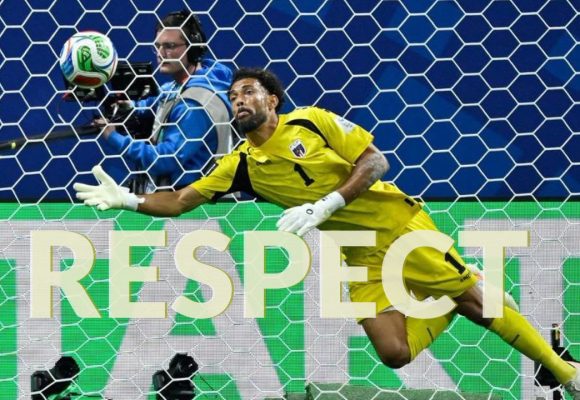
Goalkeeper Mostafa Shobeir denied Messi from the penalty spot in the 21st minute, and Messi looked tentative over the ball before the shot, missing his second penalty of the tournament after also failing against Austria in the group stage. Egypt still leaves with nothing to show for that save, for a lead that held for most of the match, or for a complaint FIFA has yet to resolve.
Repeated VAR reviews and tight offside calls have done more to disrupt the game’s rhythm this tournament than protect its fairness. Egypt deserved better than a set of contested calls in the final quarter of an hour.
Infantino’s calculation was simple, and it was never about the rules
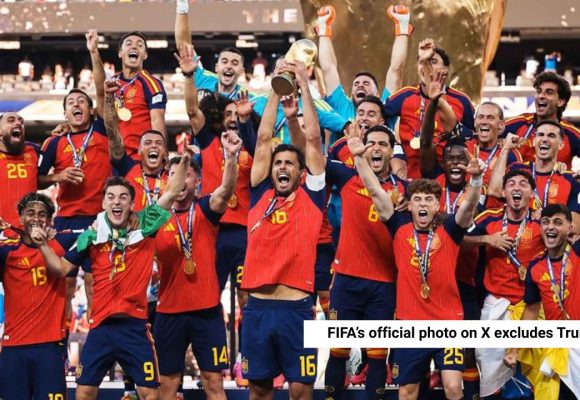
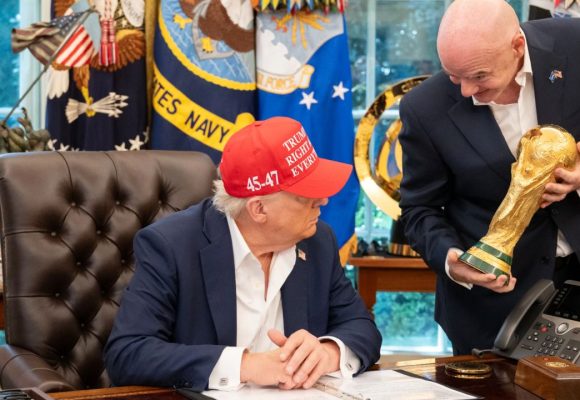
FIFA awarded Trump its first-ever “Peace Prize” in December, a title that Infantino himself presented at the World Cup draw. Infantino has since confirmed that Trump will help present the trophy at the July 19 final in New Jersey, breaking with decades of tradition in which the FIFA president alone handled the honor. Fifty members of the European Parliament have written to FIFA demanding it address an ethics complaint over the Peace Prize award, citing concerns about political neutrality.
Infantino’s approach has followed one clear pattern all year. Avoid Trump’s anger. Flatter his ego. Bend a rule if it keeps the peace. The Balogun reversal fits that pattern, as does the invented prize, and so does telling critics to “chill and relax” when a Somali referee was turned away at the border. Expect the loudest chorus of boos any World Cup final has ever recorded when Trump steps onto that podium in New Jersey, and expect Infantino to have seen it coming and decided the trophy photo was worth it anyway.

LEAVE A COMMENT
You must be logged in to post a comment.