

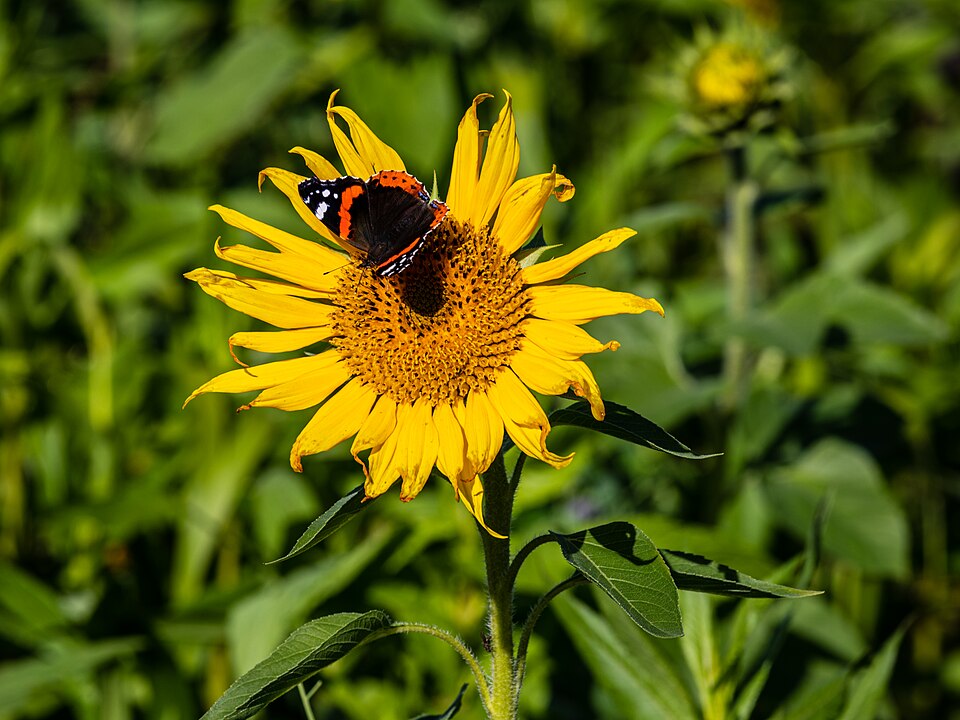
Most people never think about pollen. Not even farmers
Most farmers worry about rainfall. Consumers worry about food prices; and governments talk about yields, fertiliser and food security. Pollen rarely enters the conversation of food production.
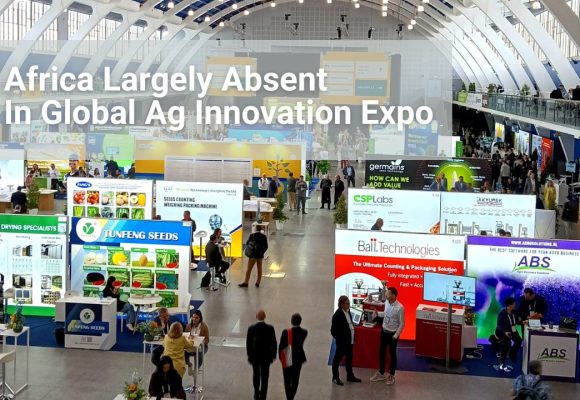
However, as delegates from 78 countries gathered in Lisbon for the 2026 World Seed Congress, pollination kept surfacing up in conversations about climate resilience, plant breeding and the future of agriculture. Experts essentially repeatedly said that before there is a harvest, before there is food on the table, there is pollination. It became hard to ignore. And rightfully so.
And pollination begins with pollen.
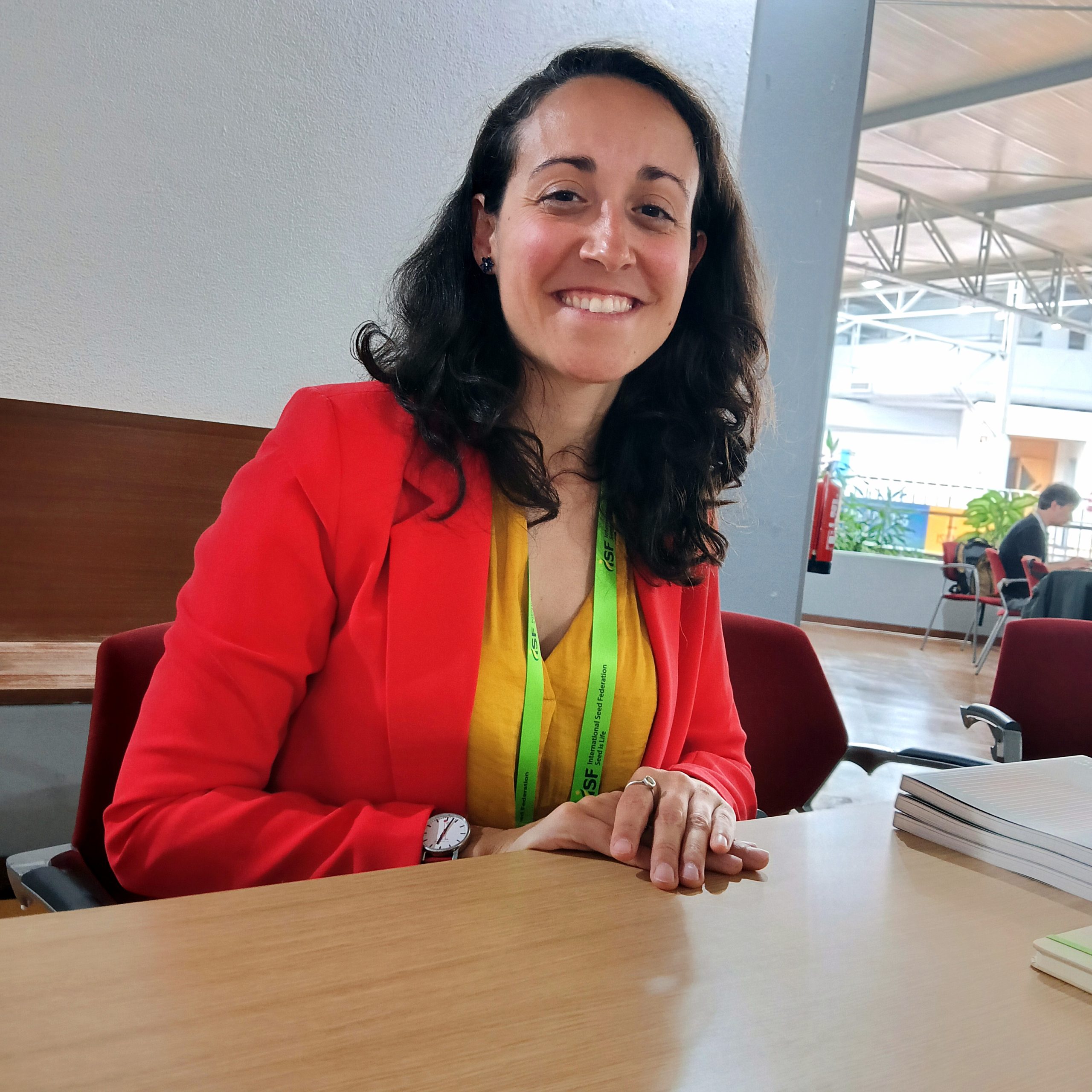
“It is the beginning of the whole history,” said Marta Pesquera, a sales manager at Swiss pollen-analysis company Amphasys, as delegates moved between conference sessions and exhibition stands.
“If you don’t have pollen and you want to cross two lines, you cannot go to the next step.”
It is a surprisingly simple observation for something so fundamental. A flower opens. Pollen reaches its destination. Fertilisation occurs. Seeds form. Fruits develop. The process has been taking place for millions of years. But scientists are now increasingly concerned that climate change is making it harder.
Looking at agriculture through a microscope
Amphasys, based in central Switzerland, has spent the past 12 years developing technology that helps breeders, researchers and seed producers analyse pollen quality and quantity. The company’s instruments are now used around the world, including in Africa, where many of its seed-sector customers are located in South Africa.
To many people outside agriculture, the idea of analysing pollen may seem obscure. Pesquera has developed her own way of explaining it. “When people who don’t work in agriculture ask what I do, I usually compare it to if you want to have a baby as a human,” she said. “What you check is the father and the mother. So in our case, we check the father, the sperm, and see if the quantity and quality is good or if there is a problem.”
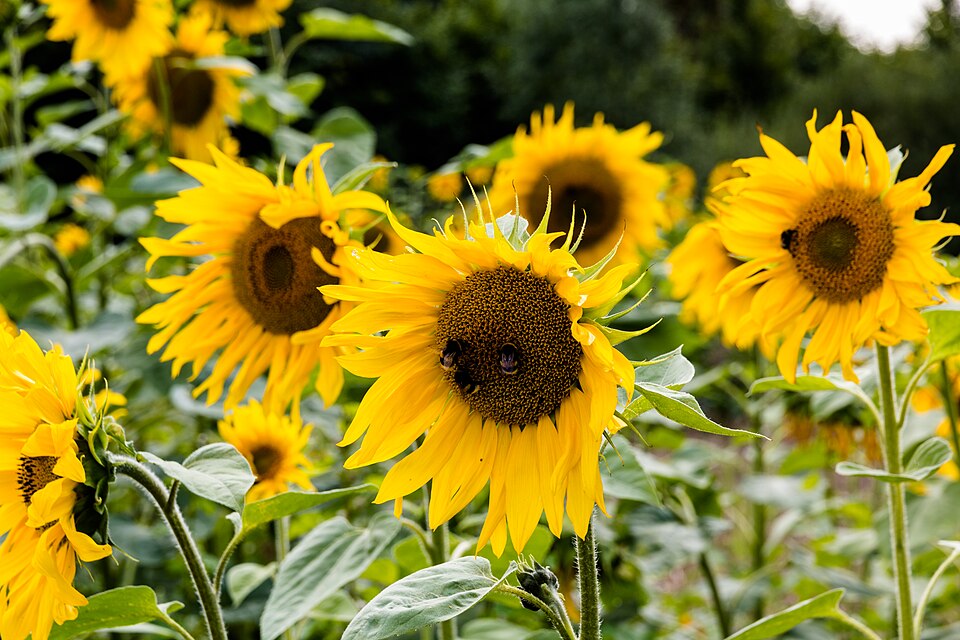
The analogy sounds simple, but it points to an increasingly important challenge. Climate change is exposing crops to conditions they did not evolve to handle. Heatwaves, prolonged droughts and erratic weather can affect pollen viability, reducing a plant’s ability to reproduce successfully.
Sometimes the consequences are obvious. But more often, they are not. A plant may appear healthy. Leaves may remain green. Yet pollination may fail, resulting in poor fruit development, reduced yields or crops that fail to meet market standards. Pesquera recalled a recent conversation with a grower who noticed that poor pollen quality was affecting fruit formation. “They said they were creating problems on the fruit because the pollination was not occurring properly,” she said.
Climate change’s hidden impact
Concerns about heat stress and pollination are increasingly being backed by scientific evidence. In a 2025 study published in Scientific Reports, researchers led by Jenna Walters of Michigan State University exposed blueberry plants to four hours of extreme heat (37.5 degrees Celcius) during flowering and found significant changes in pollen quality, plant reproduction and pollinator health. The researchers reported that heat stress altered pollen nutrition, reduced fruit set and affected bee survival, highlighting how vulnerable plant reproduction can be to short periods of unusually high temperatures.
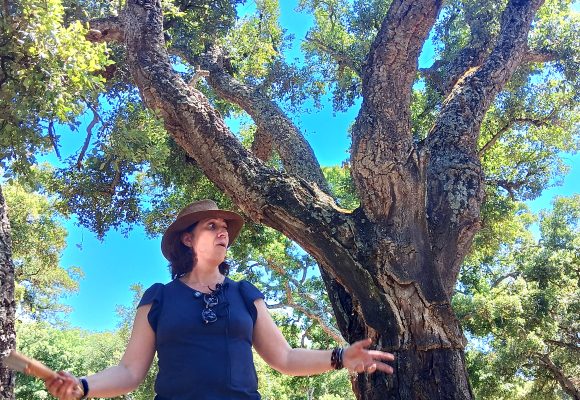
That reality is familiar to Jan Droppers, a Dutch seed-production specialist and adviser to Amphasys who has worked in several parts of the world, including southern Africa. “If we wouldn’t have pollination, we would all starve within a few months,” he said. “If you look at a plate of food, probably 80 per cent of what is on your daily menu is there because at some point pollination took place and was successful.”
He points to apples, tomatoes, peppers, melons, rice and wheat. Different crops rely on different pollination mechanisms. Some depend largely on insects. Others rely on wind. But all require successful fertilisation. “Without pollination, we don’t have anything,” Droppers said.
Local conditions matter
One of the most revealing moments in the conversation came when the discussion turned to Africa. For years, agricultural development has often focused on transferring technologies and varieties developed elsewhere. But climate change is increasingly exposing the limitations of one-size-fits-all solutions.
Pesquera recalled discussions with breeders working in southern Africa who had seen high-yielding varieties developed under different environmental conditions struggle when transplanted into harsher climates. A variety developed for conditions in the United States, she explained, performed poorly when grown near arid regions of South Africa because it was not adapted to local realities. “I agree that it’s important to look at the problems from a local perspective,” she said.
According to the Food and Agriculture Organization of the United Nations (FAO), climate change is expected to affect agricultural productivity across much of the continent through higher temperatures, shifting rainfall patterns and more frequent extreme weather events. Thus, the challenge now goes beyond developing better crops to looking at how those crops work where they are grown.
The value of indigenous seeds
I asked the Pesquera and Droppers if artificial pollination spells doom and death to traditional varieties, and if it means displacing indigenous crops and locally adapted seeds.
“No. No. No,” he said. “In fact, there are some seed companies who specialise in what we call open-pollinated varieties. They specialise in working with these indigenous varieties, with these locally highly adapted varieties.”
He said local varieties, often called landraces, have spent generations adapting to specific environments. That makes them valuable sources of genetic traits such as drought tolerance, heat resilience and adaptation to local growing conditions.

“They have many good aspects, often in terms of being very resilient. And one thing that they often try to do is increase the productivity level a bit or make them a bit more homogeneous,” Droppers said, arguing that the goal is not necessarily replacement but improvement.
A locally adapted variety might be crossed with another line carrying disease resistance, producing a crop that retains local resilience while performing better under modern production pressures. The approach aligns with broader discussions taking place across the seed sector.
At the Lisbon congress, one panel focused specifically on the importance of conserving and using local germplasm, the genetic material that forms the foundation of crop diversity. “There was a panel discussion this morning focusing on the crucial importance of recognising the value of local germplasm,” Droppers said. “And how extremely important that is going to be for the future of our food supply.”









LEAVE A COMMENT
You must be logged in to post a comment.