

|
LISTEN TO THIS THE AFRICANA VOICE ARTICLE NOW
Getting your Trinity Audio player ready...
|
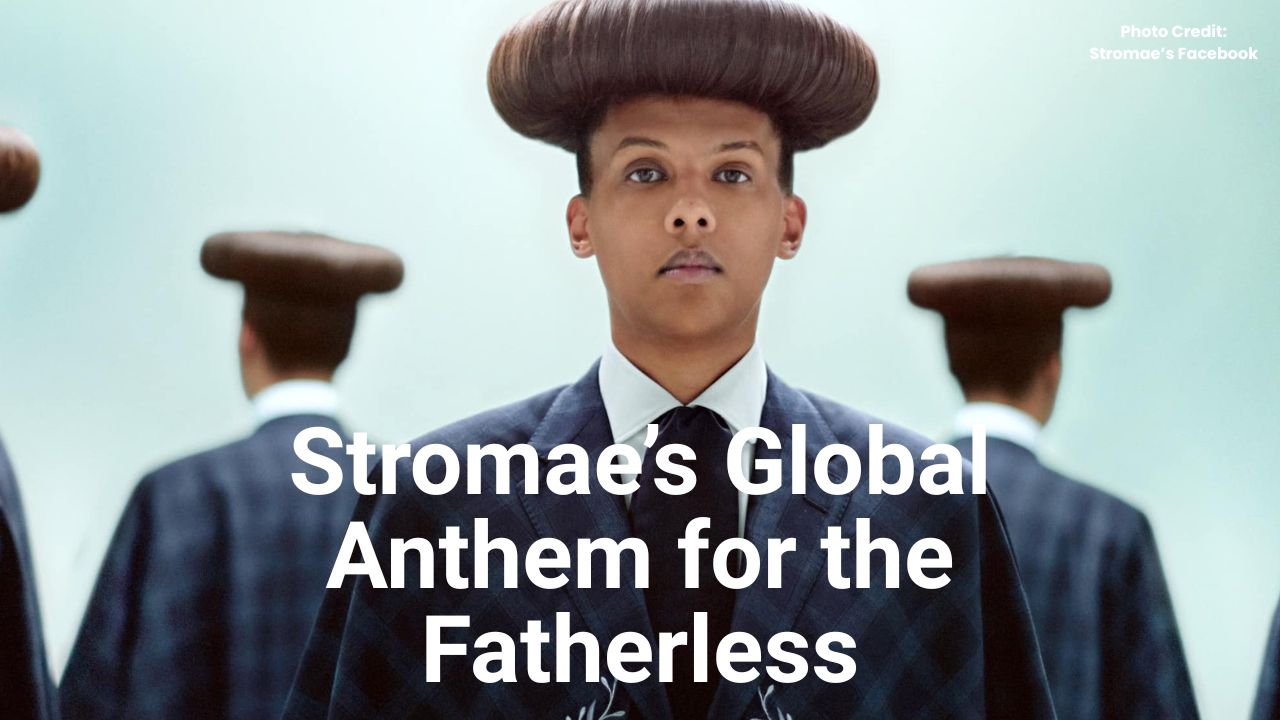
Long before “Papaoutai” went viral again in AI form, Belgian artist Stromae, born Paul Van Haver, had already turned the song into a global landmark.
Released in 2013, “Papaoutai” became one of the defining songs of its era. Its official video has now reached 1.2 billion views on YouTube, a rare feat for any song, in any language.
That scale matters because “Papaoutai” did not need AI to become important. It was already a global hit. It was already a cultural force. It was already one of the most inspirational songs in modern pop history.
Not because it offered easy hope. Because it turned pain into something unforgettable.
The beat is bright. The hook is immediate. But beneath the rhythm sits a question that still hurts more than a decade later.
Where are you, father? In French.
A Song Rooted in Deep Personal Loss
That question is the soul of the song.
In a Feb. 19, 2014, interview with NPR’s Tell Me More, Stromae tied “Papaoutai” directly to his own life. “Of course, my personal life is that I didn’t really know my father. I met him, like, sometimes, and he died in the Rwandan genocide,” he said. But he also made clear that the song reached beyond autobiography. “The question is what’s a good father, what’s a father, what’s a bad father?” he said.
The title itself plays on “Papa, où t’es?,” or “Dad, where are you?” It sounds simple. It is devastating. Stromae is not just singing about a missing person. He is singing about a role left unfilled, a silence left hanging, a wound that shapes childhood and then follows adulthood.
In that same NPR interview, he said he was raised by his mother after his father’s death and admitted that anger stayed with him for years. “Until before I created the song I was still a little bit angry,” he said, before explaining that he had tried to let go of some of that anger and move forward.
The Video Told the Story
The official video makes that absence impossible to miss.
A little boy tries to draw life from his father, played by Stromae, but the father figure remains frozen and unreachable, almost like a mannequin. The child watches other children move with their parents, while his own father remains physically present but emotionally absent. NPR host Michel Martin called the video “devastating,” describing a boy trying to get his father to react while the father is “there, but not there.” Stromae embraced that paradox, saying the image captures what children both want and do not want from a father.
That visual story is part of why the original still lands so hard. It gives form to the ache inside the song.
Then Came the AI Revival
The latest wave of “Papaoutai” has often traveled without that same context.
Released on Dec. 21, 2025, “Papaoutai (Afro Soul)” helped push the song back into global circulation.
It has now drawn more than 109 million Spotify streams. Part of its viral spread came through videos featuring Arsene Mukendi, a singer and social media creator whose emotive clip helped popularize the remake online. OkayAfrica later reported that Mukendi said the version was AI-generated.
What makes the story worth telling now is not simply that the AI version went viral. It has remained viral and shows no signs of slowing down.
Months later, the song is still circulating as background music in thousands of social media videos. Many carry little or no context for what the original song actually said. The feeling remains. The story often does not.
Why This Feels Different
Music has always been remade. Pop history is full of reinterpretations that reintroduced or even eclipsed originals, from Whitney Houston’s “I Will Always Love You,” first recorded by Dolly Parton, to UB40’s hit version of Elvis Presley’s “Can’t Help Falling in Love.”
What makes “Papaoutai” different is that its new afterlife is being driven not by another singer’s human reinterpretation, but by AI’s imitation.
That changes the emotional equation. A cover can honor a song while bringing a new voice, a new life, and a new point of view. An AI rendition can preserve the feeling while blurring its origins. It can move listeners before they even know whose wound they are hearing.
What Gets Lost
That is where the message risks slipping away.
The renewed viral life of “Papaoutai” has helped it captivate new audiences worldwide. But algorithmic circulation often strips away the story while keeping the feeling. Listeners hear the pain, but not always the source. They hear the longing, but not always the history. A song rooted in personal loss and tied to one of the darkest chapters in African history can quickly be consumed as a mood, aesthetic, or trend.
Still, the message survives because it speaks to more than one life.
Across Africa and the diaspora, father absence is not an abstract idea. Some know it through death. Others know it through war, migration, abandonment, separation, or emotional distance. Stromae’s question reaches into all of those lives. That is why the song continues to move people 13 years after its release. It is not simply catchy. It is recognizable. It gives language and rhythm to a silence many families already know.
More Than a Viral Sound
Stromae himself offered the clearest explanation for why the song travels so far. “I think it’s about the feeling more than a language,” he told NPR. That may be the truest way to understand why “Papaoutai” continues to captivate the world, even in a new digital form. People may arrive through the beat, the visuals, or the AI revival. What stays with them is the feeling.
As of publication, there is no verified public comment from Stromae in the materials reviewed for this story about the AI-generated rendition.
What is clear is that the original still stands tallest. Before the latest wave of viral remakes, “Papaoutai” had already crossed continents, touched millions, and joined the small group of songs whose reach can fairly be called historic.
The AI revival may have pushed it back into the feed. It did not create the wound that made the world hold on to it in the first place.










LEAVE A COMMENT
You must be logged in to post a comment.