

|
LISTEN TO THIS THE AFRICANA VOICE ARTICLE NOW
Getting your Trinity Audio player ready...
|
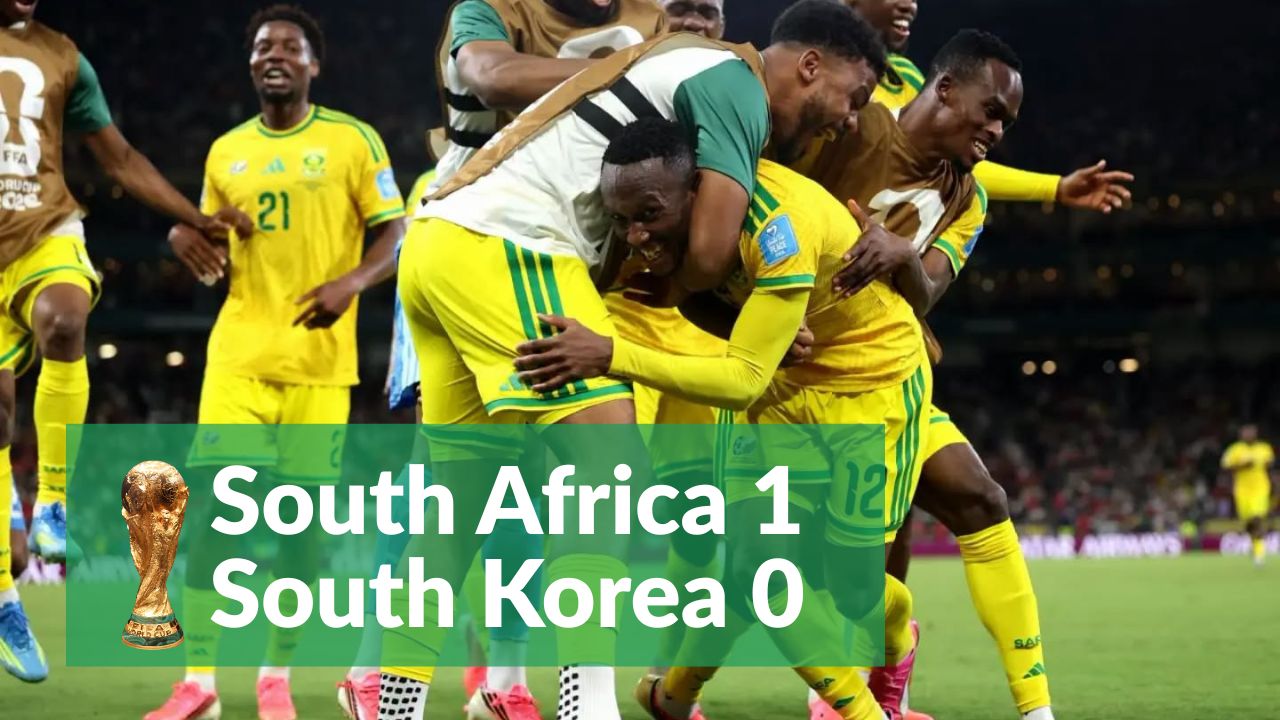
South Africans celebrated their World Cup win over South Korea as if they had just won the tournament.
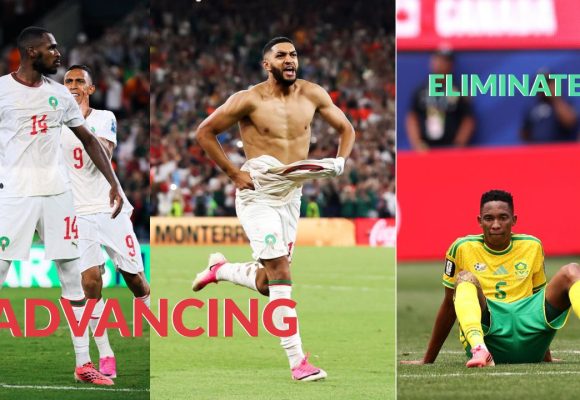
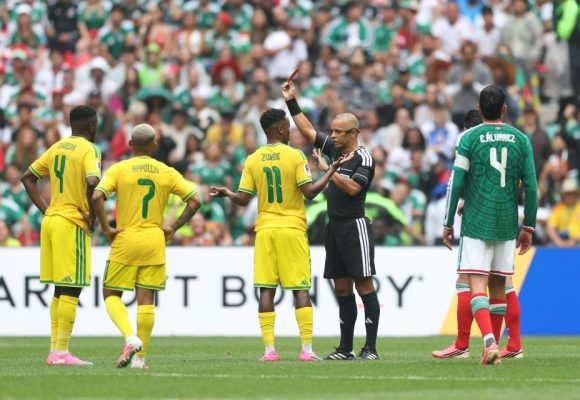
The streets of Johannesburg, Cape Town, and Durban erupted early Thursday morning as Thapelo Maseko’s 63rd-minute strike sent Bafana Bafana, South Africa’s national football team, into the Round of 32 at the 2026 FIFA World Cup. It is the first time in the country’s history that South Africa has reached the knockout stage of the tournament. The celebrations were loud, proud, and entirely justified. The players earned every decibel.
But on the internet, where the other battle was being fought, the noise told a very different story.
The Goal That Put South Africans on the Moon
Maseko, a forward who plays for AEL Limassol in Cyprus, did not just score a goal in Monterrey. He detonated a continent’s worth of complicated feelings in one clinical finish. South Africa defeated the Republic of Korea 1-0 in their final Group A match at Monterrey Stadium in the northern Mexican city of Monterrey. They finished second in Group A behind an imperious Mexico side that won all three group games without dropping a point. Bafana Bafana collected four points from three matches, one win, one draw, and one loss. It was enough to advance. It was enough to make history.
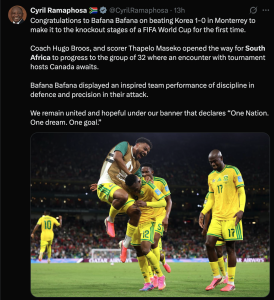
On the pitch, it was a performance that demanded respect. The Republic of Korea, one of Asia’s most technically accomplished football nations with a long World Cup pedigree, arrived controlling 68 percent of the ball and fielding a squad built around precision passing and movement. Their captain, Heung-Min Son, one of the most recognizable forwards in world football and a long-serving star at English Premier League club Tottenham Hotspur, was benched for the first time in 13 World Cup matches. It was a gamble by Korea coach Myung-Bo Hong that backfired badly.
Hugo Broos had other ideas. The 74-year-old Belgian tactician has managed Bafana Bafana since 2021. He previously led Cameroon to an Africa Cup of Nations title in 2017 and played as a defender in the Belgium squad that finished fourth at the 1986 World Cup, also held in Mexico. This tournament is his farewell to football, and he has said so publicly. Broos organized his side into a disciplined defensive block, absorbed Korea’s pressure, and turned their sloppiness against them. South Africa generated 13 attempts on goal to Korea’s eight, recording a superior expected goals figure, a statistical measure of the quality of scoring chances, and commanding the match in every metric that actually mattered.
Tshepang Moremi, a forward who plays for Orlando Pirates and has emerged as one of Bafana’s most creative forces in this tournament, supplied the assist. Maseko supplied the moment. Goalkeeper Ronwen Williams, South Africa’s captain and one of the finest shot-stoppers on the continent, made two crucial saves when Korea pushed desperately for an equalizer. Relebohile Mofokeng, the gifted 21-year-old winger who also plays for Orlando Pirates, caused problems for Korea every time he touched the ball. When the final whistle blew in Monterrey, Bafana Bafana had not just qualified. They had outplayed a ranked Asian powerhouse and sent them home.
Before the tournament, President Cyril Ramaphosa stood at the team’s send-off dinner in Pretoria and told the players plainly: “Asifuni group stage. Asifuni knockout rounds.” We don’t want the group stage. We don’t want just knockout rounds. He promised a public holiday every time they advanced. South Africa has advanced. The promise is now due.
Social Media Comment Sections, the new battleground
“Where are the haters. Xenophobia team this and that, crying to be in my land without documents, and wants to do as they please in my land and among my people. Their tails are between their legs now.”
The reaction from across the continent was immediate, divided, and, in places, ugly. Comment sections under South African football pages are filled within minutes of the final whistle. Some African voices offered genuine congratulations, while others fanned the flames, triggering more insulting back-and-forth insults.
Nigerian supporter Samuel Oloye Ogundipe cut straight to the bone. “South Africa qualified from the group stage for the first time because a Nigerian helped their team,” he wrote. “Now, imagine what they will achieve if they allow fellow black foreign nationals to take part in activities in South Africa. One person can bring goodluck. SAY NO TO XENOPHOBIA.”
He was referring to Ime Okon, the 21-year-old center-back who started in South Africa’s defensive lineup throughout the tournament. Okon was born in Johannesburg to a Nigerian father and a South African mother. He plays for Hannover 96 in Germany and was eligible to represent either South Africa or Nigeria. He chose Bafana Bafana without hesitation. When asked recently whether Nigeria had approached him about switching allegiance, Okon was direct. “Not really. But even if they call me, South Africa is my home. That’s what I have to say.” Nigeria, meanwhile, failed to qualify for this World Cup at all, losing a playoff to DR Congo on penalties.
A player of Nigerian heritage chose South Africa, helped defend it to a historic knockout qualification, and South Africa’s streets then erupted in celebrations that included calls for African foreigners to go home. The irony does not need editorializing.
Other African commenters were equally pointed. A supporter identified as Solomon Abiodun offered his congratulations plainly: “Congratulations to banana bananas xenophobia republic.” Mukoma Dunnie, identifying himself as Zimbabwean, found a way to be gracious despite the hostility his community faces: “I’m from Zimbabwe besides all those hatred well-done Bafana Bafana.”
The response from some South African supporters was exactly what the critics expected. Sugary Leonard was celebratory and contemptuous in the same breath. “Where are the haters,” he wrote, “xenophobia team this and that, crying to be in my land without documents and wants to do as they please in my land and among my people. Their tails are between their legs now. Even their demons are rejecting them. Chest pains have landed well.” Another commenter, NHlanhla Nhlanhla, was more direct: “It’s thy duty to tell foreigners to go home and leave Bafana Bafana to us as a country. When you African sisters and brothers going home, actually when come 30.” Chadleigh Chadaks Erasmus added: “They said they’re against us we’re coming back home soon, we proved them wrong. Now we’ll see 30 June who’s going home.” Melo Tlou kept it short: “Chasing Foreigners did help.”
June 30. The date keeps appearing. Operation Dudula, the anti-immigration movement whose name means “push back” in Zulu, along with affiliated groups, has made that date a deadline for African nationals to leave South Africa. It is six days away. While South Africans were posting celebration videos and demanding public holidays, thousands of African migrants and asylum seekers were calculating what the end of the month might mean for their safety. Those are not separate stories. They are the same story.
Players Are Not the Problem
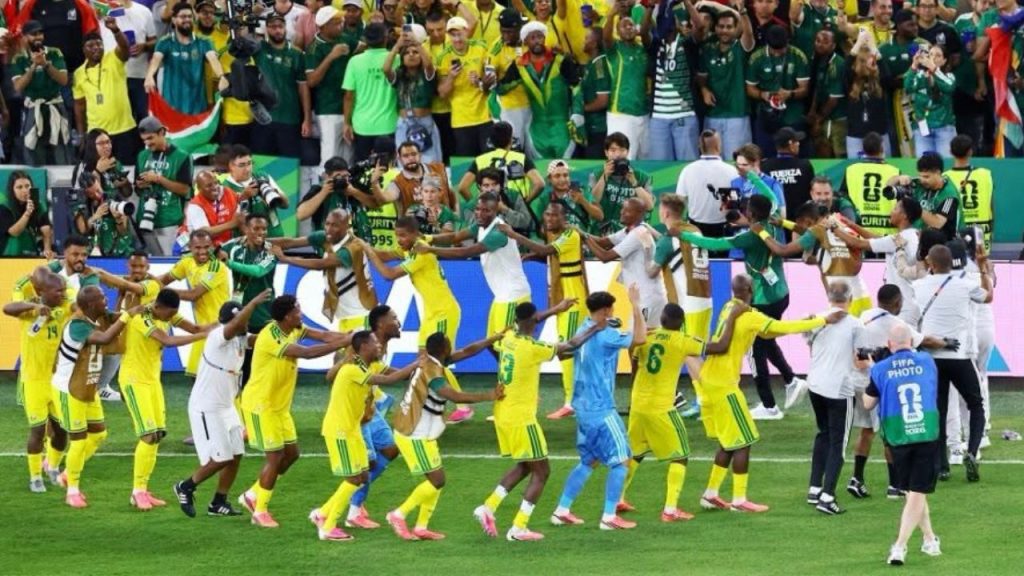
This is where the line must be drawn clearly. Thapelo Maseko is not Operation Dudula. Ronwen Williams did not set the June 30 deadline. Ime Okon, who chose South Africa as home when he could have chosen otherwise, is not responsible for what happens to Nigerian traders in Johannesburg when the calendar turns. These men trained, competed, and delivered one of the most significant results in South African football history. They represent a country whose government has repeatedly failed African nationals within its borders, but they are not that government. They should not be made to carry that weight.
Broos built a squad that plays without fear and executes without apology. Evidence Makgopa, the striker who has led Bafana’s attacking line with relentless energy throughout the group stage, pressed Korea’s defense from the first whistle. Thalente Mbatha, the combative midfielder who sets the tempo in the engine room, won his battles in the middle of the park. Mofokeng ran at defenders until his legs gave out. Their achievement belongs to them alone.
It is worth noting that South Africa is not entirely without voices of conscience. EFF leader Julius Malema has been among the loudest in calling out Afrophobia by name. He has challenged South Africans directly, asking how many jobs were created by beating up Zimbabweans and Nigerians. He has called Operation Dudula’s leaders clowns and charlatans. He has said plainly that he would rather lose votes than abandon fellow Africans. That takes political courage in the current South African climate. But one politician’s conscience does not undo the lived reality of millions of African nationals who go to sleep in South Africa, wondering whether they will be safe when they wake up.
Two Battles, One Country, No Easy Resolution
What Wednesday night exposed is that South Africa is fighting two contests simultaneously and winning only one. On the football pitch, Bafana Bafana are exceeding every expectation. Off it, the country’s relationship with the rest of Africa remains fractured, hostile, and, as of June 30, potentially explosive.
Anger among Africans at South Africa is not about football. It is a call for intervention, one that the AU’s 49th Executive Council session, convening this week in El Alamein, Egypt, must answer before June 30 arrives and the situation on the ground spirals beyond repair.
The South African government issued an official statement congratulating Bafana Bafana on their historic victory, calling it a proud moment reflecting the team’s determination, discipline, and fighting spirit. Many South Africans responded to that statement by questioning whether they even have a functioning government. The cynicism is earned. A government that can mobilize national pride around football but cannot protect Zimbabwean families from mob violence in Johannesburg has its priorities on full display.
Bafana Bafana face Canada in the Round of 32 on June 28. Canada, which finished second in Group B, will not be an easy opponent. Two days after that match, June 30 arrives. The players will be preparing for the biggest game of their careers. The rest of South Africa will be navigating something far more uncomfortable than a football match.
Whether the country can hold both realities at once, the joy of a historic qualification and the weight of an unresolved crisis, is a question no goal can answer.


LEAVE A COMMENT
You must be logged in to post a comment.