

|
LISTEN TO THIS THE AFRICANA VOICE ARTICLE NOW
Getting your Trinity Audio player ready...
|
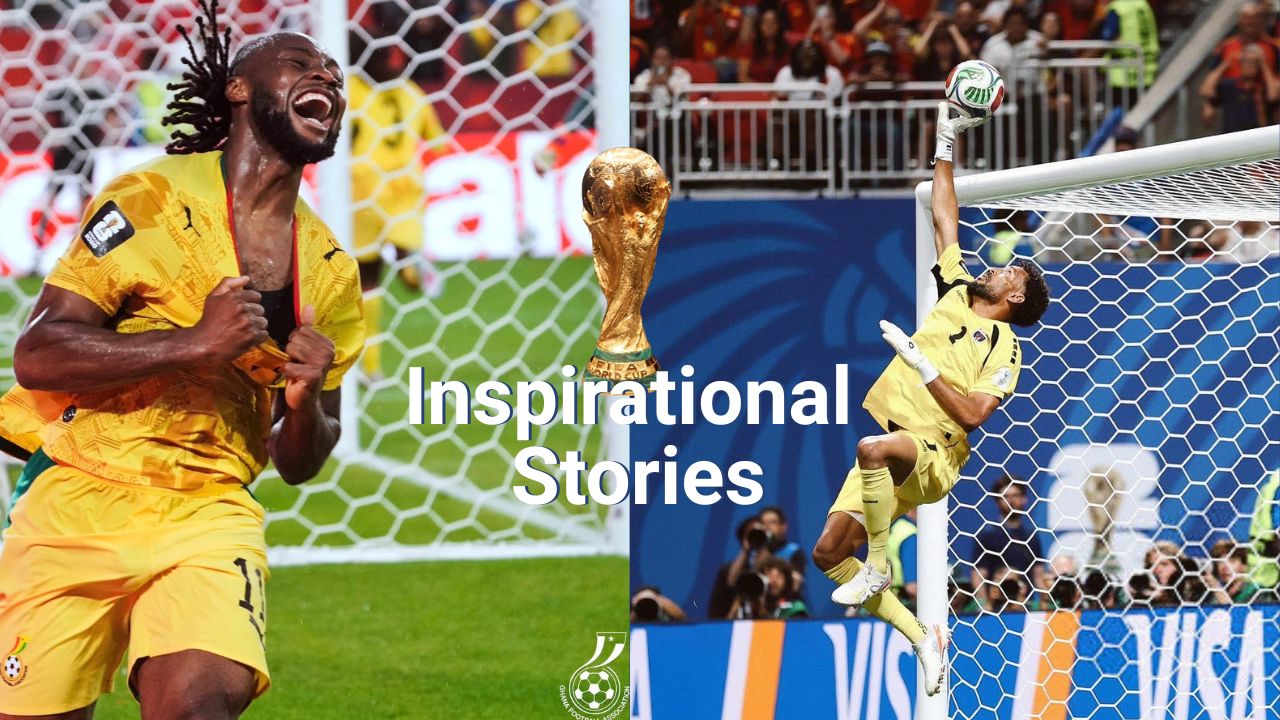
Cape Verde’s 40-year-old goalkeeper cried after shutting out Spain. Haiti reached the World Cup despite gangs controlling its capital, then watched FIFA strip its jersey of the general who won the country its freedom.
A Congolese superfan trained himself to stand motionless for ninety minutes straight. A Somali referee got turned away at a Miami airport and came home to a hero’s welcome instead. Three weeks into the 2026 World Cup, Africa and the Caribbean are writing the tournament’s most compelling chapters, on the field and off it.
Ten African nations and two Caribbean sides, Haiti and Curaçao, qualified for this tournament. Their early results have surprised bookmakers and broken records. But many of their fans are watching from home, blocked by American immigration policy or, in Haiti’s case, by FIFA’s own definition of what counts as political. For African and diaspora audiences, this World Cup is proving several things at once: that football has arrived, that the border policy has not loosened, and that the line between sport and politics keeps moving depending on who is drawing it.
A Continent Punching Above Its Weight
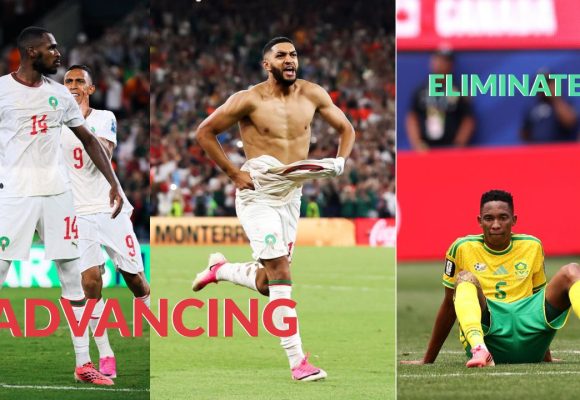
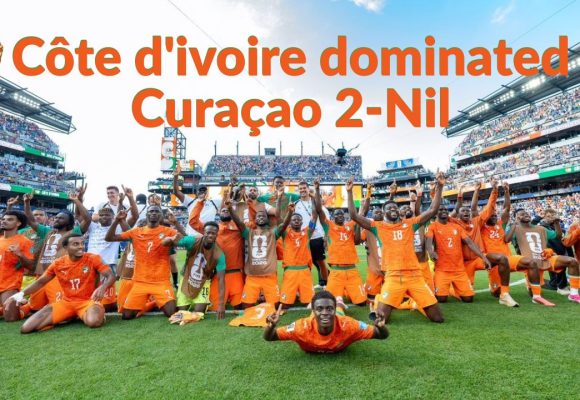
Morocco sits second in Group C after beating Scotland 1-0 and drawing Brazil 1-1, extending the run that took the Atlas Lions to the semifinals in Qatar. Ghana opened with a 1-0 win over Panama. Ivory Coast beat Ecuador 1-0 before a high-stakes clash with Germany. DR Congo, back at the World Cup for the first time since 1974, drew 1-1 with Portugal on a stoppage-time goal from Yoane Wissa.
Four other African sides, Egypt, Cape Verde, Senegal, and Algeria, remain alive but face tighter margins. Only South Africa and Tunisia look genuinely under pressure heading into their final group matches.
Vozinha Turns Cape Verde Into a Folk Tale
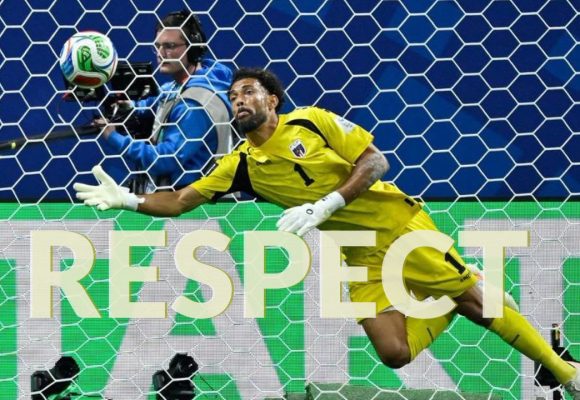
No African story has traveled further than Josimar José Évora Dias, known to the world as Vozinha. At 40, Cape Verde’s goalkeeper faced 27 shots from Spain and stopped all seven that were on target, becoming the oldest goalkeeper ever to keep a clean sheet at a World Cup. The result preserved a scoreless draw, the nation’s first point in its first World Cup match.
The nickname itself started as a tease, Vozinha told the Confederation of African Football (CAF). As a boy on São Vicente, he played street football with older kids and absorbed plenty of hits. When he could not get even, he went home angry and sulking. His friends mocked him for it, saying he was going to complain to his grandparents, “vozinha” in Portuguese. Other outlets have told it differently, often translating the name simply as “little voice” and describing it as a name his grandparents gave him, without the teasing behind it. CAF’s version is the one built on his own words.
Vozinha wept at the final whistle. He explained that the tears were for his grandparents, who raised him but died before they could see him play on the sport’s biggest stage. Overnight, his Instagram following jumped from roughly 56,000 to 14.2 million. He revealed after the match that he could not afford to pay for his own mother’s visa to attend the tournament, a detail that sits uneasily alongside his sudden global fame.
DR Congo’s Statue in the Stands
DR Congo’s most recognizable supporter never made it to the team’s World Cup opener. Michel Nkuka Mboladinga, known as Lumumba Vea, went viral at this year’s Africa Cup of Nations for standing rigid and motionless through entire matches, one arm raised, in tribute to Patrice Lumumba, the country’s first prime minister and independence icon.
Mboladinga missed the Portugal match because he was serving a 21-day quarantine tied to an Ebola outbreak. President Félix Tshisekedi had added him to the official delegation and covered his accommodation, travel, and tickets to ensure he could attend. He is expected to resume his statue pose when DR Congo faces Colombia.
A Jersey FIFA Called Too Political
Haiti’s path to this World Cup ran through a country where gangs effectively run. Armed groups control an estimated 80 to 90 percent of Port-au-Prince, forcing the team through an entire qualifying campaign on neutral ground, with coach Sébastien Migné managing the squad without ever setting foot in the country. Haiti secured its spot with a 2-0 win over Nicaragua in November, ending a 52-year wait for a second World Cup appearance.
Fireworks lit up Port-au-Prince as residents celebrated, a rare moment of unity that even rival gang factions reportedly paused for. The celebration crossed oceans, with Haitian communities in Miami, New York, Montreal, and Paris erupting in matching joy.
Then came the jersey. Days before Haiti’s opening match, FIFA ruled that the team’s kit, designed by Colombian manufacturer Saeta, violated equipment rules barring political imagery. The disputed design depicted the Battle of Vertières, the decisive 1803 engagement of the Haitian Revolution, alongside revolutionary leader Jean-Jacques Dessalines and other independence fighters as they raised the Haitian flag.
Dessalines led the army that defeated Napoleon’s expeditionary force in Haiti and declared independence on January 1, 1804. Haiti became the first nation in the world to permanently abolish slavery. FIFA did not specify which elements it found objectionable. Saeta complied and issued a revised kit, marking Haiti’s second rebuke from a major international sports body in a matter of months, after the International Olympic Committee made similar demands ahead of the Winter Games.
Sociologist Wilkens Pierre disagreed with FIFA’s decision. “A national team jersey is never just a piece of clothing,” he said. Haitian observers also pointed out that other federations, Mexico among them, carry historical and political imagery on their kits without drawing the same scrutiny from FIFA.
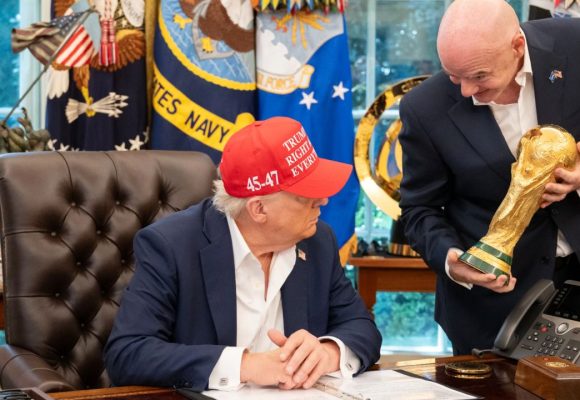
The timing made the ruling harder to swallow. In December, FIFA President Gianni Infantino handed Donald Trump the governing body’s newly created Peace Prize at the World Cup draw, telling the American president football’s community stood behind him.
Human rights group FairSquare filed a formal ethics complaint, arguing the award itself was a clear breach of FIFA’s own neutrality rules. Haitians watching their revolutionary general erased from a jersey for being too political did not need much help drawing the comparison.
Locked Out of the Tournament They Qualified For
Not every barrier facing Haiti’s fans involves a jersey. Haiti sits on the U.S. government’s full travel ban list alongside Iran, meaning supporters without an existing American visa cannot enter the country to watch Les Grenadiers play, even with the team competing inside a nation co-hosting the tournament.
A December 2025 White House proclamation placed entry restrictions on 39 countries effective January 1. An Africana Voice review of that list found 25 African nations facing full or partial limits, eleven barred outright and fourteen under partial restrictions, more than half the continent’s recognized states.
Two African qualifiers sit directly on that list. Ivory Coast and Senegal face partial restrictions, barring fans without existing visas from traveling to American host cities. Senegal supporter Djibril Gueye, speaking to The Associated Press in Tangier, said the U.S. should not have agreed to host the tournament if it could not let qualified nations attend.
Cape Verde avoided the formal ban but ran into a different obstacle. The nation is among fifty countries whose citizens face visa bonds of up to $15,000, part of a broader crackdown on travelers from countries with high visa overstay rates. The administration later suspended that bond requirement for ticket holders from Cape Verde and four other World Cup nations, though critics said the reprieve came too late for many fans.
A Referee Sent Home, A Hero’s Welcome
The clearest individual casualty of these policies wears a whistle, not a jersey. Omar Abdulkadir Artan, named Africa’s referee of the year for 2025 by the Confederation of African Football, was set to become the first Somali official ever to work a World Cup match. U.S. Customs and Border Protection turned him away over unspecified vetting concerns, despite his having already cleared State Department vetting and holding a valid visa.
Somalia sits on the full travel ban list. Artan never reached a pitch in the United States. He flew home instead, and Mogadishu treated his return like a championship. Crowds packed the airport, and thousands later filled a stadium for a welcome ceremony as supporters lifted him onto their shoulders and handed him flowers. Prime Minister Hamza Abdi Barre said Artan had already won the hearts of millions and secured his place in history. Artan told reporters he intends to be at the next World Cup.
Where Each African and Caribbean Side Stands
Standings reflect results through Friday, June 19, before Saturday’s full slate of matches.
|
Team |
Group |
Record (W-D-L) |
Points |
Goal Diff. |
Status |
|
Morocco |
C |
1-1-0 |
4 |
+1 |
Strongly placed, faces eliminated Haiti next |
|
Ghana |
L |
1-0-0 |
3 |
+1 |
Well placed, faces England on Tuesday |
|
Ivory Coast |
E |
1-0-0 |
3 |
+1 |
Well placed, faces Germany Saturday |
|
DR Congo |
K |
0-1-0 |
1 |
0 |
Alive, faces the group leader of Colombia next |
|
Egypt |
G |
0-1-0 |
1 |
0 |
Alive, group wide open |
|
Cape Verde |
H |
0-1-0 |
1 |
0 |
Alive, faces Uruguay Sunday |
|
South Africa |
A |
0-1-1 |
1 |
-2 |
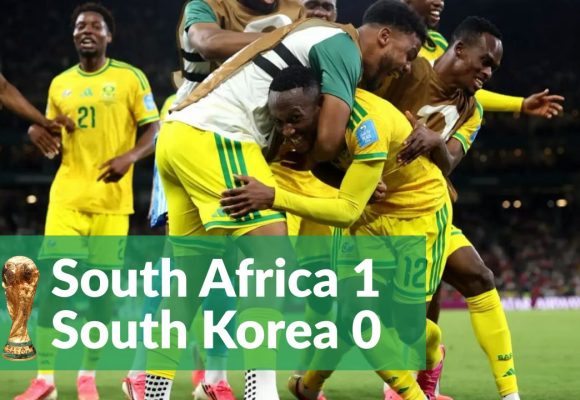
On the brink, must beat South Korea |
|
Senegal |
I |
0-0-1 |
0 |
-2 |
On the brink, fans face partial U.S. travel ban |
|
Algeria |
J |
0-0-1 |
0 |
-3 |
On the brink, must win remaining matches |
|
Tunisia |
F |
0-0-1 |
0 |
-4 |
On the brink, faces Japan Saturday |
|
Haiti (Caribbean) |
C |
0-0-2 |
0 |
-4 |
Eliminated on the pitch; fans barred under full U.S. travel ban |
|
Curaçao (Caribbean) |
E |
0-0-1 |
0 |
-6 |
On the brink after 7-1 loss to Germany |
The Polymarket Favorites and the Money
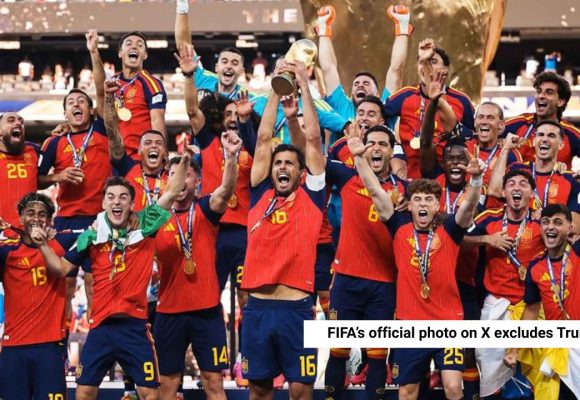
While African and Caribbean sides chase knockout spots, the traditional powers are doing what traditional powers do. Argentina’s Lionel Messi scored the first hat trick of his World Cup career in a 3-0 win over Algeria. Germany put seven goals past Curaçao, the tournament’s most lopsided scoreline so far. The United States and Mexico, the two co-hosts active so far, have already clinched their places in the knockout rounds.
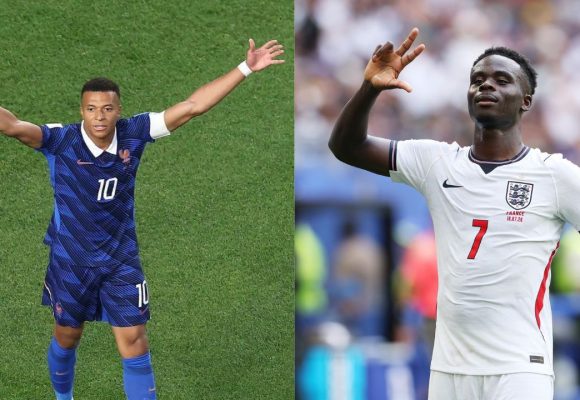
Prediction markets reflect that hierarchy. On Polymarket, France leads the World Cup winner market at roughly 18 percent implied probability after its 3-1 win over Senegal, with Spain next at about 14 percent despite its draw with Cape Verde. Portugal, Brazil and Germany trail behind them. No African or Caribbean side currently ranks among the market’s leading contenders, a gap that mirrors decades of seeding and resourcing more than it reflects what has actually happened on the field this month.
That gap is exactly what makes Morocco’s position, Ghana’s start, and Haiti’s improbable run worth watching closely. The football is closing. The politics, on jerseys and at airports alike, is not. Both stories will keep running through the final group matches and into the knockout rounds that follow.



LEAVE A COMMENT
You must be logged in to post a comment.