

|
LISTEN TO THIS THE AFRICANA VOICE ARTICLE NOW
Getting your Trinity Audio player ready...
|
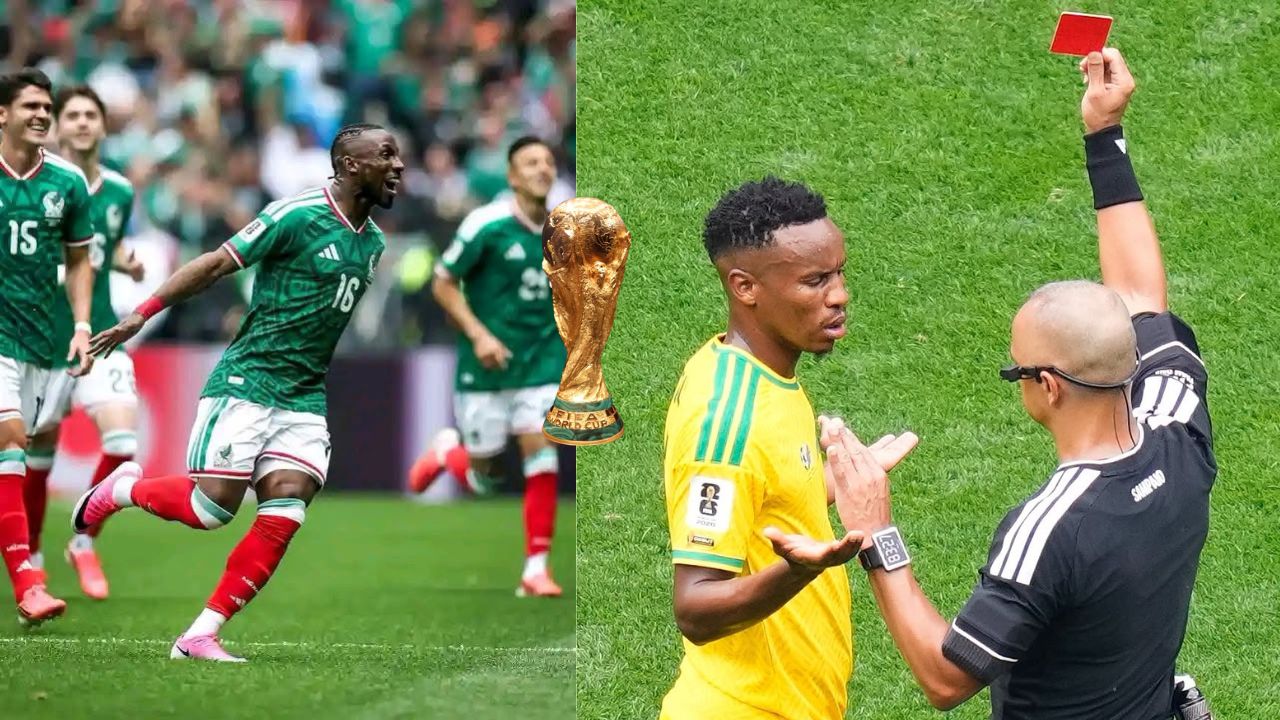
A nightmare scenario unfolded for South Africa’s Bafana Bafana in the World Cup opener against co-hosts Mexico, delighting many Africans online.
“South Africa took all the anger and hostility they usually reserve for other African nationals to the World Cup,” wrote one commenter on the team’s official Facebook page, “and ended up collecting two red cards in their opening match.”
The match, played at Estadio Azteca on June 11 before a sellout crowd of 83,000, ended with the co-hosts defeating Bafana Bafana 2-0 in a lopsided match dominated by the Mexicans.
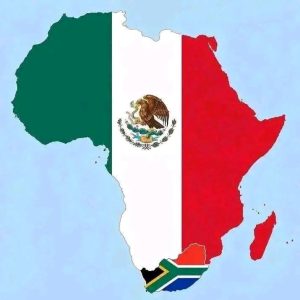
Before the match, many Africans had declared support for Mexico in protest of the ongoing Afrophobic attacks unfolding in South Africa. Their glee after Bafana Bafana’s defeat, in a nightmare game where two of their players were red-carded, was in full display on the team’s official Facebook page.
A Black Colombian Opens the Wound
The damage started early, and it started with a mistake. In the eighth minute, goalkeeper Ronwen Williams, South Africa’s captain and one of the continent’s most decorated shot-stoppers, attempted to play out from the back with a short goal kick. It was a calculated risk in a tournament where modern goalkeepers are expected to be playmakers as much as shot-stoppers. On this night, it backfired immediately.
Mexico’s high press swallowed the move whole. Midfielder Sphephelo Sithole was suffocated on the ball, and Erik Lira forced the turnover deep in Bafana Bafana territory. The loose ball fell to Julián Quiñones at the edge of the box. He did not hesitate. A low, driven strike rocketed through Williams’ legs and into the net, the earliest goal scored in a World Cup opening match since Philipp Lahm’s strike for Germany in 2006.
The man who delivered that opening blow carries his own story.
Quiñones is a Black Colombian, raised in Magüí Payán, a predominantly Afro-Colombian community in southern Colombia’s Nariño region, who became a naturalized Mexican citizen in 2023. He arrived at this tournament as the Saudi Pro League’s top scorer, having outscored both Cristiano Ronaldo and Ivan Toney with 33 goals in 31 matches for Al-Qadsiah.
The image landed hard across the continent. A man of African descent, wearing Mexico’s colors, scoring the very goal that began South Africa’s unraveling, at a tournament where Afrophobia had already turned much of Africa against Bafana Bafana before kickoff. Within hours, it would become one of the central images of the night.
The Collapse Continued
South Africa never recovered the platform Quiñones had knocked from under them. Mexico controlled the half, and the warning signs of a long night kept multiplying. Just before halftime, South Africa’s discipline began to crack.
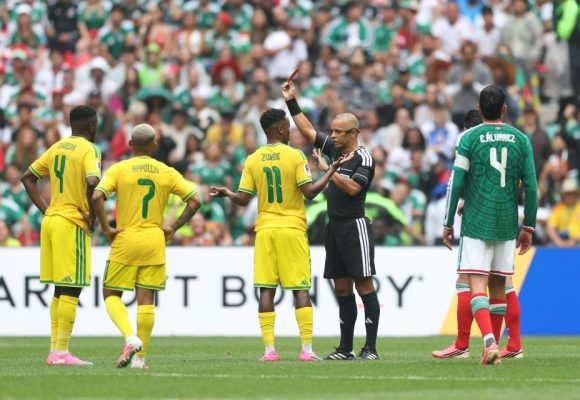
The breaking point came in the 49th minute. Sithole, still rattled from his role in the opening goal, brought down Brian Gutiérrez on the edge of the box as the Mexican midfielder broke clear on goal. Brazilian referee Wilton Sampaio reached for his pocket without hesitation. Straight red card. South Africa, down to ten men, had to defend the rest of the match with one fewer body against a rampant home crowd.
Mexico made them pay. In the 67th minute, veteran striker Raúl Jiménez rose to meet a cross and headed home Mexico’s second, sealing the result and confirming what had felt inevitable since the eighth minute.
Then came the moment that turned a difficult night into a historic humiliation. In the 84th minute, substitute Themba Zwane was shown a second red card after the video assistant referee determined he had struck Mexico’s Roberto Alvarado. South Africa finished the match with nine men, matching the disciplinary record Cameroon set in 1990, the only other nation in World Cup history to have two players sent off in an opener. Cameroon, famously, won that match. South Africa did not.
Even Mexico did not escape clean. Captain César Montes saw red in stoppage time for a hard challenge on Khuliso Mudau, denying a clear goal-scoring chance. It made for an unprecedented finish: three red cards, the most ever in a World Cup opening match, and two teams that finished with ten and nine men, respectively.
“Looks Like South African Players Are in a Hurry to Go Back Home to Protect Their Jobs,” | Facebook Comment
Bafana Comments Section Becomes the Story
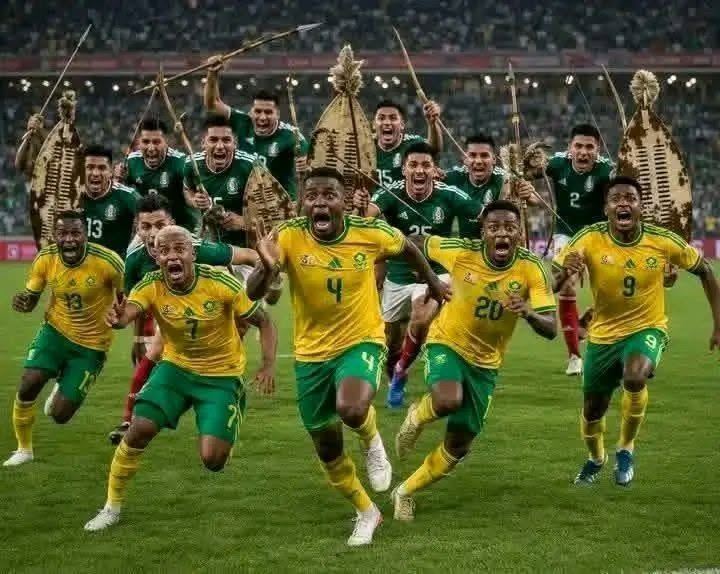
While the match was unfolding, Bafana Bafana’s official Facebook page was becoming something between a roast and a referendum. The team had posted its standard pre-match graphic, tagging sponsors and broadcasters with the usual #BafanaPride hashtag. What followed in the comments was anything but standard.
Throughout the thread, a recurring joke took hold: that all 53 other African nations had united, however briefly, behind Mexico. “We the 53 African countries are solely behind Mexico, plus Nelson Mandela,” wrote one commenter. “At this point, Mandela counts as the 54th African nation.”
Another commenter claimed that “the remaining 53 African countries have been practicing to sing Mexico’s national anthem for the past two weeks.” A third distilled the entire match into a riddle. “Two nil, two red cards. Who am I?”
The phrase “Mexico versus Xenophobia” became its own meme, repeated in different languages and spellings throughout the thread. One commenter rendered the scoreline as “Mexico 2, Xenofobianos 0.” Another wrote simply, “Afriphobia 0, Mexico 3,” inflating the actual score to make the symbolic point land harder.
A Threat Lands Inside the Joke
Not every comment was lighthearted, and not every reference to “30 June” was a joke about jobs. One South African commenter addressed the wave of mockery directly. “To all the foreigners wilding with the comments here,” the comment read, “I have two words: 30 June.”
That date is not a punchline. As TAV has reported, June 30 marks the deadline set by South African anti-immigration movements Operation Dudula and March and March, groups that Human Rights Watch has linked to violent attacks on African migrants in Pretoria, Johannesburg, and Durban earlier this year. When a comment referencing that date appears beneath a football post aimed at “foreigners,” it stops being banter and becomes more like a warning. The collision between football rivalry and the Afrophobia crisis was, for a moment, no longer symbolic.
“We lost, I know, but on the 30th let them go,” Facebook comment
South Africa Pushes Back, Gently
Amid the wall of mockery, a smaller current of South African voices tried to hold the line, for the team if not for the politics. “We remain South Africans, we are behind our boys,” wrote one fan, in a comment that read almost like a plea for calm. “Anger aside, Bafana must rise. I come in peace.”
Others leaned on pride rather than rebuttal. “All the best, Bafana Bafana,” wrote another. “You’re not just there to participate. You’re there to compete.” Kaizer Chiefs, one of South Africa’s most storied clubs, posted a rallying message hours before kickoff, urging the country to “fly the flag high and make the nation proud.”
By the final whistle, those voices were a minority in their own house. The mockery had not just outpaced the support. It had buried it.
What the Match Revealed
South Africa’s campaign now sits at the bottom of Group A, two players suspended, and a result that will be remembered as much for what happened in the stands and online as for what happened on the pitch. The 2010 World Cup, hosted on South African soil, was supposed to be the moment African football arrived. Sixteen years later, the team that carried that legacy walked into Mexico City and found much of the continent rooting for the other side, on its own page, in its own comment section, in real time.


LEAVE A COMMENT
You must be logged in to post a comment.