

|
LISTEN TO THIS THE AFRICANA VOICE ARTICLE NOW
Getting your Trinity Audio player ready...
|
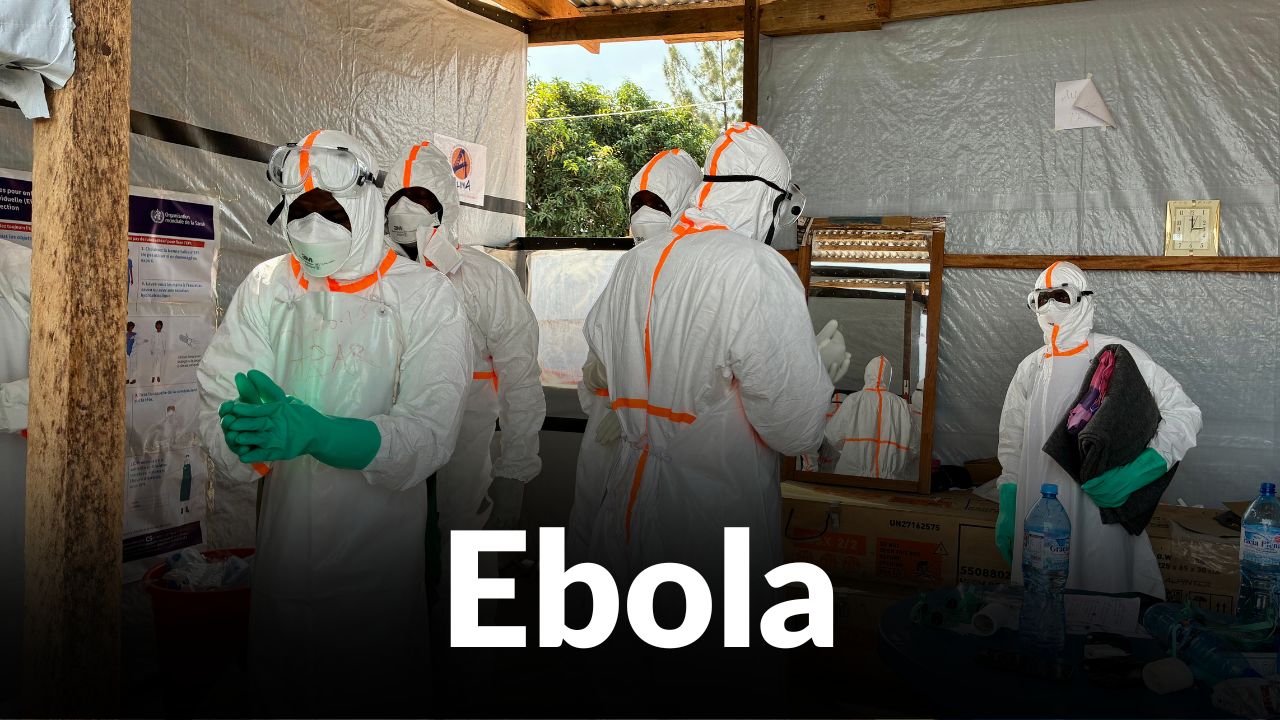
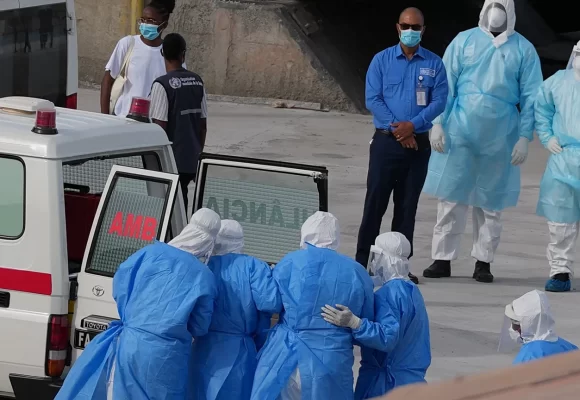
Ebola has killed more than 2,000 people in the Democratic Republic of Congo in under three months.
That makes this the fastest-growing outbreak the disease has ever produced.
The World Health Organization says containment efforts are losing ground in some of the hardest-hit provinces even as the death toll climbs.
This is now the second-largest Ebola epidemic on record, in a region already strained by conflict, displacement and years of disinvestment in public health.
Congolese health workers are carrying out the response, saying they have gone unpaid for months.
The global institutions built to support them remain underfunded, and, in Washington’s case, more focused on shielding its own citizens from the virus than reinforcing the fight against it at its source.
Congo’s Outbreak Is Now Outrunning Every Ebola Epidemic on Record
The Congolese Ministry of Health had confirmed 4,449 cases and 2,061 deaths across five provinces and 53 health zones as of Aug. 12, according to WHO.
The case fatality rate stands near 46 percent.
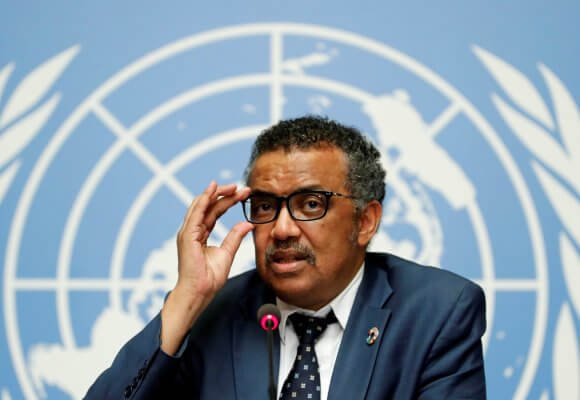
Director-General Dr. Tedros Adhanom Ghebreyesus told reporters Aug. 12 that the outbreak is moving faster than any previous one, on pace to eclipse the 2014 to 2016 West African epidemic that killed more than 11,000 people.
Ituri province accounts for roughly 90 percent of cases and 80 percent of deaths.
A troubling share of those deaths are occurring in communities rather than treatment units, among people never on a known contact list.
That suggests the response is not reaching people before the virus does.
A U.S. citizen who tested positive for Bundibugyo virus in July illustrates that gap from a different angle.
He was evacuated to Frankfurt rather than the American quarantine facility Washington built near Nanyuki, Kenya, which remains under Kenyan court suspension.
That has not stopped its use entirely.
Seven American aid workers evacuated from the DRC response were quarantined inside the facility in July, according to the U.S. State Department and Samaritan’s Purse, even as Kenya’s health minister publicly denied it was housing anyone.
Washington’s answer to an outbreak on African soil was to build an exit route for its own citizens rather than reinforce the response at its source.
That posture says as much about the crisis as any single case count.
Health Workers Say the Pay Problem Was Never Actually Fixed
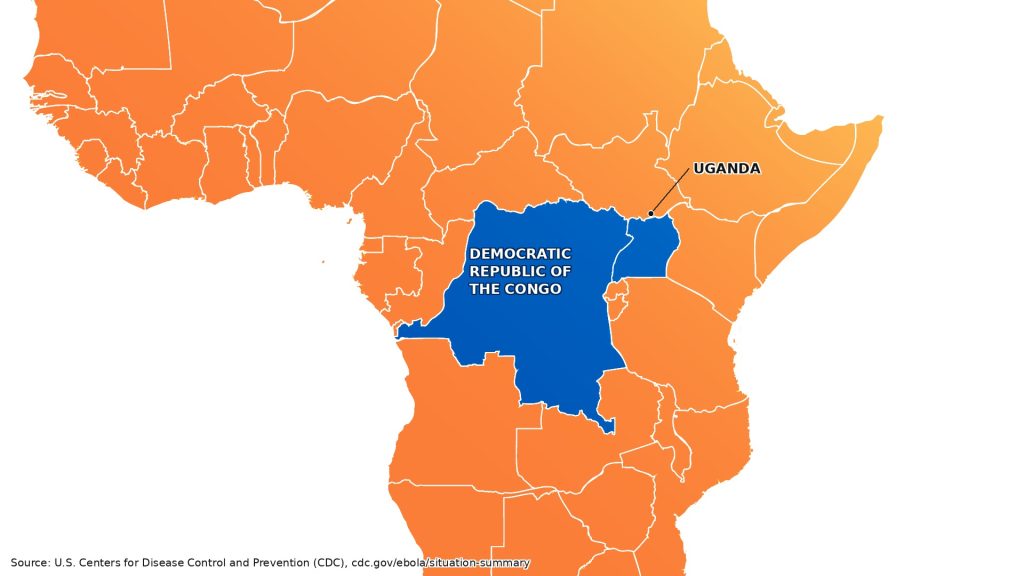
Health workers in Ituri have gone on strike repeatedly since mid-May over unpaid wages and bonuses.
The money in question is a government obligation.
Doctors Without Borders, which runs several treatment centers and pays its own field bonuses, has said explicitly that the protests concern unpaid Congolese government salaries, not its payments.
Those wages and risk allowances are supposed to come from Kinshasa, and workers say many have not been paid since the outbreak was declared.
In late July, Dr. Adelard Lufungula, operations manager for the government’s Ebola response, said the problem was “being resolved,” with workers shifting from cash to mobile money and the backlog expected to be cleared within days.
That statement was a pledge, not a resolution.
Workers who did receive money through early August often got partial payments, $380 instead of the promised $510 monthly salary in some cases.
On Aug. 14, the Ebola treatment center in Nizi shut for a day after staff struck over three months of unpaid arrears.
DRC Health Minister Roger Kamba acknowledged the government had mobilized $50 million for the response, with part of the remainder earmarked to “register and pay doctors and nurses involved in the response,” an admission the payroll problem remains unresolved rather than fixed.
Communications Minister Patrick Muyaya Katembwe attributed the delay separately to an administrative process of verifying which workers had actually been deployed, telling CNN, “Anyone officially listed will be paid.”
The delay fits a pattern older than this outbreak.
Congolese civil servants have long gone months without pay, a dysfunction researchers trace to a poorly functioning state remuneration system that pushes workers toward informal income and fuels corruption.
A community leader in Bunia told Mongabay the situation was not surprising given how routinely it happens to Congolese civil servants generally, though he called it outrageous for work this dangerous.
Some of the delay traces to conflict itself.
Officials have cited the closure of Bunia’s airport as a disruption to the flow of funds into the province, the same insecurity complicating lab testing and contact tracing described below.
Workers have also disputed how their pay is classified.
In a July letter, Ituri responders demanded their compensation be treated as tax-exempt hazard pay rather than taxable salary, a classification fight compounding the delay on top of the administrative one.
The clearest sign of how far the outrage has escalated is who they addressed it to.
Health workers sent a formal letter directly to President Félix Tshisekedi describing the pay crisis as an injustice that threatens the response itself.
As of the most recent reporting, he had not responded publicly, and the communications ministry had not responded to press inquiries about the letter either.
During the 2014 to 2016 West African outbreak, the World Bank financed hazard pay and death benefits directly for tens of thousands of health workers in Guinea, Liberia and Sierra Leone, and used the same mechanism again during the 2018-20 DRC outbreak.
No comparable dedicated, ring-fenced hazard-pay channel has been identified as active in this outbreak.
The World Bank has committed roughly $243 million toward DRC surveillance, lab capacity and health systems, and international partners have pledged $910 million more, but none of the public accounting of that money earmarks it specifically for worker pay.
The one documented exception is Africa CDC, which has provided the DRC roughly $2 million in its own funds, part of which an agency official said could be used to make delayed payments to health workers.
That is a fraction of what is owed, but it is the only funding source directly tied to payroll on the record.
No World Bank, African Development Bank or Africa CDC official appears to have been asked publicly why a 2014-16-style direct mechanism was not activated this time.
The DRC Ministry of Health itself has not issued a statement confirming the payroll backlog is cleared, leaving only the operational-level accounts from Lufungula, Muyaya and Kamba on the record.
Africa CDC Has Moved Independently of WHO
Africa CDC, under Director-General Dr. Jean Kaseya, declared its own Public Health Emergency of Continental Security on May 18, a distinct designation from WHO’s PHEIC, and committed $1 million from its own budget along with eight deployed specialists to Bunia within days.
Kaseya has since become one of the response’s sharpest public voices on funding gaps.
On June 25, he revised the continent’s funding estimate to $1.4 billion, three times an earlier figure, and said that of roughly $910 million pledged internationally, only 13 percent had reached the response.
“We have the science, we now need the funding to use it,” Kaseya said June 30, announcing a separate $18 million Africa CDC appeal specifically for therapeutic drug trials.
In early July, the agency also became the only institution to put money directly toward the payroll crisis, providing the DRC roughly $2 million partly usable for delayed worker payments.
M23 Territory Is Running Its Own Ebola Response, With Its Own Shortages
Parts of North and South Kivu remain under the control of the AFC/M23 rebel coalition.
Cooperation between rebel-held areas and Kinshasa on the Ebola response is largely confined to data sharing and laboratory testing, coordinated through surveillance mechanisms that aid agencies have maintained to keep reporting reliable, according to the United Nations’ interim humanitarian coordinator in Congo, Damien Mama.
A Reuters investigation based on response-team interviews and internal documents found real shortages under rebel administration, including protective equipment, infection-control kits, vehicles and fuel.
The Goma laboratory that processes Ebola samples for the region had only two extraction kits as of mid-June, limiting testing capacity.
The closure of Goma’s airport and shutdown of the banking system in rebel-held territory since the group’s 2025 takeover has complicated moving personnel, supplies and funds.
WHO reported separately in June that three DRC laboratories in Bukavu, Lwiro and Goma had run out of testing supplies and were awaiting reagent shipments, citing access challenges tied directly to insecurity and armed conflict in the hardest-hit provinces.
That corroborates the operational picture Reuters found independently.
WHO’s Boureima Hama Sambo separately said the Goma lab’s biobank remained secure and functioning normally despite the takeover, addressing biosafety concerns distinct from the capacity shortages.
Those are documented operational effects on containment, distinct from the conflict’s broader political dimensions.
Reuters reported separately that the rebel coalition turned to Rwanda, described as its main backer, which deployed six specialists in surveillance, lab work, logistics and burial to Goma.
That characterization traces to Reuters reporting rather than a UN Group of Experts finding specific to the Ebola response, and it concerns the conflict’s wider political and economic dimensions rather than the outbreak response itself.
Disinformation Is Compounding a History of Distrust
WHO officials and DRC Health Minister Roger Kamba have identified rumor and conspiracy narratives as an active obstacle to containment.
Some of the most persistent claims are that the outbreak was fabricated, either for Tshisekedi’s political benefit or to serve foreign mineral interests.
Researchers have traced those narratives partly to the December 2025 Washington Accords, the U.S.-brokered minerals-for-security deal between the DRC and Rwanda.
A 2019 Lancet survey of 961 adults in Beni and Butembo, conducted a month after the 2018 outbreak’s declaration, found that 31.9 percent trusted local authorities to represent their interests.
That figure fell further at higher levels of government: 15.1 percent trusted city authorities, and just 2.1 percent trusted national ones.
Trust in the Ebola response specifically was higher, at 40.5 percent for government and 61.5 percent for health professionals.
The same survey found 25.5 percent of respondents believed the outbreak was not real, and that low institutional trust was independently linked to lower vaccine uptake and reduced use of formal healthcare.
What Comes Next
WHO’s International Health Regulations Emergency Committee is scheduled to meet Aug. 18 to reassess the outbreak’s Public Health Emergency of International Concern status.
No outcome exists yet.
No vaccine or treatment has been approved for Bundibugyo virus disease.
In late May, WHO recommended against using the Ervebo vaccine, developed for a different Ebola species, for this outbreak, citing insufficient evidence of cross-protection, though later animal studies have kept that question open.
The WHO-sponsored PARTNERS trial, testing the antibody MBP134 and remdesivir, enrolled its 100th patient by Aug. 12, roughly 12 weeks after the outbreak was declared.
Oxford’s Pandemic Sciences Institute has described it as the fastest-ever randomized controlled Ebola treatment trial.
A parallel trial of the drug obeldesivir opened in mid-July for high-risk contacts.
WHO vaccines lead Dr. Vasee Moorthy said in early August that conclusive trial results were still likely months away.
U.S. aid to the DRC fell from roughly $1.2 billion in fiscal 2024 to $715 million in fiscal 2025 to just $67 million in the final quarter of the year, a drop of 70 to 80 percent.
The International Rescue Committee’s DRC country director, Heather Kerr, said the cuts forced the organization to scale back Ebola-related surveillance coverage in Ituri from five health zones to two, directly reducing early case detection in the outbreak’s epicenter.
The State Department has disputed any causal link, telling NPR it is “false to claim” the funding changes hurt the response.
No sourced reporting draws a direct line between the cuts and the Ituri payroll backlog specifically, which officials attribute instead to administrative verification problems and, separately, to Bunia airport’s closure disrupting the flow of funds into the province.
None of that changes what health workers in Ituri are being asked to do today.
They are containing the fastest-growing Ebola outbreak on record, in provinces where armed groups control access to some of the population, against a viral strain with no dedicated vaccine.
Many have gone months without the wages they were promised for doing it.



LEAVE A COMMENT
You must be logged in to post a comment.