

|
LISTEN TO THIS THE AFRICANA VOICE ARTICLE NOW
Getting your Trinity Audio player ready...
|
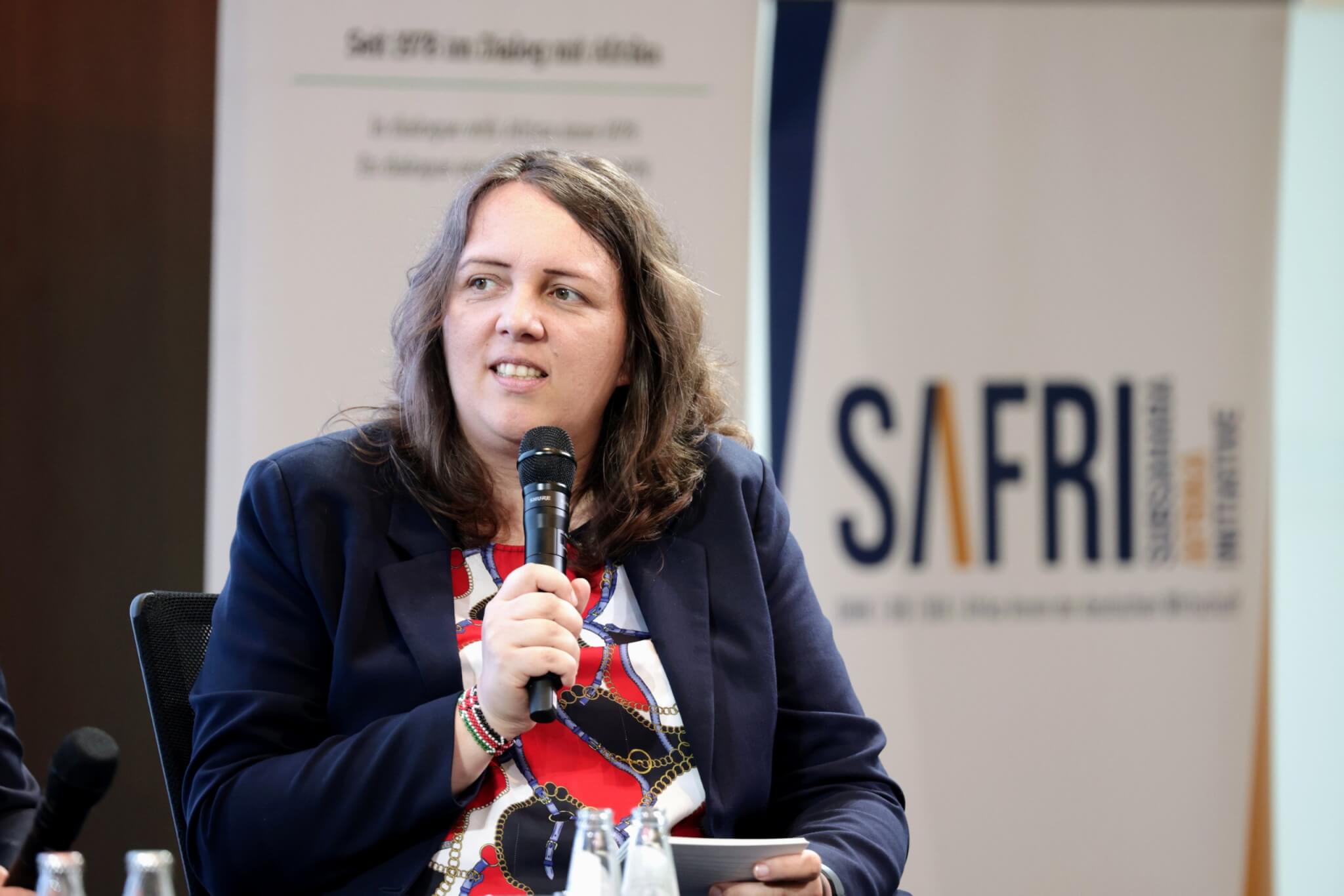
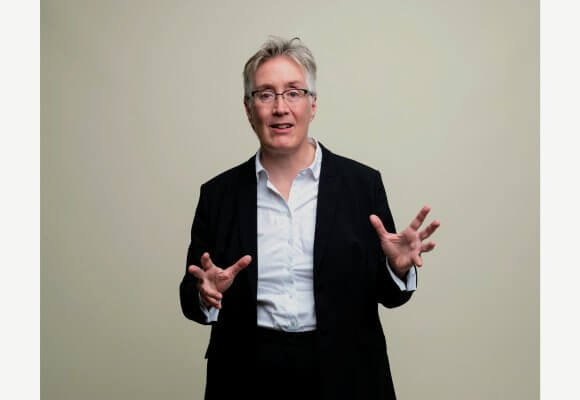
On a sweltering Berlin afternoon, inside a modest office about a 15-minute walk from the Reichstag, Sabine Odhiambo leans forward in her black recliner and sighs. “When I moved back from Kenya in 2017,” she says, “I left a country where you could apply online for your passport, your driver’s licence, basically everything. It’s 2025 in Germany, and that’s still not possible here.”
For the Secretary General of the Deutsche Afrika Stiftung (German Africa Foundation), such moments are somewhat disturbing. They are parables of perception, about how Africa is imagined in Germany and how just a few Germans realise about the continent’s advances. “Unfortunately,” she adds, “the image of Africa in Germany is still very distorted. It focuses on wars, poverty, terrorism… any catastrophe, really. What people don’t see is innovation, technological progress, solutions that in many cases are ahead of what we have here.”
Odhiambo has spent nearly a decade between Nairobi and Berlin, and has seen the realities in both worlds. In Kenya, she lived eight years, taught German at the Goethe-Institut, worked at the German embassy, and saw the rise of mobile money and digital governance as daily life. In Berlin, she now leads a foundation tasked with the delicate mission of recalibrating Germany’s Africa policy; and reshaping the stories Germans tell themselves about Africa.
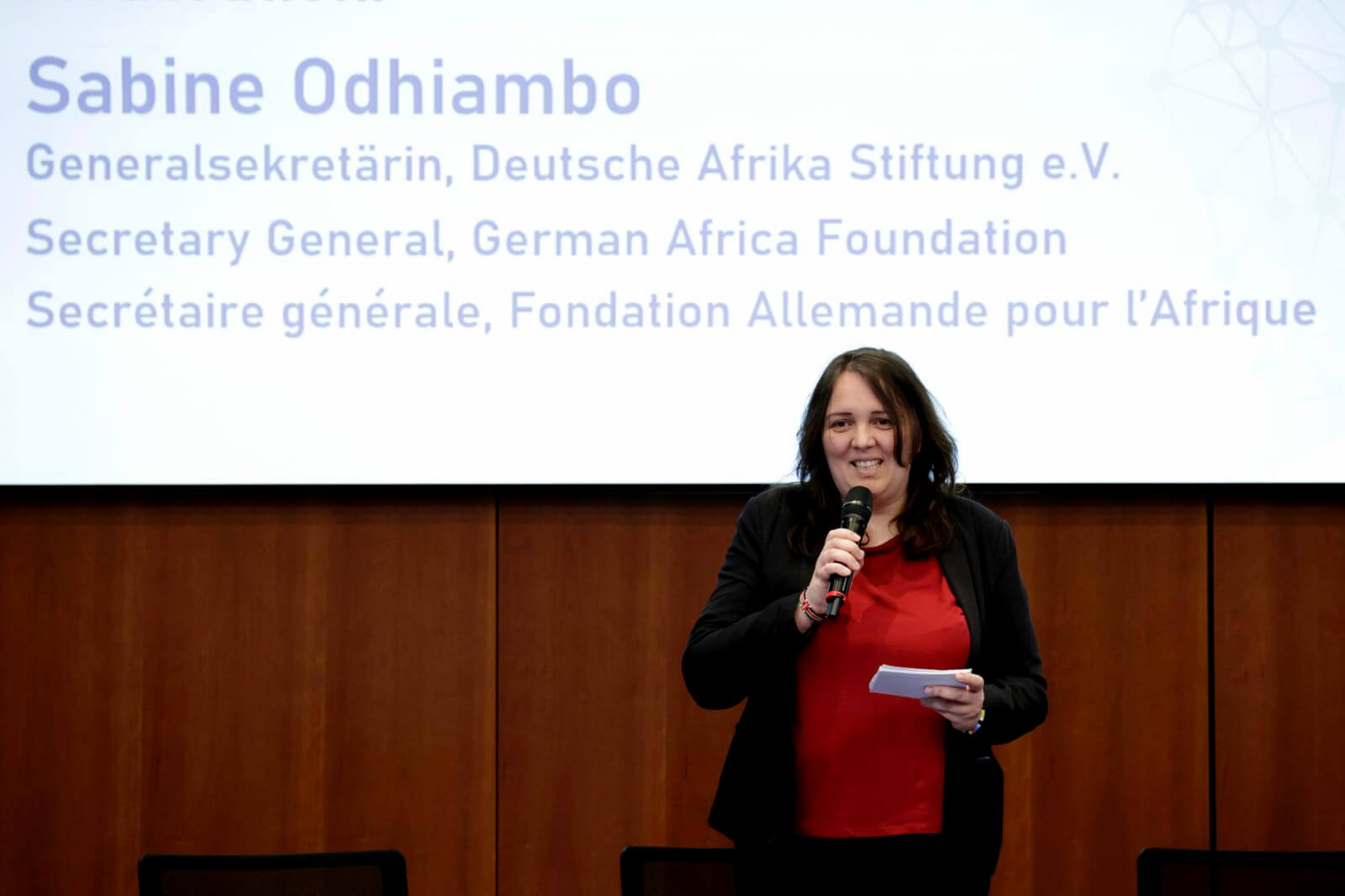
The Deutsche Afrika Stiftung is not a household name even in Germany. The Berlin-based foundation, which was founded in 1978, is institutionally funded by the German Foreign Office but operates with independence. Its dual mandate is ambitious. First, it is tasked with bringing Africa-related policy debates into the Bundestag so that German lawmakers can make informed decisions. Secondly, it is supposed to promote a “differentiated image of Africa” among the German public. This is, in Odhiambo’s words, “a daunting task,” one that requires far more than a small foundation can deliver alone.
Listen to the podcast episode based on this story here
Europe’s population is aging and the continent is running short of skilled workers. At the same time, China and Russia are expanding their reach in Africa while Germany’s far right stokes anti-migrant fears. In this climate, the question of whether Africa is seen as a partner or a problem is no longer academic.
A Battle Over Narratives
At the heart of DAS’s mission is a battle over images. “You can even see it in the schoolbooks,” Odhiambo says, recalling a discovery in her son’s geography class. The chapter was on family planning. The book depicted a smiling white girl from Poland, which essentially is a success story. On the opposite page was a black child, supposedly from Botswana, whose mother had died of AIDS, who dropped out of school, had seven children, and died young. “That is serious,” she says. “It reinforces very old stereotypes, and this is what German children read. It shapes their worldview at an early age.”
Such portrayals echo into adulthood, into politics, and into media. “When German newspapers report on a leader’s trip to Africa,” she adds, “the first sentence might be: ‘When he got out of the plane, there was dust in the air.’ You won’t see that written about visits to Asia or America. It’s always Africa.”
Larissa Pflüger, DAS’s Advisor for Communications and Scientific Advisor for Southern Africa, has seen the same patterns. “As long as people here have this very negative image about Africa,” she says, “they also associate it with the people. Migration debates then become about Africans coming here to take advantage of our system, instead of seeing them as highly skilled people adding value.”
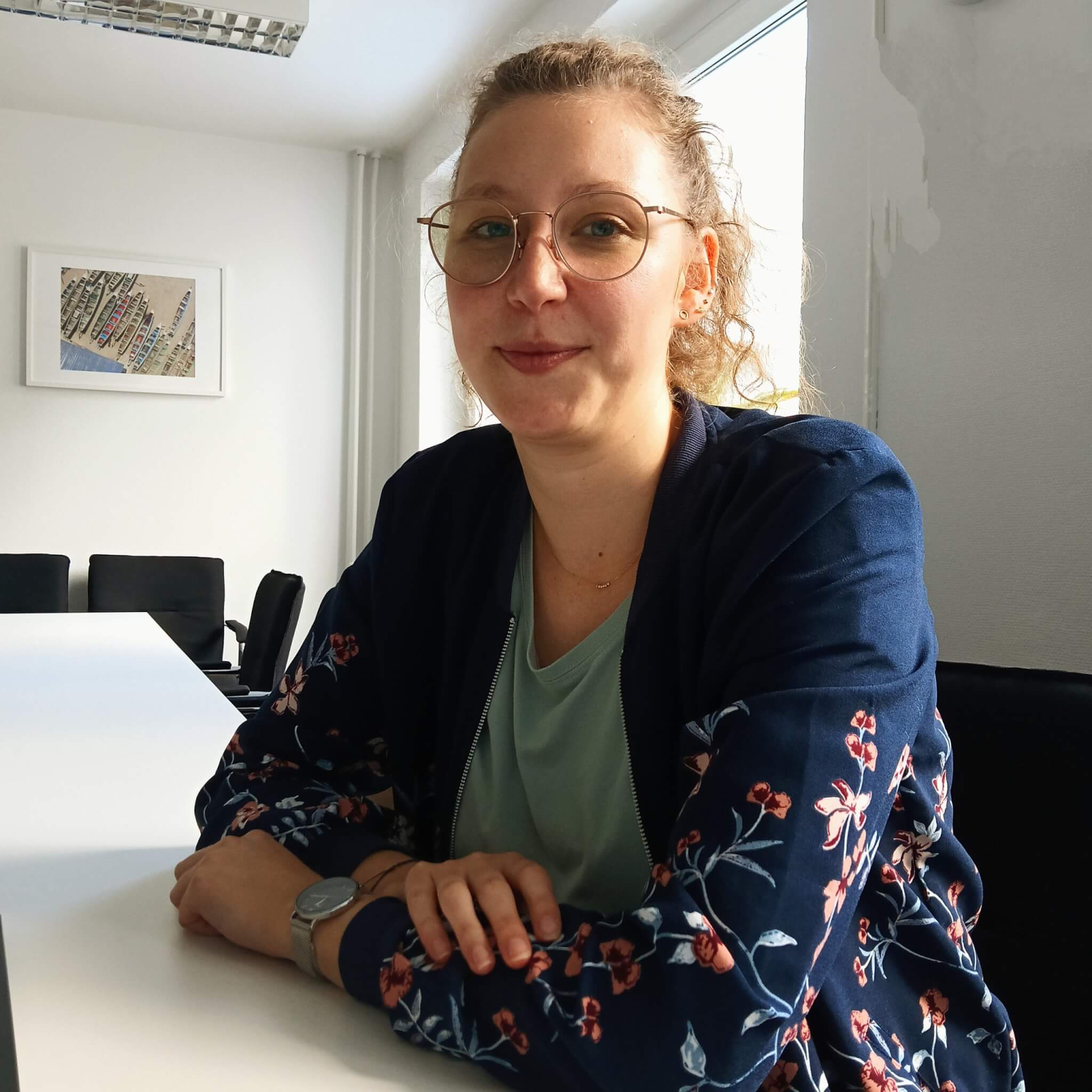
Pflüger, who has worked at the foundation for five years, argues that changing the narrative is not just about fairness, but also about survival. “Germany is getting older and older. Our population is shrinking. We need migrants, we need skilled labour to keep our whole system alive. But unless we change how the public sees Africa, unless we build a welcoming culture, people will choose to go somewhere else.”
The Visa Wall
Nowhere is the tension between rhetoric and reality more stark than in the visa office. Germany, like all Schengen states, maintains some of the strictest entry procedures in the world. Odhiambo calls it “one of my favourite criticisms.”
“The rejection rate for Africans applying for Schengen visas is 30 percent,” she says, her voice sharpening. “That’s every third applicant- businesspeople, artists, civil society leaders, political representatives, people invited for conferences. The global average rejection rate is 17 percent. For Africans, it’s double. You can talk of partnership all you want, but as long as visas are denied at that rate, there is no partnership.”
The absurdity, she notes, sometimes borders on the tragicomic. She recalls a particular instance when at a trade fair in Germany, four businesses from East Africa had been officially invited by the German Ministry of Economic Affairs. They paid €2,000 each for participation. But all four were denied visas. “That doesn’t make any sense,” she says. “And then you will hear our politicians worry about China’s influence in Africa. But guess what? China gives the visa.”
Odhiambo believes there are practical solutions- like longer visa durations, multiple entries, less bureaucratic suspicion. But the political climate complicates reforms. “Unfortunately, migration is an extremely emotional issue here. The far right is growing stronger. Policy makers know we need skilled labour, but the public debate is not welcoming. And without a welcoming culture, Germany will not be attractive.”
The African Diaspora Bridge
The labour question has become one of the defining arenas for DAS. In December 2024, Kenyan President William Ruto signed a partnership in Berlin aimed at sending skilled Kenyan workers to Germany. This was part of Germany’s plan to attract 400,000 skilled workers annually from abroad.
But agreements on paper are only the beginning. Odhiambo stresses the obstacles- language barriers, integration hurdles, housing discrimination, and public suspicion. “If skilled workers come here but feel unwelcome, if they can’t find a flat because they are foreigners, if they experience hostility in public transport, then they will choose to go elsewhere instead.”
For DAS, one way forward is harnessing the African diaspora already in Germany. Pflüger explains: “They know both markets, both cultures. They can bridge the gap between German companies that are hesitant and African opportunities that are real. They can de-risk investment because they understand the ground realities.”
To this end, DAS collaborates with diaspora-led organisations like the 360 Degree Alliance and with African embassies in Berlin. Together, they organise summits such as the African Ambassadors Labour Mobility Summit, bringing businesses, civil society, and policy makers into dialogue. “We don’t want Germany to dictate to African countries what they need,” Pflüger says. “We want Africans to say: this is our strategy, this is what we bring to the table. Then meet in the middle.”
Fears of Cuts in Germany’s Development Cooperation
The struggle over Africa’s image is also seen on the geopolitical front. As the U.S. and U.K. scale back aid, questions hover over Germany’s commitments. Odhiambo is candid. “People here are questioning ‘why are we spending money abroad?’ And I think there will be cuts to that ministry, I think that is for sure, and also there will be another cut the following year, I believe so too. But I mean in the end we still have the ministry and we still have a substantial amount of money and maybe it is time to see how this money can be used more effectively, because maybe it is now time to critically self-reflect.”
She bristles at the idea that aid is charity. “Development cooperation is not about being good. It’s in Germany’s interest. A stable, growing Africa means stability for us. Our well-being is connected. Instability there leads to illegal migration here. Prosperity there creates markets for our businesses. It is not about moral obligation alone, it’s common interest.”
Yet the public debate is lagging behind. Far-right populists thrive on caricatures of “foreigners taking jobs” and “wasted aid money.” Meanwhile, Germany risks losing ground to China, which has dramatically expanded scholarships for African students, even as Germany debates cutting its own. “If you want friends in the world, you need to invite your friends,” Odhiambo says. “We can’t afford to cut scholarships. It’s not strategic.”
Honouring Africa’s Achievements Yearly
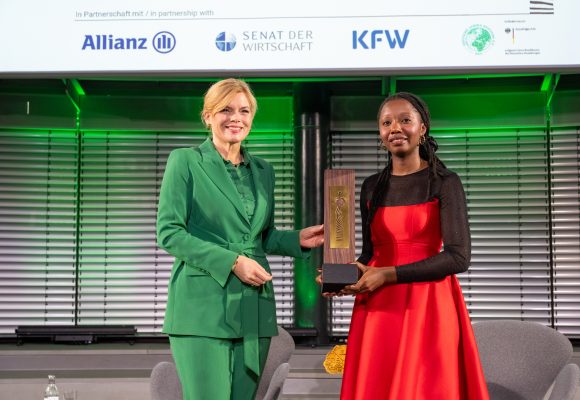
One of DAS’s quieter but more powerful instruments is recognition. Since 1993, the foundation has awarded the German Africa Award to outstanding personalities from the continent. Past winners include scientists, human rights activists, and entrepreneurs.
In 2022, the award went to South Africa’s Professor Tulio de Oliveira and Botswana’s Dr. Sikulile Moyo, the scientists who first discovered the Omicron variant of COVID-19. The irony was not lost- when Omicron was identified, Europe’s first reaction had been to shut its borders to southern Africa. “No one praised the scientists,” Odhiambo recalls. “The headlines said: ‘The virus from Africa is coming.’ Yet the virus was already here, undetected. It was African scientists who had the advanced tools to spot it.”
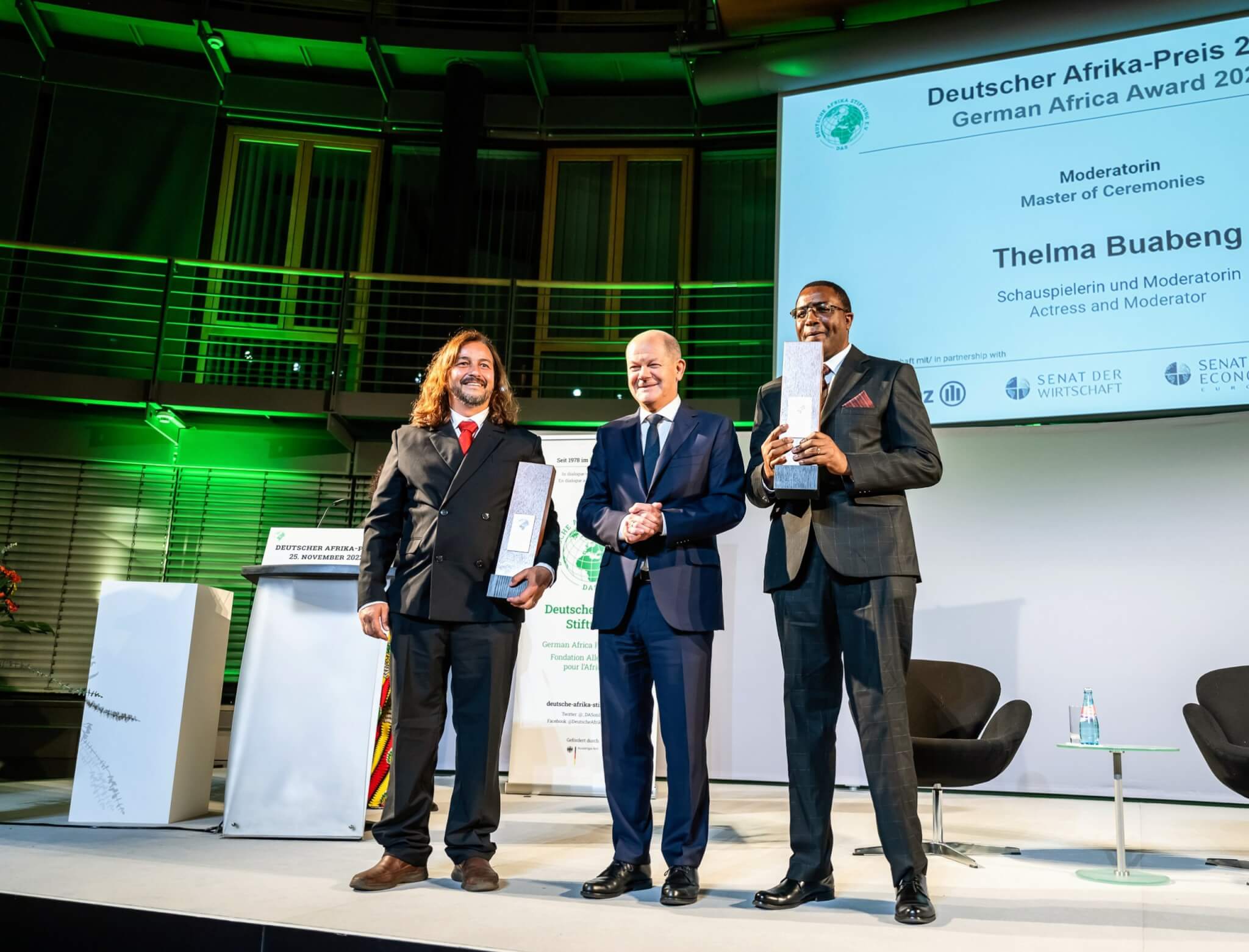
The award ceremony in Berlin, where Chancellor Olaf Scholz handed over the prize and apologised for Germany’s initial response, was a symbolic inversion, Africa as scientific leader, Europe as the learner. It was precisely the kind of narrative shift DAS strives to mainstream.
Between Berlin and Nairobi
Odhiambo’s own biography embodies the bridge she wants to build. She grew up in Germany but substantive years in Kenya. She saw the everyday normalcy of technologies like M-Pesa long before Germans marvelled at mobile banking. She saw e-government solutions in Nairobi that would take Germany years to match. And she saw how narratives lagged, how Germans were surprised at realities Africans took for granted.
“At the time, I didn’t even realise it, but I realised it when coming back because when coming back, everyone here was talking of M-Pesa as something so incredible and so new,” she says. “And I was like, wait, I’ve been using this in my daily life every time. It didn’t feel like such a big thing, but it is. Because here in Germany, we don’t have that. You don’t have mobile payment without the internet. So it’s more like a kind of everyday life things that you didn’t even notice when back in Kenya. But then when you come here and people are surprised about it and can’t believe it.”
Pflüger, too, speaks of the need for exchanges. “Journalists need to tell different stories. But they also need audiences willing to read them. That’s why exchange programmes, like the one you are attending, are so important. We need to learn from each other, to show nuance, to tell stories that are not just about crises but about choices, innovations, agency.”
Listen to the podcast episode based on this story here


LEAVE A COMMENT
You must be logged in to post a comment.