

|
LISTEN TO THIS THE AFRICANA VOICE ARTICLE NOW
Getting your Trinity Audio player ready...
|
This is not a forgotten war. It is a protected one.
When The Africana Voice reported on the fall of El Fasher in November 2025, we documented what the U.N. would later confirm in February 2026: the Rapid Support Forces committed genocide in that city, killing an estimated 6,000 people in 72 hours, burying and burning bodies as satellite cameras watched from above. The U.S. State Department had already made the same determination a month earlier, in January 2025, declaring the RSF guilty of genocide across Sudan. Genocide Watch placed the country at Stage 9, Extermination.
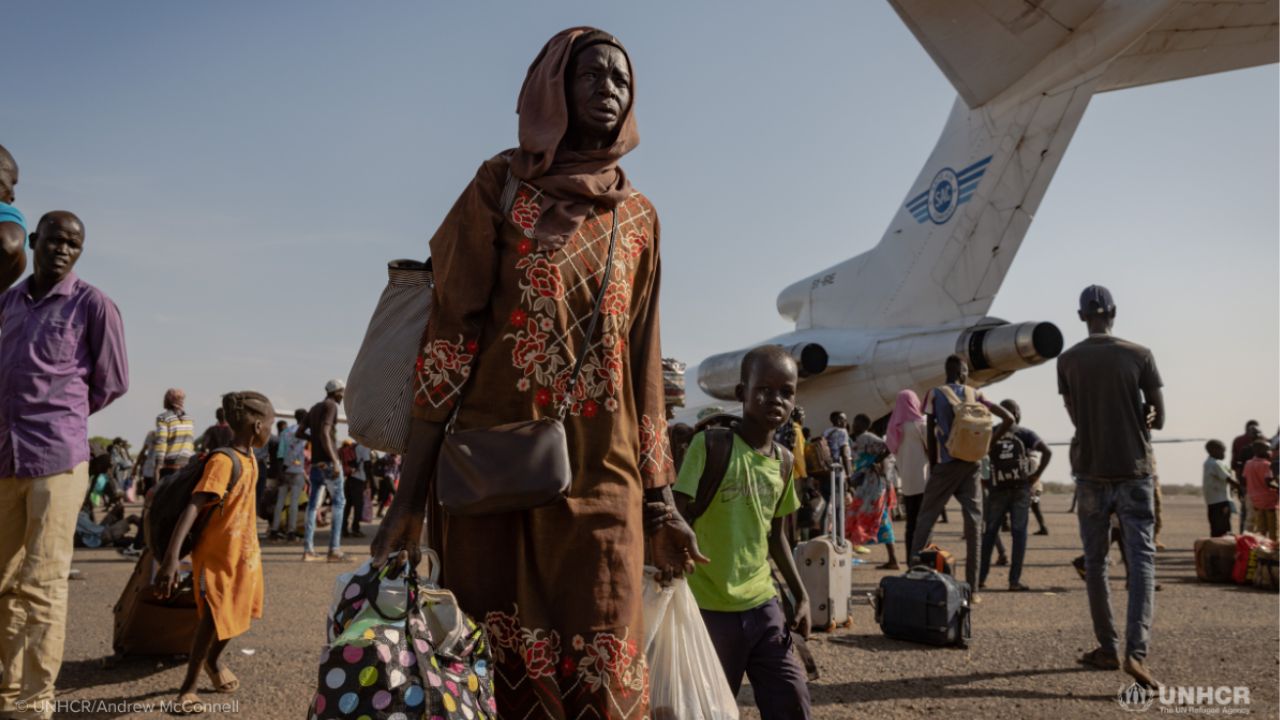
More than 150,000 people are dead, according to multiple monitoring organizations. More than 14.5 million have been driven from their homes, the largest displacement crisis on the planet, the International Organization for Migration reported. The IPC confirmed famine in multiple regions. Three in every five Sudanese need humanitarian assistance, according to the Development Action for Refugees and Empowerment.
The world knows. The world has the evidence. And with very few exceptions, the world has done nothing. The reason is not ignorance. It is money.
The Evidence Is Unambiguous
The formal genocide determinations, from the institutions with the authority and the evidence to make them, are on the record:
|
U.S. Secretary of State (Antony Blinken |
RSF and allied militias committed genocide |
Jan. 7, 2025: https://2021-2025.state.gov/genocide-determination-in-sudan-and-imposing-accountability-measures/ |
|
U.S. Ambassador to the U.N. (Thomas-Greenfield) |
RSF genocide; Hemedti personally sanctioned |
Jan. 7, 2025: https://usun.usmission.gov/statement-by-ambassador-linda-thomas-greenfield-on-the-determination-of-genocide-in-sudan/ |
|
U.N. Independent Fact-Finding Mission |
RSF held specific genocidal intent in El Fasher |
February 2026: https://ysph.yale.edu/news-article/un-concludes-rsf-conducted-genocide-in-el-fasher-yale-lab-provided-key-evidence/ |
|
Genocide Watch |
Sudan at Stage 9 (Extermination) |
January 2025: https://www.genocidewatch.com/single-post/sudan-genocide-emergency-january-2025 |
|
ICC Deputy Prosecutor |
Reasonable grounds for war crimes and crimes against humanity |
July-October 2025 |
|
U.S. Holocaust Memorial Museum |
Imminent risk of genocide in North Darfur |
May 2024: https://www.ushmm.org/genocide-prevention/blog/imminent-risk-of-genocide-in-north-darfur |
The RSF has dismissed the violence as a “tribal conflict”. That framing collapses under satellite imagery, forensic evidence, and survivor testimony gathered by at least four independent investigative bodies. “If you are black, you are finished,” one witness told The Guardian in January 2025, describing an RSF checkpoint in West Darfur. These are not isolated incidents. They are policy.
The Financiers of Genocide
The Rapid Support Forces, a paramilitary descended directly from the Janjaweed militia that carried out the first Darfur genocide between 2003 and 2008, are not fighting this war on ideology alone. They are fighting it on gold.
The RSF controls Sudan’s richest gold deposits at Jebel Amer in North Darfur, a mining complex Hemedti’s family has dominated since 2017, according to Chatham House. That gold does not stay in Sudan. The Swiss NGO Swissaid reported that the United Arab Emirates imported 29 tonnes of Sudanese gold in 2024, up from 17 tonnes the year before. An estimated 90% of Sudan’s gold exports flow to Dubai, whether directly or via Chad, Libya, and the Central African Republic. The U.S. State Department’s Conflict Observatory concluded “with near certainty” that the UAE also transferred weapons to the RSF through Chad throughout 2024. In January 2025, the U.S. Treasury sanctioned seven RSF-linked UAE companies for financing the war.
The UAE denied everything, but they kept buying the gold.
Egypt is arming the other side. Cairo has supplied the Sudanese Armed Forces with fighter jets, ammunition, and intelligence, as documented by the EU Agency for Asylum, and Egyptian President Abdel Fattah el-Sissi personally pledged “continued support” to SAF commander Gen. Abdel Fattah al-Burhan in November 2024.
Russia, through its Africa Corps network, has supplied weapons to the RSF via Libya and the Central African Republic, while separately trading arms to the SAF for gold in a sanctions-evasion arrangement, the Sudan Transparency and Policy Tracker found.
Two sides. Three foreign patrons. One genocide. And a global community of governments that has sanctioned a handful of shell companies while continuing to do business as usual with every state actor named above.
The Silence Is a Choice
Sudan has received a fraction of the media coverage of Ukraine or Gaza despite comparable or worse humanitarian statistics. That disparity is not accidental. The RSF’s principal backer, the UAE, is among the most commercially important partners of Western governments, an arms customer, a financial hub, and a diplomatic intermediary too valuable to publicly embarrass, Friends of Europe noted in a 2024 analysis.
A Reuters Institute study released in April 2026 found that “hierarchies of visibility in global and regional media ecosystems” systematically deprioritize African crises. Sudan’s own de facto government in Port Sudan has suspended international news outlets and barred journalists from Darfur, ensuring that the documentation of atrocities remains as thin as possible.
The African Union and IGAD have convened six major mediation sessions since July 2023. None produced a ceasefire. The Jeddah process, co-led by the United States and Saudi Arabia, has similarly stalled. Meanwhile, the Mo Ibrahim Foundation estimates Sudan loses approximately $3 billion annually in illegal gold revenues, nearly the equivalent of the entire U.N. humanitarian appeal for the country. The war is more profitable than peace for too many of the people sitting at the negotiating table.
What Needs to Happen
Mourning Sudan is not enough. The evidence points to specific actors, specific transactions, and specific policy failures that can be challenged. Here is where pressure must be applied:
Hold the UAE accountable. The January 2025 U.S. Treasury sanctions on seven RSF-linked UAE companies were a start. They must be expanded. Western governments that impose arms embargoes on conflict zones while allowing a Gulf partner to purchase conflict gold through Dubai’s trading houses are not enforcing their own stated values. The UAE’s gold imports from Sudan must be subject to the same scrutiny as conflict diamonds.
Demand an arms embargo with teeth. The U.N. Security Council has repeatedly failed to pass a binding arms embargo on Sudan, blocked in part by Russia and China. African governments, civil society organizations, and diaspora communities must collectively demand that their representatives at the U.N. push for enforcement rather than more statements.
Fund the humanitarian response. The U.N.’s humanitarian appeal for Sudan has been severely underfunded throughout this crisis. Governments that express concern about Sudan in press releases must back those statements with money. Organizations operating on the ground, including the WFP, UNICEF, and MSF, are operating at a fraction of their required capacity.
Name the gold buyers. Investigative journalists, trade monitoring organizations, and advocacy groups must continue to trace Sudan’s conflict gold from the mine to the market. Every Dubai refinery, every European bank, and every commodity trader that handles RSF gold is a link in the supply chain that can be broken.
Support Sudanese journalists and civil society. The Sudanese Journalists Syndicate estimates 90% of the country’s media infrastructure has been destroyed. Funding, platforms, and protection for Sudanese reporters, both inside the country and in exile, is not charity. It is the only way the evidence needed for future accountability will be gathered.
The genocide in Darfur has a name. It has perpetrators with known addresses, financiers with auditable bank accounts, and foreign governments with embassies in your capital city. The Africana Voice will continue to report on all of them.
This is the first installment of “The Forgotten Genocide,” an ongoing investigative series on the conflict in Sudan. Follow The Africana Voice for continued coverage.
Sources include the U.N. Independent Fact-Finding Mission for Sudan, the U.S. State Department, Genocide Watch, Chatham House, Swissaid, the Sudan Transparency and Policy Tracker, the EU Agency for Asylum, the Mo Ibrahim Foundation, Yale University’s Humanitarian Research Lab, the Reuters Institute, and reporting from Al Jazeera, BBC, The Guardian, CNN, The New Humanitarian, and The Africana Voice.
Research powered by Perplexity.

LEAVE A COMMENT
You must be logged in to post a comment.