

|
LISTEN TO THIS THE AFRICANA VOICE ARTICLE NOW
Getting your Trinity Audio player ready...
|
The silence in El Fasher is deceptive. It is not the quiet of peace, but the grim hush that follows a massacre. Cut off from the world by a telecommunications blackout, the true horror of the Sudanese city’s capture by the paramilitary Rapid Support Forces (RSF) on October 26 is only now emerging, piece by traumatic piece, from those who managed to escape.
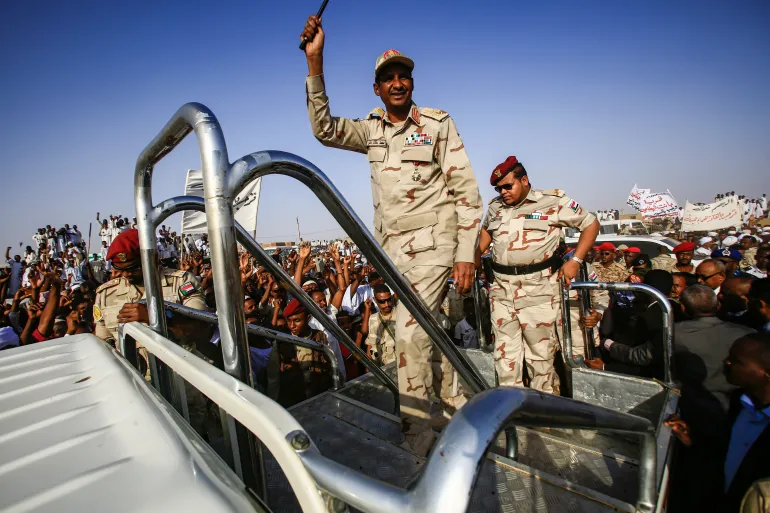
Their testimonies paint a picture of a city descending into hell: civilians shot in the streets, hunted by drones, and crushed under the wheels of military trucks. The fall of El Fasher, the last army stronghold in Darfur, is a devastating milestone in a two-and-a-half-year war that has created the world’s largest displacement crisis and pushed millions to the brink of famine.
In the nearby town of Tawila, one witness, too fearful to give his name, recounted to Reuters the moment his world collapsed. As his group tried to flee intense shelling, RSF trucks surrounded them. “They sprayed civilians with machine-gun fire and crushed them with their vehicles,” he said by phone. “Young people, elderly, children, they ran them over.”
Another survivor, Mubarak, who spoke to Reuters from the northern city of al-Dabba, described a systematic clearing of the city. “Fifty or sixty people in a single street… they kill them bang, bang, bang. Then they would go to the next street, and again bang, bang, bang. That’s the massacre I saw in front of me,” he said.
The violence was not random. Multiple reports indicate it was sharply ethnic in nature. Survivors told Al Jazeera that the RSF, which traces its origins to the Arab “Janjaweed” militias accused of genocide two decades ago, targeted people based on their ethnicity and skin colour. The Zaghawa, the dominant ethnic group in El Fasher, were particularly singled out.
“If your skin is light, they might let you go,” university student Hassan Osman told Al Jazeera. “It’s purely ethnic.” Sylvain Penicaud of Doctors Without Borders (MSF), who spoke to civilians who fled to Tawila, confirmed this, stating many said they were “targeted because of the colour of their skin” and were “hunted down while they were running for their lives.”
Erasing the Evidence
As the international community expressed alarm, a new, gruesome phase began. The Sudan Doctors Network accused the RSF on November 9 of a “desperate attempt” to conceal evidence of mass killings by burning bodies or burying them in mass graves.
“What happened in el-Fasher is not an isolated incident but rather another chapter in a full-fledged genocide carried out by the RSF,” the medical organization said in a statement, adding that the group’s crimes could not be “erased through concealment or burning.”
This grim accusation finds support in forensic analysis from afar. Satellite imagery reported by Yale’s Humanitarian Research Lab showed objects consistent with dead bodies in several parts of al-Fashir last week. Subsequent images, according to the lab, showed earth disturbances suggesting mass graves and the disappearance of bodies, indicating a possible clean-up operation.
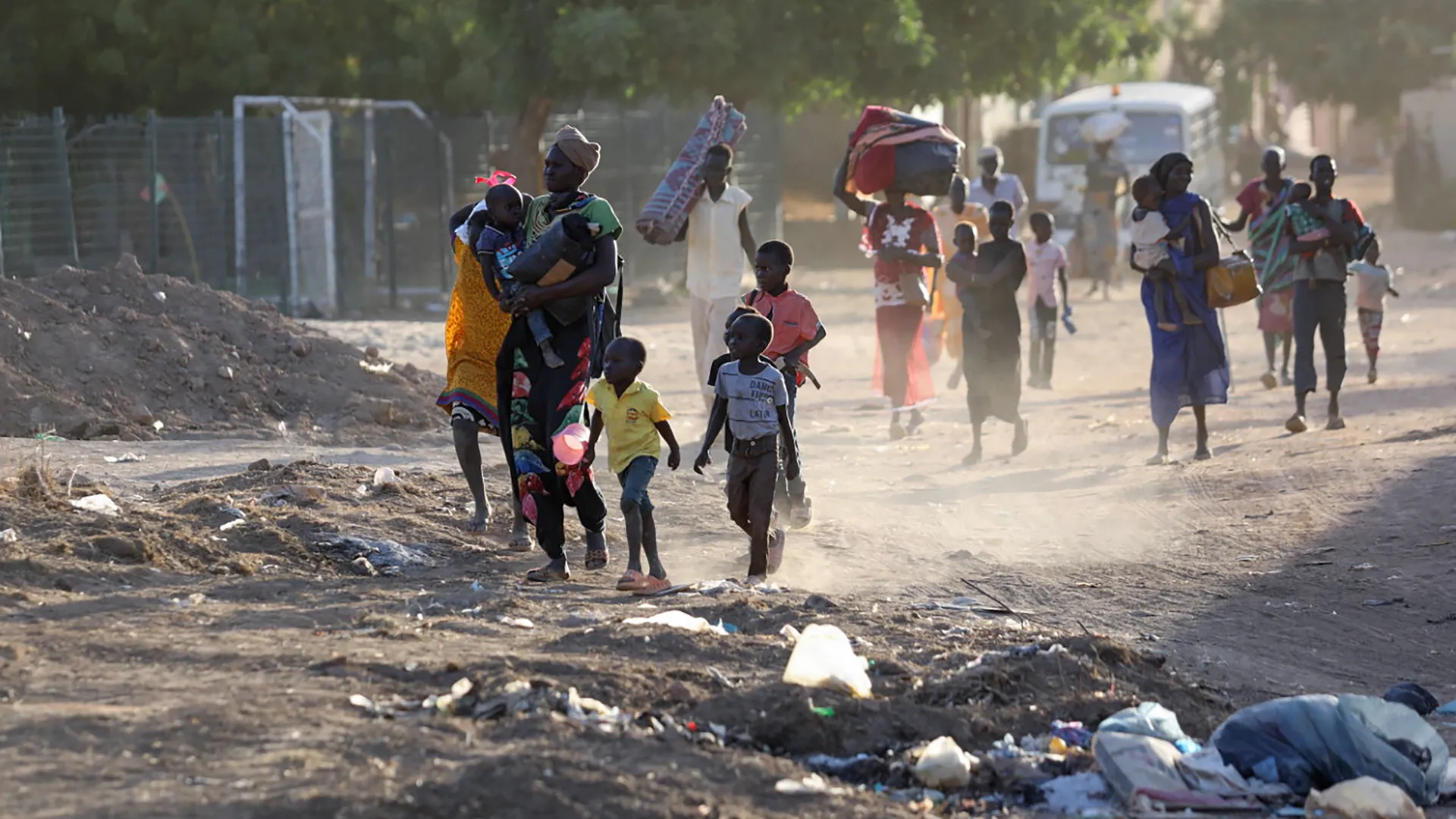
The humanitarian toll is catastrophic. The International Organization for Migration (IOM) estimates that 82,000 of El Fasher’s 260,000 residents fled after the RSF seized the city. Al Jazeera’s Hiba Morgan, reporting from Khartoum, said many who escaped for Al Dabbah died on the road, “because they had no food or water, or because they sustained injuries as a result of gunfire.”
A Hollow Truce and a Deepening Crisis
The RSF’s military success in Darfur was swiftly followed by a public relations move. On October 30, the group announced it had agreed to a humanitarian ceasefire proposal from the United States, Egypt, the UAE, and Saudi Arabia, as reported by DW.
Yet, the promise of peace proved fleeting. Just days later, on the morning of November 6, residents in the army-controlled capital of Khartoum and the city of Atbara were woken by the sound of drones and explosions, according to eyewitness accounts gathered by the BBC and Reuters. An RSF leader, when previously asked by Reuters for comment on alleged abuses in El Fasher, said investigations were underway and anyone proven to have committed abuses would be held accountable, but claimed reports had been “exaggerated by the army and its allies.”
This pattern of agreeing to ceasefires while continuing hostilities has been a constant throughout the war. Sudan’s ambassador to South Africa, Osman Abufatima Adam Mohammed, expressed deep skepticism to the BBC, stating, “From our experience, we had many truces at the beginning of the war but every time there was no respect from [the RSF]. They use these truces to move to new areas and make moves against the government.”
The consequences of this relentless conflict are now irreversible for many. A UN-backed global hunger monitor has confirmed that famine conditions are spreading in Sudan’s conflict zones. The non-profit Islamic Relief has warned that community kitchens in Darfur, on which countless families depend, are at risk of collapse.
Facing this staggering scale of suffering, UN Secretary-General António Guterres made an impassioned plea on November 4. “I call for an immediate cessation of hostilities in Sudan,” he stated. “I call for the safe, rapid and unimpeded delivery of humanitarian aid to all civilians in need and an end to the flow of weapons and fighters into the country. I call on the Sudanese Armed Forces & the Rapid Support Forces to come to the negotiating table to bring an end to this nightmare of violence — now.”
But for the traumatized civilians still trapped inside El Fasher, as UN human rights chief Volker Turk noted on November 6, the nightmare continues. “I fear that the abominable atrocities such as summary executions, rape and ethnically motivated violence are continuing,” he said.








LEAVE A COMMENT
You must be logged in to post a comment.