

|
LISTEN TO THIS THE AFRICANA VOICE ARTICLE NOW
Getting your Trinity Audio player ready...
|
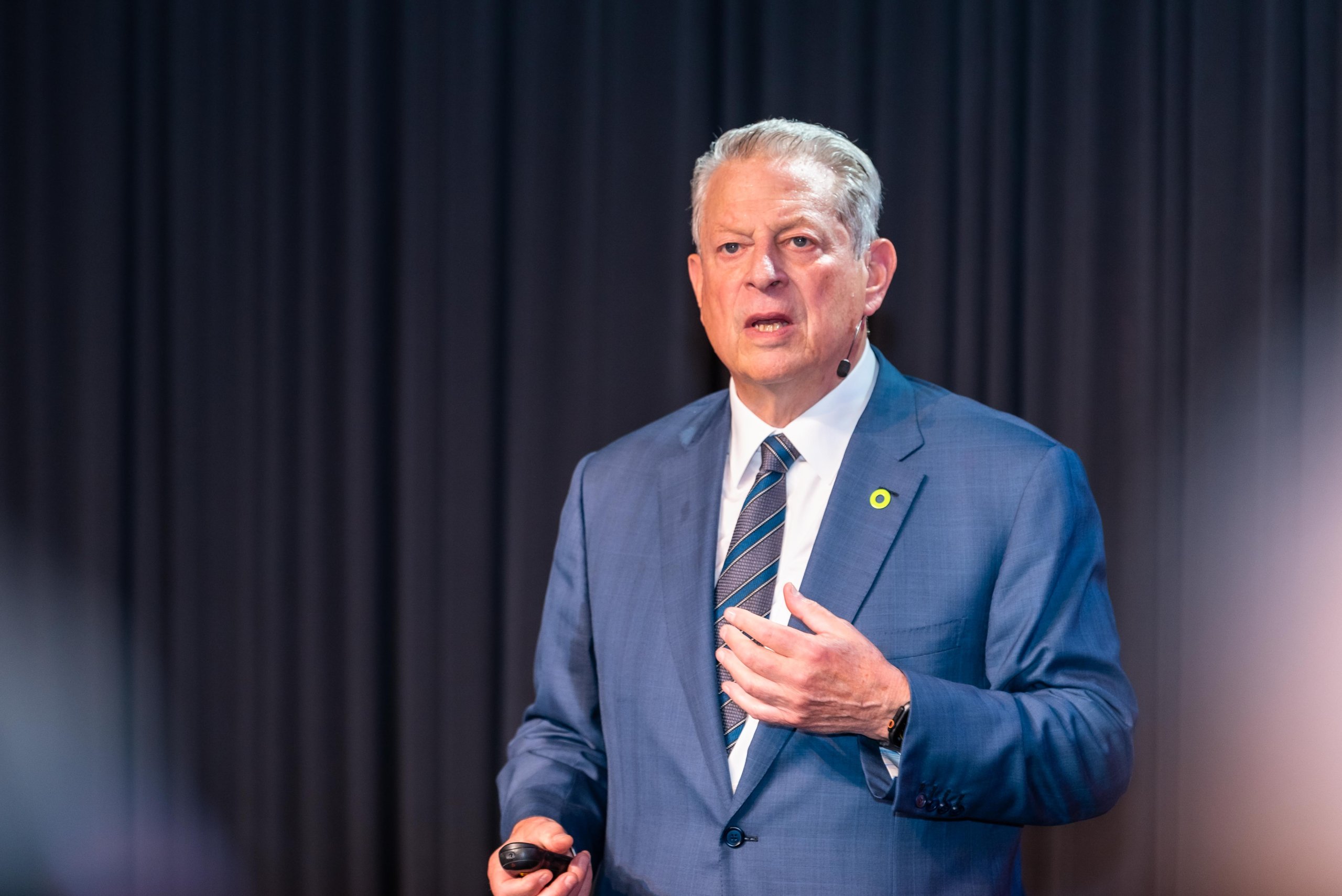
On a warm June afternoon in Nairobi, the city’s skies had that clean, deceptive stillness that often precedes a storm. Inside a quiet room, on Mkungu Close, just off the edge of Parklands Road in the Westlands district, the atmosphere was heavy with anticipation. There, seated at a modest roundtable, Al Gore, former Vice President of the United States, Nobel Peace Prize laureate, and one of the most persistent voices in global climate discourse,was listening, intently.
Gore, now in his late seventies, still speaks with the fervor of a man carrying unfinished business. His hair may have turned silver, but his sentences still burn with urgency. He had come to Kenya for the latest regional training under the Climate Reality Project, the nonprofit he founded in 2006 to galvanize citizen leadership on climate change across the globe. This leg of the initiative focused on East Africa, a region already living through the ecological consequences of a crisis it did not create.
It was in that context, that I sat across from Gore for a one-on-one interview. He was focused, unguarded, and unsparing in his words.
A Fractured America, a Withdrawing Giant
I began with what was, for many Africans, the most urgent question. What happens when the United States, historically the largest emitter and a major donor to climate efforts, pulls back? Since President Donald Trump’s return to office in January 2025, the U.S. government has scrapped or slashed multiple international climate aid programs, particularly the USAID, many of them previously active in African countries.
Gore’s response was immediate and personal. “I’m sorry. As an American, I certainly did not vote for Donald Trump,” he said. “I wish he had not been elected.” His words were slow, deliberate. “To do it suddenly is cruel,” he added, referring to the abrupt cancellation of the funding.
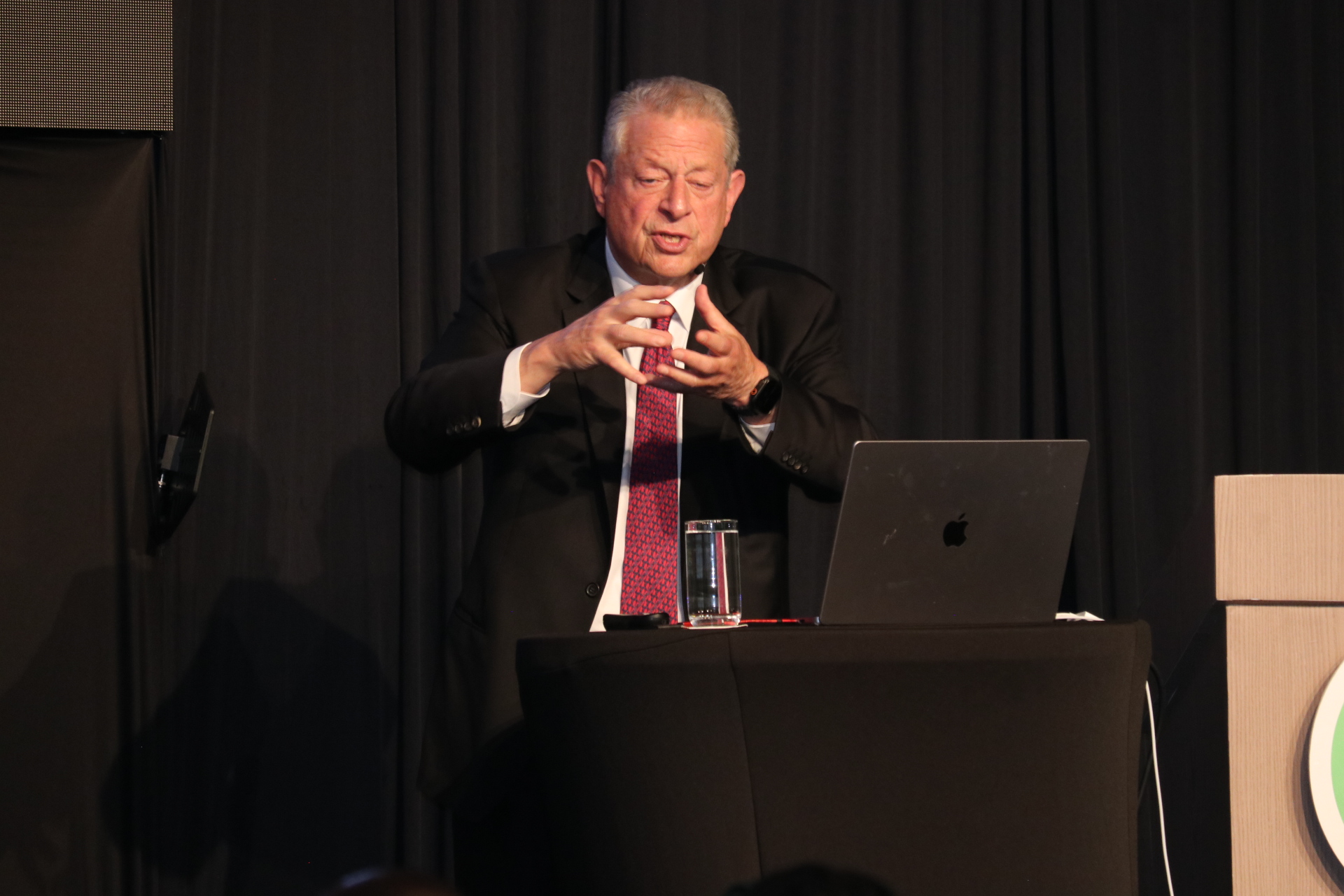
It was clear Gore saw this as a policy mistake, and, to him, a moral failure of the US. The United States, he offered, has for decades enjoyed economic dominance and geopolitical influence. “To whom much is given, much is required,” he said. “I think that embodies a principle of justice that the U.S. should continue to respect.”
Yet even as he expressed sorrow over America’s current posture, Gore placed cautious hope in what he called “subnational leaders”, the governors, mayors, and corporations acting independently to curb emissions and support green initiatives. “There’s a real chance that we’ll see significant improvements in U.S. policy after the midterm elections,” he said, referencing the vote scheduled for November 2026.
Gore vs. the COP Process
For nearly three decades, Gore has been part of the global climate negotiation ecosystem, from Kyoto to Paris to the latest COP summits. However, his faith in the UN Framework Convention on Climate Change is now shaky.
“I have quite loudly advocated for serious reforms in the COP process,” he told me. The problem, he explained, is not just bureaucratic inertia, it’s the brazen takeover of the process by fossil fuel lobbyists and petrostates. “The very fact that the CEO of one of the biggest and dirtiest oil companies on the planet was installed as the head of COP28 is ridiculous and absurd.”
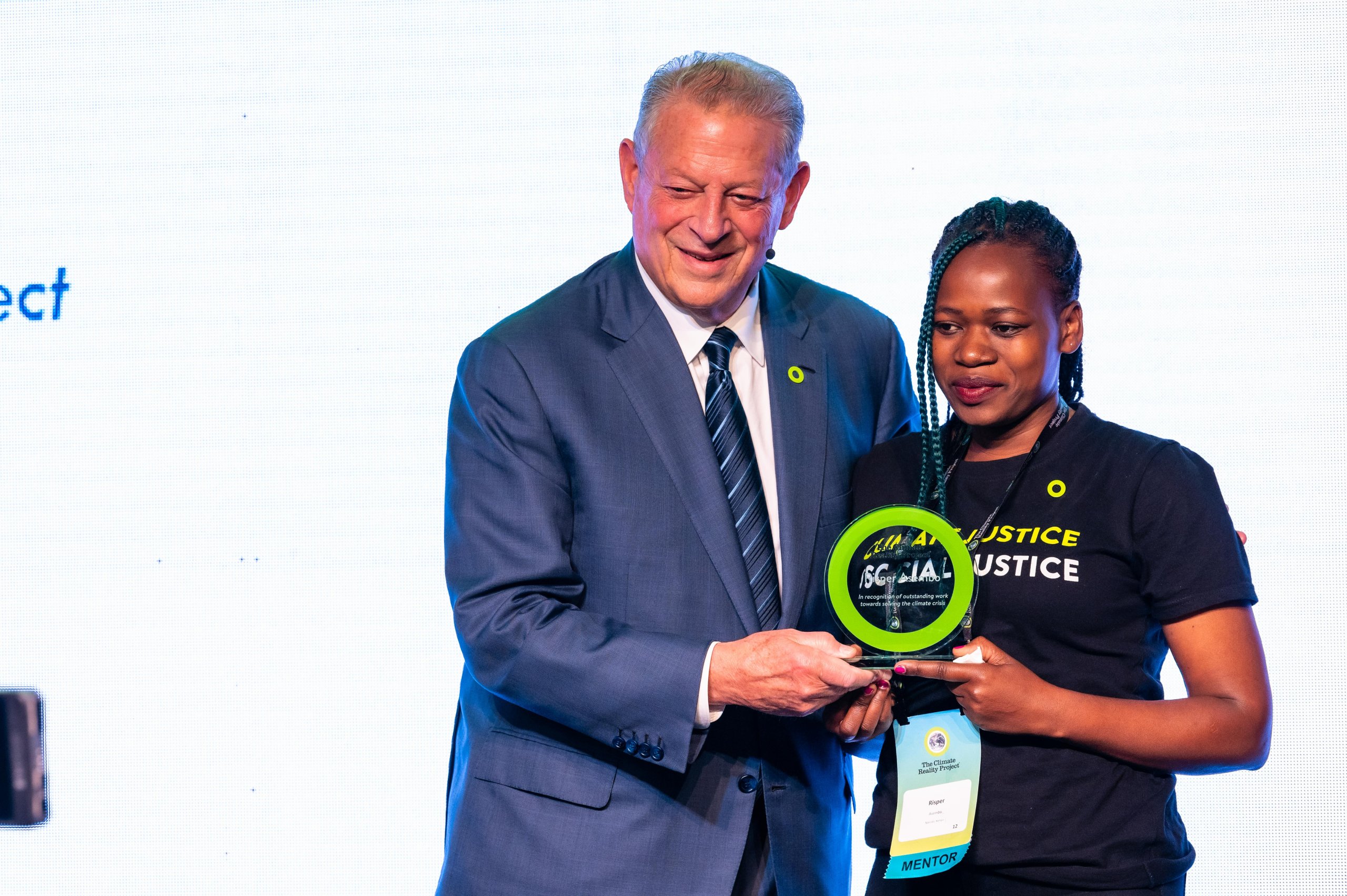
To Gore, the COP conferences have become a paradox: gatherings meant to fight climate change are now hosting those most responsible for accelerating it. “The number of fossil fuel company delegates outnumber the combined delegations of the ten nations most harmed by the climate crisis,” he said, visibly irritated. “That’s unjust.”
He wants structural changes, starting with eliminating the requirement for unanimous consensus, which he argues has paralyzed the ability of nations to take bold steps. “It took 28 COPs before they could even mention fossil fuels,” he said. “And then in COP29, they got rid of it again.”
The Carbon Credit Controversy
The conversation turned to carbon markets, one of the most controversial tools in the global climate response. In theory, these markets allow corporations to offset their emissions by funding projects like reforestation or renewable energy in poorer countries. In practice, many such schemes in Africa have been accused of exploitation and displacement.
In Kenya lately, there has been a talk of how carbon offset schemes had allowed Western corporations to appropriate land under the guise of climate action. Gore nodded, like someone who has been following the trend.
“There has been a history of abuses where carbon credits are concerned,” he said. “If local communities are not consulted or involved, that’s unjust. And climate justice is justice.”
He acknowledged that the imbalance between wealthy polluters and vulnerable communities had led to what some have called “green colonialism.” Carbon credits, he said, must not be a license for rich countries to pollute at will. “Some of them are just excuses to continue polluting. That’s terrible. It ought to be outlawed.”
Still, he stopped short of calling for the entire system to be scrapped. He has seen a few carbon market models, he said, that were community-led, high-integrity, and beneficial. “But they are few, I must say,” he said.
On Africa’s Right to Develop
Africa’s development dilemma, how to grow economically without deepening climate vulnerability, is one Gore understands well. For example, when asked about the backlash Uganda faced for trying to exploit new oil reserves, he didn’t dismiss the country’s ambitions.
“Of course African nations have a right to develop as they choose,” he said. But he urged them to learn from history. “Look at Nigeria. The history of the environment being left poisoned and destroyed, people harmed, their health ruined, driven into poverty.”
What makes it worse, he said, is that the wealth from such fossil fuel extraction rarely benefits the people. “It mostly goes to a very small number of wealthy elites, and to those extracting the fossil fuels from Africa and selling it to Europe and Asia.” He called it “fossil fuel colonialism”.
His advice to African governments empathetic: “Listen to the young people. They know what’s at stake. They’ve done the research. They are pointing to a better way forward.”
The climate emergency, Gore believes, is inseparable from the erosion of democracy. He spoke candidly about how special interests have “captured the minds and hearts of the politicians and the policymakers.”
“Some of them are completely under the thumb of the big polluters,” he said. “It’s disgusting. And it needs to change.”
He’s now channeling much of his energy toward reforming democratic processes, restoring integrity to elections, fighting misinformation, and protecting civic space. Because without functioning democracies, he said, ambitious climate policy is a fantasy.
The Missing Half: Women in the Climate Fight
One part of the climate conversation Gore has become increasingly vocal about is gender. The climate crisis, he said, does not affect everyone equally, and women, especially in the Global South, carry an outsized burden.
“Women are, on average, more affected by the climate crisis than men,” he said. Part of it, he noted, lies in social roles: women are more likely to be caregivers, food producers, water fetchers, all functions directly impacted by droughts, floods, and failed harvests. But part of it is structural: a world still wired to sideline women from decision-making tables.
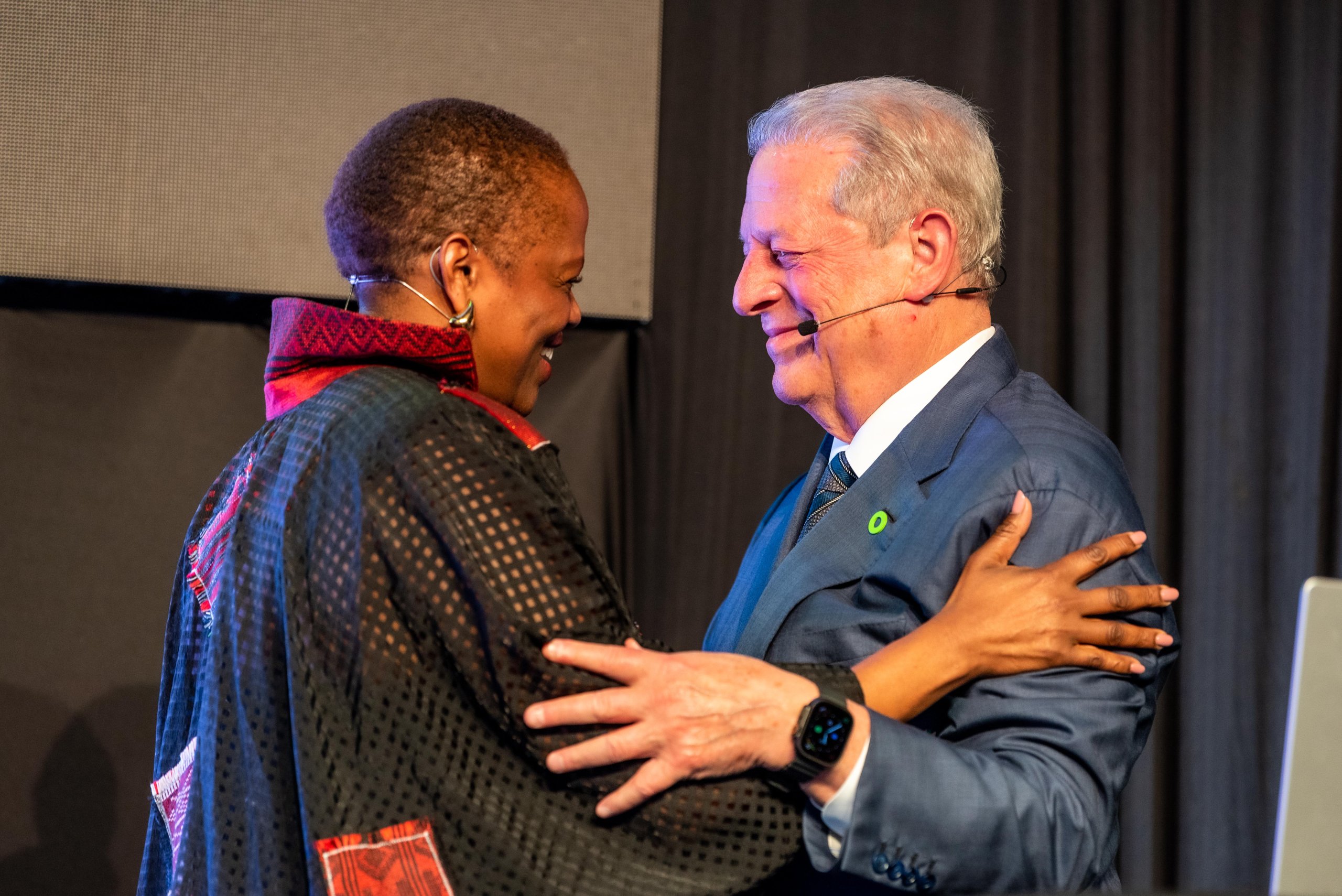
He was quick to add that exclusion is not universal. “One of the most inspiring and effective leaders I have ever met on climate in my life was the late Wangari Maathai from Kenya,” he said. “She inspired me.”
He recalled how Maathai once visited his home in Tennessee, and how her daughter, Wanjira, now a formidable climate voice herself, continues her legacy. “It depends on the individual women and the communities involved,” Gore said. “But yes, we still have work to do.”
But There Is Hope
After everything, the failed summits, the rising emissions, the broken promises, I asked if he was still hopeful.
He paused. Then he told me about a saying from economist Rudy Dornbusch: “Things take longer to happen than you think they will, but then they happen faster than you thought they could.”
That, he believes, is where the climate movement is today, on the edge of irreversible harm, but also possibly on the cusp of a rapid transformation. He pointed to the fact that 93 percent of all new electricity generation added globally last year was solar or wind. “That’s amazing,” he said. “It’s happening.”
But more than any data point, Gore said, it’s people,especially young African climate activists, who give him hope. “They’re so energetic. They’ve taken the time to educate themselves, to communicate and advocate skillfully.”



LEAVE A COMMENT
You must be logged in to post a comment.