

|
LISTEN TO THIS THE AFRICANA VOICE ARTICLE NOW
Getting your Trinity Audio player ready...
|
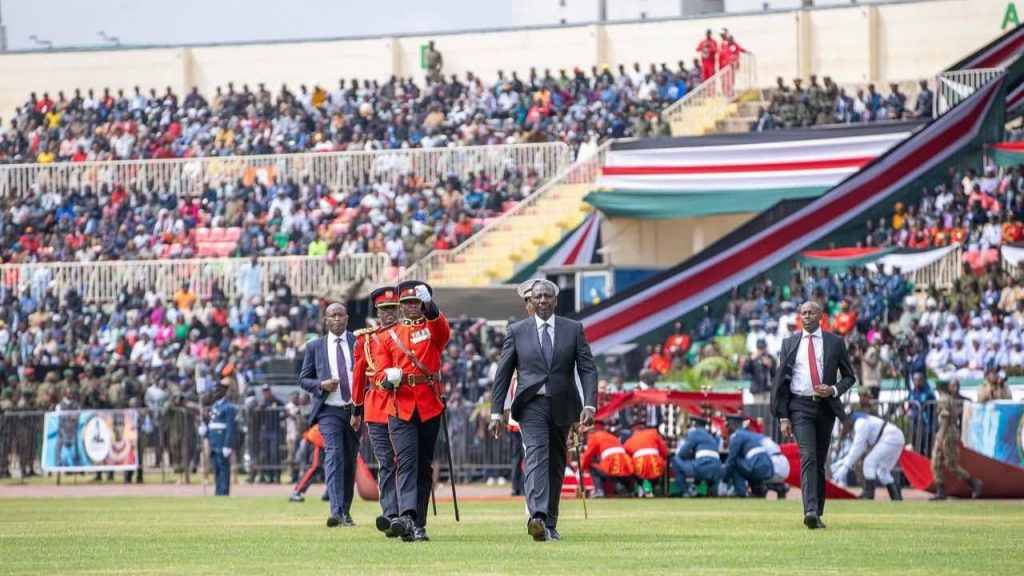
Jamhuri Day, observed on December 12, is perhaps Kenya’s most important national holiday, marking the country’s transition from colonial rule to full republican self-government. The date fuses two milestones into a single national reckoning. Kenya gained independence on Dec. 12, 1963. One year later, it became a republic, severing its remaining constitutional ties to the British crown.
More than a historical marker, Jamhuri Day signifies the assumption of power and responsibility. It recalls the moment Kenyans took control of their laws, institutions, and national direction, while serving as an annual measure of how that authority has been exercised.
The founding fathers imagined more than the end of colonial rule. They spoke of peace, unity, and prosperity, ideals woven into the Kenyan National Anthem. From its opening line, the anthem is framed as a prayer rather than a victory song.
“O God of all creation,
Bless this our land and nation,
Justice be our shield and defender.”
Sixty-two years later, that prayer still shapes how Kenyans judge their republic.
Founding leadership and early nation-building
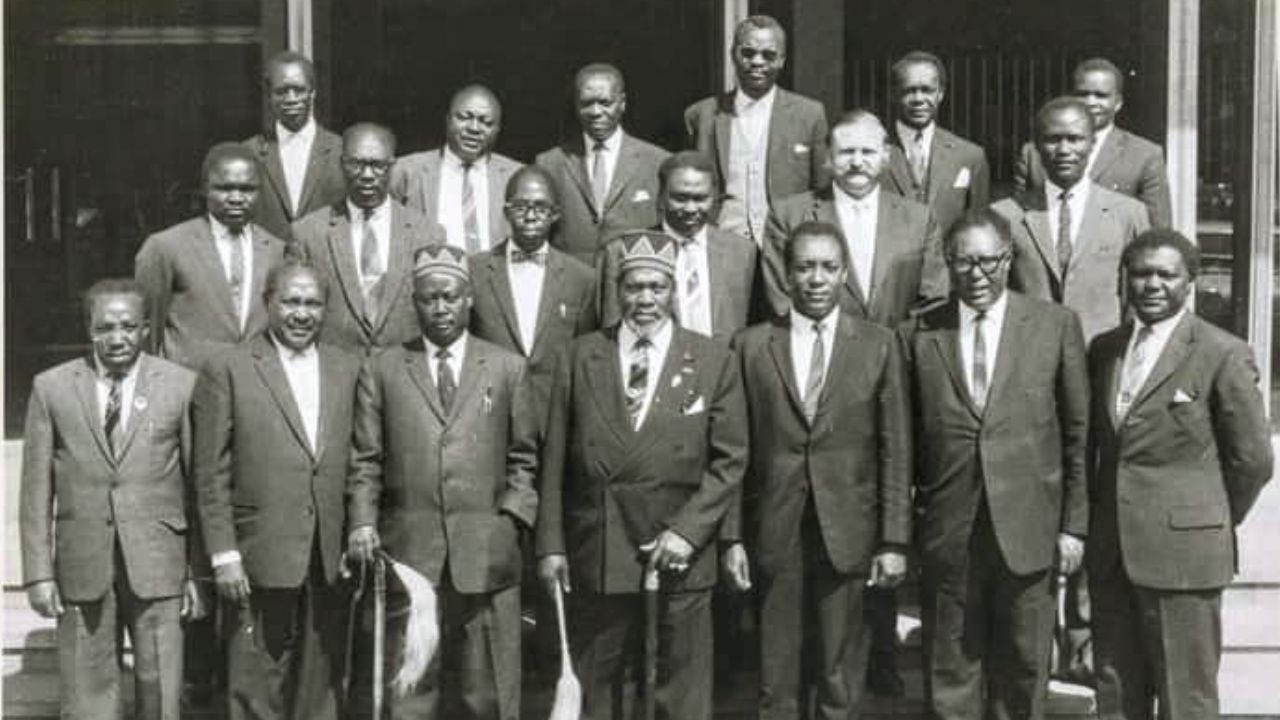
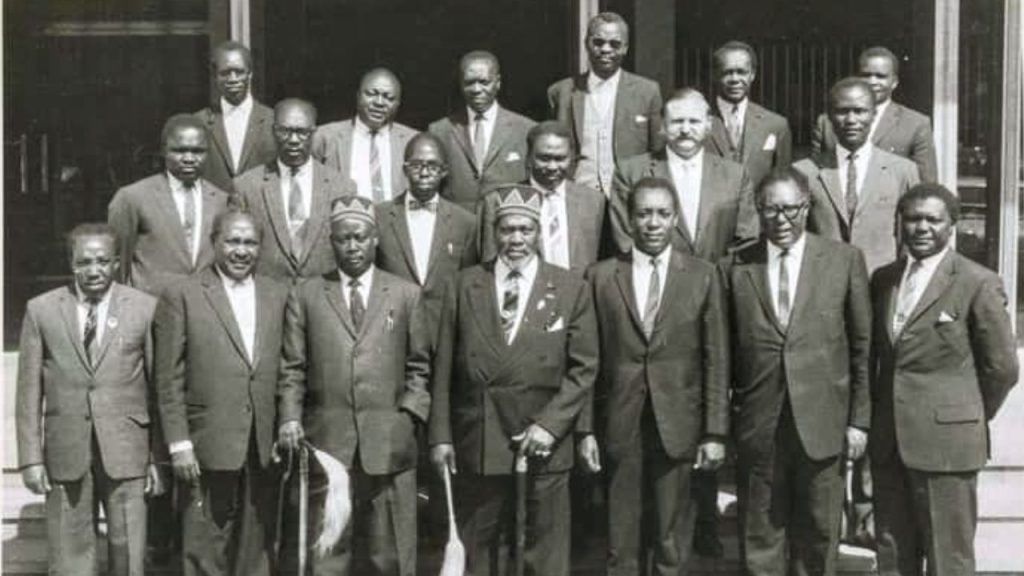
Jomo Kenyatta led the first independent government. His early cabinet brought together leaders such as Jaramogi Oginga Odinga, Tom Mboya, James Gichuru, Joseph Murumbi, Mbiyu Koinange, Dr. Njoroge Mungai, Ramogi Achieng’ Oneko, and Jackson Angaine. They inherited a country fractured by land dispossession, racial hierarchy, and regional inequality.
The early years delivered visible gains. Education expanded. State institutions took root. Kenya emerged as a stable anchor in East Africa. Yet power was centralized quickly. Political competition narrowed. Ethnicity began to shape access to influence and resources, testing the anthem’s plea that “May we dwell in unity, peace and liberty.”
Authoritarian turns and broken liberties
The failed 1982 coup attempt marked a turning point. Though the uprising collapsed, its aftermath reshaped governance. President Daniel arap Moi tightened control, expanded detentions, and restricted media and academic freedom. Stability became the justification for repression.
Liberty, named plainly in the anthem, became conditional. Fear replaced trust. The republic endured, but at the cost of open politics and civic confidence.
Can You Name Kenya’s Founding Fathers?
The human cost of Jamhuri
Kenya’s march toward nationhood has carried a heavy human toll. Some of the republic’s most influential voices paid with their lives or freedom. Tom Mboya, a brilliant nationalist and symbol of a modern, merit-driven Kenya, was assassinated in 1969, a killing that shook the young nation. J.M. Kariuki, a populist critic of inequality, was murdered in 1975, exposing the dangers of dissent.
Under Moi, detention without trial became routine. Kenneth Matiba’s health collapsed after years in custody. Former Prime Minister Raila Odinga endured repeated detentions, including solitary confinement, for his role in pro democracy activism. These sacrifices fueled resistance that culminated in the Saba Saba movement of July 7, 1990, when Kenyans rose against one-party rule. Though met with deadly force, arrests, and torture, Saba Saba galvanized the Second Liberation and forced the return of multiparty democracy.
The cost of dissent has not faded. During the 2024 Gen Z-led protests against proposed tax hikes, dozens of young Kenyans were killed, while others were reportedly abducted or disappeared, allegations human rights groups have linked to state security agencies under Ruto’s administration. The government has denied responsibility and promised investigations, but for many families, justice remains unresolved.
Multiparty democracy and constitutional renewal
Multiparty politics returned in the 1990s, and the 2002 election ended decades of one-party dominance. Still, elections remained disputed, and trust was fragile.
The trauma of the 2008 post-election violence, which killed more than 1,000 people and displaced hundreds of thousands, forced deeper reform. The 2010 Constitution expanded rights, strengthened courts, and devolved power to 47 counties. Devolution brought services closer to communities, even as corruption and inefficiency followed.
The anthem’s call to “Build this our nation together” found new institutional form, though imperfectly applied.
Innovation, growth, and uneven progress
Modern Kenya holds genuine achievements. It is the largest economy in East and Central Africa and a regional hub for trade, diplomacy, and finance.
M-Pesa, a Kenyan creation, transformed mobile money and reshaped global finance. Nairobi’s Silicon Savannah draws startups and talent. Konza Technopolis promises a technology-driven future.
Yet growth has not translated into shared prosperity. Youth unemployment remains high. Inequality persists. After 62 years of independence, Kenya still struggles to deliver consistent quality in education and health care, and poverty continues to shape daily life for millions. The anthem’s hope that “Plenty be found within our borders” remains unevenly realized.
Tribalism and the struggle for unity
Ethnic politics remains the republic’s most corrosive weakness. Elections often divide rather than unite. Loyalty can outweigh merit. National interest competes with communal calculation.
Peace without unity proves fragile. Unity without justice cannot endure. The founding ideal remains aspirational rather than assured.
Gen Z and the demand for renewal
The 2024 protests signaled a generational shift. Young Kenyans rejected tax burdens, elite detachment, and politics as usual. Using digital platforms and street mobilization, they forced a national reckoning and reshaped the tone of governance.
Their message echoed the anthem’s second stanza, which calls for service as an “earnest endeavour.”
Jamhuri at 62, a prayer still waiting.
The Kenyan National Anthem ends with a vision of shared labor and shared gratitude, where “the fruit of our labour” fills every heart. Kenya’s national motto speaks of peace, love, and unity.
At 62, Jamhuri Day is not only a celebration. It is an audit. It asks whether the republic has lived up to its founding prayer, or merely repeated it.
Independence was achieved in 1963. Nationhood remains a daily task. Whether the prayer is finally answered depends on Kenya’s willingness to confront its scars, renew its institutions, and make peace, unity, and prosperity more than words sung on ceremonial days.






LEAVE A COMMENT
You must be logged in to post a comment.