

|
LISTEN TO THIS THE AFRICANA VOICE ARTICLE NOW
Getting your Trinity Audio player ready...
|
Following heavy rains that descended on Nairobi and other parts of Kenya on Friday, March 6, at least 49 people have died and more than 9,000 households have been displaced. The disaster has raised questions about Kenya’s preparedness for climate change–related disasters, the effectiveness of urban planning in Nairobi, and the role of corruption in the city’s development.
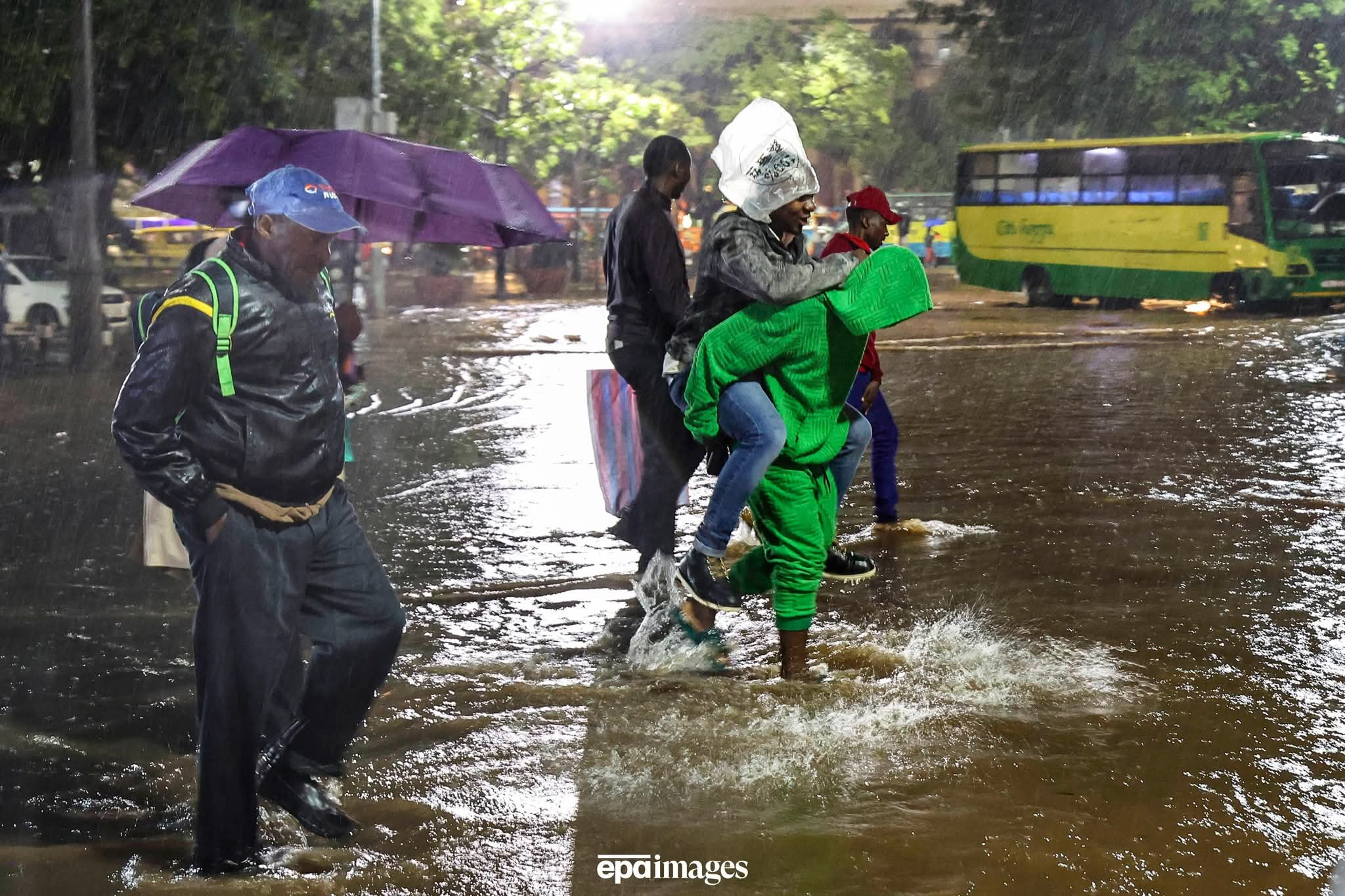
The crisis began after heavy downpours swept across large parts of the country beginning March 6, triggering flash floods that submerged roads, inundated homes and paralysed transport networks in the capital, Nairobi, and beyond.
Police initially confirmed 42 deaths by March 9, including 26 fatalities in Nairobi, as emergency workers pulled bodies from floodwaters across the city’s low-lying neighbourhoods and informal settlements. By Tuesday, government officials said the toll had risen further.
“The security department has confirmed that at least 49 people have died following heavy rains that pounded the country last week,” Government Spokesperson Isaac Mwaura said in a statement on March 10, 2026.
Four people remained missing, while at least four others were receiving hospital treatment for injuries sustained during flood-related incidents, he added. Authorities said the devastation had spread across multiple regions. Nairobi recorded the highest number of deaths at 27, followed by 11 in the Eastern region, five in the Rift Valley, and one death each in the Coast and Nyanza regions.
Capital city overwhelmed
The worst destruction unfolded in Nairobi, where rivers burst their banks and floodwaters swept through residential estates and informal settlements.
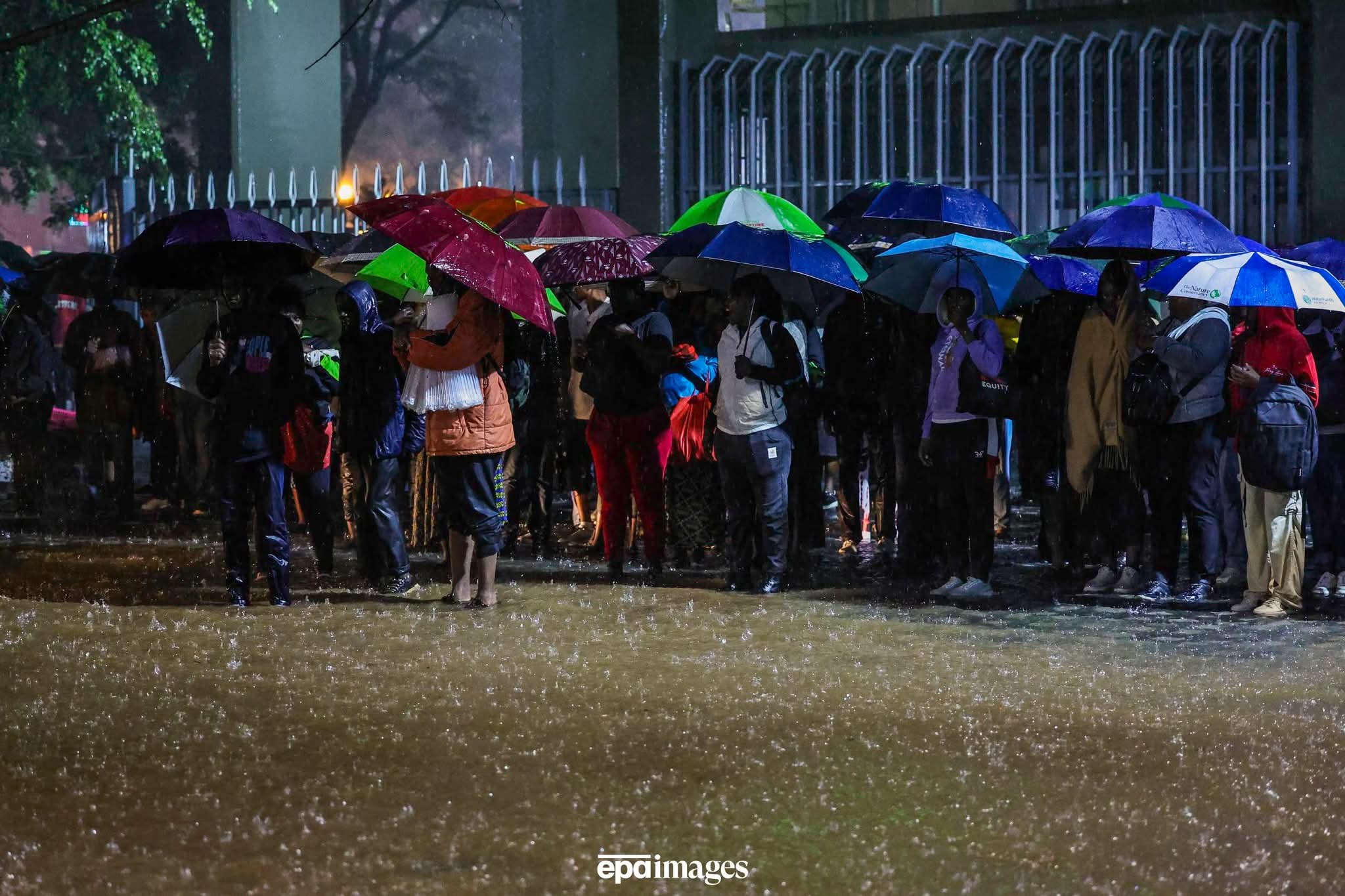
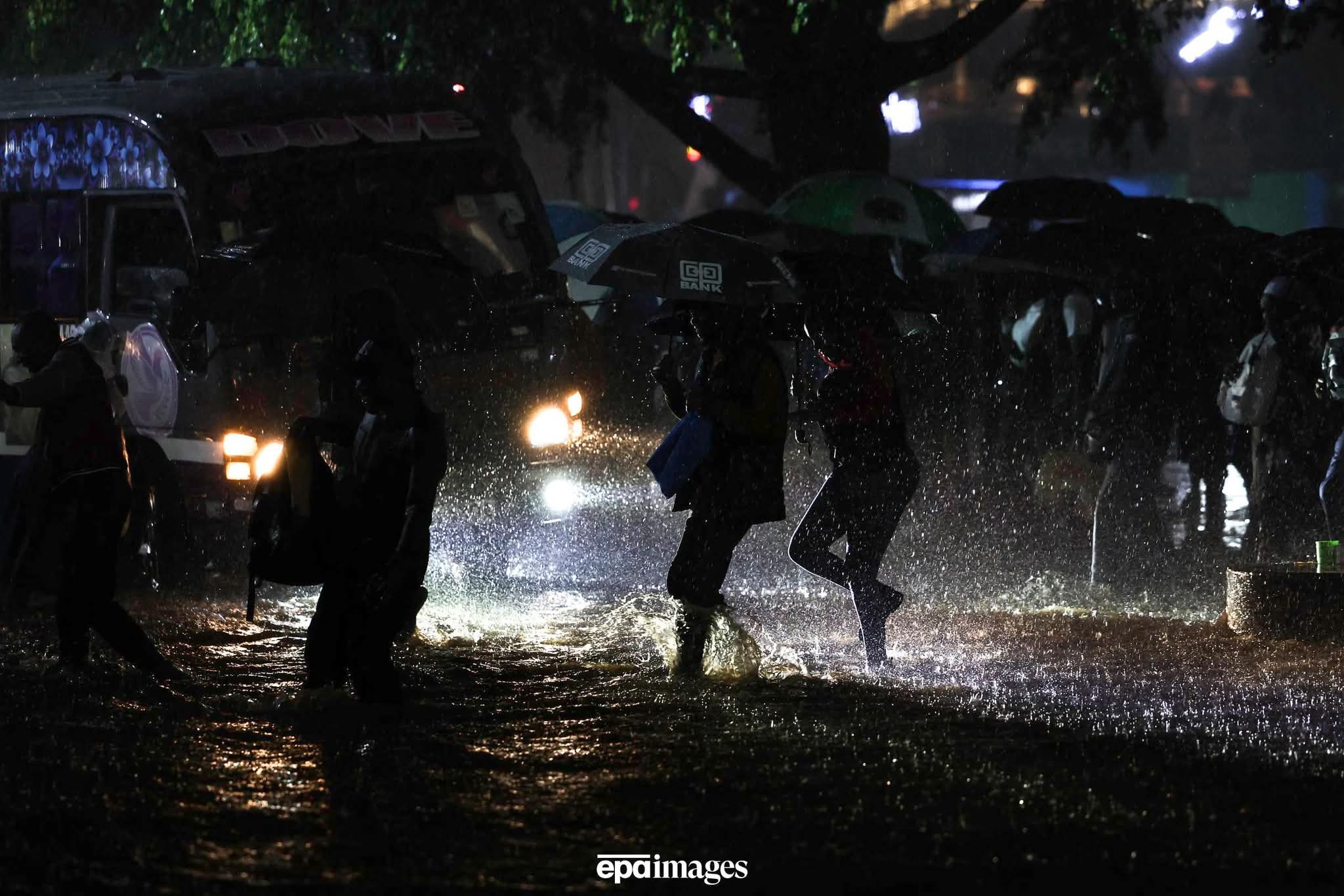
Vehicles were carried away by raging waters in some neighbourhoods while commuters were stranded for hours along flooded highways. Major roads became impassable, bringing daily life in parts of the city to a standstill.
The impact rippled beyond ground transport. Kenya Airways reported disruptions to flights into Nairobi’s main airport, forcing some aircraft to divert to the coastal city of Mombasa.
“If you are travelling out of JKIA today, please be aware that your flight schedule may change. Our teams are working hard to get everything back to normal as soon as possible,” the national carrier said in a statement dated March 7th.
Emergency crews worked through the night to rescue stranded residents and motorists.
The Kenya Defence Forces (KDF) said its Rapid Response Unit was deployed to assist rescue operations after severe flooding hit Nairobi on the evening of March 6, 2026.
“KDF personnel assisted stranded motorists and pedestrians while working to restore safe passage along the affected routes,” the military said in a statement, adding that soldiers remained on high alert overnight to respond to emerging emergencies.
Thousands Displaced Nationwide
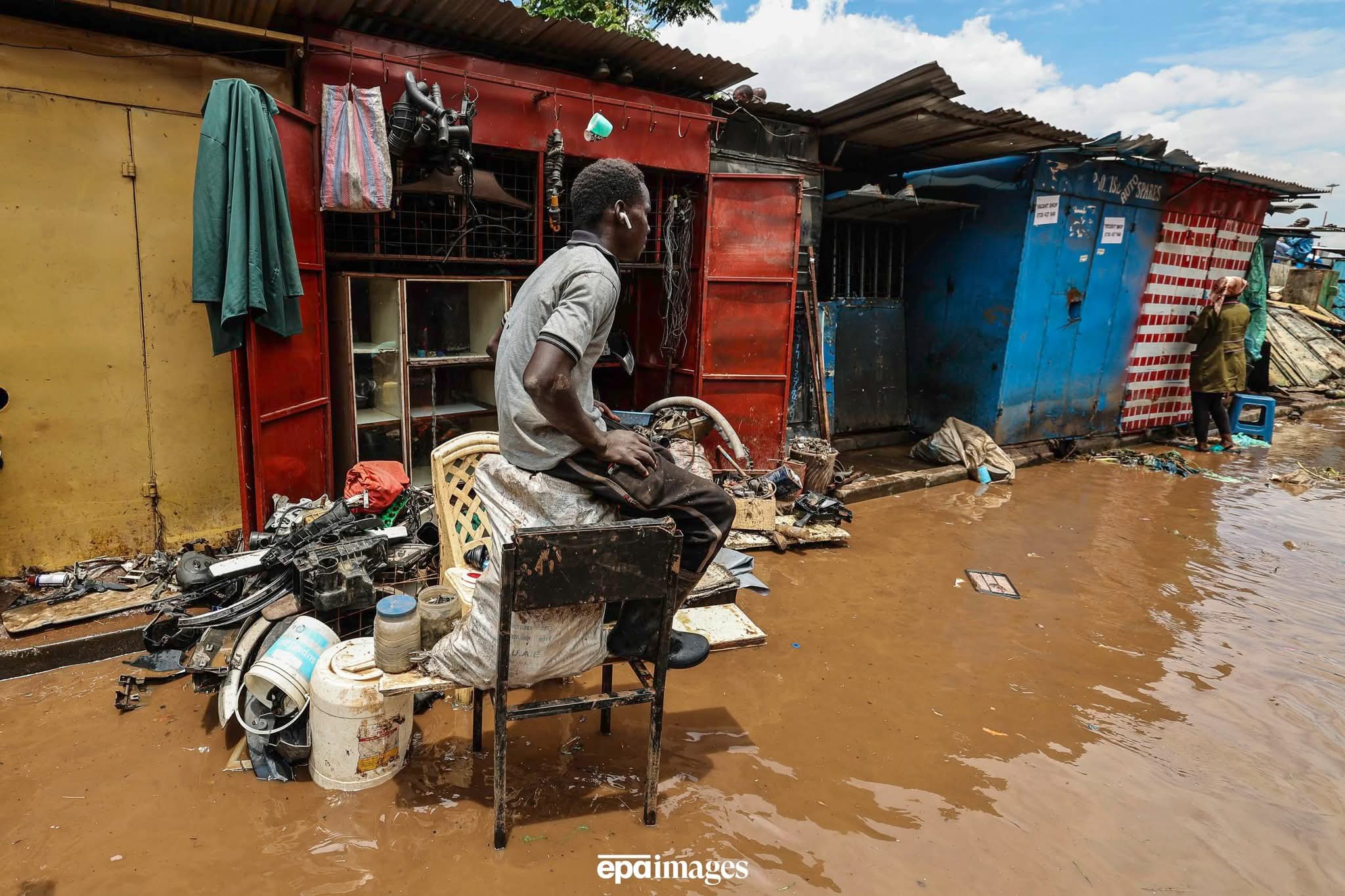
Beyond the capital, the floods displaced more than 9,033 households across Kenya. According to the government’s March 10 update: Nairobi recorded the highest number of displaced families, at 5,260 households. Rift Valley followed with 2,538 households. In Central region 434 households were displaced. In Nyanza 415 households were displaced. Coast suffered displacement of 282 households, while Eastern and Western had 58 and 46 households displaced, respectively.
Humanitarian agencies say the flooding has also devastated livelihoods, destroying crops and farmland in some areas.
The Kenyan Red Cross reported that hundreds of households had been affected across neighbouring counties, with large tracts of agricultural land submerged.
Munir Ahmed, a spokesman for the organisation, called for coordinated action to address the growing crisis.
“I would call for joint efforts between the government and humanitarian agencies to deal with this problem, and to understand why we are having this havoc,” Ahmed told journalists.
Government mobilises emergency response
President William Ruto ordered a multi-agency emergency response to deal with the unfolding disaster, including the deployment of the military to assist rescue teams.
“The ongoing flooding in parts of Nairobi and several other areas of our country has caused immense distress to many families, resulting in the tragic loss of lives, displacement of residents, and damage to homes, property and livelihoods,” the president said in a statement issued on March 8, 2026.
Ruto said the government had released emergency food supplies from national reserves to support affected households.
“I have also ordered that relief food from our national strategic reserves be immediately released and distributed to families affected by the floods,” he said.
He added that the government would also cover hospital costs for flood victims receiving treatment in public health facilities. “In addition, the Government will meet the hospital bills of those injured or affected by the flooding and currently receiving treatment in public health facilities.” Authorities later announced that the state would also cover mortuary and funeral expenses for victims of the disaster.
Warning signs before the storm
Meteorologists had issued warnings days before the floods began. In a weather advisory released on March 2, 2026, the Kenya Meteorological Department predicted an escalation of rainfall across multiple regions of the country.
“Rainfall is expected to increase in intensity and spread across several parts of the country,” the agency said in its March 3–9 rainfall outlook, forecasting moderate to heavy rain across the Central Highlands, Lake Victoria Basin, Rift Valley, Western Kenya, the Coast and parts of northern Kenya.
Despite the early warning, the scale of the flooding caught many communities unprepared. Authorities warned on March 10 that the situation could worsen as rainfall continues. Mwaura urged residents living downstream of Nairobi Dam to remain vigilant as water levels continued to rise.
“The Government is closely monitoring the rising water levels at Nairobi Dam and advises residents living downstream to remain alert,” he said. He added that a technical assessment of the dam was underway.
According to the Meteorological Department more rainfall would be expected between March 10 and March 16. “Let us remain vigilant, follow official advisories and take precautionary measures, particularly those living in flood-prone areas,” Mwaura said.
Extreme weather patterns are becoming more frequent across East Africa, and they are amplifying both droughts and floods.
According to researchers, global warming is concentrating rainfall into shorter but more intense storms, increasing the likelihood of flash floods.
A 2024 study by World Weather Attribution found that climate change had made devastating rains in East Africa twice as likely compared with previous decades.
Neighbouring countries, including Somalia and Ethiopia, have also experienced flooding linked to the same weather systems.
Public anger and questions of accountability
As images of submerged roads and stranded motorists circulated online, the floods triggered widespread public anger, particularly over the state of Nairobi’s drainage infrastructure.
Some residents blamed unregulated construction and corruption in city planning.
“When will Sakaja and his officials end the receiving of bribes from developers who bypass zoning laws and build high-rise apartments in low-rise zones?” wrote resident Sylvia Uchi on social media.
“This robs the preexisting townhouses, villas and low-rise apartments of daylight and causes strain on Nairobi’s outdated drainage systems.”
“Roads meant to serve a few homes now funnel many motorists due to overcrowding of apartments in a small plot of land,” she added. “Zoning laws should be enforced, not bribed through and disregarded.”
Others used satire to express frustration.
“Due to floods, the Nairobi Expressway has now become the longest swimming pool in the world,” wrote social media user Cornelius Ronoh. “We thank Kenya Power for the darkness.”
Another resident, John Seremani, directly criticised the city’s leadership.
“Sakaja Johnson, in the eyes of heaven, you bear some responsibility. You had four years to prepare, four years to be bold,” he wrote.“I don’t know which side you’ll defend yourself on when the day of judgment comes.”
Governor Sakaja defends response
Nairobi’s leadership came under intense scrutiny, with critics questioning whether the city had done enough to prepare for the annual rains.
During a televised interview on Citizen TV on March 8, 2026, journalist Jeff Koinange directly confronted Nairobi Governor Johnson Sakaja about accountability, telling him: “If you were in Japan, and you were the county governor, you’d have resigned.”
Sakaja rejected the suggestion that resignation would resolve the city’s long-standing flooding crisis. He said that the problem predates his administration and requires systemic solutions.
“It won’t solve it, you know. It’s a problem that has been there for long,” Sakaja said. “I remember being stuck during the El Niño rains as a child in school and being marooned for hours until very late in the night in 1997.”
The governor said leadership should focus on solving structural problems rather than assigning blame. “Leadership is to provide solutions. Leadership is not about blaming,” he said. “We have to make tough decisions.”
Sakaja pointed to the city’s efforts to clear drainage systems, including the deployment of thousands of sanitation workers tasked with unclogging blocked drains.
“We have hired 4,500 green army personnel who are out there unclogging those drainage systems,” he said. “But who dumps in those drains? Who is littering in those drains? We’ve provided bins, but you see, there is a responsibility that all of us must bear.”
The governor also acknowledged the human toll of the disaster and expressed sympathy to those affected.
“To those who have lost loved ones and property, it is a sad and tough situation. Pole kwao,” he said.
The city governor argued that the roots of Nairobi’s flooding go back decades, tied partly to the geography and planning history of the Kenyan capital. “Inasmuch as this goes into decades of issues of planning, the city was built on a swamp,” he said.
He added that some flood-control infrastructure, including major roads and waterways, falls under the national government’s jurisdiction, which requires coordinated action between different levels of government. “I am the one who is in charge now,” he said. “Inasmuch as many of these roads and waterways are not under the county government, which is why we have come together with the national government and said, let’s solve this and not just point blame.”
The governor’s remarks came as public frustration mounted over the city’s drainage systems, rapid urban development and enforcement of zoning laws, long-standing issues that critics say have worsened Nairobi’s vulnerability to seasonal floods.
Senator Sifuna acknowledges failure
Edwin Sifuna, Senator for Nairobi County, said the flooding exposed serious weaknesses in city management.
“As part of the leadership in Nairobi, you will hear no excuses from me. Yesterday’s flood situation was an indictment,” he said in a statement on Saturday, March 7. “We know it’s a sum total of many failures but mostly failures of leadership. We must do better because you don’t deserve this.”
Sifuna said piecemeal drainage interventions had failed to solve the problem and called for a comprehensive review of the city’s infrastructure.
“It is obvious that we need a comprehensive review of how the city drains because the piecemeal interventions are not working.”
Kenya experiences seasonal flooding almost every year, particularly during the long rains between March and May.
But the scale and frequency of recent disasters have intensified concerns about climate resilience and urban planning in East Africa’s fastest-growing cities.
The Kenya Red Cross’ Ahmed said it’s all human fault for the flood’s impact. “The science is not complicated; you block the movement of water then water will build up and cause flooding upstream and that is what is happening to the city,” he said in an interview with Citizen TV. “We have built on waterways and blocked water channels”
President Ruto acknowledged that long-term solutions are needed.
“These floods once again highlight the urgent need for lasting solutions to the perennial challenge of flooding in our urban areas,” he said.
The government says the Nairobi River Regeneration Programme, aimed at restoring river ecosystems and improving drainage systems, will form a key part of efforts to reduce future flood risks.











LEAVE A COMMENT
You must be logged in to post a comment.