

|
LISTEN TO THIS THE AFRICANA VOICE ARTICLE NOW
Getting your Trinity Audio player ready...
|
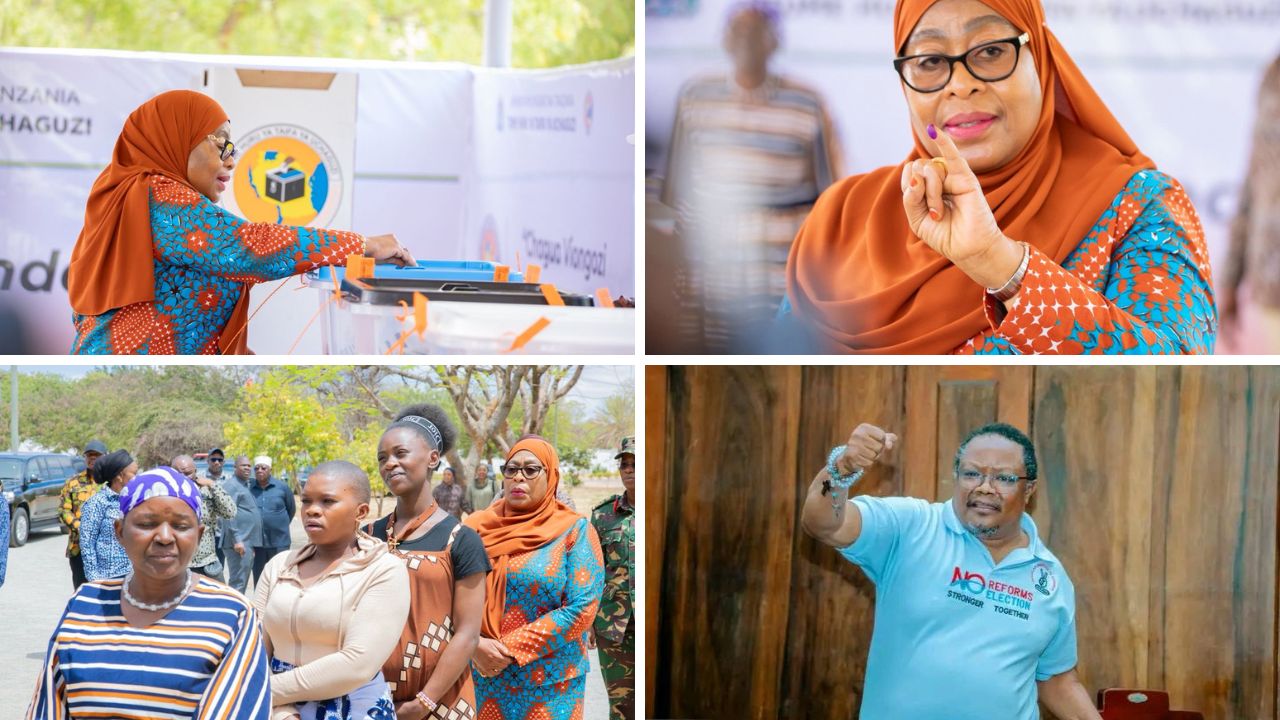
Tanzania’s October 29 general election was meant to be a milestone. If successful, President Samia Suluhu Hassan will become the first woman ever elected president in East Africa. Yet instead of celebration, the nation faces fear, abductions, and escalating unrest.
Suluhu Hassan, who took office in 2021 following the death of John Magufuli, is expected to win under the ruling Chama Cha Mapinduzi (CCM). She has campaigned on promises of major infrastructure projects and universal health insurance. However, opposition figures and rights groups accuse her government of using intimidation, censorship, and security forces to shape the outcome.
On social media, critics have nicknamed her “Idi Amin Mama,” a term that reflects fears that Tanzania’s democracy is being replaced by authoritarian rule.
The Political Landscape: CCM and Its Disqualified Rivals

CCM has ruled Tanzania since 1977 and continues to command strong support in rural areas. Its control of state and security institutions gives it a decisive advantage in national politics.
The main opposition party, Chama cha Demokrasia na Maendeleo (CHADEMA), led by Tundu Lissu, was barred from the presidential race after refusing to sign a new electoral code of conduct. The party said the measure was designed to silence dissent under the guise of maintaining peace.
The smaller ACT-Wazalendo party also faced the disqualification of its candidates. Other opposition movements lack the organization and resources to challenge CCM’s dominance.
Candidates Snapshot: Who’s Running Against CCM
- Samia Suluhu Hassan (CCM) is running with her running mate Emmanuel Nchimbi. Suluhu Hassan, the incumbent president, is seeking her first full term after completing Magufuli’s.
- Salum Mwalimu (CHAUMMA) – Former CHADEMA affiliate, now the standard-bearer of CHAUMMA. Campaigns on constitutional reform and anti-corruption measures.
- Gombo Samandito Gombo (Civic United Front – CUF) – Focuses on free education, universal healthcare, youth employment, and rural development.
- Kunje Ngombale Mwiru (AAFP) – Advocates agricultural modernization, women’s land rights, and devolution of power to rural communities.
Analysts widely agree that none of these minor-party candidates has the national reach or resources to seriously challenge CCM’s dominance.
Tundu Lissu’s Imprisonment and Isolation
CHADEMA leader Tundu Lissu, once Tanzania’s most visible opposition figure, was arrested in April after leading a rally under the slogan “No Reforms, No Election.” He faces treason charges, which carry the death penalty, and cannot apply for bail.
In an October 26 message shared on X, Lissu described being held in solitary confinement under constant surveillance.
“My cell is fitted with cameras that record everything I do,” he wrote. “It is a deliberate act meant to humiliate my dignity.”
He said the conditions violate Tanzania’s Constitution and the United Nations Mandela Rules on the treatment of prisoners. Rights groups have called his detention politically motivated.
Maria Sarungi Tsehai and the Citizen Resistance
Among the loudest critics of the government is Maria Sarungi Tsehai, a Tanzanian activist and media entrepreneur now based in the United Kingdom. She leads the #ChangeTanzania movement and uses her platform of more than 1.3 million followers on X to expose irregularities and alleged abuses.
In one widely circulated post, Sarungi Tsehai shared footage of citizens appearing to intercept a bag containing pre-marked ballots allegedly filled out for CCM.
“Citizens have confiscated a bag full of filled ballots (all voting for CCM),” Sarungi Tsehai wrote. “No free and fair elections. Plain rigging.”
Her posts have drawn both praise and hostility, with government supporters accusing her of incitement. She was previously detained in Tanzania and later left the country.
Sarungi Tsehai has continued to campaign online, calling the 2025 vote “a defining moment for Tanzanian democracy.”
Torture and Sexual Assault Allegations
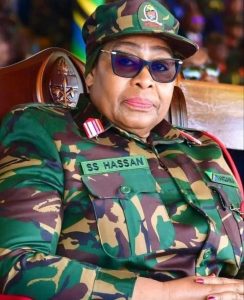
According to BBC News, Kenyan activist Boniface Mwangi said he was sexually tortured in detention in Tanzania after traveling to show solidarity with Lissu. Mwangi told the BBC that he was stripped naked, hung upside down, beaten on his feet, and sodomized with various objects.
He said his captors forced him to say “asante,” meaning “thank you,” to Suluhu Hassan during the assault.
Ugandan activist Agather Atuhaire also told the BBC she was raped and beaten while held incommunicado in Tanzania. Photos published by the BBC showed bruises and scars on her wrists.
Tanzania’s police chief Jumanne Muliro denied the allegations, calling them “opinions” and “hearsay.” Rights organizations, including Amnesty International, have urged an independent investigation.
Regional Fallout and Deportations
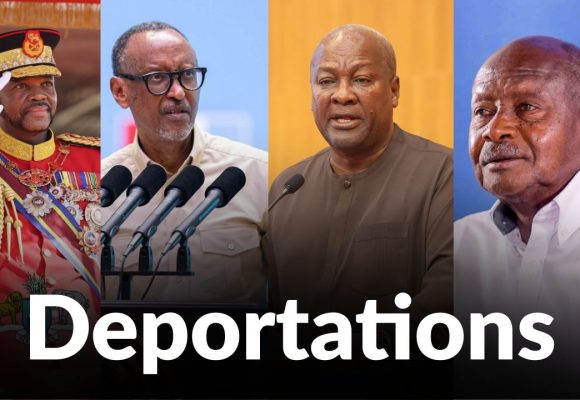
In May, Tanzanian authorities detained and deported former Kenyan Chief Justice Willy Mutunga, former Justice Minister and key opposition figure Martha Karua, and several Kenyan activists who had traveled to observe Lissu’s trial. They were interrogated at Julius Nyerere International Airport and flown back to Nairobi.
The East African Law Society and the Law Society of Kenya condemned the deportations, calling them a violation of the East African Community (EAC) treaty, which guarantees free movement across member states.
Kenyan social media users reacted angrily, with hashtags such as #HandsOffActivists and #IdiAminMama trending for days.
Fresh Arrest and Disappearance of CHADEMA Deputy Leader
According to several international media reports, CHADEMA deputy leader John Heche was seized by police last week while attempting to attend a court session for Tundu Lissu. Witnesses told Al Jazeera that Heche was “bundled into a police pickup” and has not been seen since.
The incident came days after Heche was blocked from traveling to Kenya to attend the funeral of opposition leader Raila Odinga. CHADEMA officials said his disappearance is part of a broader campaign to cripple opposition leadership. Tanzanian police have not commented on his case.
Restrictions on Media and Online Platforms
Tanzania’s government has intensified restrictions on journalists and online users. In May, access to X (formerly Twitter) was blocked, with officials citing cybersecurity concerns. Al Jazeera reported that much of the local press has been barred from covering the polls, and thousands of websites have been shut down.
Authorities say the measures protect peace and prevent misinformation. Opposition leaders and rights groups argue they are meant to silence dissent and conceal electoral misconduct.
Curfew, Protests, and Internet Shutdown
According to an Associated Press report, protests erupted across Dar es Salaam and other cities as voting continued, prompting the government to deploy the military and impose a 6 p.m. curfew in the commercial capital. Police confirmed fires were set to a bus and a gas station in the Kimara and Ubungo neighborhoods.
Local media also reported unrest in Magomeni, Kinondoni, and Tandale districts, as well as vandalism at polling centers in Arusha and Mbeya. The U.S. Embassy issued a security alert citing “countrywide protests,” and urging Americans in Tanzania to “keep a low profile.”
The advocacy group NetBlocks documented a “nationwide disruption to internet connectivity,” while human rights organizations said arbitrary arrests and enforced disappearances had marked the pre-election atmosphere.
The military presence was visible in Dodoma and Zanzibar, including outside media offices. There was no immediate public statement from Suluhu Hassan or CCM as the situation escalated.
How Tanzania’s Voting Process Works
Under the Presidential, Parliamentary, and Councillors’ Elections Act (2024), Tanzanians vote in concurrent national and local elections.
- Voter registration: Citizens must register with the National Electoral Commission (NEC).
- Nomination: Political parties nominate candidates by official deadlines.
- Campaigning: Approved candidates can campaign until shortly before election day.
- Voting: Polls open from 7 a.m. to 4 p.m. Voters present ID, receive a ballot, and cast their vote in secret.
- Counting and results: Votes are counted at polling stations and verified at the regional level. The presidential candidate with the most votes wins. There is no runoff.
When Will Results Be Announced?
Preliminary results are expected within 24 to 72 hours of polls closing. The National Electoral Commission has up to seven days to certify the final results, meaning the outcome should be known by early November.
Losing candidates can file petitions in court, but the commission’s declaration is rarely overturned. Observers say transparency during counting will determine whether the public accepts the outcome.
Women Who Have Led African Nations
If confirmed as the winner, Suluhu Hassan will join a small group of women elected to lead African countries.
Those include:
- Ellen Johnson Sirleaf, Liberia (2006–2018)
- Ameenah Gurib-Fakim, Mauritius (2015–2018)
- Samia Suluhu Hassan, Tanzania (2021–present, seeking first elected term)
Others, such as Joyce Banda of Malawi (2012–2014) and Catherine Samba-Panza of the Central African Republic (2014–2016), served in interim or transitional capacities.





LEAVE A COMMENT
You must be logged in to post a comment.