

|
LISTEN TO THIS THE AFRICANA VOICE ARTICLE NOW
Getting your Trinity Audio player ready...
|
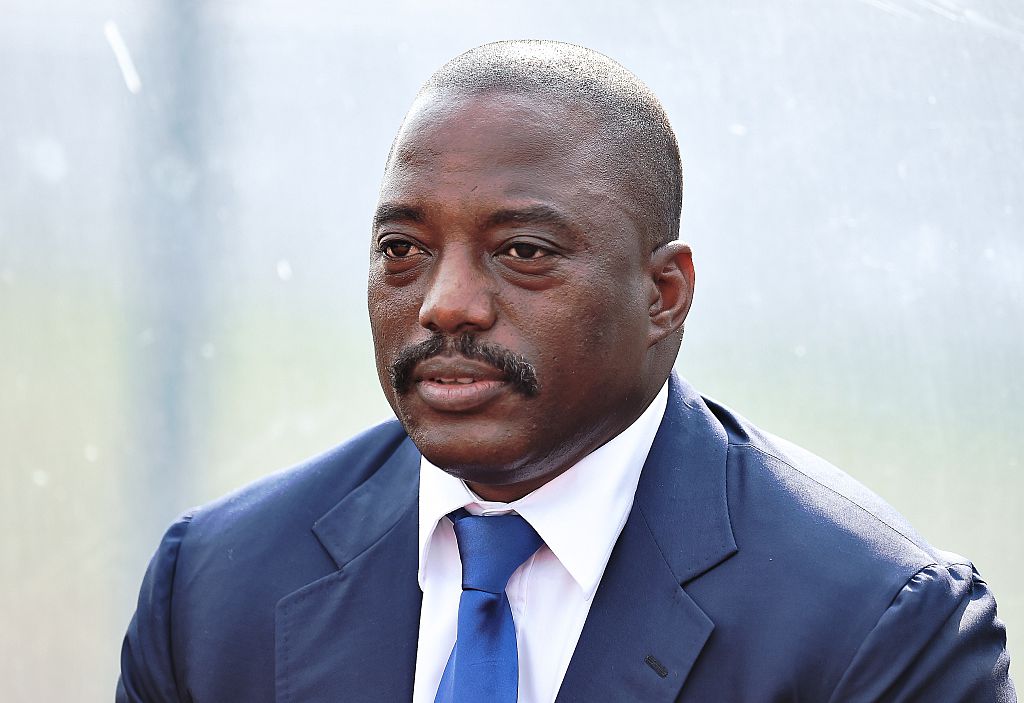
KINSHASA, Congo (TAV) — A military court in Kinshasa on Sept. 30, 2025, sentenced former Democratic Republic of the Congo President Joseph Kabila to death in absentia, convicting him of treason, war crimes, and crimes against humanity. The ruling, unprecedented in Congolese history, came after prosecutors accused Kabila of collaborating with the M23 rebel group. Reuters first reported the verdict.
A Historic Verdict
According to Reuters, the tribunal also ordered Kabila to pay about $50 billion in damages to the Congolese state and to victims of violence in North and South Kivu provinces.
Lieutenant General Joseph Mutombo Katalayi, who presided over the tribunal, said that under the Military Penal Code, “the most severe one, which is the death penalty,” applied to the charges, Reuters reported.
Kabila, who governed from 2001 until handing power to President Félix Tshisekedi in 2019, was absent from the proceedings and had no legal representation, according to the AP.
Alleged Rebel Ties
The prosecution alleged that Kabila maintained ties with Rwanda-backed M23 rebels and helped enable murder, rape, torture, and the occupation of Congolese territory. The military prosecutor, General Likulia Lucien René, told Reuters in August that he sought the maximum penalty, stating Kabila was guilty of “homicide, torture, rape and organizing insurrection.”
Reaction to the ruling has been deeply polarized. Ferdinand Kambere, secretary of Kabila’s People’s Party for Reconstruction and Democracy (PPRD), told Reuters the judgment was “an act of relentlessness and persecution against a member of the opposition.”
By contrast, Richard Bondo, the lawyer representing North Kivu and South Kivu, told AP: “Justice rendered in the name of the Congolese people gives satisfaction to its people.”
The Financial Times reported that the court also imposed separate reparations for the provinces of North and South Kivu, adding to the billions in reparations Kabila must pay.
Tshisekedi’s Government Tightens Grip
The verdict follows a series of steps by Tshisekedi’s government to weaken Kabila’s influence, including stripping him of immunity, banning his party, and seizing assets belonging to his allies, Reuters reported.
Conflict in the east continues to rage. According to AP, M23 rebels have seized towns in North and South Kivu, displacing thousands. Kinshasa has accused neighboring Rwanda of backing M23, a claim Kigali denies.
Though the sentence is the harshest possible, Congo has not carried out executions since 2003, effectively maintaining a moratorium, according to Human Rights Watch.
The ruling against Joseph Kabila underscores the fragility of Congolese institutions and the volatility of its politics. Whether it closes the chapter on Kabila’s influence or triggers further unrest remains uncertain.
How Kabila Rose to the Congolese Presidency
- Laurent-Désiré Kabila, Joseph Kabila’s father, became president of the Democratic Republic of Congo in 1997 after overthrowing Mobutu Sese Seko.
- On January 16, 2001, Laurent Kabila was assassinated inside the presidential palace in Kinshasa.
- His own bodyguard, Rachidi Kasereka, shot him during a meeting. Reports at the time said the bodyguard was immediately killed by other security officers.
- While the assassination was officially attributed to this rogue bodyguard, speculation has long persisted about whether elements of the Congolese military, rival political factions, or even foreign intelligence services may have been involved.
- Just days later, on January 26, 2001, his son, Joseph Kabila, was sworn in as president, becoming Africa’s youngest head of state at the time, at the age of 29.

LEAVE A COMMENT
You must be logged in to post a comment.