

|
LISTEN TO THIS THE AFRICANA VOICE ARTICLE NOW
Getting your Trinity Audio player ready...
|
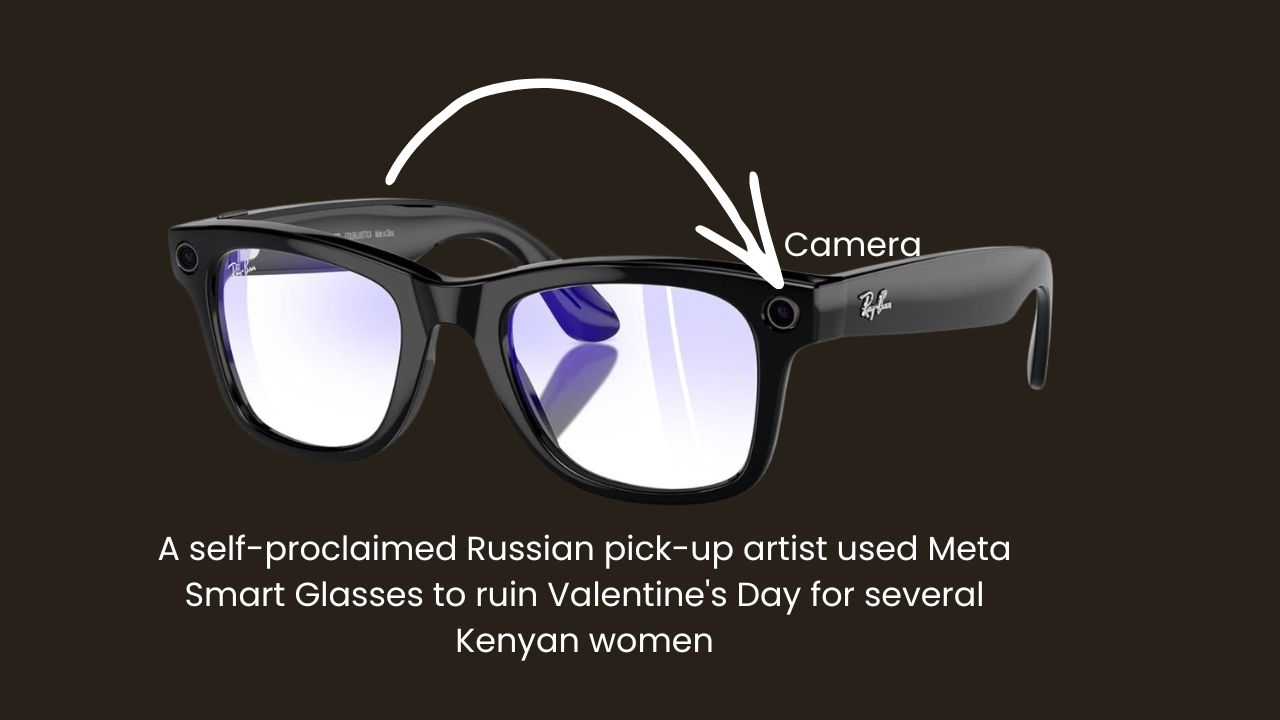
A man believed to be a tourist and social media content creator from Russia became the Grinch that ruined Valentine’s Day for many Kenyan women and perhaps destroyed marriages.
Videos allegedly recorded by the man using Meta smart glasses during encounters with Kenyan women have triggered outrage across social media.
The clips, widely shared on X, TikTok, and Facebook, appear to show the man approaching women in Nairobi and inviting them to his apartment. The footage is recorded from his point of view, raising questions about whether the women knew they were being filmed.
Public Reaction
Reaction has been swift and divided. Some Kenyans blamed the women, calling them “loose.” Others criticized the man for exploiting them and exposing private encounters for online attention.
Others took the opportunity to crack jokes.
“When I grow up, I want to be a ‘Russian man’, Munabi Edwin posted on Facebook.
“You are Black, sorry,” Omuteefu responded.
In one widely discussed clip, the man approaches a woman accompanied by her young children. After a brief conversation, he invites her to his apartment. A later video shows her dancing there.
“When our women see white men, they don’t see a tourist. They see vaccine to msoto buana,” Korkoren Jnr commented on Facebook.
Muhudin Abdikadir provided a more sober assessment of the situation.
“This is exactly how our daughters fall into danger. Predators take advantage of vulnerability, false promises, and manipulation,” Abdikadir said. “We must stay vigilant, educate our girls, and protect them from individuals who disguise harm as opportunity.”
A political commentator on Facebook called out men for criticizing the women.
“Kenyan men should be the last to act as moral cops on the case of those women exposed by that Russian,” Betty Muchina, a Kenyan political commentator, said in a Facebook post. “Unaona vile wako active kutrend hiyo story? Have you ever seen them calling out paedophiles who are assaulting and even killing children right, left, and center?”
“When our women see white men, they don’t see a tourist. They see vaccine to msoto buana,” Korkoren Jnr on Facebook.
Machel, a Kenyan based in the US, said the man’s activities were not just about invading the women’s privacy; it was about power.
“There should be informed consent when recording anyone, especially in vulnerable situations,” Machel said.
She termed the assertion that Kenyan women are loose as simplistic and missing context.
“I think the poverty and a sense of hopelessness make people desperate for a better life or the illusion of a better life,” Machel said. “A white guy may represent that illusion.”
Many people have argued that the women may have succumbed to the man’s entreaties more readily because he’s a ‘mzungu.’
The man is also believed to have surreptitiously recorded his encounters with women in Ghana and South Africa.
According to the BBC, Ghana plans to seek the extradition of a Russian national accused of secretly recording sexual encounters with multiple women and publishing the videos online without their consent. African and Russian media described the man as a self-proclaimed pick-up artist and blogger in his 30s who traveled to Ghana to covertly document his interactions.
The controversy has since moved beyond social media outrage into legal and constitutional debate.
Legal Analysis: What the Kenyan Constitution Says
Nairobi lawyer Danstan Omari argues that age and consent are central to the discussion.
“One thing that is very clear is that all these women are above 18 years,” Omari said. “So there is no crime committed” in terms of age.
He stated that seduction itself is not criminal under Kenyan law.
“Every man has a constitutional right to seduce any woman,” he said. “Every woman has a constitutional right to say yes or to say no.”
Omari noted that no woman has publicly alleged force or deception.
However, he drew a firm distinction between consensual interaction and secret recording.
“Where the issue of crime emanates is the recording without the consent of the women,” he said.
He cited Article 31 of Kenya’s Constitution, which protects the right to privacy. Personal information and private life are shielded from unlawful intrusion.
“Is taking a photo of a woman in a bedroom and releasing it without her consent illegal? Yes,” Omari said. “That contravenes Article 31.”
He also cited Article 28, which guarantees the inherent dignity of the human person.
“Every woman has inherent dignity and she must be treated with that dignity,” he said. “Is it dignified in a sexual encounter to be made public? That goes against Article 28.”
Omari warned that if severe harm results, including self-harm, liability could extend under the Computer Misuse and Cybercrimes Act 2018.
He added that affected women could petition the High Court to enforce their constitutional rights and seek damages.
Kenya’s Data Protection Act 2019 also restricts the collection and publication of personal data without consent. Whether those provisions apply depends on the specific facts, including where and how the recordings were made.
What Are Meta Glasses?
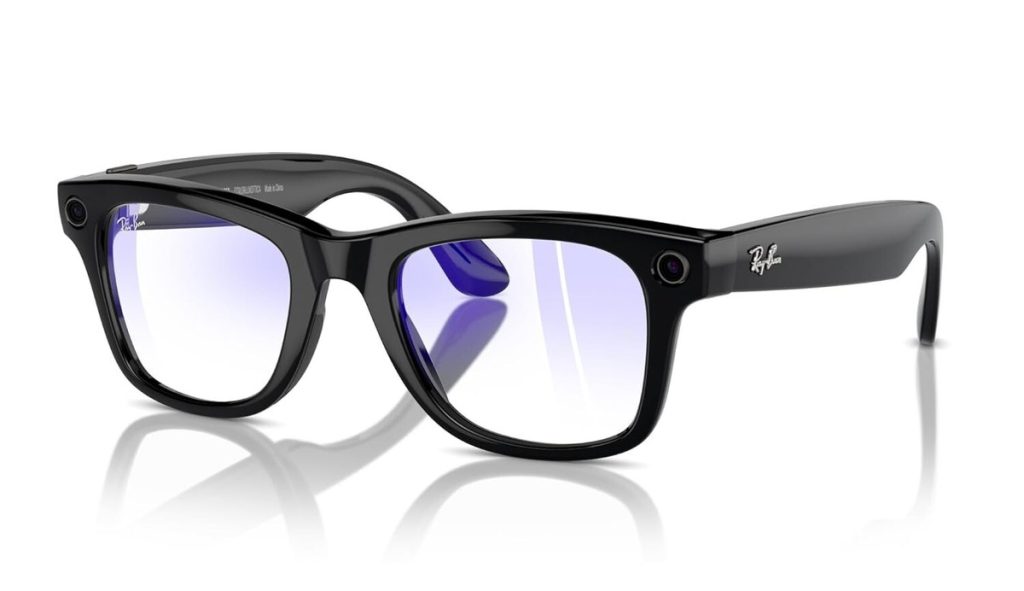
Meta smart glasses, developed by Meta Platforms in partnership with multiple sunglasses companies, including Ray-Ban, resemble ordinary eyewear. However, they contain built-in cameras, microphones, and open-ear speakers.
Users can record short videos, take photos, and livestream hands-free. A small LED light signals when recording is active. In crowded spaces, that indicator may not be obvious.
The glasses connect directly to social media platforms. Content can be uploaded within seconds.
Wearable cameras have practical uses. Journalists document events in real time. Travelers capture immersive footage. People with visual impairments rely on voice-enabled features.
Still, discreet recording tools raise ethical concerns. Consent becomes blurred when the act of filming is unclear.
Gendered Blame and Racial Narratives
Much of the backlash has focused on the women rather than the man behind the camera.
Some online commentary questioned why Kenyan women would accept such invitations. Others framed the issue in racial terms, suggesting white men are perceived as more desirable or financially secure.
That framing risks oversimplification.
Kenya and other African nations face high youth unemployment and rising living costs. In Nairobi, transactional relationships exist across social classes. Financial stability often shapes romantic decisions.
The episode appears less about nationality and more about money and power. Wealth can shift dynamics in any society.
Calls have emerged for Kenya to ban smart glasses or restrict their import. Yet wearable cameras are already embedded in modern devices. Existing constitutional and cybercrime laws provide legal avenues.
The incident may serve as a cautionary tale rather than a trigger for new legislation. Digital literacy, consent awareness, and economic empowerment could prove more effective than reactive bans.
Meta glasses are tools. They can document truth or expose vulnerability. In a digital era where private moments can become public content, vigilance and judgment remain the strongest safeguards.
Editor’s Note: Because of the sensitive and exploitative nature of this story, The Africana Voice has chosen not to publish images of the women recorded without their consent.












LEAVE A COMMENT
You must be logged in to post a comment.