

|
LISTEN TO THIS THE AFRICANA VOICE ARTICLE NOW
Getting your Trinity Audio player ready...
|
Kenya paused this week to lay Raila Amolo Odinga to rest, the country’s most enduring opposition figure and a statesman whose influence spanned generations. The solemnity of the moment exposed not only the nation’s grief but also the true character of its political class. In the rituals of mourning, alliances shifted, rivals showed grace, and others revealed the smallness of their politics. In a week defined by mourning and political theatre, Kenya’s leaders revealed who could rise above partisanship and who stumbled in the shadow of a fallen giant.
🟩 The Winners
William Ruto: The Statesman in a Storm
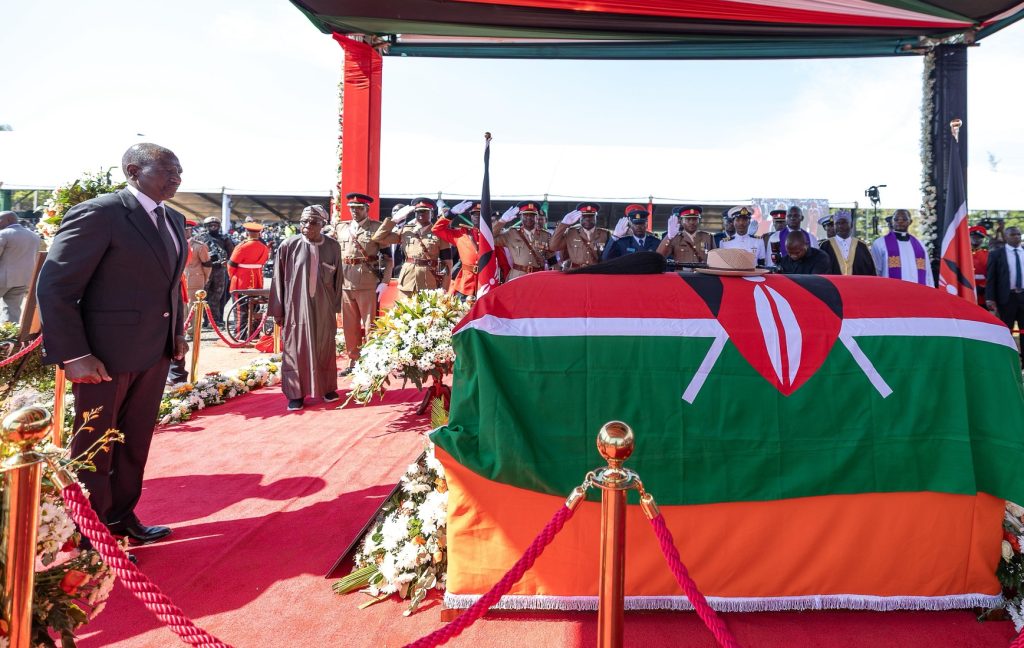
President William Ruto walked a delicate line, and, surprisingly, walked it well. His decision to grant the late Raila Odinga a state funeral marked a rare moment of grace in an administration accused of mismanaging the economy and undermining human rights through the abduction of Gen Z protestors.
The move earned him deep gratitude from the Odinga family and rare praise from ODM members, including one of his fiercest critics, Siaya Governor James Orengo. Orengo publicly thanked the president and described the moment as a historic first for the region. He reminded Kenyans that former President Daniel arap Moi’s administration had denied Raila’s father, Jaramogi Oginga Odinga, a state funeral, forcing the family to scramble to give him a dignified sendoff.
By personally leading the nation in mourning, Ruto projected unity rather than partisanship. His gesture resonated beyond his Rift Valley base, earning goodwill in the Luo, Coast, and Mulembe regions. It was a politically astute move, proof that empathy can sometimes achieve what force cannot.
Kenya is now watching to see whether Ruto can build on that goodwill, turn the WANTAM tide championed by his former deputy, and begin to inherit Raila’s base. For now, he is off to a good start.
The Odinga Family: Legacy, Unity, and a National Moment
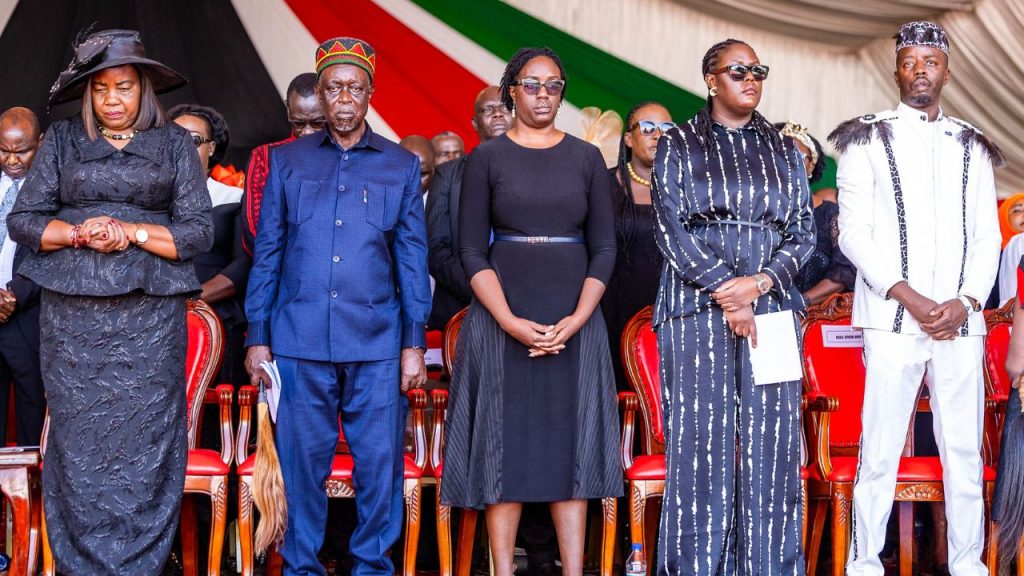
The Odinga family carried the weight of both grief and history with remarkable poise. Beyond the private pain of loss, they managed a public event that balanced personal mourning with national symbolism.
Led by Raila’s widow, Mama Ida Odinga, the burial at Kang’o ka Jaramogi in Bondo was executed with dignity, blending state ceremony with Luo tradition.
Their ability to bring together Kenya’s political class, allies and rivals alike, transformed the funeral into a shared national experience rather than a partisan affair. The family’s composure and hospitality reminded Kenyans that Raila’s struggle for democracy was never just about politics; it was about dignity.
For holding the center at a time of deep emotion, the Odinga family and clan earned widespread respect.
Uhuru Kenyatta: The Steady Elder Statesman
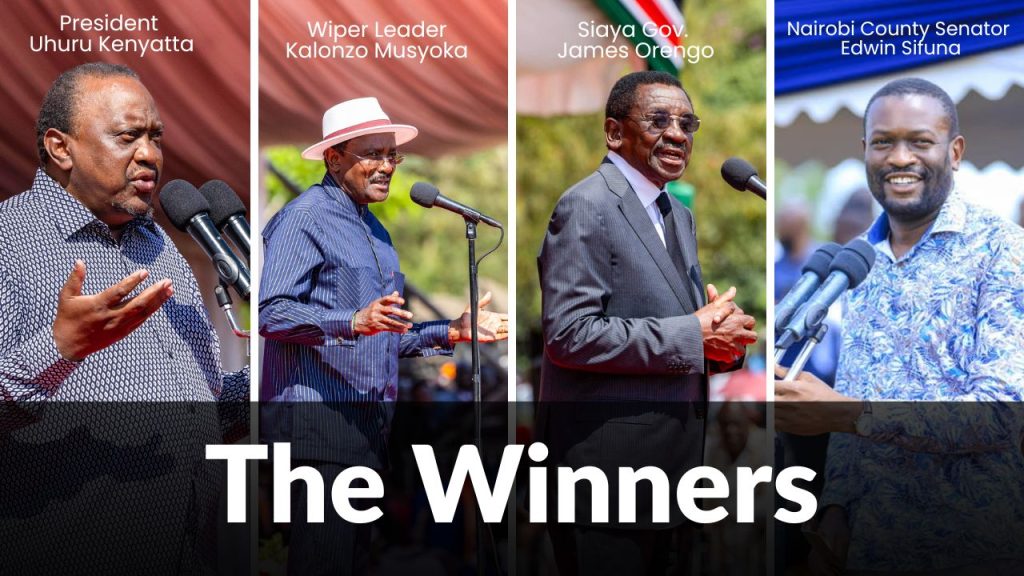
Former president Uhuru Kenyatta’s steady presence at the funeral reminded Kenyans of the value of continuity. Though largely retired from active politics, his decision to stand by the Odinga family reflected a consistency rare in Kenya’s transactional politics.
His return to Raila’s graveside a day after the burial showed deep friendship and respect for the fallen statesman.
Kalonzo Musyoka: The Man Who Refused to Be Sidelined
Kalonzo Musyoka demonstrated political conviction by insisting on the opportunity to speak at the funeral. His measured remarks and calm authority stood out amid the day’s heightened emotions.
If Ruto was the pragmatic unifier, Kalonzo was the moral compass. Cutting short his foreign trip to attend the funeral, he not only showed up but insisted on being heard. His calm insistence on speaking reflected both confidence and conviction.
In a landscape littered with bombast and tribal posturing, Kalonzo’s measured tone and his recognition of opposition colleagues who were present but denied speaking time stood out. He projected himself as a statesman capable of filling the opposition vacuum left by Raila’s passing. Many Kenyans saw in him not just a political survivor but a potential national unifier.
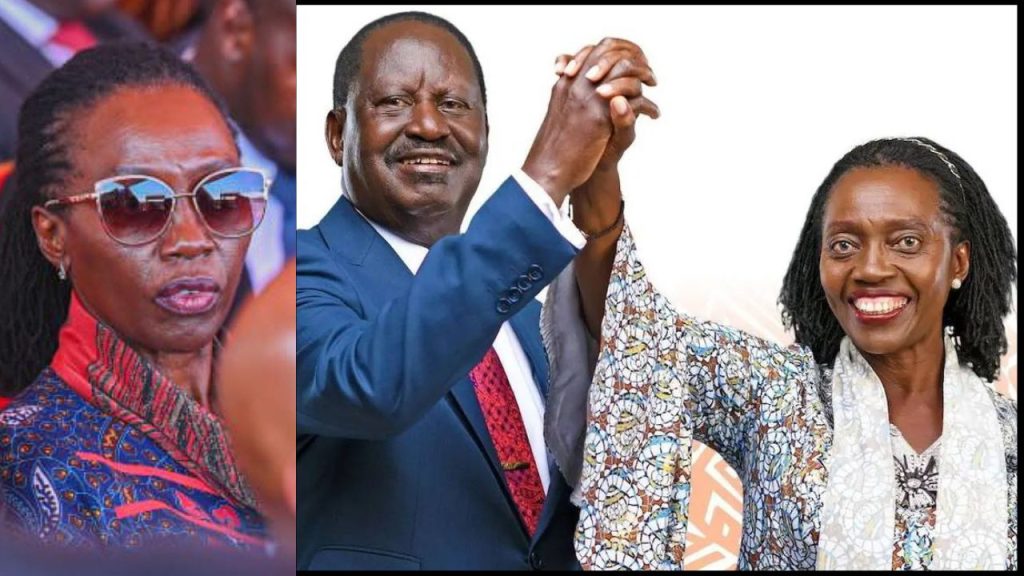
Martha Karua: Grace Under Snub
Despite being publicly snubbed by Deputy President Kithure Kindiki, who refused to give her speaking time, Martha Karua remained poised, honoring Raila with her sheer presence. She was Raila’s last running mate and a friend.
Her composure under pressure reflected integrity and restraint, the kind of political grace Kenya’s leadership class sorely needs.
James Orengo and Edwin Sifuna: Drawing the Line
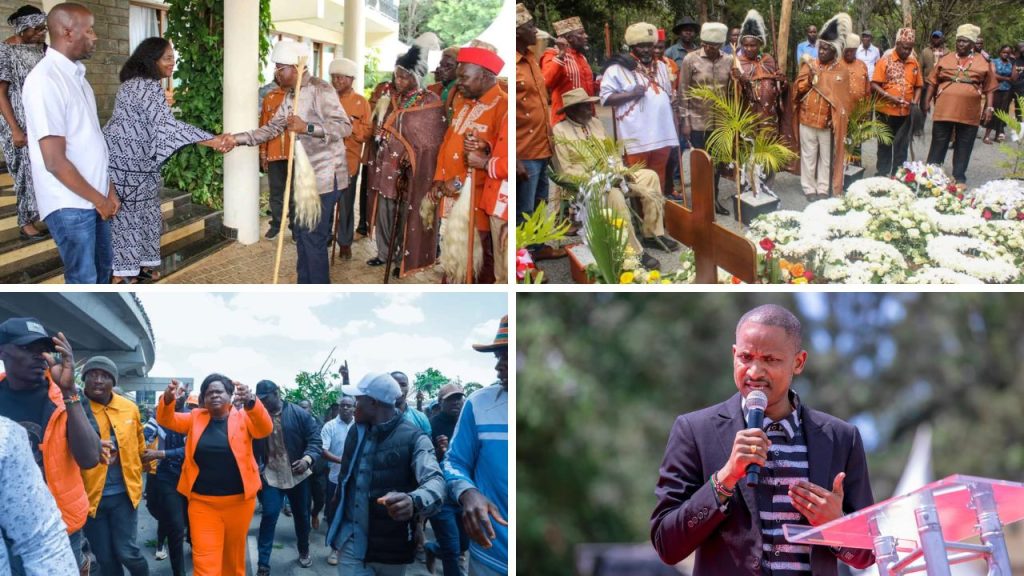
Governors James Orengo and Senator Edwin Sifuna emerged as principled voices in ODM’s uncertain future. Their refusal to merge the party into Ruto’s broad-based government sent a clear message that Kenya needs a credible opposition.
With growing reports of abductions and suppression of civic freedoms, Orengo and Sifuna’s stand was a defense of democracy itself. They reminded the public that Raila’s true legacy lies in resistance to unchecked power.
Babu Owino: The Populist
When Embakasi East MP Babu Owino arrived at the funeral, the crowd’s deafening cheers said it all. Owino has grown from a rabble-rouser to a powerful voice of the youth.
His connection to Gen Z and the working-class base gives him a political energy that traditional politicians cannot replicate. His ability to honor Raila without theatrics reflected maturity and an understanding of the moment’s gravity.
ODM: Discipline, Coordination, and Respect for the Moment
The Orange Democratic Movement proved that even without its longtime leader, it can still marshal structure and discipline when it counts most. The party avoided the internal wrangling many had expected and, working closely with the national government, gave Raila a dignified sendoff as their undisputed leader.
The task required political maturity and logistical precision.
From coordinating thousands of mourners to managing security, protocol, and communication between the family and the state, ODM’s behind-the-scenes role was crucial. There were no major hitches, no turf wars, and no incidents of chaos.
In a country where funerals of political icons often turn into partisan battlegrounds, ODM’s ability to maintain order and respect marked a quiet but essential victory. The party showed it could act as an institution, not just a movement tied to one man.
The Gikuyu Elders: Bridge-Builders Beyond Politics
In a powerful gesture of reconciliation, the Gikuyu Council of Elders traveled from Central Kenya to Bondo to pay their respects to the late Raila Odinga. Their symbolic presence, separate from official delegations, underscored a willingness to bridge old ethnic divides that have long haunted Kenya’s politics.
The elders publicly distanced themselves from Governor Mutahi Kahiga’s offensive remarks, affirming that Raila was a friend to the Gikuyu and a national figure deserving of honor. Their quiet diplomacy spoke louder than speeches, reminding Kenyans that healing must come from shared respect and moral courage.
🟥 The Losers
Rigathi Gachagua: The Missing “Son of Mau Mau”
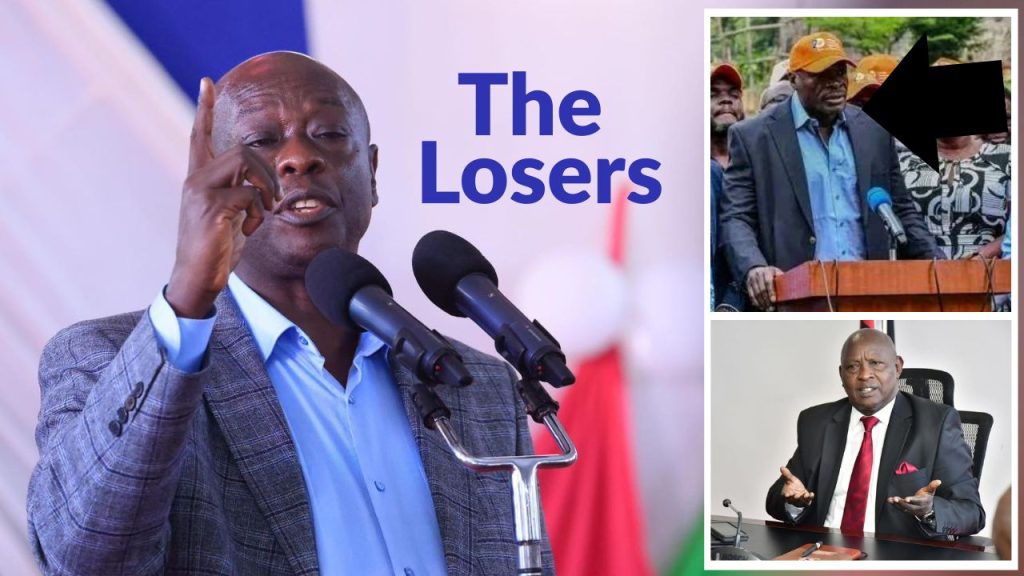
Deputy President Rigathi Gachagua’s absence from Raila Odinga’s funeral was a glaring mistake and a missed chance to demonstrate statesmanship. After Raila had braved hostility to attend the funeral of Gachagua’s brother last year, the deputy president’s failure to reciprocate appeared petty and tone-deaf.
In the days before Raila’s death in India, Gachagua had inflamed tensions at a rally by angrily dismissing an ODM statement accusing him of wishing Raila ill health. Using Kalonzo Musyoka as a foil, he mocked the opposition, asking the crowd, “Kwani Kalonzo ni bacteria? Yeye ni virus?” Though he later, in the same speech, wished Raila a quick recovery so they could “defeat them at the ballot,” his tone lacked sincerity.
When Raila died, the moment called for more than a carefully worded post. It called for the burying of the hatchet. His physical presence at Nyayo Stadium or in Bondo would have signaled humility, closure, and national healing. Instead, Gachagua chose absence over grace, reinforcing perceptions of bitterness and political insecurity.
For a self-proclaimed “son of Mau Mau,” heir to courage and resilience, Gachagua’s no-show was a failure of nerve. Leadership demands presence, not pride. In missing the chance to reconcile with history, he became the week’s biggest loser.
Mutahi Kahiga: When Words Betray Leadership
Nyeri Governor Mutahi Kahiga found himself at the center of national outrage after a video surfaced showing him celebrating Raila’s death at a political rally. His remarks, made in the heat of local politics, were widely condemned across party lines.
The backlash was swift. Religious leaders, civil society groups, and even Gikuyu elders denounced his insensitivity, saying his words dishonored the dead and embarrassed Central Kenya. Kahiga apologized, claiming his remarks were “taken out of context,” but the damage was done.
In a week when Kenya came together in mourning, Kahiga’s callousness became a symbol of the arrogance and divisiveness Kenyans hoped to leave behind.
Seth Kanga: The Wrong Kind of Loyalty
ODM Kisumu vice chairperson Seth Kanga stumbled when he threatened to bar Rigathi Gachagua from entering Bondo. His comments were an unforced error that undermined the dignity Raila’s family had worked so hard to maintain.
True loyalty defends a leader’s ideals, not his territory. Kanga’s rhetoric fed the same hostility ODM sought to transcend, and in the process, he handed ammunition to critics who view the party as intolerant.
ODM Leaders Courting Ruto’s Government: Selling Cheap
One of the more controversial chapters in Raila’s long political career was his decision to team up with President William Ruto, granting the struggling administration a lifeline at a time when many Kenyans were losing faith in it.
Analysts offered different readings of that move. Some saw it as a tactical strike against the impeached Deputy President Rigathi Gachagua, while others viewed it as a transactional misstep that blurred the lines between government and opposition.
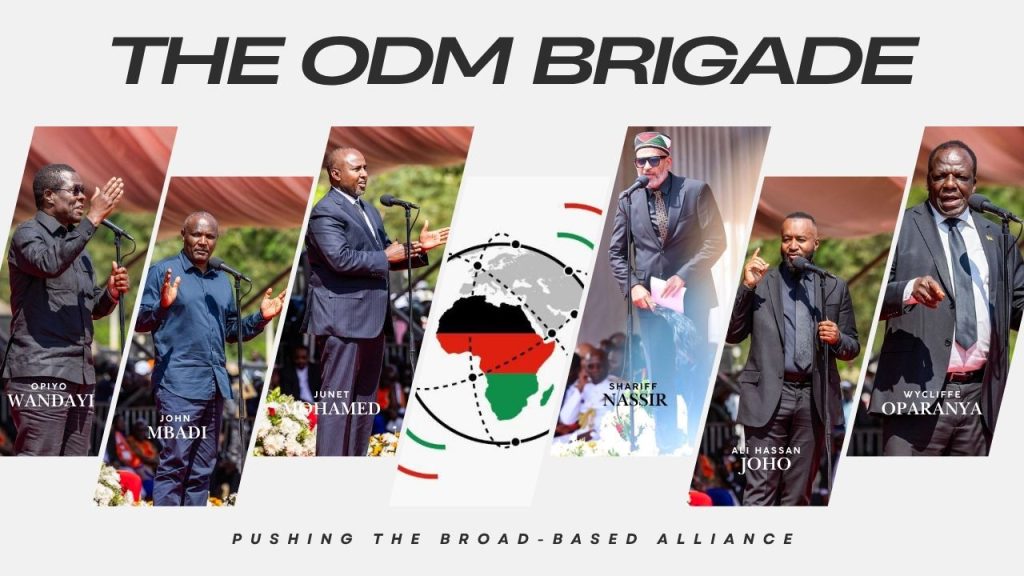
Now, in the wake of Raila’s death, a faction within the Orange Democratic Movement seems intent on extending that alliance.
Several ODM figures have openly supported the so-called broad-based government, the Raila-Ruto version of the famous Handshake, and have claimed it reflects Raila’s final wishes. The endorsement baffled supporters and drew criticism even within the party, as leaders such as Senator Edwin Sifuna later suggested the matter remained unsettled.
Kenya, at this critical juncture, needs a strong opposition to check economic mismanagement, protect civil liberties, and hold power to account. By cozying up to Ruto’s administration, these ODM leaders appear more interested in proximity to power than in preserving the movement’s founding ideals.
In doing so, they have missed an opportunity to correct Raila’s rare political error. Instead, they risk cheapening the very cause he championed, turning a once-defiant people’s movement into an accessory of convenience.
A Nation at a Crossroads
Raila’s funeral was not just a farewell to a political icon; it was a mirror held up to Kenya’s leaders. It revealed those capable of rising above ego and those trapped by it.
The winners of the week projected empathy, conviction, and courage. The losers mistook silence, fear, or opportunism for strategy. As the country recalibrates in the post-Raila era, one thing is clear: the mantle of moral authority is up for grabs, and Kenya is watching who will earn it.

LEAVE A COMMENT
You must be logged in to post a comment.