

|
LISTEN TO THIS THE AFRICANA VOICE ARTICLE NOW
Getting your Trinity Audio player ready...
|
NAIROBI, Kenya (TAV) – On October 15, when former Prime Minister Raila Amolo Odinga died, Kenya lost a national figure, but the Luo nation lost something deeper, its political compass.
For decades, Raila was both party leader and community patriarch, roles that overlapped but were not identical.
As the ODM party leader, he commanded a national movement. As the Luo leader, he embodied the community’s conscience, mobilizing loyalty not by decree but by persuasion. His death, without choosing a successor, leaves those two crowns vacant, the institutional and the cultural, hanging separately, each awaiting a worthy successor.
The 72-hour watch: where grief meets power
In Luo culture, funerals are not only farewells but celebrations of one’s being, reflections of order, belonging, and a passing of the baton. The 72 hours before Raila’s burial in Bondo, as dictated by his wishes, will be as revealing as any campaign.
Who sits beside Mama Ida Odinga?
Who calms the crowd when it grows restless?
Who is invited to speak, and who is not?
Who is cheered, and who is booed?
These gestures, small yet symbolic, will show who commands respect and who is still seeking it.
With a state funeral confirmed by President William Ruto, the ceremony will carry both grandeur and gravity. But beneath the hymns and military salutes, Luo Nyanza will be reading the body language of succession, the alliances, the humility, the emerging hierarchy.
History circles back
Luo’s politics has faced this moment before. When Jaramogi Oginga Odinga, Kenya’s first vice president and Raila’s father, died in 1994, grief quickly gave way to contest.
As head of Ford–Kenya, Jaramogi was expected to pass both the party and the community’s leadership to his son. But the party’s constitution placed Michael Kijana Wamalwa, Jaramogi’s Western Kenyan deputy, next in line.
When Raila challenged that order, Wamalwa held firm. Their rivalry split the movement, and Raila, unwilling to linger in second place, left to form the National Development Party, symbolized by a tractor, the Tinga.
That act of rebellion redefined him. It taught Luo Nyanza that leadership is not inherited; it is fought for and earned through defiance.
Now, three decades later, the same lesson hovers over Bondo.
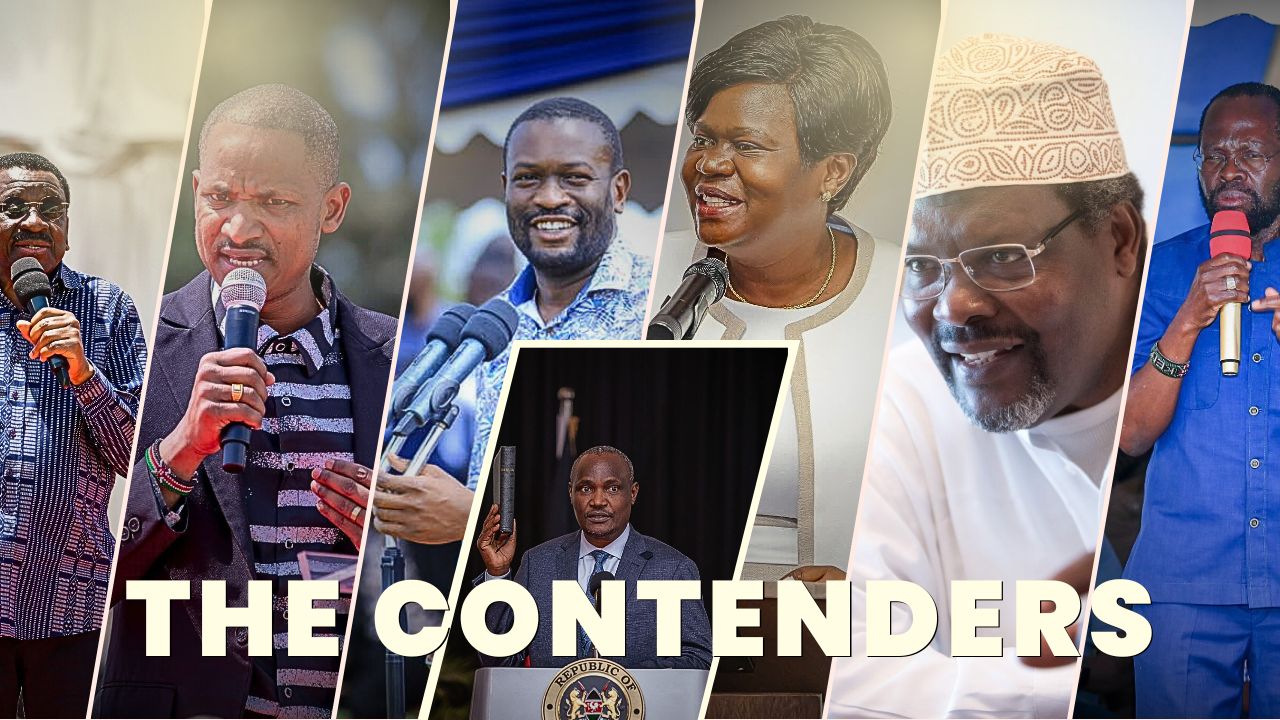
The contenders: reverence and ambition
James Orengo and Prof. Anyang’ Nyong’o, the elder reformers
Governors James Orengo and Prof. Any’ang Nyong’o embody the liberation generation. They were jailed with Raila, argued for democracy when it was dangerous, and later helped draft Kenya’s 2010 Constitution.
They remain voices of conscience. Orengo’s courtroom eloquence and Nyong’o’s academic gravitas still command loyalty. At the funeral, their words will matter; they can calm emotions and signal unity. If they play the role of stewards rather than survivors, they could shape how Luo politics resets after Raila.
John Mbadi – The calm continuity candidate
John Mbadi, ODM Chairman and Cabinet Secretary for the National Treasury and Economic Planning, is the quiet contender in the race to inherit Raila’s mantle. Mbadi carries the coveted blessing of Mama Ida Odinga, a signal of trust that few in Raila’s inner circle can claim.
He may lack Raila’s raw charisma, but he mirrors his patience, discipline, and capacity for consensus. If he helps deliver a dignified, orderly funeral while coordinating seamlessly with both the state and the Odinga family, Mbadi could quietly emerge as the region’s next political anchor. His challenge, however, lies in his modest national profile, which may limit his ability to fill Baba’s larger-than-life shadow.
Gladys Wanga – The woman against the tide
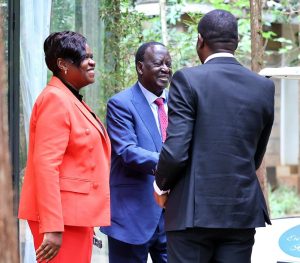
Homa Bay Governor Gladys Wanga stands as proof of courage and skill in a system still defined by patriarchal caution. Her election as the first female governor in Nyanza was not only historic but also a testament to her political dexterity in navigating one of Kenya’s most competitive regions.
Wanga was among Raila Odinga’s most trusted lieutenants, a loyal and articulate defender of his vision both within ODM and on the national stage. Her rise from grassroots mobilizer to county governor mirrors the very qualities Raila admired: resilience, loyalty, and an instinct for the political pulse of the people.
She follows a path first cleared by Grace Onyango, Kenya’s first female mayor and Member of Parliament, and carried forward by pioneering Luo women such as Phoebe Asiyo, Orie Rogo Manduli, and Millie Odhiambo-Mabona. These women defied convention and claimed space in a political culture that often treated women as spectators.
Now, Wanga carries that torch forward. Her challenge is to transform visibility into authority and translate respect into real influence within ODM and the Luo political landscape. In a community that prizes defiance and conviction, she has both, but history will test whether she can turn them into lasting leadership.
For Wanga, visibility does not always equal power. Kenya still struggles to accept women as ultimate political arbiters. Her test will be whether she can move from representation to leadership, and, though unfair, whether the men around her will lend their support.
Miguna Miguna – Uncompromising Defiance
No conversation about Luo politics is complete without mentioning the Canada-based, self-styled General Miguna Miguna. Though he is not expected to attend the burial, his defiant shadow looms large as a man determined to wrestle the Luo Nation from the grip of Odingaism.
Miguna’s uncharacteristically warm message to the Odinga family after Raila’s death showed a rare humility toward a man he often derided as a conman or worse.
Miguna and Odinga were cut from the same cloth, two men defined by courage and an unyielding will.
It was Miguna who, on January 30, 2018, stood at Uhuru Park and swore in Raila Odinga as the “People’s President.” That day, when Kalonzo Musyoka, Prime Cabinet Secretary Musalia Mudavadi, and Speaker Moses Wetang’ula stayed away — earning Kalonzo the nickname “Watermelon” — Miguna etched himself into history as the man who stared down power.
Later, his book Peeling Back the Mask painted Raila in an unflattering light, but even critics admit his candor. In a culture that values truth-telling and courage, Miguna’s name endures as a reminder that dissent is not disloyalty.
Still, his road back to Luo political relevance is steep. To inherit Raila’s mantle, Miguna would have to seize it — not through endorsement, but through rebellion. He would need to persuade the Luo Nation to reject Odingaism itself and embrace a new, more radical vision of leadership, one that breaks from the past yet still honors its defiant spirit.
Babu Owino and Edwin Sifuna – The young lions
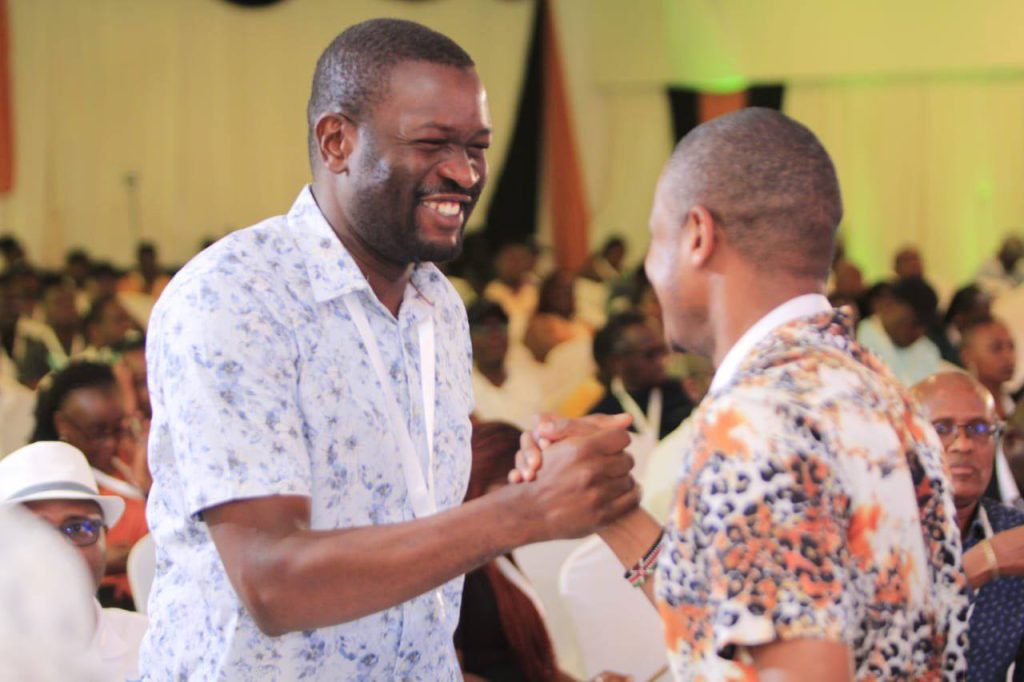
Among the youth, Babu Owino and Edwin Sifuna carry the restless spirit that Raila once personified.
Babu Owino
Babu, bold and populist, has cultivated a devoted base among urban youth. The rousing welcome during his entrance at Raila’s body-viewing ceremony at Kasarani Stadium showed his clout within Raila’s base in Nairobi.
His defiance thrills some and alarms others, but his following is real. Concerns about his moral character stemming from the on-camera shooting case involving DJ Evolve might blunt his ascent. If he shows restraint during this period of mourning, respect over rhetoric, he could reposition himself from rabble-rouser to credible successor.
Edwin Sifuna
Sifuna, ODM Secretary-General and Nairobi Senator, is the movement’s intellect, articulate, witty, and principled enough to critique his own camp. His growing independence has drawn comparisons to Raila’s early pragmatism and endeared him to Gen Z. Although he cannot be crowned Luo leader, as he is a son of the Mulembe nation, Sifuna’s defiant style could attract support among Luo youth and elders who reward boldness.
Gen Z Factor
Beyond the veterans and party loyalists stands a restless generation, Gen Z, the digital natives who have turned frustration into organized activism. Their protests over taxation, joblessness, and corruption have rippled across Nairobi and Kisumu alike, giving them credibility as more than an online chorus. Fiercely anti-establishment and increasingly skeptical of President Ruto’s government, they view politics through the lens of economic survival and dignity.
The Kenyan Gen Z movement has also reverberated beyond its borders, inspiring youth-led demonstrations across the continent, most recently in Madagascar, where young Africans echoed Kenya’s call for accountability and dignity.
For any new Luo or ODM leader, the challenge will be to engage this generation on substance, not symbolism. They demand transparency, accountability, and empathy, and they are quick to call out hypocrisy. Whoever can listen to their anxieties about jobs, climate, and governance while channeling their idealism into policy will not only win their support but also anchor Raila’s reform legacy in the future.
Mama Ida: The matriarch and moral center
If Raila was the movement’s guiding light and heartbeat, Mama Ida Odinga has always been its spine. For half a century, she has weathered harassment, Raila’s arrests and detention, exile, and political storms with grace. As teacher, advocate, and strategist, she grounded a movement that might otherwise have drifted into chaos.
Now she stands as the quiet arbiter of the transition. Her influence is neither ceremonial nor partisan; it is moral. When she endorsed John Mbadi last year, many read it as both a mother’s counsel and a leader’s signal.
At the funeral, her gestures will matter: who she greets first, who sits near her, whom she whispers to, and which speech she listens to most closely.
Behind the scenes, Mama Ida is expected to steady the Odinga orbit, guiding loyalists, tempering ambition, and ensuring that grief does not splinter into rivalry. In a community that reveres matriarchs, her word will carry more weight than any vote, and her blessing will be the most sought-after in the run-up to the 2027 elections.
Ruto’s delicate optics and gymnastics at the funeral
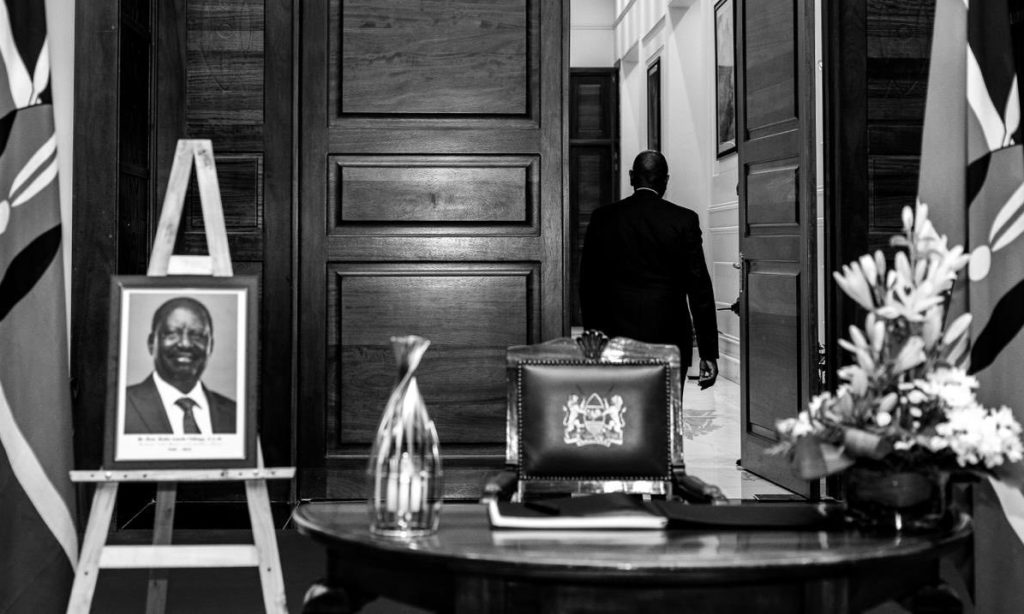
For President William Ruto, the funeral is both an opportunity and a hazard. Thanks to Ruto, Raila will be buried with full state honors, but Ruto can deliver more if he wishes to satisfy the Luo Nation’s appetite to see their revered son granted the highest honors possible.
So far, he has delivered. Declaring Friday a national holiday in honor of Raila, check. Declaring a 7-day national mourning period, check. Connecting with Mama Ida and the Odinga family, check. State funeral, check. What’s left is winning over the masses, and that’s where it gets complicated. He has to promise a bright future to an audience that views his word as valuable as toilet paper.
In Luo Nyanza, Ruto presides over a region accustomed to survival without government favor, one that has often viewed the presidency with suspicion. How he handles this moment could reshape his fortunes.
Ruto’s challenge is amplified by the words of his estranged deputy, Rigathi Gachagua, the impeached former Deputy President, whose “shareholders” speech suggested that opposition regions should not expect government benefits. Despite Raila and ODM joining Ruto’s broad-based government, the perception persists that his administration favors allies in the Rift Valley over equitable national sharing.
The funeral crowd will be a barometer. The applause, the silences, even the jeers will reveal whether reconciliation has taken root. Any hint of “Wantam,” the chant associated with Gachagua’s faction, would expose how fragile the alliance remains.
Ruto’s best hope is sincerity. Aligning respectfully with Mama Ida Odinga will help, but words alone will not suffice. He must convey genuine respect for Raila, demonstrating that the state recognizes his role in Kenya’s democratization.
The only president to strike that balance was Uhuru Kenyatta. His 2018 Handshake with Raila transformed hostility into partnership and earned him affection in Nyanza unseen since independence. Luos judged him not by promises but by tone and found him genuine.
Ruto now faces the same test. His presence at the funeral and his speech can demonstrate that his mission was never just to win over Raila the man, but to reconcile with the Luo nation itself, proving that Kenya can finally rise above the politics of tribe and rivalry.
Kalonzo’s dilemma
Stephen Kalonzo Musyoka, Raila’s longtime running mate, walks into Bondo with mixed memories trailing him. The Kamba community stood with Raila through five elections. Now Kalonzo seeks that loyalty in return.
But Luo’s allegiance is earned through courage and conviction, not nostalgia. His 2018 absence from the “People’s President” ceremony still casts a shadow.
To regain credibility, he must mourn, not maneuver, speak softly, thank sincerely, and avoid political overtones.
The Luo audience forgives bluntness, not hypocrisy, and it rewards courage, especially when it comes at personal cost.
Among opposition figures, Kalonzo’s long partnership with Raila gives him a head start in earning Luo Nyanza’s trust.
If he honors that history with humility and sincerity, he stands the strongest chance of carrying the alliance forward.
Understanding the meaning of Raila’s death
Raila’s death is not only the loss of a revered leader, it is a mirror held up to a nation still learning how to honor dissent.
As his coffin is lowered into the red soil of Bondo, those who claim his legacy will stand shoulder to shoulder, some humbled, some calculating, all under the scrutiny of the people he served.
There will be tears, songs, and silences heavy with meaning. But beneath them will echo a deeper question that will shape the next era of Luo politics.
Will Luo Nyanza choose continuity with veteran guardians Orengo and Nyong’o, whose wisdom and partnership with Raila have steadied it through storms?
Or will it seek a fresh start with Mbadi, who is patient and disciplined, and Babu Owino, who is fiery and charismatic?
And which way will history bend for Edwin Sifuna, the articulate modernist poised between reverence for the past and impatience for the future?
As Kenya lays to rest its most consequential reformer, the answer to those questions will reveal not only who leads next, but what kind of country Kenya wants to become.





LEAVE A COMMENT
You must be logged in to post a comment.