

|
LISTEN TO THIS THE AFRICANA VOICE ARTICLE NOW
Getting your Trinity Audio player ready...
|
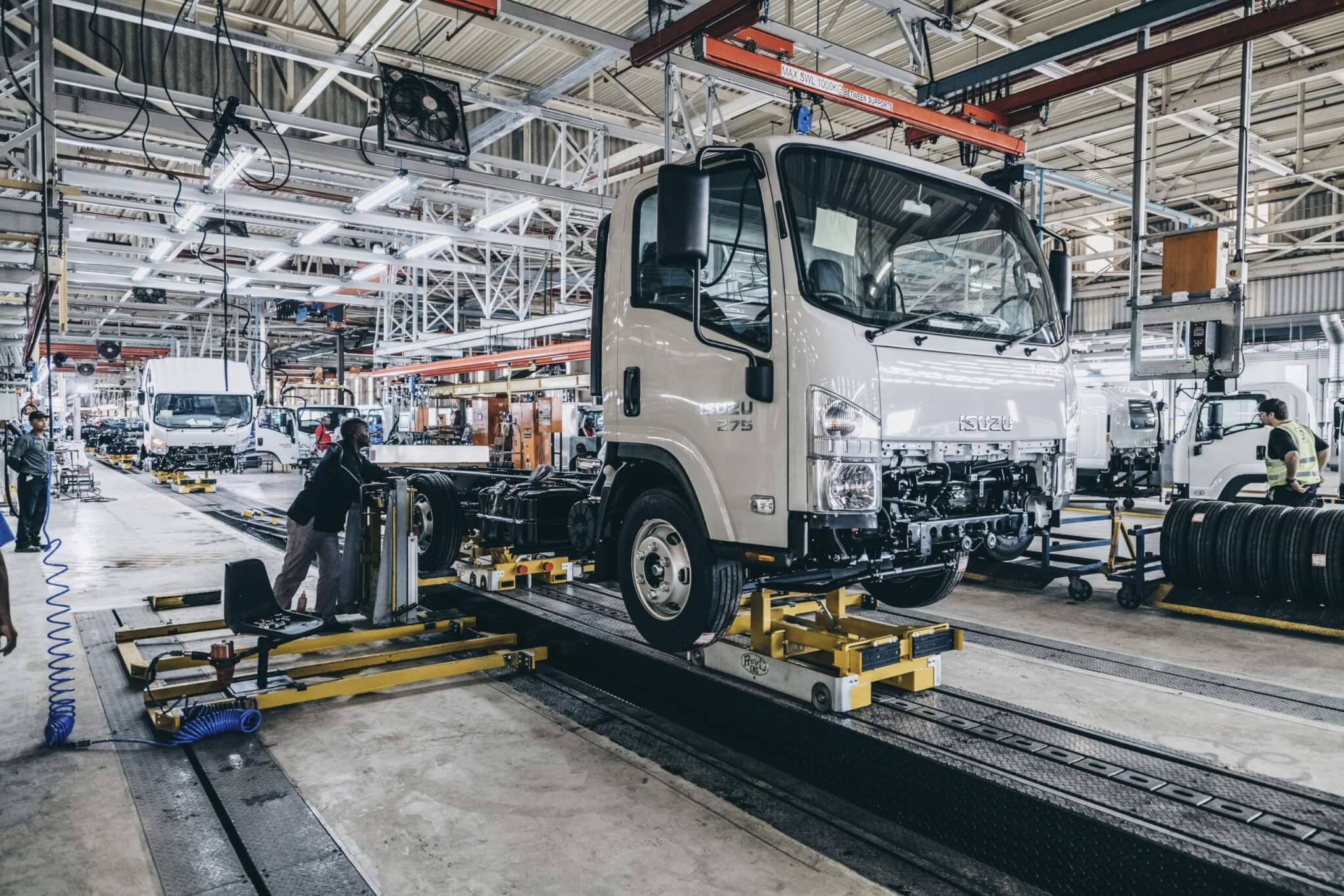
Japanese automaker Isuzu Motors is banking on South Africa to become the continent’s manufacturing base for commercial trucks, a move its local subsidiary says could boost production volumes, increase the use of homegrown parts, and cement the country’s role in Africa’s fast-changing automotive landscape.
Speaking in Johannesburg on Friday, Billy Tom, President and CEO of Isuzu Motors South Africa, said he has been in discussions with executives in Japan to shift more vehicle production to Africa.
“We’re saying to them, instead of producing vehicles in Japan, you’ve got a facility in Africa. We can produce the vehicles here,” Tom told Reuters.
The plan builds on small-scale successes. Isuzu has already carried out trial runs of manufacturing a truck and its body entirely in South Africa. Currently, some truck bodies are still imported from countries including China and the Middle East, but Tom believes a stronger local base could change that.
Building a Continental Base
At present, Isuzu’s South African plant manufactures the popular Isuzu D-MAX pickup, assembles medium-heavy and extra-heavy trucks, and imports the Isuzu MU-X SUV for African distribution. Exports of pickups already reach more than 30 African countries, but exports of trucks remain limited.
Tom says the company has set its sights on West Africa as a starting point for expanded truck sales. “We’ve been looking for opportunities in the African business. About six years ago, 15% of my volumes were in Africa. That number is now 22% to 23%. Our ambition is to get that number to 45%,” he explained.
The push is closely tied to opportunities presented by the African Continental Free Trade Area (AfCFTA), launched in 2021 after being ratified by 49 countries. Though implementation remains patchy; with fewer than half of member states trading under the tariff-free framework, the agreement holds the promise of easier, cheaper trade across the continent.
Isuzu is not alone in searching for ways to strengthen local production. Volkswagen, Toyota, Mercedes-Benz and other global manufacturers with assembly plants in South Africa are also seeking strategies to defend their operations against a flood of imports, particularly from China.
The concern is not unfounded. 64% of all vehicles sold in South Africa are imported, according to government figures. At an automotive parts conference this week, Minister Parks Tau warned that the country’s industry is under threat from “deindustrialisation” as imports climb.
South Africa’s Automotive Masterplan sets ambitious goals: 60% local content in vehicles by 2035 (from a stagnant 39% today), and production of between 1.3 and 1.5 million vehicles annually, more than double the current output of around 600,000 units.
Tom echoed those concerns, saying, “That threat of deindustrialisation is there and probably getting bigger as well, because if you look at the growth of what is imported into the country, that number is growing.”
For South Africa, the stakes are high. The auto industry is one of the country’s most important manufacturing sectors, providing jobs and export revenue.









LEAVE A COMMENT
You must be logged in to post a comment.