

|
LISTEN TO THIS THE AFRICANA VOICE ARTICLE NOW
Getting your Trinity Audio player ready...
|
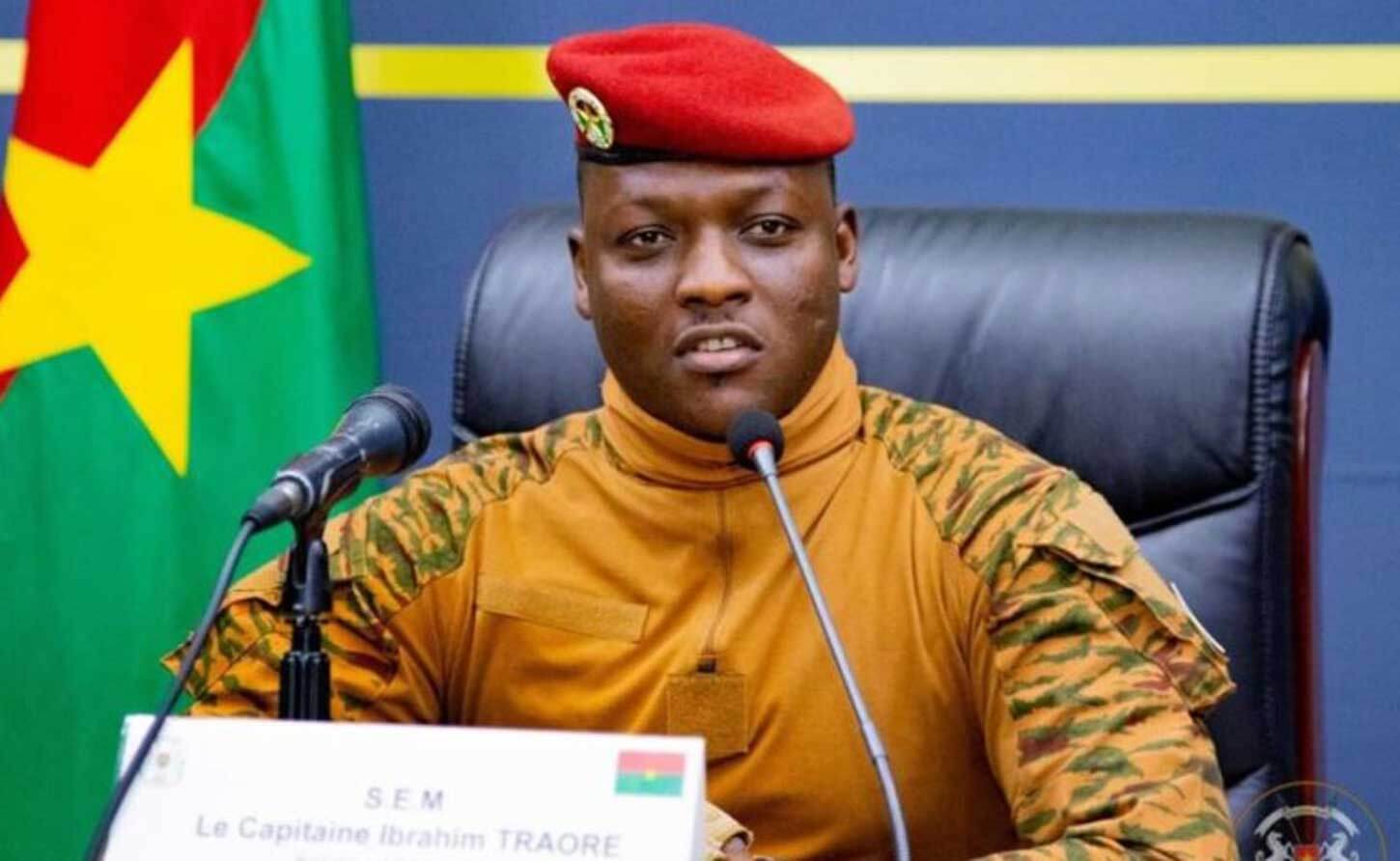
Burkina Faso’s military-led government on September 1, passed a sweeping new law that criminalises homosexuality, imposing penalties of up to five years in prison in a move that places the West African nation squarely within a widening continental pushback against LGBT practices.
The measure, announced Monday evening by Justice Minister Edasso Rodrigue Bayala on state broadcaster Radiodiffusion Télévision du Burkina (RTB), was adopted unanimously by all 71 members of the country’s transitional legislature, an unelected body appointed by the junta that seized power after two coups in 2022.
Under the new law, individuals found guilty of “homosexual or similar practices” face prison terms of two to five years, alongside steep fines. Foreign nationals convicted under the statute will be deported. Bayala described the legislation as part of a broader reform of family and citizenship codes. “If a person is a perpetrator of homosexual or similar practices, all the bizarre behaviour, they will go before the judge,” he declared.
The law takes immediate effect and will be disseminated nationwide through what officials described as a public “awareness campaign.”
A surprising turn
The legislation marks a sharp turn for Burkina Faso, which had previously been one of the few countries in West Africa where same-sex relations were not criminalised. Human rights groups now fear the change could fuel a climate of persecution against LGBT citizens already living on the margins of society.
“Burkina Faso has joined the wrong side of history,” said a regional human rights advocate based in Dakar, who asked not to be named for security reasons. “This is a distraction from the country’s real crisis, the daily violence, the displacement, the hunger. Instead, they are criminalising love.”
Since seizing power in 2022, Captain Ibrahim Traoré, now 36, Africa’s youngest head of state, has cast his rule as a corrective to political dysfunction. Promising stability and security amid escalating jihadist insurgency, his junta dissolved the elected parliament and installed a transitional assembly handpicked by the military. But rights groups accuse the regime of shrinking civic space, conscripting critics into the army, and detaining dissenters. The anti-homosexuality law, they argue, is part of this authoritarian drift.
A regional trend
Burkina Faso’s decision places it within a growing bloc of African nations moving to toughen laws against homosexuality. Just last year, neighbouring Mali, a close political and military ally of Ouagadougou, criminalised same-sex relations through its own transitional parliament.
Elsewhere on the continent, Ghana’s parliament passed sweeping legislation in 2024 outlawing not only same-sex intimacy but also advocacy for LGBT rights, though the bill remains contested in court. In Uganda, one of the continent’s most draconian anti-gay laws was adopted in 2023, introducing the death penalty for what it termed “aggravated homosexuality” and life imprisonment for consensual same-sex relations.
Across Africa, more than half of the continent’s 54 nations now ban homosexuality outright. In several, including Nigeria, Mauritania, and parts of Somalia, such laws carry the death penalty.
Supporters of these laws frequently invoke arguments rooted in religion, culture, or resistance to perceived Western interference. Politicians, particularly in military-led states, often frame anti-LGBT legislation as an assertion of sovereignty at a moment of political and economic strain.
Analysts say the Burkinabé junta’s embrace of criminalisation reflects both regional alignment and domestic calculation. With vast swathes of the country under the control of jihadist militants linked to al-Qaeda and the Islamic State, and millions displaced by violence, the transitional government faces mounting criticism over its failure to deliver on security promises.
“Targeting LGBT people allows the regime to rally conservative social forces while diverting attention from the war it is losing in the countryside,” said Ornella Moderan, a Sahel expert formerly with the Institute for Security Studies. “It’s a textbook play from the authoritarian handbook.”
A global flashpoint
Internationally, the move risks straining relations with Western donors and rights groups at a moment when Burkina Faso is already pivoting away from France and closer to Russia. Traoré’s government has expelled French troops, welcomed Russian advisers, and tightened military and political cooperation with Mali and Niger — two other juntas in the Sahel.
Western governments, especially the United States and the European Union, have condemned similar laws in Uganda and Ghana. But Burkina Faso, facing isolation from the Economic Community of West African States (ECOWAS) and sanctions over its coup, has shown little concern about alienating Western partners further.
For many in Ouagadougou, where daily life is shaped less by geopolitics than by insecurity and economic hardship, the law is both symbolic and chilling. LGBT citizens, who have long lived discreetly, now face the prospect of prison, fines, and deportation if exposed. Rights defenders warn that the vague language of “similar practices” in the statute could be used to prosecute not only same-sex intimacy but also gender non-conforming behaviour, activism, or even association.
In recent months, Burkinabé civil society organisations have already reported an uptick in harassment. “People are afraid to speak, afraid to organise,” said one activist reached by phone in Bobo-Dioulasso. “This law will push us even further underground.”
For the transitional government, however, the legislation is being presented as part of a “moral renewal”, a phrase often repeated by officials in state media. In speeches, President Traoré has argued that Burkina Faso must reclaim its cultural identity and resist external pressures.

LEAVE A COMMENT
You must be logged in to post a comment.